The world's first offshore wind farm was tiny, and it has already been taken down
In 1991 a Danish utility planted eleven small turbines in the shallow sea and quietly invented the first offshore wind farm. Vindeby was modest to the point of charming, it ran for a quarter of a century, and it has already been dismantled, yet the industry it started now towers over it.
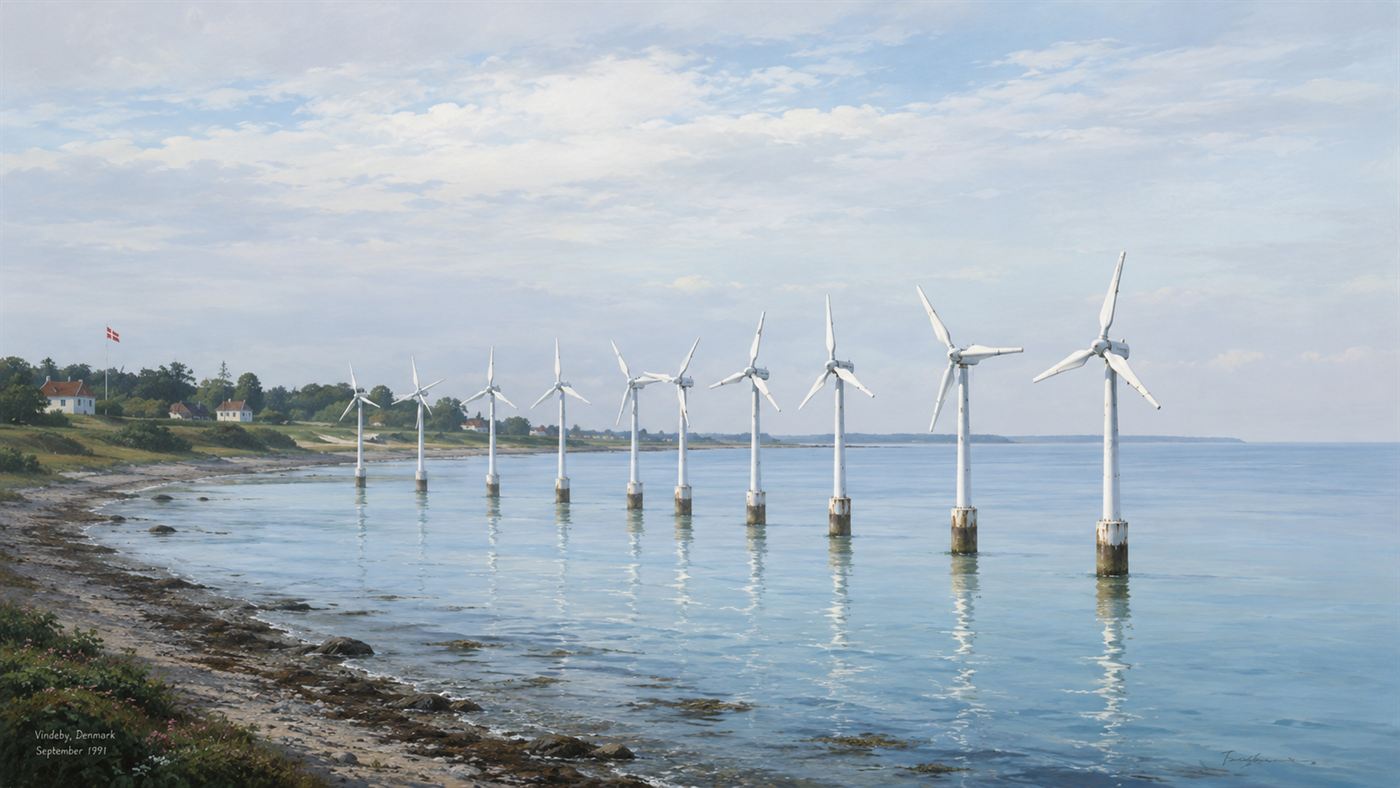
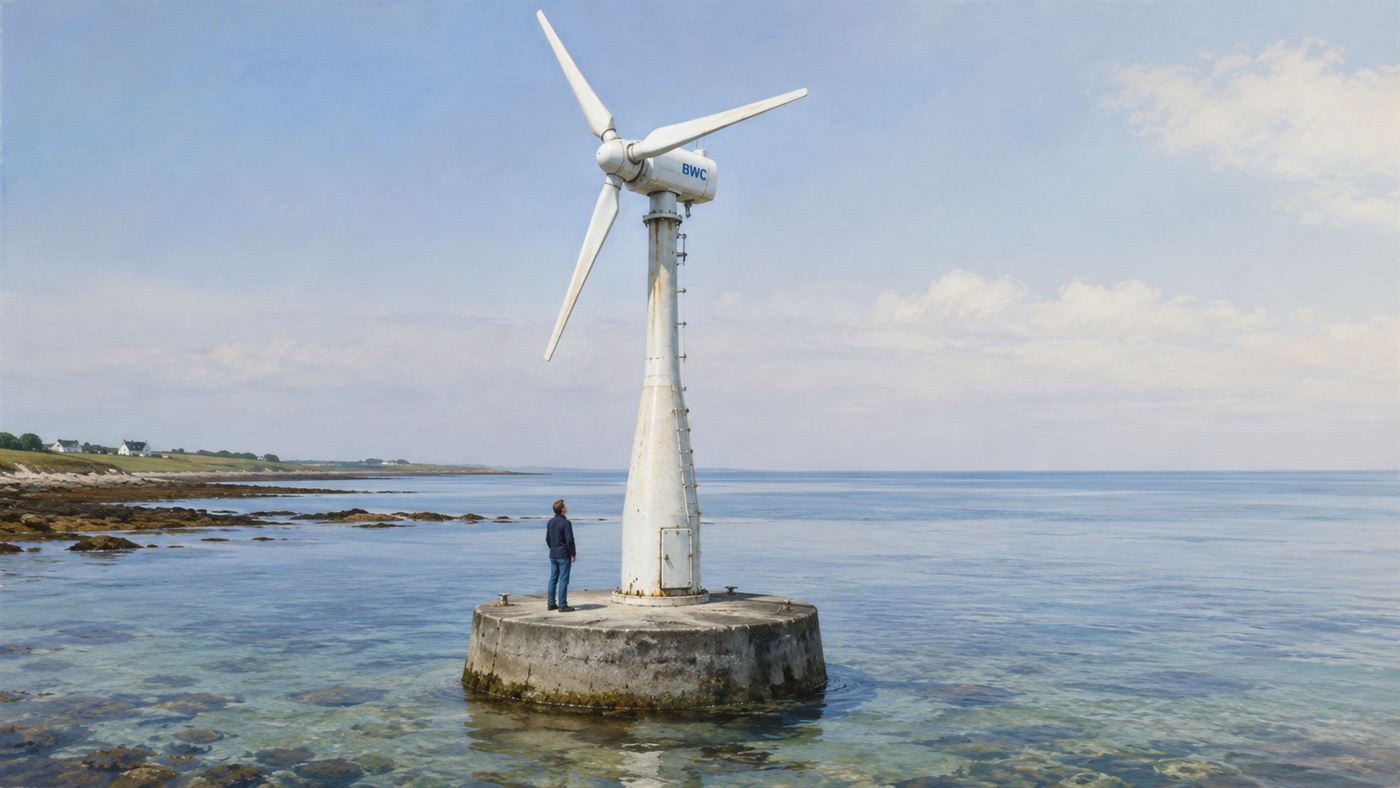
Eleven small turbines in the shallows off Denmark started it all. Illustration: Watts & Wild.
Every giant industry has an awkward, undersized first attempt, and offshore wind is no exception.
Its starting point was a neat little row of turbines standing in water barely deep enough to cover your waist.
What was the first offshore wind farm? The first offshore wind farm was Vindeby, built off the coast of Denmark in 1991. It had eleven small turbines totalling about five megawatts, it operated for around 25 years, and it was dismantled in 2017 after proving that turbines could work at sea.
Vindeby, the first offshore wind farm
Vindeby was switched on in 1991 off the island of Lolland in southern Denmark.
It consisted of eleven turbines of 450 kilowatts each, adding up to a grand total of just under five megawatts.
The machines were ordinary onshore turbines, lightly adapted, set on simple concrete foundations in water only a few metres deep.
They stood close to shore, near enough that you could comfortably see the whole farm from the beach.
By the standards of the time it was bold, and by the standards of today it is almost unbelievably small.
Why put turbines out to sea
Building in water is expensive and awkward, so there had to be a good reason to try.
Out over open water the wind blows stronger and steadier than it usually does on land.
The sea also offers vast open space, well away from homes that might object to the noise or the view.
Stronger, smoother wind means each turbine can generate more electricity more reliably.
Vindeby was the experiment that tested whether all of that was worth the trouble of going offshore.
Almost comically small
It is worth pausing on just how tiny that pioneer really was.
The whole farm produced under five megawatts, spread across eleven separate turbines.
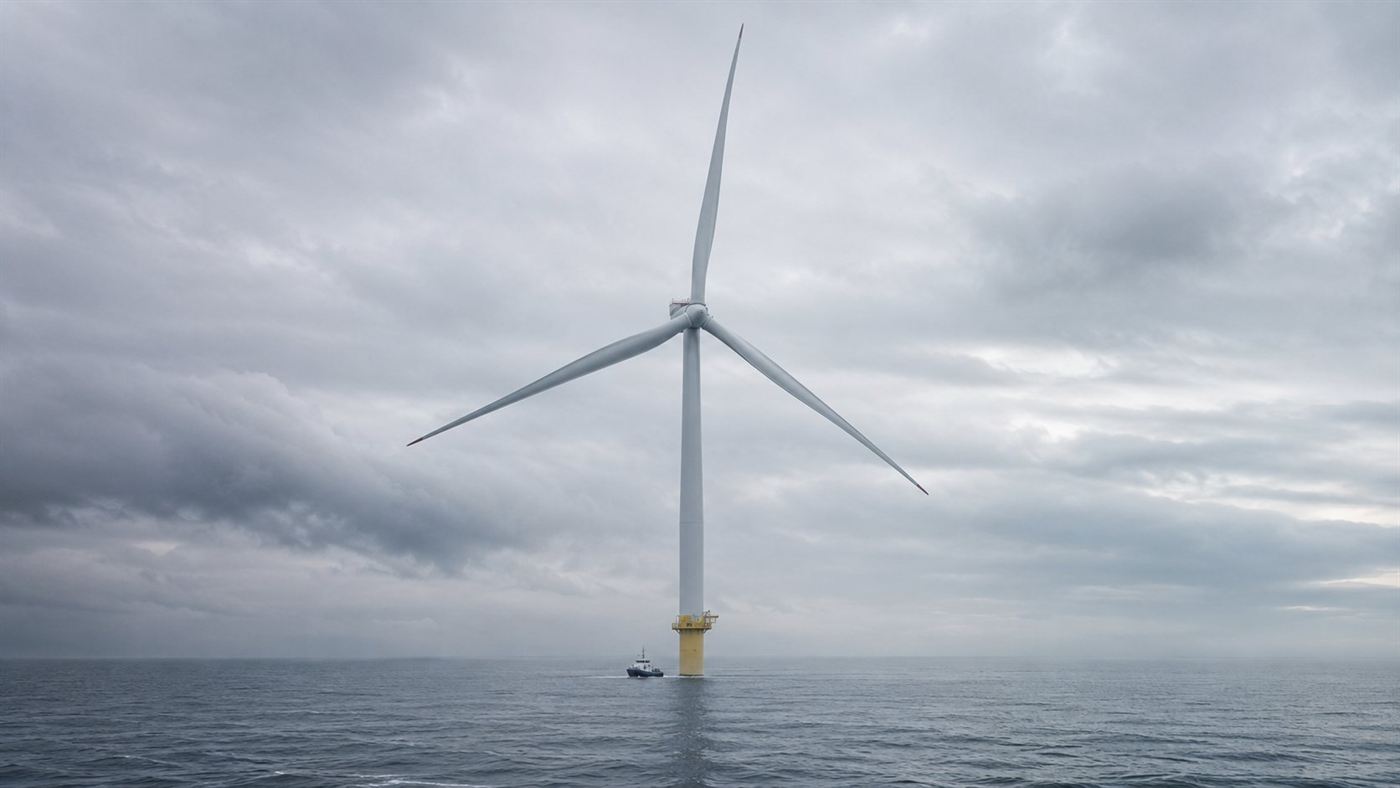
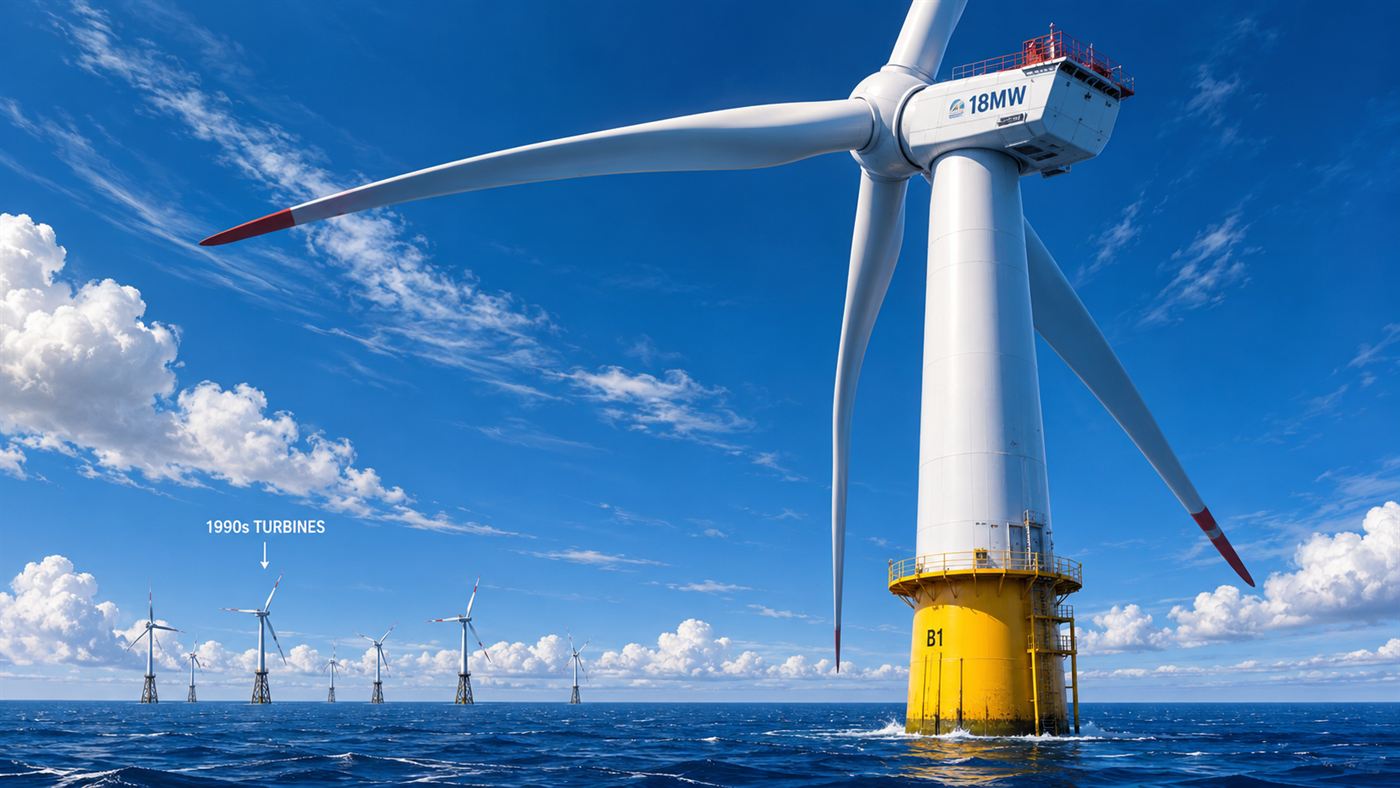
A single modern offshore turbine can now top ten or fifteen megawatts on its own.
In other words, one machine built today would out-generate the entire original farm several times over.
The first step into the sea was less a leap than a careful, knee-deep paddle. The deep water came later, once turbines learned to float, in the world's first floating wind farm off Scotland.
The industry it launched
What Vindeby lacked in size it made up for in influence.
By showing that turbines could survive and earn their keep at sea, it opened a door that has never closed.
Denmark turned that early lead into a global industry, with its companies among the giants of offshore wind today.
Modern farms now string together hundreds of huge turbines and produce more than a gigawatt each.
All of that traces back to those eleven little machines paddling in the shallows off Denmark. The same country went on to turn even its rubbish into a showpiece, wrapping a waste-to-energy plant in a public ski slope at CopenHill.
The honest catch
It is worth keeping the legend in proportion.
Vindeby was a modest pilot, not a triumph of scale, and it never generated very much power at all.
It has already been decommissioned, with the turbines removed in 2017 and much of the material recycled.
Offshore wind itself still wrestles with real problems, from high costs to the puzzle of recycling worn-out blades.
Even so, the humble little farm did the one thing that mattered, it proved the idea was real and let everything bigger follow.
Vindeby is a reminder that world-changing industries often begin with something small enough to overlook.
It belongs with the other firsts and giants of clean power, from the single turbine that now dwarfs whole early wind farms to the borehole that struck magma in search of heat. Its distant descendant is the largest offshore wind farm in the United States, now rising off Virginia Beach.
If the mighty offshore wind industry started with eleven turbines you could wave at from the beach, what tiny, easily mocked experiment running quietly today will look like the start of everything in thirty years? Tell us in the comments.