Edwin Drake drilled the first oil well in 1859 and gave the world the petroleum age, then failed to patent his idea, lost his savings, and died so poor the state had to grant him a pension
Almost everything that runs on oil, from cars to plastics to the global economy, traces back to a single hole in the ground beside a creek in Pennsylvania. The man who drilled it, Edwin Drake, started one of the richest industries in history and barely made a cent.
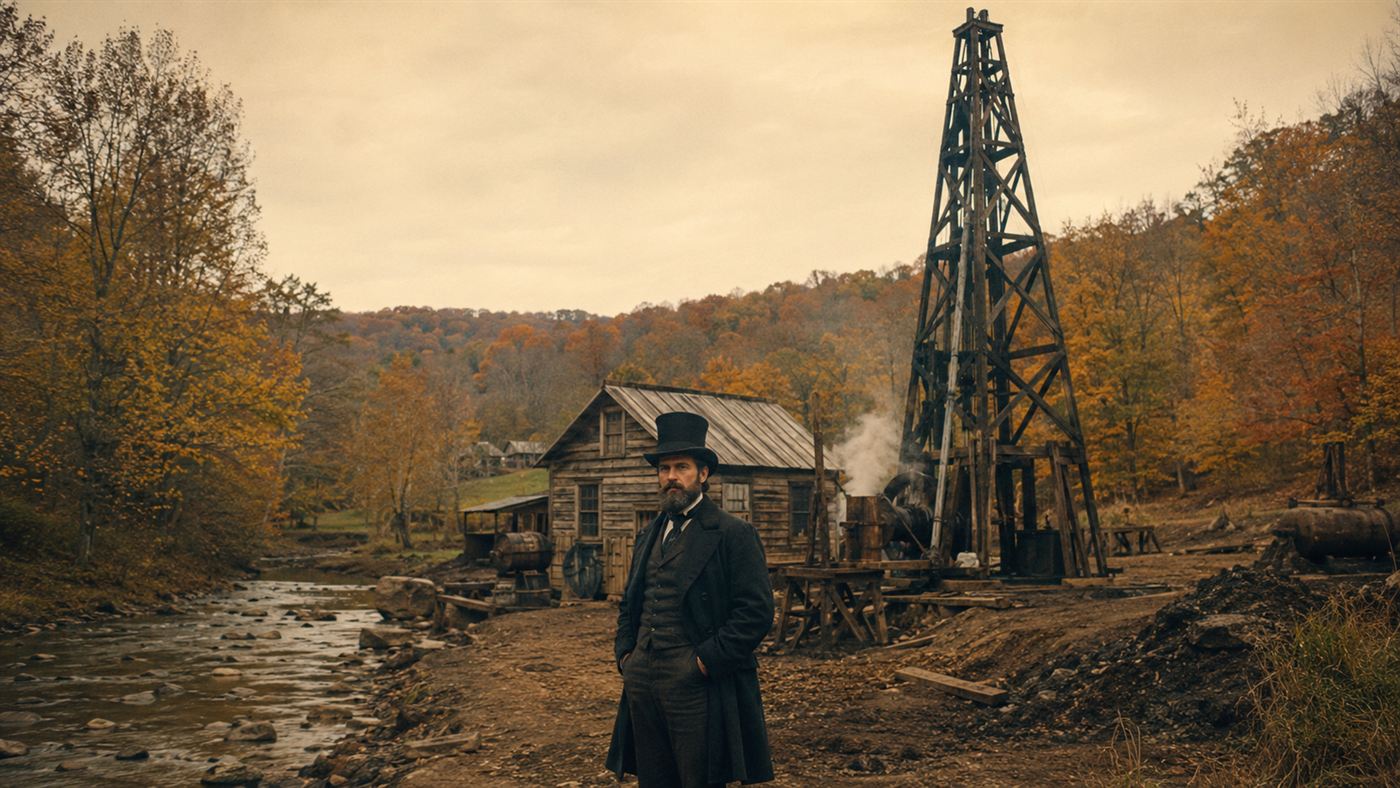
The first commercial oil well was a rickety wooden derrick beside Oil Creek. The world that came out of it is hard to overstate. Illustration: Watts & Wild.
Edwin Drake was an unlikely father for the oil age. He was a former railway conductor in poor health, with no training in geology or engineering, hired more for his free rail pass and his stubbornness than for any expertise. Yet in 1859 he drilled the first oil well in the United States, and in doing so lit the fuse on the modern world. Within a few decades, the kerosene and then the gasoline that flowed from wells like his would remake transport, lighting, and war.
The story is a near-perfect illustration of how the people who start revolutions are so often not the ones who profit from them. The industry Edwin Drake founded would mint some of the richest men who ever lived, and he would end his days leaning on a charity pension, half-forgotten in the country he had helped transform.
Edwin Drake drilled the first commercial oil well in the United States, striking oil at Titusville, Pennsylvania, on August 27, 1859. His use of an iron drive pipe to keep the hole open made drilling for oil practical and launched the modern petroleum industry, though he never patented the idea.
How Edwin Drake struck the first oil well
In the 1850s, oil was a nuisance and a novelty. It seeped to the surface around Titusville, in northwestern Pennsylvania, where people skimmed it off creeks and bottled it as patent medicine. A few sharp minds, chiefly the lawyer George Bissell, suspected that if you could gather it in quantity it would make a cheap, clean fuel for lamps, replacing increasingly scarce whale oil. The problem was getting it out of the ground in bulk.
Their company sent Edwin Drake to Titusville to try, and his great insight was to stop digging and start drilling, borrowing the techniques used to bore salt wells. The man who actually turned the tools was a salt-well driller and blacksmith named William Smith, known to everyone as Uncle Billy, and it was slow, mocked, money-losing work. Locals called the project "Drake's Folly," and the backers were on the verge of pulling the plug.
The simple idea that made oil drilling work
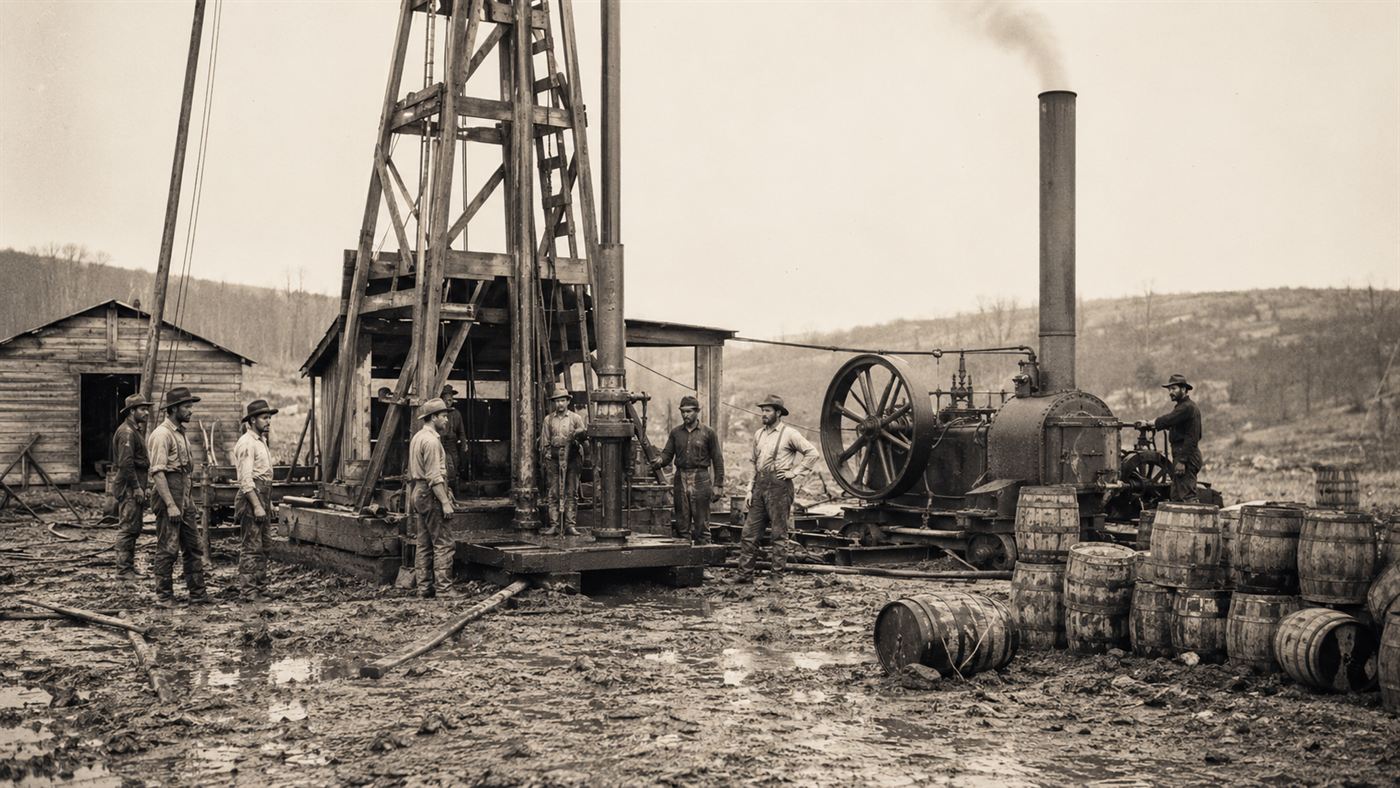
The breakthrough was almost embarrassingly humble. The hole kept collapsing and flooding with groundwater before the drill could reach the oil-bearing rock, defeating every attempt. Edwin Drake's answer was the drive pipe: he drove lengths of cast-iron pipe down through the loose earth until they hit bedrock, creating a stable, watertight shaft through which the drill could keep going cleanly.
It worked. On August 27, 1859, as Britannica recounts, at a depth of just under 70 feet the drill struck oil, and the next day Uncle Billy found it pooling near the top of the pipe. That drive pipe trick is the ancestor of the casing used in essentially every oil and gas well drilled since, a quiet piece of engineering that unlocked a planet's worth of buried energy. It was also, fatefully, an idea that Edwin Drake never thought to patent.
The boom that swallowed Titusville
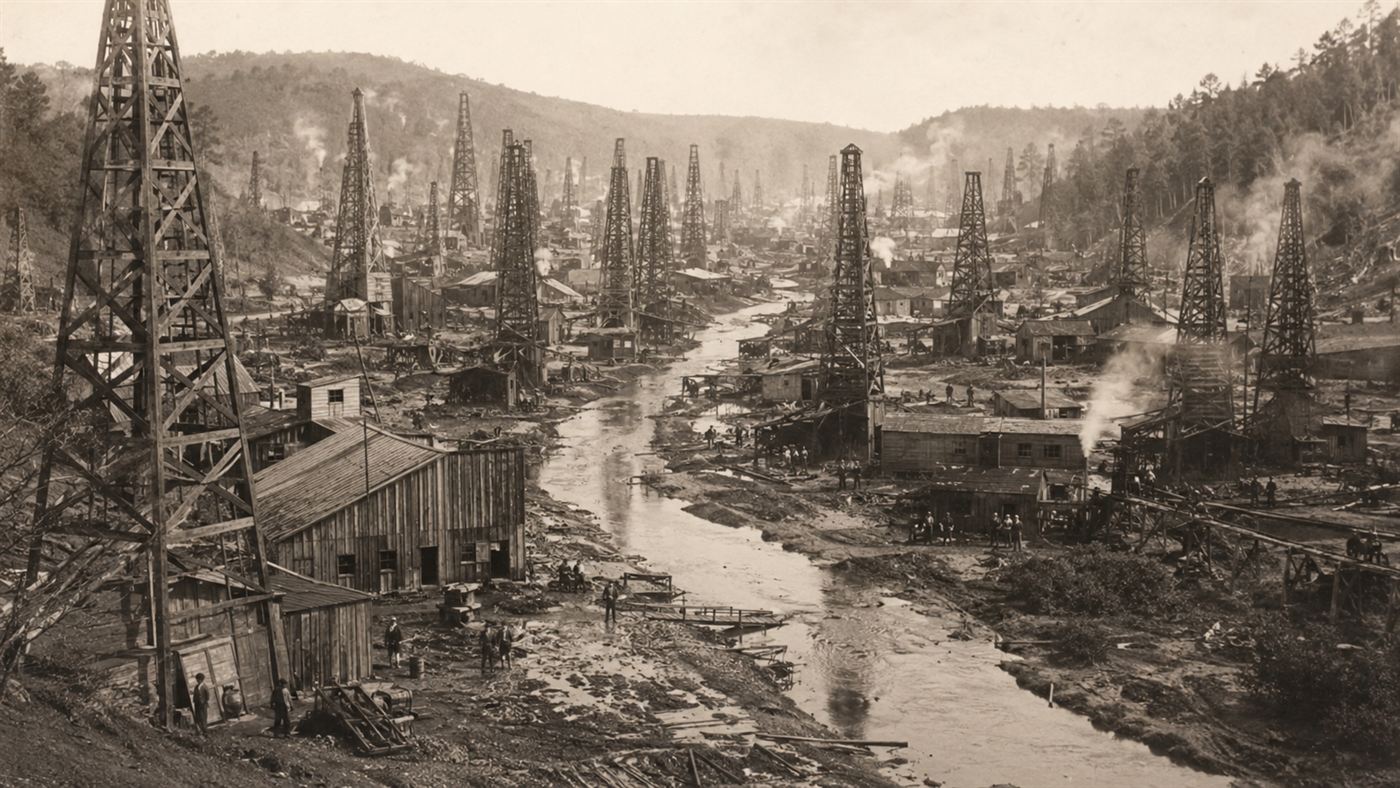
Word of the strike spread like a grass fire. Within months, speculators and fortune-hunters poured into the valley around Titusville, and the quiet farmland of Oil Creek sprouted a forest of wooden derricks, each one chasing the same black wealth. It was America's first oil rush, as the Drake Well Museum documents, with all the boomtown chaos that implies: instant millionaires, ruinous gluts that crashed the price, fires, fraud, and mud everywhere.
This was the true birth of the petroleum industry, and it scaled with astonishing speed. The refineries that grew up to turn crude into lamp kerosene became the foundation of an entirely new economy, and one young Cleveland bookkeeper named John D. Rockefeller saw in that chaos a chance to organize, consolidate, and dominate. The petroleum industry he built into Standard Oil made him the richest man in the world, all on the trade that Edwin Drake's well had opened. The age it began truly exploded in 1901, when the Spindletop gusher in Texas blew oil 150 feet into the sky.
Why Edwin Drake died with nothing
While fortunes exploded around him, Edwin Drake went the other way. Having never patented the drive pipe, he collected no royalties from the thousands of wells that copied it. He drilled a couple more wells, drifted into buying and selling oil, and then lost what money he had speculating in the very market he had created, wiped out around 1863.
The last act was grim. Crippled by neuralgia and sinking into poverty, the man who had launched the petroleum industry became a near-destitute figure, supported by friends. In the early 1870s the Pennsylvania legislature, somewhat shamed by his condition, voted him an annual pension of 1,500 dollars, a modest reward for founding an industry already worth untold millions. He died in 1880, his name attached forever to a well that made everyone but him rich.
The honest catch
The legend rounds off a few corners, as legends do. Edwin Drake did not discover oil, which humans had gathered from seeps for thousands of years, from the ancient brine wells of China to the oil pits of Baku, so the phrase "first oil well" really means the first to deliberately drill a commercial well and prove the method worked. And he did not do it alone: Bissell supplied the idea and the money, and Uncle Billy Smith supplied the hands that actually drilled.
It is also worth sitting with what was really born beside that creek. The same petroleum industry that lit cheap lamps and powered a century of progress also gave us climate change, oil spills, and resource wars, a legacy as heavy as it is vast. None of that changes the strange, human heart of the story, though. A sick, stubborn man with a borrowed idea drilled a hole that changed the planet, and the world he made could not even spare him a comfortable old age.
The man who started the oil age died poor while others built empires on his idea. Should the people who spark a revolution share in the riches it creates, or is that just how invention works? Tell us in the comments.
Related reading: When Iraqi forces set 700 Kuwaiti oil wells ablaze, the sky went black for months and a Texan legend came to put them out.