A single worn hook on a 97-year-old power line snapped one November morning in 2018 and started the Camp Fire, which killed 85 people and erased the town of Paradise in hours
The Camp Fire is the deadliest wildfire in California history, and it did not begin with a lightning strike or a careless camper. It began with a piece of metal the size of your hand, worn thin after almost a century in the wind, that finally gave way on the morning of November 8, 2018.
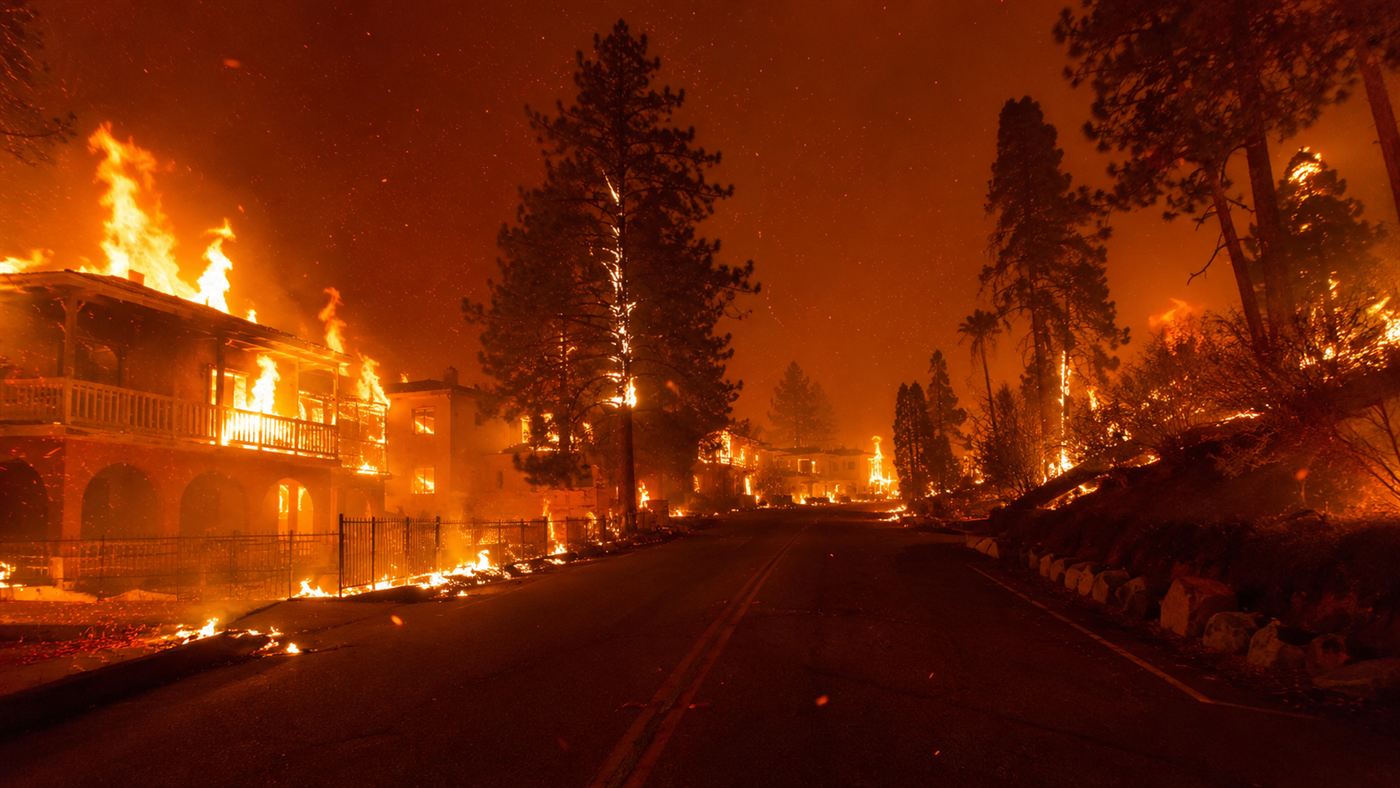
The Camp Fire turned the sky over Paradise a hellish orange within hours of ignition. Illustration: Watts & Wild.
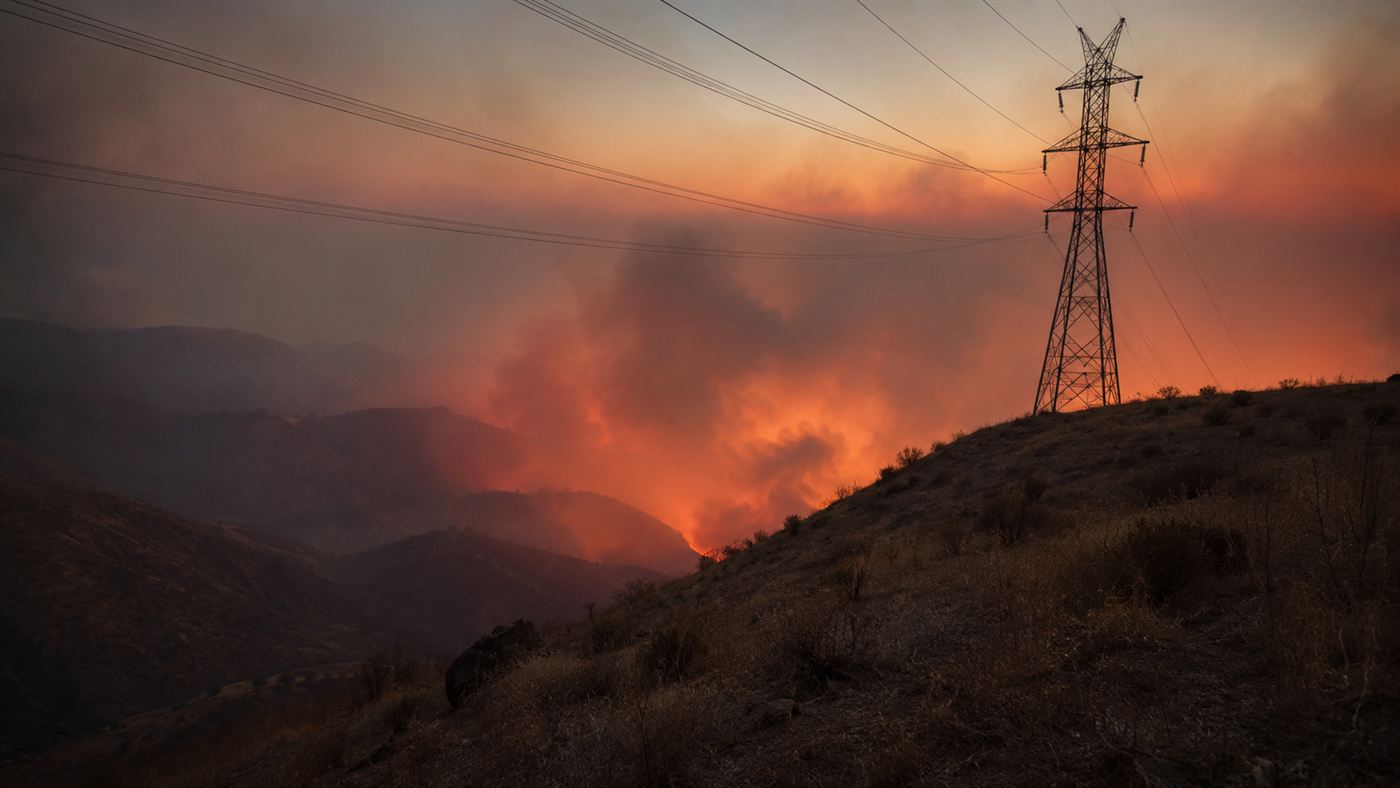
The Camp Fire started at 6:15 in the morning in the Feather River Canyon near the tiny settlement of Pulga, in Butte County. It was a dry, gusty autumn day, the kind northern California fears, with parched brush and hot winds pouring down out of the hills. As the public record shows, at that exact moment a PG&E control center recorded an outage on a transmission line in the canyon. Something had just broken, high up on a tower, and the timing was not a coincidence.
Within a few hours, a town of 26,000 people would be gone. What happened at Paradise that day is one of the clearest, most horrifying lessons in what it costs when the machinery that powers our lives is quietly allowed to rot.
The short version: On November 8, 2018, a worn hook on PG&E's nearly 100-year-old Caribou-Palermo transmission line failed and sparked the Camp Fire. Driven by high winds through bone-dry terrain, it killed 85 people and destroyed 18,804 buildings, nearly erasing the town of Paradise. It remains the deadliest wildfire in California history.
What caused the Camp Fire?
The culprit was almost absurdly small. Investigators traced the ignition to a single worn power line component called a C-hook on one of PG&E's Caribou-Palermo towers, a steel structure that had been standing since roughly 1921. The hook held up the heavy line and its insulators, more than 142 pounds of hardware, and over nearly a hundred years the constant sway had ground it down until it was worn about seven-eighths of the way through.
On that windy morning, it finally snapped. The energized line swung loose and struck the tower, and the contact threw an electrical arc burning somewhere between 5,000 and 10,000 degrees, hot enough to melt steel. Gobs of molten metal and a shower of sparks rained down into the dry brush below and caught instantly. A component that had not been closely inspected in decades became the match that lit the deadliest fire the state had ever seen. It is the same quiet, cumulative neglect that nearly lost Oroville Dam a year earlier, a few counties away.
Paradise had minutes, not hours
The fire moved with a speed that outran every plan. Pushed by the wind, it threw burning embers a mile or more ahead of itself, and by the time it reached the ridgetop town of Paradise around 8:30 a.m., spot fires were already igniting inside the town itself. The single main road out clogged almost immediately, trapping residents in a slow-moving line of cars as flames closed in on both sides. People abandoned vehicles and ran, drove through walls of fire, and the 911 center was swamped, taking 132 calls before 8:20 a.m. and having to forward them to the next county.
The scale of the loss came fast. By Cal Fire's accounting, the town of Paradise lost roughly 95 percent of its buildings, most of it within the first six hours. Cal Fire Chief Scott McLean put it bluntly at the time, saying that pretty much the whole community of Paradise was destroyed, that the wind that had been predicted simply came and wiped it out. For the people living there, a normal Thursday became a race for their lives with almost no warning.
85 lives and a town wiped from the map
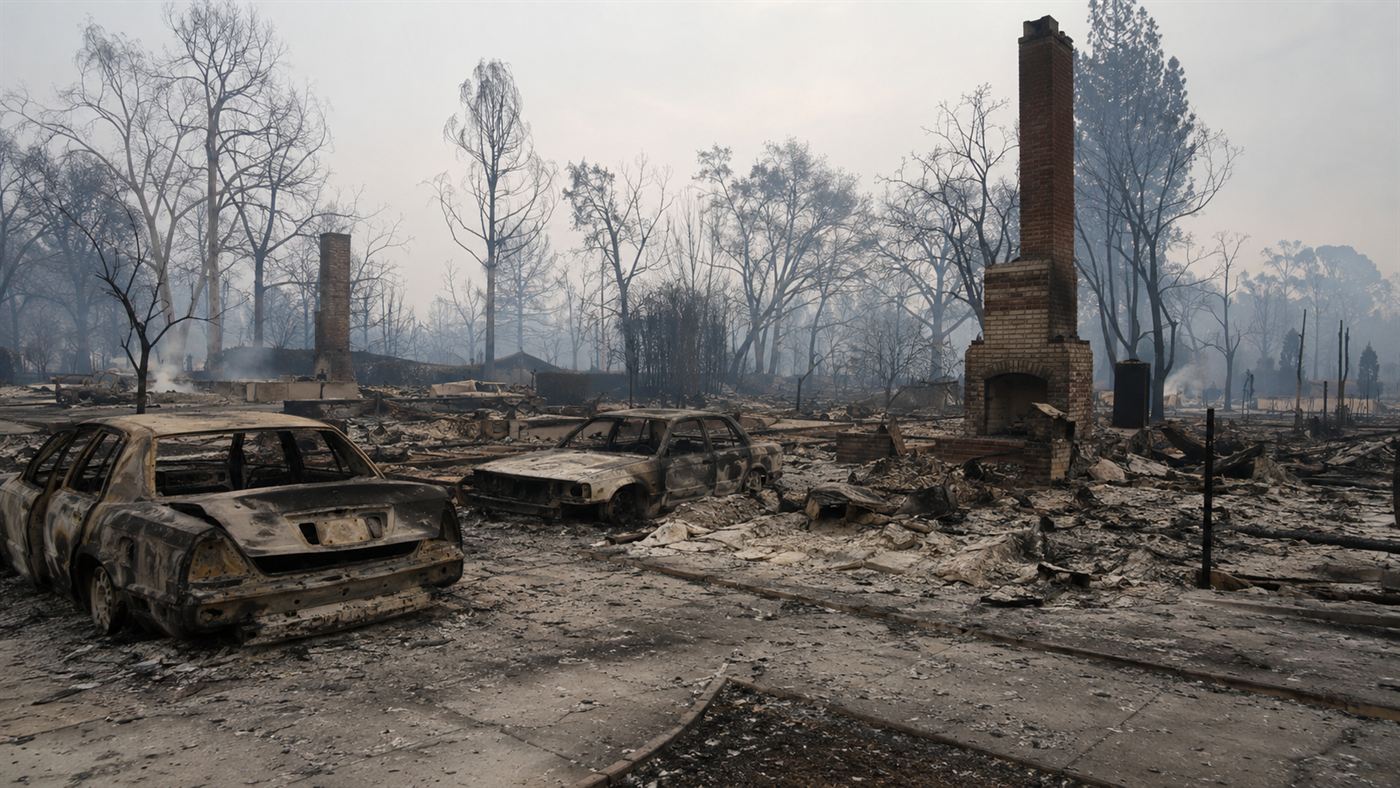
When the smoke finally cleared after 17 days, the numbers were staggering. Eighty-five people were dead, most of them elderly residents who could not escape in time, making the Camp Fire the deadliest wildfire in California history. It destroyed 18,804 structures, the overwhelming majority of them homes, along with five schools in Paradise, and it burned more than 153,000 acres.
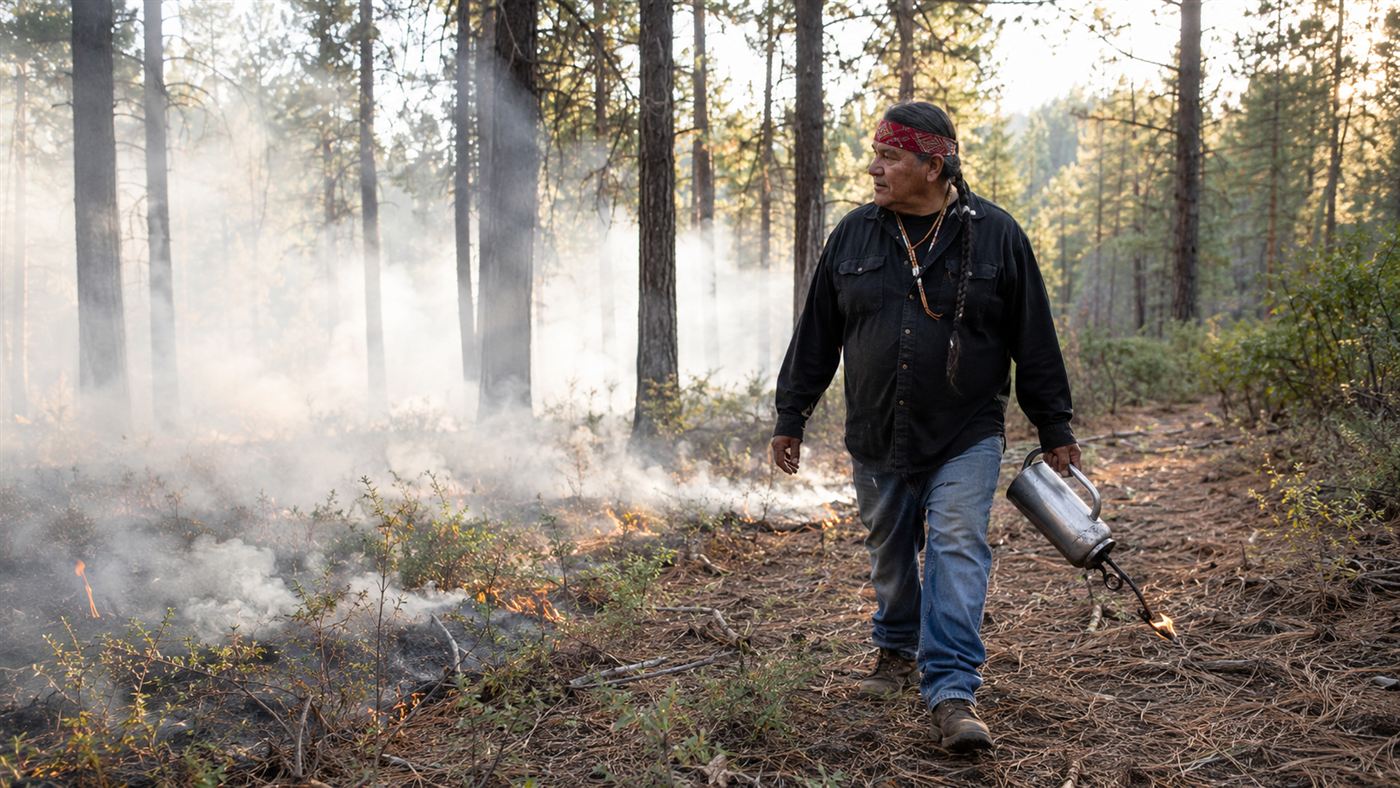
Some 52,000 people were forced to flee, and a whole community was scattered, its residents left as fire refugees with nothing to return to. Paradise did not just burn, it effectively ceased to exist as the town it had been. This kind of total, community-ending California wildfire has become a grim signature of the modern West, where old infrastructure and a drying climate keep colliding, as the practitioners of Indigenous cultural burning have long warned.
The utility that pleaded guilty to homicide
What followed was a reckoning with few parallels in American corporate history. Facing an estimated $30 billion in wildfire liabilities, PG&E filed for bankruptcy in January 2019. Then it did something almost no major company ever does: it admitted to killing people. On June 16, 2020, PG&E pleaded guilty to 84 counts of involuntary manslaughter, with its chief executive telling the court, in effect, that the company's equipment started that fire.
It was the first time a major American utility had been criminally charged with homicide. The company accepted the maximum fine allowed, a mere $3.5 million against the scale of the loss, and agreed to a roughly $13.5 billion settlement to compensate victims of the Camp Fire and other blazes tied to its equipment. Yet even that settlement paid victims partly in shares of the reorganized company, tying their recovery to the fortunes of the very utility that had burned them out.
The honest catch
It is tempting to pin the whole catastrophe on one rusted hook, and that would be too easy. The hook was only the last link in a long chain. The real cause was decades of deferred maintenance on a huge, aging grid strung across some of the most fire-prone land in the country, inspected too rarely and pushed too hard. The hook failed because a system had been quietly allowing thousands of such parts to age past their limits, betting that none of them would let go on the wrong day.
The other half of the truth is the climate the grid now runs through. Longer droughts and fiercer autumn winds have turned California's hills into tinder for more of the year, so the margin for a single spark has shrunk to almost nothing. PG&E's response, pre-emptively shutting off power to millions during dangerous winds, shows how brittle things have become. The Camp Fire was not a freak accident. It was a warning about old wires in a hotter world, and that warning has not gone away.
A single worn hook that no one had checked in decades set off a fire that killed 85 people and erased a town, and the aging grid that hid it still stretches across the fire-prone West. Should utilities be forced to spend whatever it takes to bury or rebuild old power lines, even if it sends your bill soaring? Tell us what you think in the comments.
Related reading: The giant California battery that caught fire and rained heavy metals on a wildlife estuary, or the Peshtigo fire of 1871, the deadliest and most forgotten wildfire in US history.
More from Watts & Wild
More in Energy →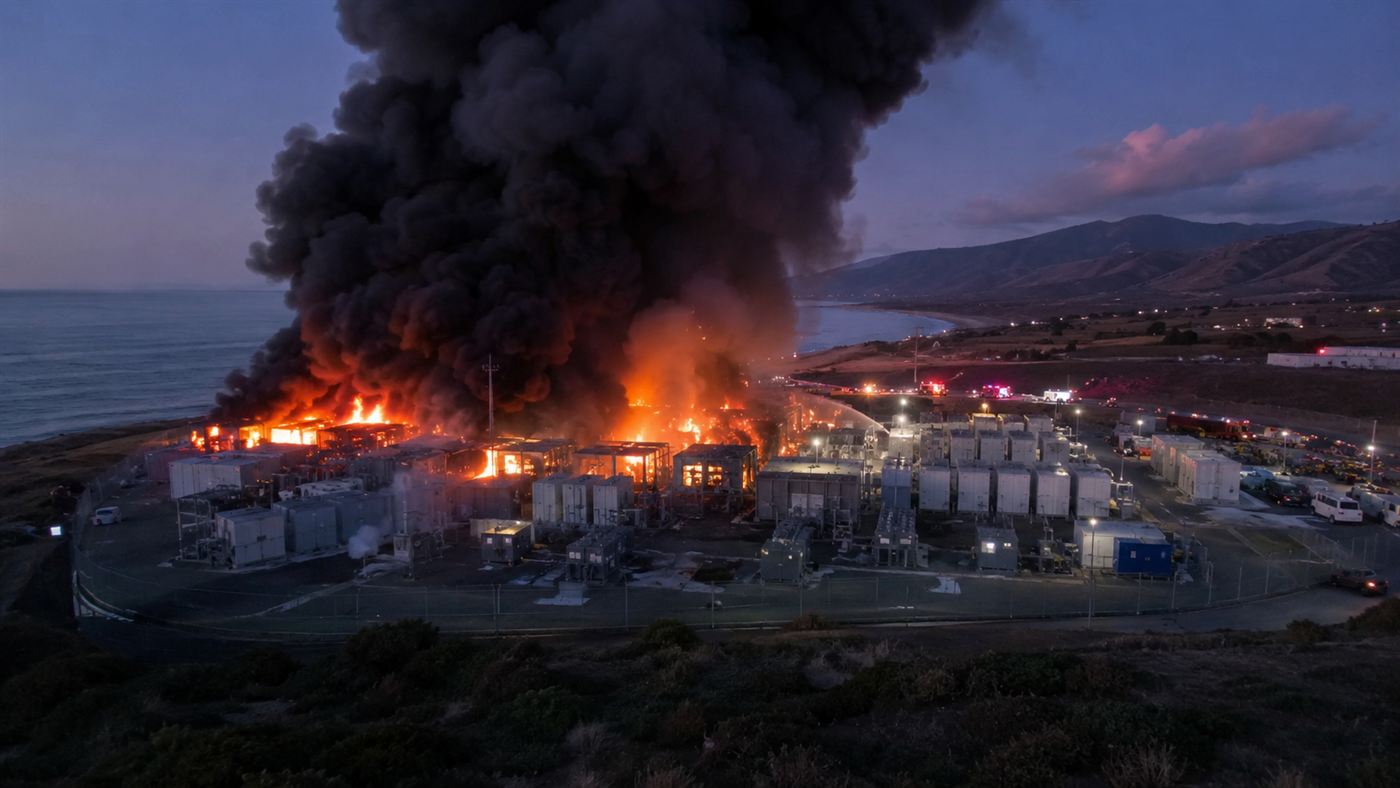

Bruno writes about energy history, industrial disasters, and the people who shaped the technologies we take for granted. He is based in Brazil.