The Boquila vine of Chile can reshape its own leaves to copy almost any plant it climbs, matching size, colour and even veins, and no one is sure how it does it
Camouflage is common in the animal world, where creatures hide by matching their surroundings. It is far rarer, and far stranger, in a plant. The Boquila vine is a leafy chameleon that disguises itself as its neighbours, and the way it manages the trick has botanists genuinely stumped.
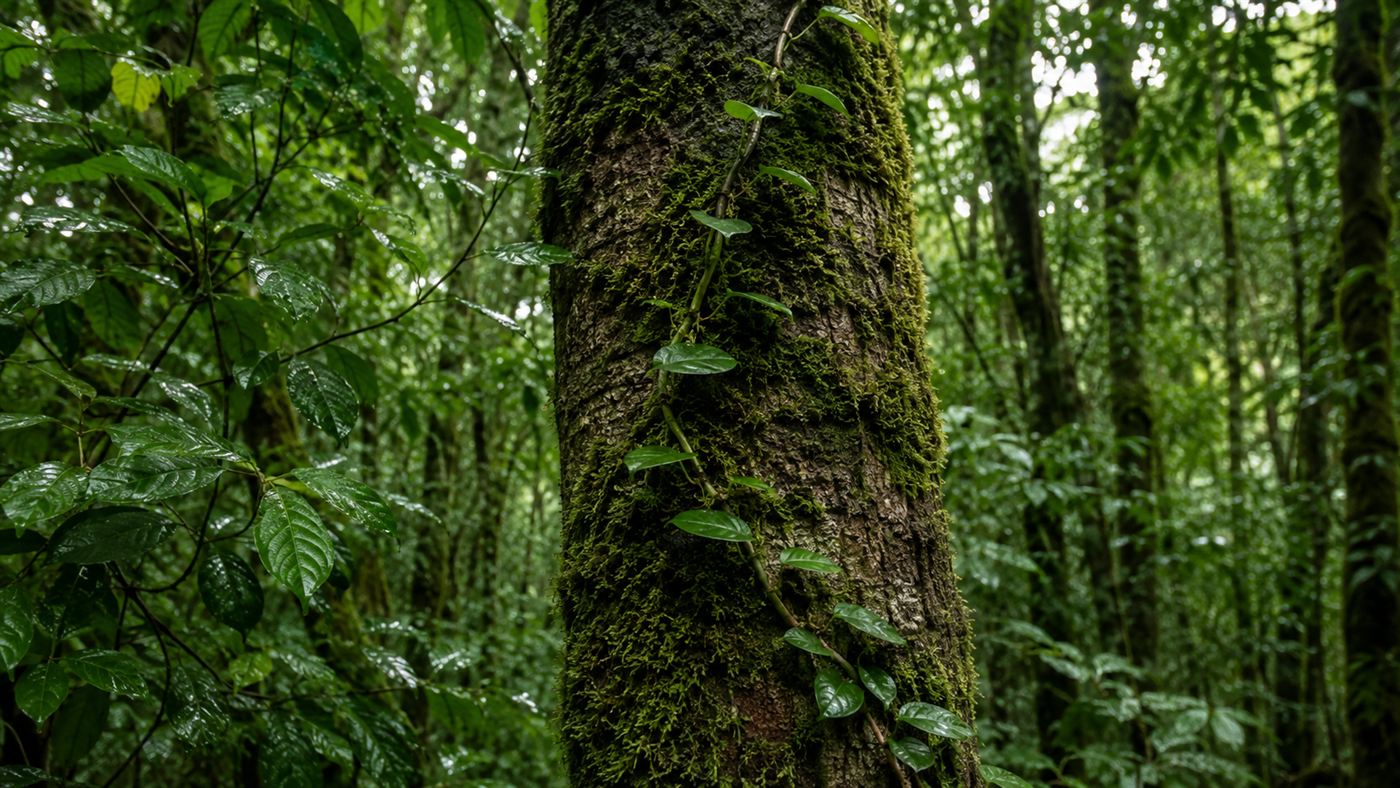
The Boquila vine blends its leaves into whatever plant it climbs. Illustration: Watts & Wild.
Hidden in the cool, wet forests of southern Chile grows a climbing plant with a very unusual talent. The Boquila vine, known to science as Boquila trifoliolata, does not have one fixed kind of leaf. Instead, it changes the shape, size and colour of its leaves to match whichever plant it happens to be growing on, disappearing into the foliage like a living disguise.
As National Geographic put it, Boquila may be the world's most mysterious plant, and the mystery is not just that it mimics, but how. A vine has no eyes, no brain and no nervous system, yet it somehow reads the plants around it and remakes itself to match. Decades into studying it, researchers still cannot fully agree on the answer.
The short version: Boquila trifoliolata is a Chilean climbing vine that reshapes its leaves to mimic the plants it grows among, copying up to nine leaf features and even imitating several different hosts on a single vine. The mimicry seems to hide it from plant-eaters, but no one is sure how it senses its neighbours, and a controversial study even claims it can copy plastic leaves.
A vine that wears disguises
The discovery is credited to plant ecologist Ernesto Gianoli, who noticed that a single Boquila vine climbing through the forest seemed to keep changing its leaves to match each new tree it touched. When he and a colleague studied it closely, they found the mimicry was astonishingly detailed. The vine could match up to nine different features of a host's leaves, including their size, area, the length of the stalk, the angle they sat at and their colour.
This is not a plant with a couple of standard leaf shapes. In the forests of Chile, Boquila effectively becomes a copy of its host, so convincingly that you can look straight at it and see only the tree it is impersonating. For a plant, that level of shape-shifting is close to unheard of, and it turned an obscure vine into one of the most talked-about organisms in botany.
Copying many plants at once
What makes it even more remarkable is that a single Boquila does not commit to one disguise. As one vine snakes from tree to tree, different branches can mimic different host plants at the same time, a trait scientists call mimetic polymorphism. One stretch of the vine wears the leaves of an oak-like tree, another the leaves of a shrub, all on the same individual.
And it does this quickly. The vine can shift its leaf form to match a new neighbour in a matter of weeks, not over the slow generations that most plant adaptation takes. That speed and flexibility is a huge clue and a huge problem at once, because it rules out the slow, inherited kinds of change that biologists usually reach for to explain how a plant comes to resemble another.

Why bother? Camouflage
The likely reason for all this effort is survival. Leaves are food, and in the forest plenty of insects and animals spend their days eating them. A vine that looks exactly like the tree it is climbing is harder for a hungry herbivore to pick out and target, so its disguised leaves get eaten less than they otherwise would.
In other words, the leaf mimicry is a defence, a plant hiding in plain sight from the things that want to eat it. It is the botanical version of a stick insect pretending to be a twig, except that Boquila does not have one fixed costume. It tailors its disguise to each new host, which is exactly what makes it so much more impressive, and so much harder to explain, than ordinary plant camouflage.
How the Boquila vine pulls it off
So how does a brainless vine know what its neighbour looks like? This is where the science gets genuinely unsettled. Gianoli and his colleagues offered two main ideas. One is that the host plant releases airborne chemicals, volatile signals that Boquila detects and somehow uses as a recipe for the right leaf. The other is horizontal gene transfer, the possibility that genes leak from the host to the vine, perhaps ferried by microbes in the air.
Both ideas have problems. Gene transfer between species usually happens slowly and rarely, which sits awkwardly with a vine that redecorates itself in weeks. And most strikingly, the Boquila vine appears to be able to mimic a plant without ever touching it, sensing a neighbour across a gap of open air. Whatever it is doing, it is reaching out and reading its surroundings in a way we do not have a clean explanation for.
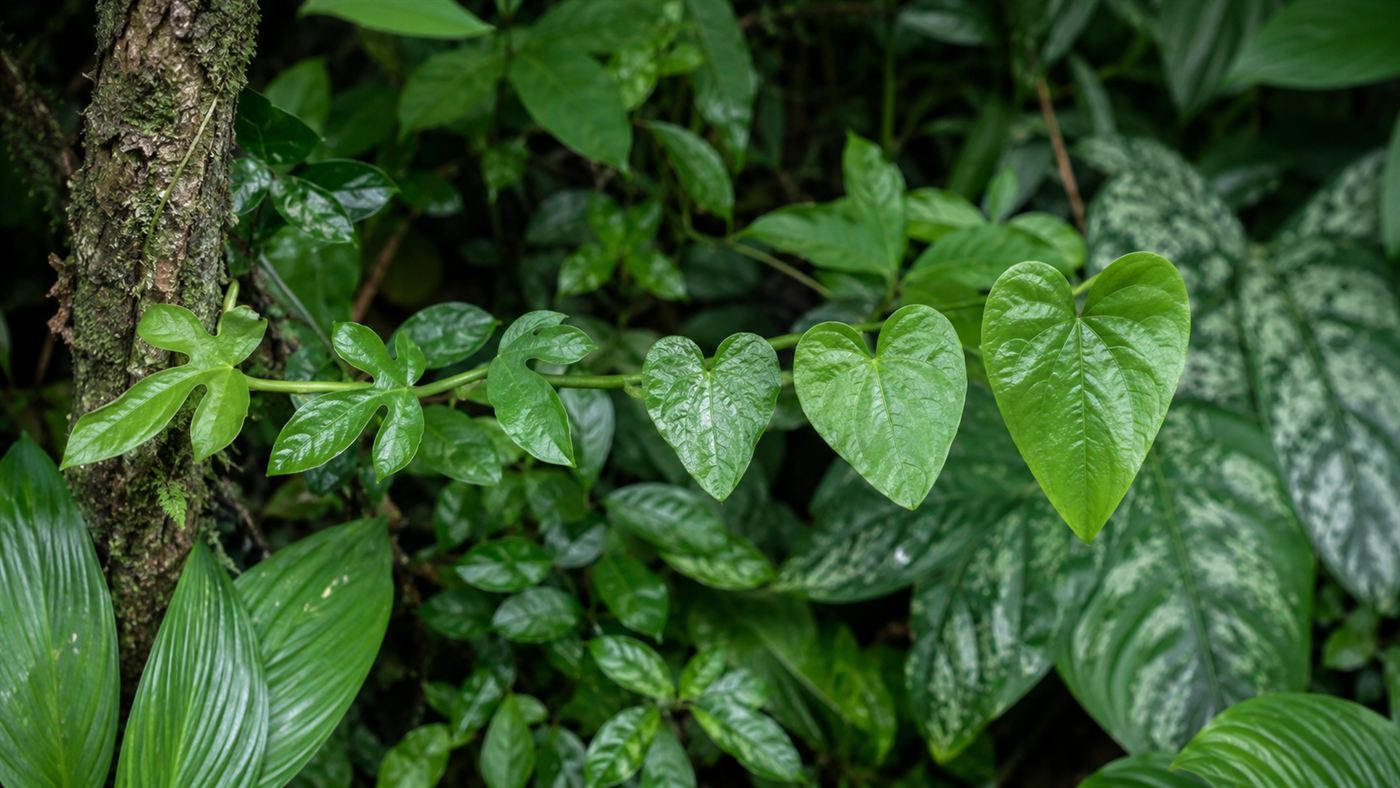
Can a plant see?
Then came the experiment that turned a botanical curiosity into a scientific fight. As The Scientist reported, a 2021 study claimed that Boquila mimicked the leaves of an artificial plastic plant. Plastic leaves give off no chemicals and carry no genes, so if the result holds, it seems to knock out both of the leading explanations at once.
The authors floated a startling possibility: that the plant has some primitive form of vision, perhaps through tiny eye-like structures, letting it actually perceive the shapes around it. To a small group of researchers, this hints that plants may sense the world far more richly than we assume. To mainstream botanists, the claim is a leap too far, built on an experiment that has not been convincingly repeated. The idea of a seeing plant is thrilling, and very far from proven.
The honest catch
This is a story where it is essential to separate the solid from the sensational. The solid part is real and well documented: Boquila genuinely reshapes its leaves to match living host plants, and it has done so reliably enough for scientists to measure since 2014. That much is not in doubt, and it is remarkable on its own.
The sensational part, that the plant can see, rests on a single contested experiment and a hypothesis most botanists find hard to swallow. Headlines announcing that plants have eyes are running well ahead of the evidence. The honest position is the most interesting one anyway: here is a common vine doing something genuinely astonishing, sensing and copying its neighbours, and we do not yet know how. Not knowing is not the same as magic. It is simply an invitation to keep looking, at a plant that keeps refusing to look like itself.
A vine copies its neighbours in detail, maybe even without touching them, and science cannot fully explain it. Is the Boquila vine hinting that plants sense the world in ways we have badly underestimated, or are we too eager to see a mind where there is only clever chemistry? Tell us what you think in the comments.
Related reading: The brainless slime mold that solves mazes, another organism doing the seemingly impossible without a mind, or the corpse flower that fakes a rotting carcass to get pollinated, or the mimic octopus that impersonates a dozen different animals.
More from Watts & Wild
More in Energy & the Wild →




Maria writes about wildlife, ecology, and the strange places where nature and human history collide. She is based in Brazil.