The corpse flower is one of the biggest and rarest blooms on Earth, and it survives by heating itself up and stinking like a rotting body to lure in the flies
Most flowers sell themselves with sweet scent and bright petals aimed at bees. The corpse flower does the opposite. It grows into a towering spike taller than a person, then throws open for a day or two and unleashes the smell of a dead animal, on purpose.
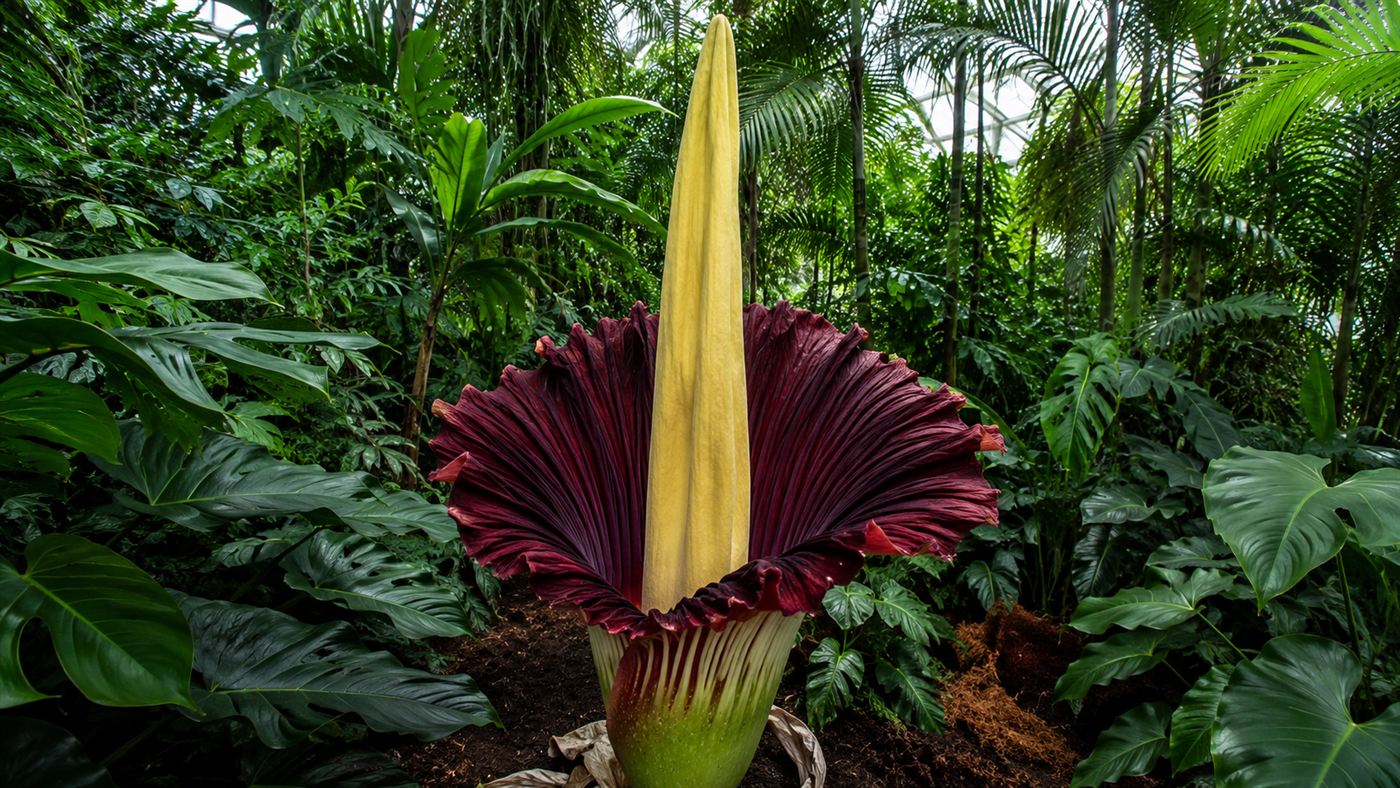
The corpse flower, or titan arum, is the largest unbranched bloom in the plant kingdom. Illustration: Watts & Wild.
The corpse flower is a plant built entirely around a single, spectacular, revolting event. For years it does nothing dramatic at all, just a leaf and a slowly fattening underground store of energy. Then, without much warning, it produces one of the largest and strangest blooms in the world and fills the air around it with the unmistakable stench of rotting meat. Then, a day or two later, it collapses.
As the Royal Botanic Gardens, Kew describes it, the titan arum produces the largest unbranched flowering structure in the plant kingdom, and its foul smell is not a flaw but the whole strategy. Everything about this plant, its size, its heat, its horrible odour, is engineered to attract exactly the kind of visitor that most flowers work hard to avoid.
The short version: The corpse flower, or titan arum, is a giant plant from the rainforests of Sumatra. It grows the largest unbranched bloom of any plant, opens only rarely and briefly, and while blooming it warms its central spike and reeks of decaying flesh to trick carrion beetles and flies into pollinating it. It is now endangered in the wild.
A bloom the size of a person
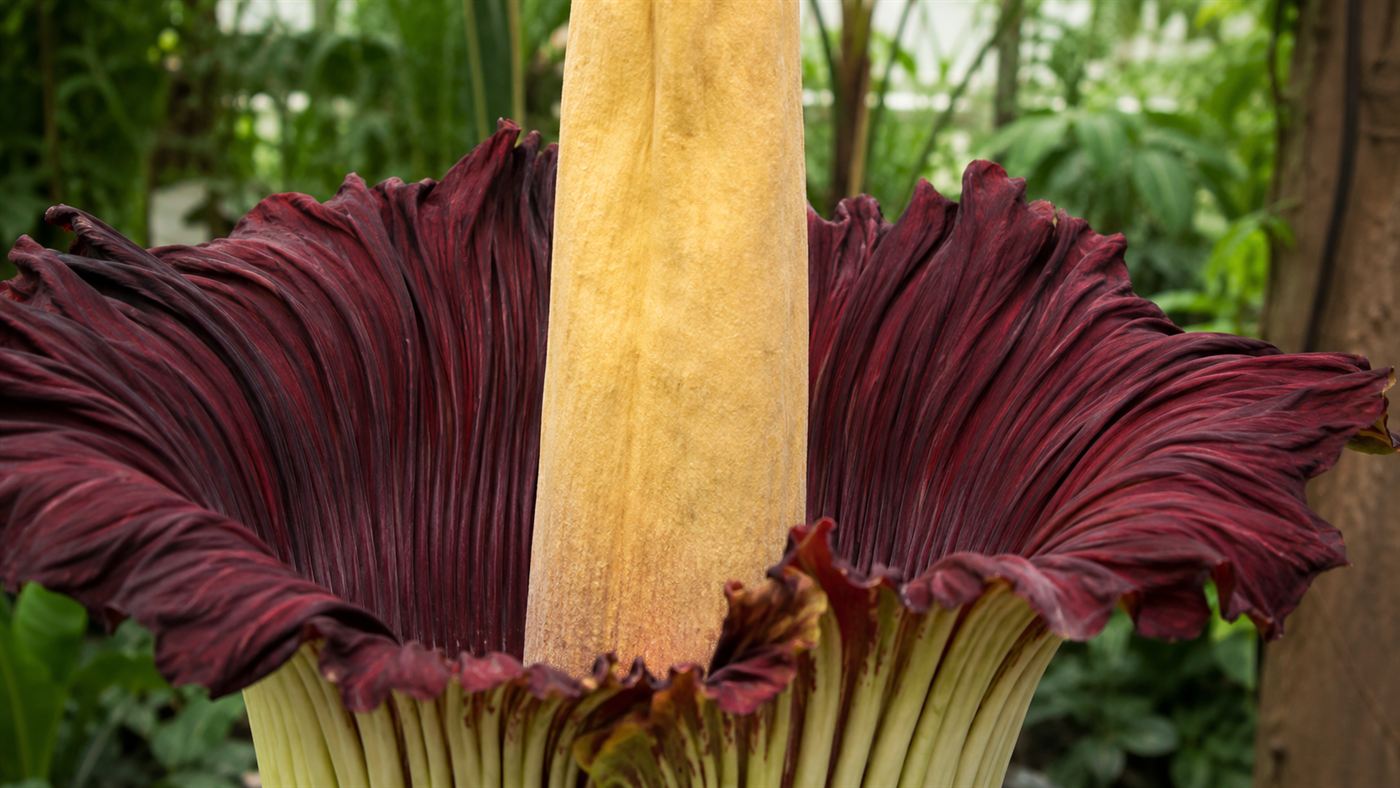
The plant, properly called the titan arum, comes from the rainforests of Sumatra in Indonesia, and everything about it is oversized. The bloom is built from a tall central spike, the spadix, which can rise to around three metres, roughly ten feet, wrapped at the base by a single huge frilled leaf-like structure, the spathe, coloured a deep meaty crimson on the inside.
Strictly speaking it is not one flower but many. Hundreds of tiny true flowers cluster at the base of that giant spike, hidden inside the spathe. All of it grows from an enormous underground storage organ, a corm that can weigh as much as a person, which the plant spends years quietly filling with energy before it can afford to put on its show.
Built to smell like a corpse
When the bloom finally opens, the smell is the point. To a human nose it is genuinely awful, a thick reek of rotting flesh, sewage and decay, strong enough to fill a greenhouse and turn stomachs. Its Indonesian name, bunga bangkai, simply means corpse flower, and anyone who has stood near a blooming one agrees the name is earned.
Paired with the smell is the look. The deep red interior of the spathe resembles raw meat, and the whole structure is essentially a giant advertisement for a fresh carcass. The plant is not trying to be beautiful. It is trying, with great success, to convince the forest that a large animal has just died on this exact spot.
The plant that heats itself up
The most extraordinary trick is invisible. To broadcast its stench through the still, humid air of the rainforest, the corpse flower does something plants are not supposed to do: it generates its own heat. Through a process called thermogenesis, the spadix warms itself during the bloom to close to human body temperature, around 37 degrees Celsius.
That warmth matters because heat makes the smelly chemicals evaporate faster and rise higher, carrying the odour much further across the forest than a cold flower ever could. Scientists have described the blooming titan arum as a torch in the rainforest, a heated beacon of stink. It is not only pretending to be a warm, fresh corpse, it is actually warming itself to make the illusion, and the advertisement, more convincing.
Who answers the corpse flower's call
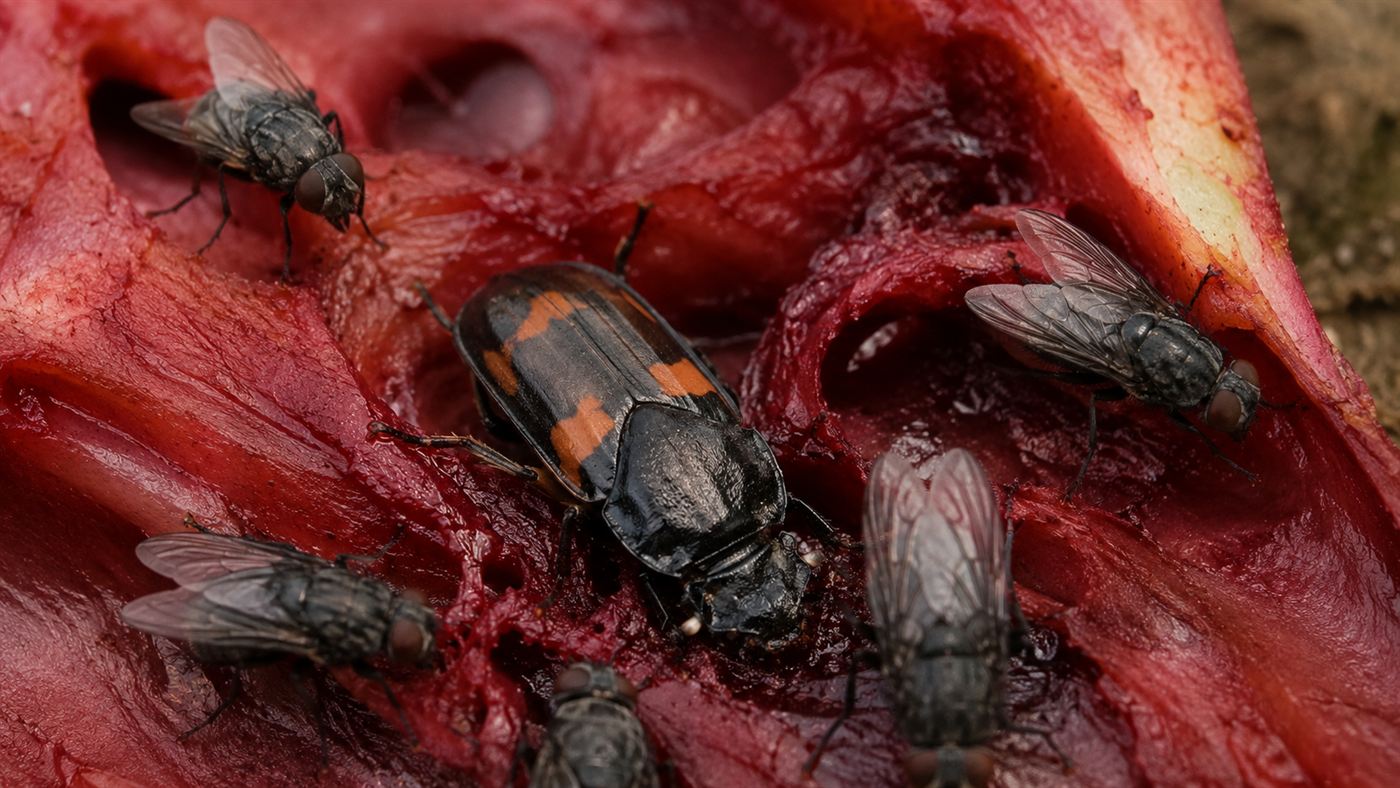
The audience for all this effort is very specific. As Britannica explains, the titan arum's smell attracts insects that normally feed on dead animals, chiefly carrion beetles and flies, which act as its pollinators. They arrive expecting a meal or a place to lay their eggs, drawn by a corpse that is not there.
Inside the bloom, the plant plays a careful game of timing. The female flowers become receptive first, on the opening night, and the male flowers release their pollen only later, on the second night. This gap makes it hard for the corpse flower to fertilise itself, and pushes the insects to carry pollen from one plant to another. The visitors get fooled out of a meal, but in exchange they unknowingly do the vital work of pollination, which is the entire reason for the show.
The rarest show in botany
What turns the corpse flower from a biological curiosity into a public sensation is how seldom it performs. A titan arum may need seven to ten years of growth before it blooms for the first time, and after that it flowers only once every few years, with no reliable schedule. When it does open, the whole spectacle lasts barely a day or two before the great spike wilts and falls.
Because a blooming corpse flower is so rare and so short-lived, the ones grown in botanic gardens become events. Gardens announce an imminent bloom like a celebrity appearance, set up livestreams, and watch thousands of people queue for hours, often late into the night, for the chance to stand in front of a giant flower and recoil at its smell. It is one of the few times a crowd will happily line up to be disgusted.
The honest catch
A couple of clarifications keep the wonder accurate. The corpse flower is frequently called the world's largest flower, and that is not quite right. It is the largest unbranched inflorescence, a cluster of many flowers on one spike, while the title of largest single flower belongs to another stinking plant, the rafflesia. It is a giant, but of a slightly different kind than the headlines suggest.
The more serious point is what the crowds often miss. The plant they are lining up to smell is in trouble. The titan arum is now classed as endangered, with likely fewer than a thousand left in the wild, as its Sumatran rainforest is cleared, much of it for oil palm plantations. Even the specimens in gardens face problems of inbreeding from a small, poorly tracked gene pool. So there is a strange sadness under the spectacle. We gather in our thousands to gawk and hold our noses at a magnificent, absurd, corpse-scented giant, at the very moment it is quietly slipping toward extinction in the forests that made it.
A giant flower fakes its own death, heat and stench included, to get pollinated, and we queue for hours to smell it. Is the corpse flower nature at its most gloriously strange, or a reminder that we treasure the spectacle of a species while quietly letting its home disappear? Tell us what you think in the comments.
Related reading: The Boquila vine, another plant that survives through an elaborate disguise.
More from Watts & Wild
More in Energy & the Wild →



Maria writes about wildlife, ecology, and the strange places where nature and human history collide. She is based in Brazil.