Tens of millions of bison were shot down to barely a thousand in a single human lifetime, and the animal survives today only because a few unlikely people changed their minds
In the early 1800s the American bison was perhaps the most numerous large animal on Earth, in herds so vast they took days to pass. Within a single lifetime they were all but gone, hunted from tens of millions down to a few hundred. The story of how the species clawed its way back from the edge of extinction is as troubling as it is hopeful.
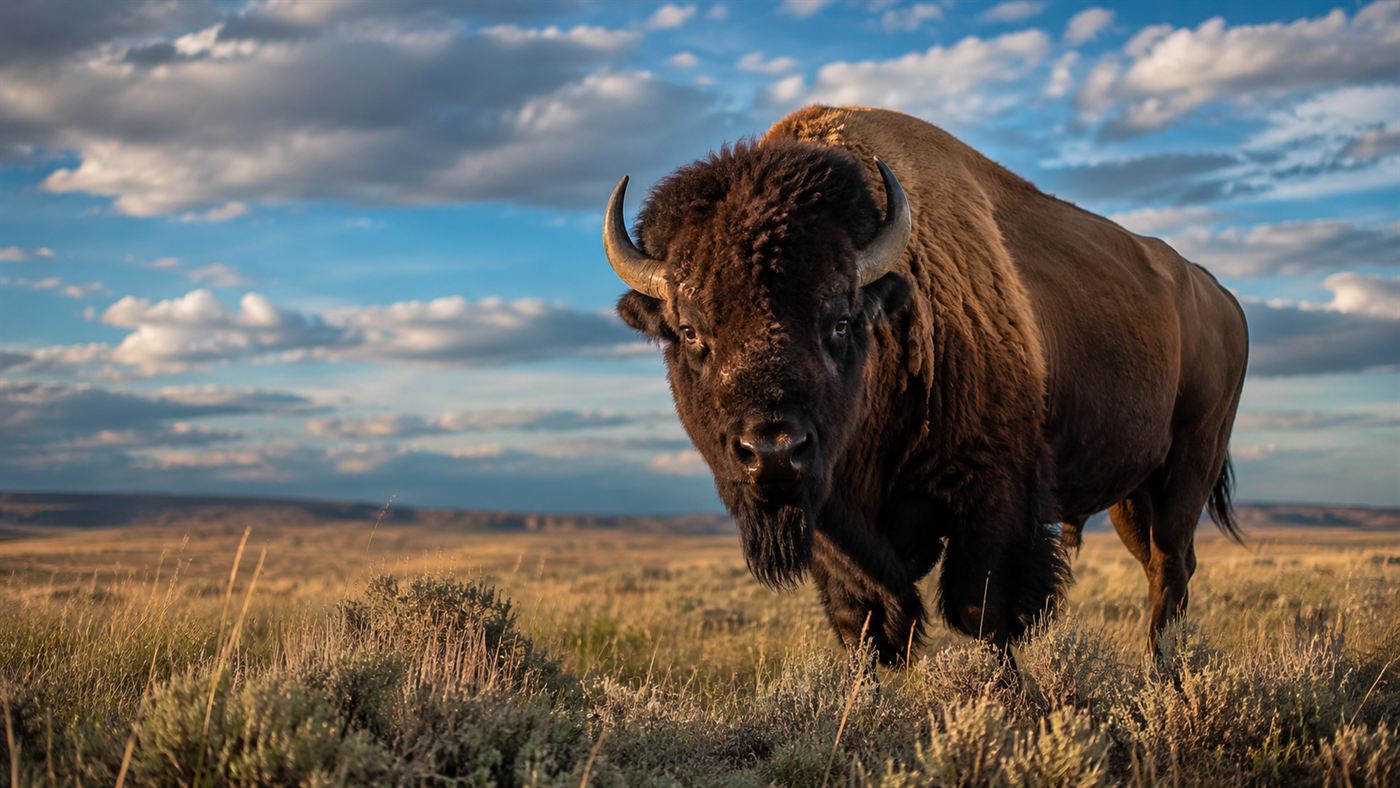
Once tens of millions strong, the bison was reduced to a few hundred in a single century. Illustration: Watts & Wild.
It is hard to grasp just how many bison once lived on the North American plains. As Wikipedia records, estimates run from 30 to 60 million animals, in herds that stretched to the horizon and shook the ground as they moved. They were the keystone of the Great Plains ecosystem and the foundation of life for many Native American nations, who used nearly every part of the animal for food, shelter, tools and clothing.
Then, in the span of a few decades after the American Civil War, they were almost wiped from the continent. The collapse was so fast and so total that people living at the time could scarcely believe an animal so abundant could simply vanish, and yet by the late 1880s the great herd was effectively gone.
How the American bison was nearly wiped out
The slaughter had several drivers, and none of them reflect well on the era. The spread of the railroads opened the plains to commercial hunters who shot bison by the million for their hides and tongues, leaving the carcasses to rot. New tanning methods made bison leather valuable for industrial belts, turning the animal into a raw material to be strip-mined.
Most disturbing of all, the destruction was, in part, deliberate policy. With the bison gone, the Native nations of the Great Plains who depended on it could be starved into submission and onto reservations, and some military leaders openly encouraged the killing for exactly that reason. The near-extinction of the American bison was not only an ecological catastrophe but a weapon in a campaign against people.
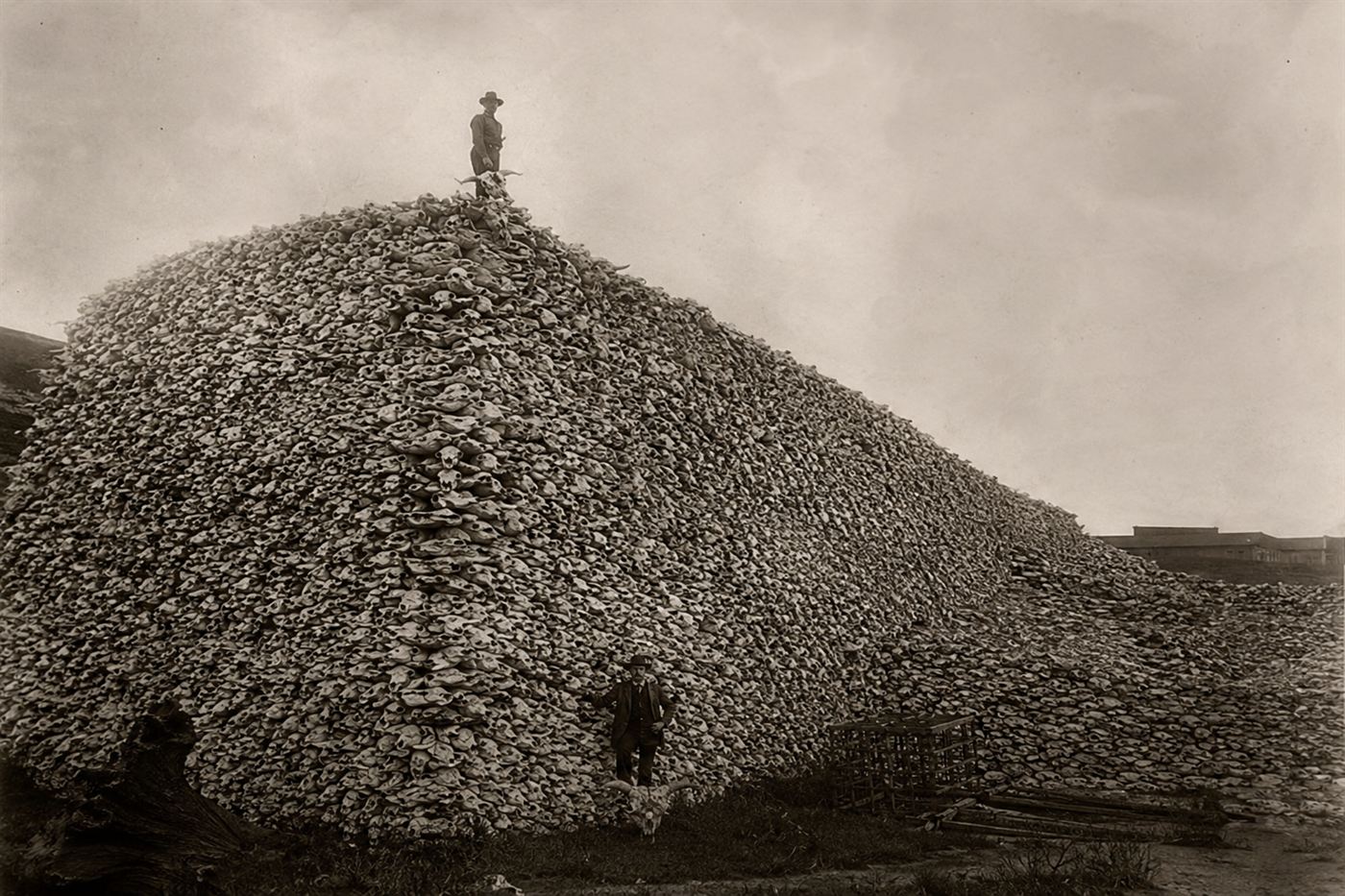
Down to the last few hundred
By the time anyone official counted, it was nearly too late. As the Smithsonian records, in 1889 the naturalist William Hornaday, who had himself hunted some of the last wild bison, tallied only around a thousand animals left in North America, scattered in tiny pockets. A species that had numbered in the tens of millions could now, almost literally, be counted one by one.
A crucial handful survived in private hands. A few far-sighted ranchers, including men like Charles Goodnight and Michel Pablo, had gathered small captive herds, sometimes out of sentiment, sometimes as a curiosity or a business bet. And deep in the new Yellowstone National Park, a wild remnant of perhaps two dozen bison clung on, the last truly wild herd in the country, protected by the park's status even as poachers picked at it.
Bringing the bison back
The turnaround came from people who had watched the loss with horror, Hornaday chief among them. Having helped kill some of the last bison, he became one of their fiercest defenders, and in 1905 he and others, with the backing of President Theodore Roosevelt, founded the American Bison Society to save the animal. Their plan was practical: breed bison in captivity and ship them to protected reserves.
As the US Fish and Wildlife Service recounts, in 1907 the Bronx Zoo sent fifteen bison by rail to a new refuge in the Wichita Mountains of Oklahoma, one of the first deliberate wildlife reintroductions in history. More reserves followed, stocked from the surviving private herds and the Yellowstone animals. Slowly, from those scattered survivors, the American bison began to climb back from the very bottom.
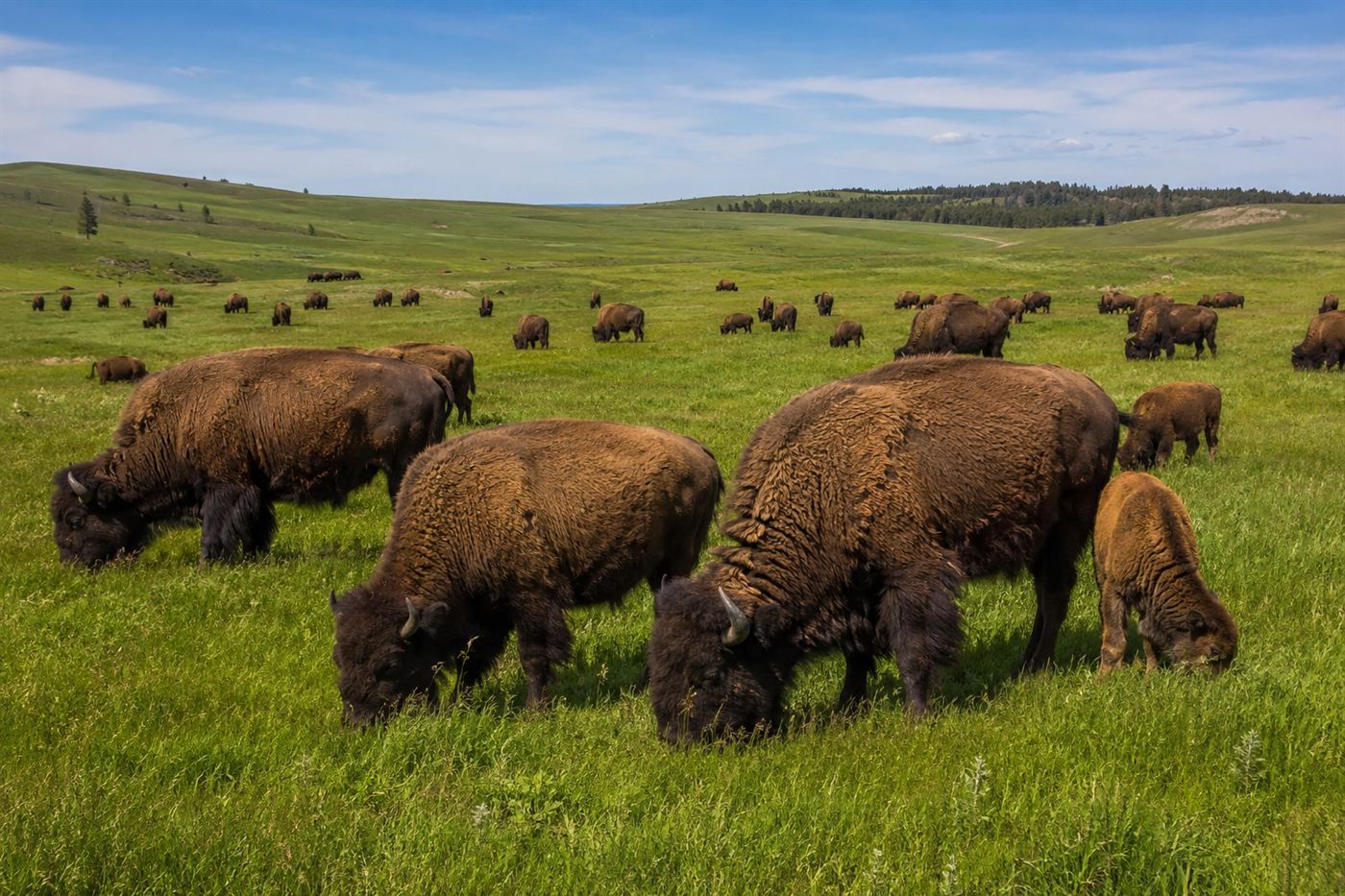
The honest catch
The comeback is real, but it deserves an asterisk or two. There are now hundreds of thousands of bison in North America, yet the great majority are raised on ranches as livestock for meat, and many carry some cattle genes from past crossbreeding. The number of genuinely wild, genetically pure bison roaming free, mostly in and around Yellowstone and a few other reserves, is far smaller, in the low tens of thousands at most.
Nor does the rebound undo the deeper wound. The bison was destroyed hand in hand with the deliberate dispossession of the Plains nations, and a recovered herd on a fenced reserve does not restore the world that was lost, for the animal or for the people. The bison is back from the brink of extinction, but it is not back to what it was, and pretending otherwise would be too easy.
Why a saved buffalo still matters
Even so, the survival of the American bison is one of the foundational stories of modern conservation, and a hinge moment in how people came to think about saving species at all. It proved that an animal could be hauled back from a few hundred individuals, and it helped invent the very tools, captive breeding, protected reserves, reintroduction, that later saved many others.
Today bison are slowly being returned to tribal lands and restored grasslands, where they once again shape the prairie that evolved around them, and Native-led herds are giving the story a more hopeful next chapter. The animal that nearly became a symbol of how fast we can erase a species has instead become a symbol of the fact that, sometimes, we can change our minds in time.
An animal once numbering in the tens of millions was cut to a few hundred, then dragged back by the very kind of people who had nearly destroyed it. Does the bison's comeback feel like redemption, or a reminder of how fast we can erase what seems endless? Tell us in the comments.
Related reading: The prairie predator declared extinct, then found again by a ranch dog. See also the American alligator, skinned nearly to nothing and now five million strong, and the Dust Bowl that turned the same Great Plains sky black after the grass was torn away.