The Antarctic icefish is the only animal with a backbone that has no red blood at all, its veins run clear, and by every rule of biology it should not be alive
Cut almost any fish and it bleeds red, because red is the colour of the molecule that keeps animals alive by ferrying oxygen. Cut an Antarctic icefish and it bleeds something close to water. It has thrown away that molecule entirely, and it is still swimming.
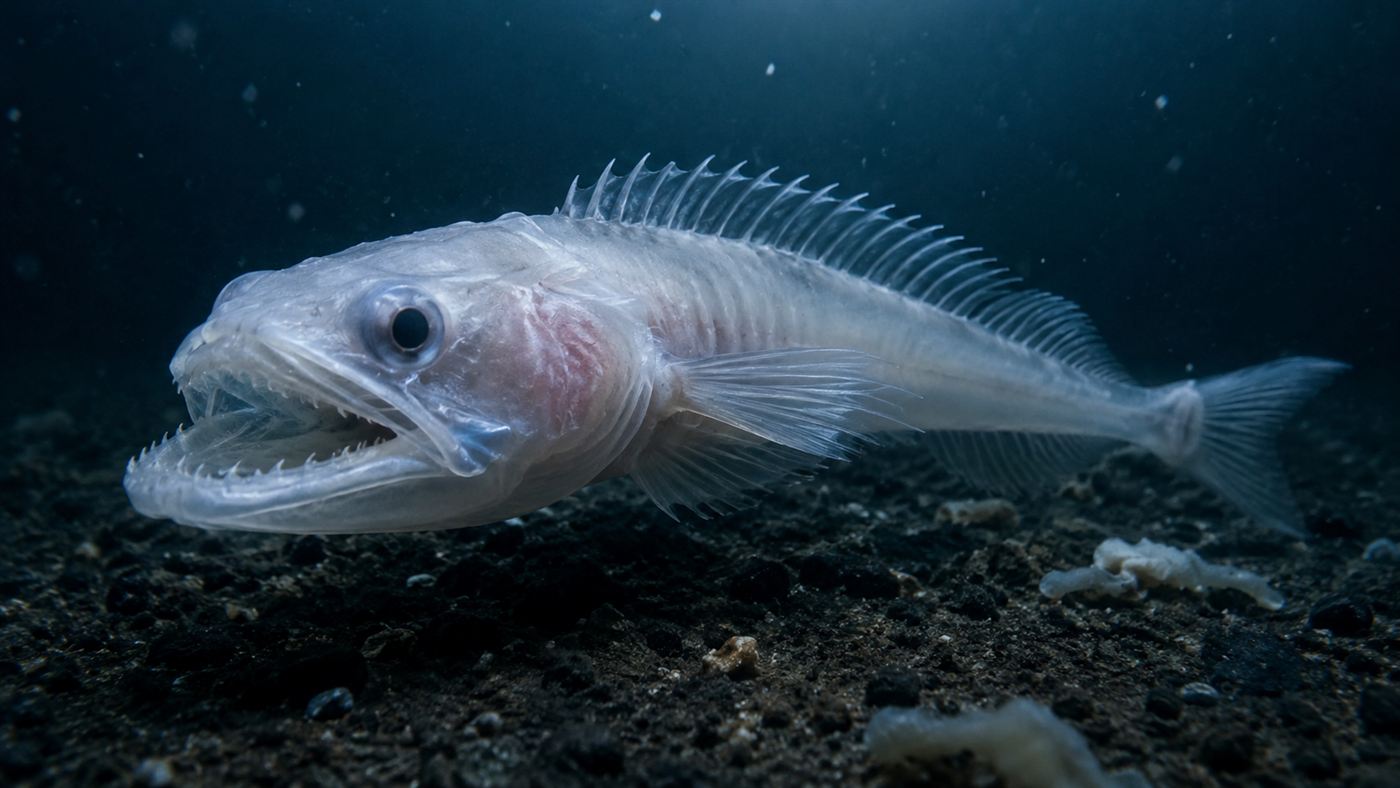
The Antarctic icefish is the only vertebrate with colorless blood. Illustration: Watts & Wild.
In the freezing seas around Antarctica lives a family of fish that break one of the most basic rules of animal life. The Antarctic icefish, a group of about sixteen species also called crocodile icefish, are the only known animals with backbones that carry no hemoglobin, the iron-rich red protein that transports oxygen in the blood of nearly every other vertebrate on the planet, including you. Their blood is pale and translucent, and their gills are ghostly white.
As Quanta Magazine has explained, the icefish is the only vertebrate known to lack the oxygen-carrying molecule that gives blood its colour. Losing hemoglobin should be a death sentence, because without it an animal cannot move enough oxygen around its body to live. And yet here they are, a whole family of them, thriving in the coldest ocean on Earth. How they get away with it is one of biology's strangest stories.
The short version: Antarctic icefish are the only vertebrates without hemoglobin, so their blood runs clear. They survive because the frigid Southern Ocean holds huge amounts of dissolved oxygen, which seeps straight into their blood, and because they compensate with a giant heart, extra blood, scaleless skin and antifreeze proteins. It is less a clever adaptation than a lucky escape from a normally fatal loss.
A fish with see-through blood
The discovery was almost an accident. In the late 1920s, a Norwegian biologist working in Antarctic waters caught a strange, pale fish, nicknamed the white crocodile fish, whose blood ran colorless instead of red. It took decades before researchers confirmed the astonishing reason: the fish genuinely had no hemoglobin, and essentially no red blood cells either.
This makes the icefish unique among all backboned animals. Every other vertebrate, from a hummingbird to a whale, packs its blood with hemoglobin to grab oxygen at the gills or lungs and carry it to the tissues. The icefish simply does not have it. The genes that should build the red protein have been broken and lost, leaving these fish with the white blood that gives them their name.
How do you breathe without red blood?
The obvious question is how such an animal breathes at all. The answer is that the icefish relies on the raw, brute-force method that hemoglobin was invented to improve upon: it lets oxygen dissolve directly into the watery plasma of its blood, the way gas dissolves into a fizzy drink, and carries it around in that thin solution.
That is a terribly inefficient way to move oxygen. An icefish's blood can carry less than a tenth of the oxygen that the blood of its red-blooded relatives can. It works only because of where the fish lives. The near-freezing water of the Southern Ocean is exceptionally rich in dissolved oxygen, since cold water holds far more gas than warm water, and the fish is sluggish and slow, with modest oxygen needs. It takes in what it can through enormous gills and even absorbs some straight through its smooth, scaleless skin. Missing the molecule that makes breathing easy, it drinks its oxygen from the coldest, most oxygen-soaked sea on the planet.
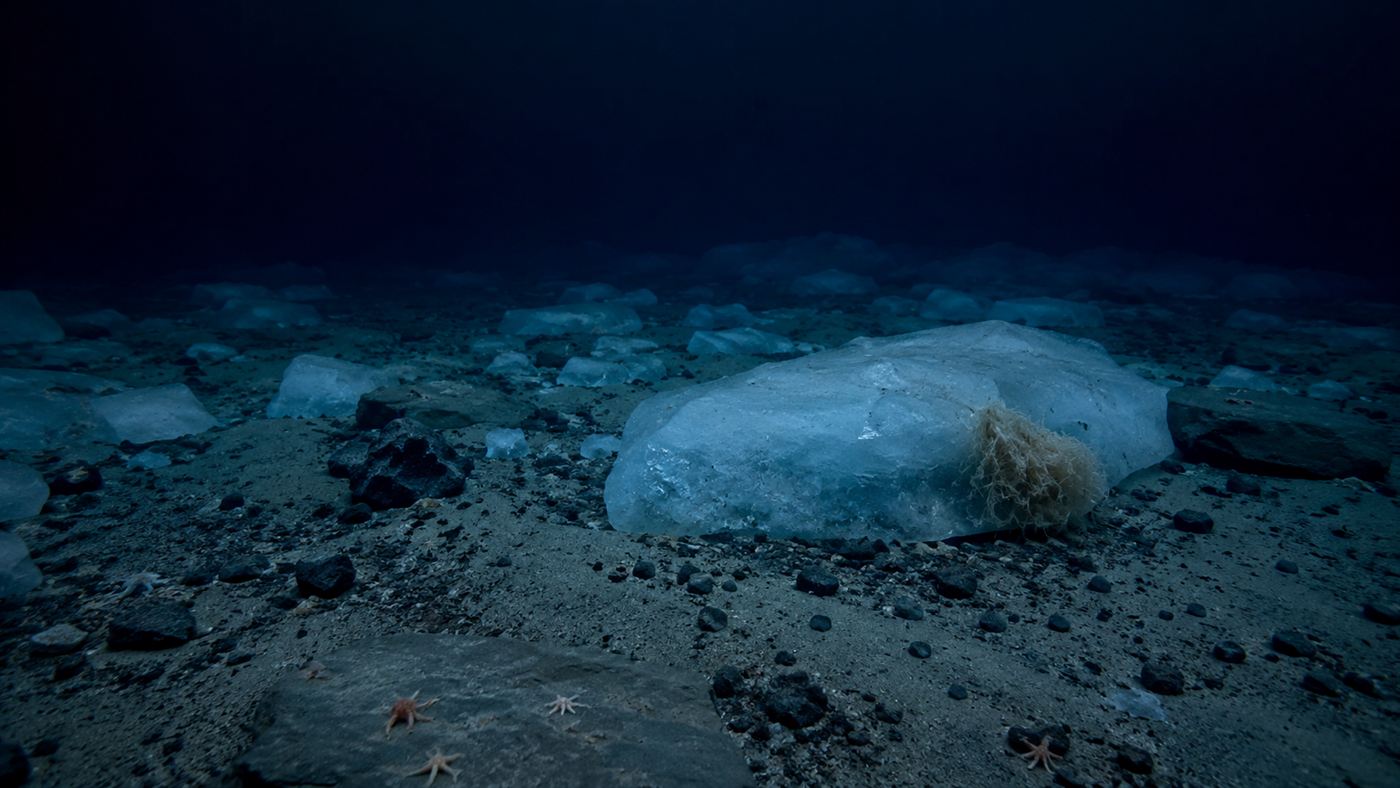
A giant heart and antifreeze veins
Living on such thin oxygen forces the icefish to rebuild its whole plumbing. To push enough of its weak blood around, it has evolved an unusually large, powerful heart and a much greater blood volume than a normal fish of its size, pumped through wide, open vessels. Some icefish have even lost myoglobin, the related oxygen-storing protein, from their heart muscle, making their hearts pale too.
On top of that, they face a second lethal problem: the water is cold enough to freeze them solid. The icefish and their relatives solve this with special antifreeze proteins in their blood and body fluids, molecules that latch onto tiny ice crystals and stop them from growing. Without those, no fish could survive in water this cold. So the icefish is really a stack of extreme solutions, a supercharged heart, watery oxygen-soaked blood, and built-in antifreeze, all keeping alive a body that has given up the very tool most animals depend on.
Why the Antarctic icefish exists at all
So why did evolution ever produce such a creature? The likeliest story is not that losing hemoglobin was a brilliant idea, but that the icefish's ancestors could afford to lose it. As the record of the family Channichthyidae describes, the loss of hemoglobin followed relaxed selective pressure in the cold, stable, highly oxygenated Antarctic waters, where the fish had few competitors or predators.
In warmer, more crowded, more demanding seas, a fish born without hemoglobin would simply have died and left no descendants. But in this strange, frozen refuge, an animal could stumble into that loss and still, just barely, survive. The Antarctic icefish is not a triumphant super-adaptation so much as a mistake that a very unusual environment allowed to slip through, and then to spread.
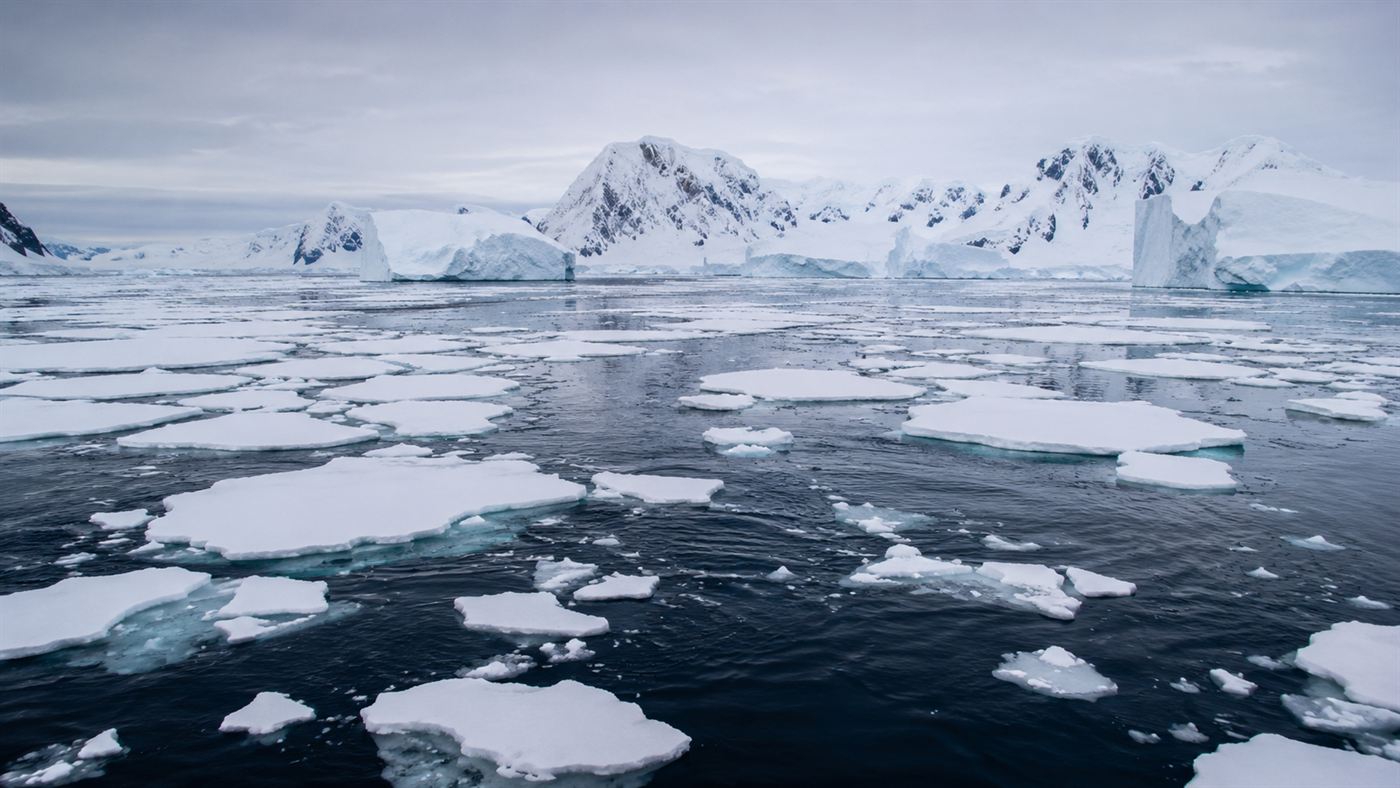
A mistake that should not work
This is what makes the icefish so quietly profound. We tend to imagine evolution as a relentless engineer, keeping only what helps and discarding what does not. The icefish is a reminder that evolution is not really a designer at all. It is a filter that removes what is fatal, and it will happily let a costly, awkward, backwards-looking loss survive, as long as it does not quite kill the animal that carries it.
The icefish did not upgrade. It downgraded, dropping a molecule that took hundreds of millions of years to evolve, and then patched over the damage with oversized hearts and dilute blood just well enough to keep going. It is a living demonstration that survival is a much lower bar than perfection, and that the natural world is full of solutions that only look clever because they happened not to be lethal.
The honest catch
It is tempting to frame the clear blood as a marvellous adaptation to the cold, and some older accounts do, but the honest picture is more sobering. Most biologists now see the loss of hemoglobin as a disadvantage the icefish has to work hard to survive, not a benefit, which is exactly why it needs that enlarged heart and sluggish way of life. The fish lives despite its clear blood, not because of it.
That has a worrying consequence. Everything about the icefish is tuned to one narrow set of conditions: intensely cold water saturated with oxygen. Warm that water even slightly, as climate change is now doing to the Southern Ocean, and it holds less oxygen just as the fish's sped-up metabolism demands more. With no hemoglobin to fall back on, the icefish has almost no reserve, which may make it one of the animals most exquisitely vulnerable to a warming world. The strange trick that let it exist could also be what finishes it, if the one sea cold enough to allow clear blood stops being cold enough.
A fish that gave up red blood survives only in the one sea cold enough to let it. Is the Antarctic icefish proof that evolution keeps beautiful mistakes as readily as clever designs, or a warning about how fragile such a specialised creature really is? Tell us what you think in the comments.
Related reading: The wood frog, which survives winter by freezing almost solid and thawing back to life. And meet the drowned landmass beneath these waters, Zealandia, Earth's hidden eighth continent. As the south warms, Antarctic penguins are breeding weeks earlier than a decade ago.
More from Watts & Wild
More in Energy & the Wild →



Maria writes about wildlife, ecology, and the strange places where nature and human history collide. She is based in Brazil.