On a spring afternoon in 1935 a mountain of dust two miles tall rolled across the Great Plains, turned day to pitch black, and made people believe the world was ending
It came out of a clear blue sky. One moment families were enjoying a mild Sunday after weeks of misery, and the next a churning black wall was bearing down on them, taller than any building and darker than night. When it hit, people could not see their own hands, and many were sure this was the end of the world.
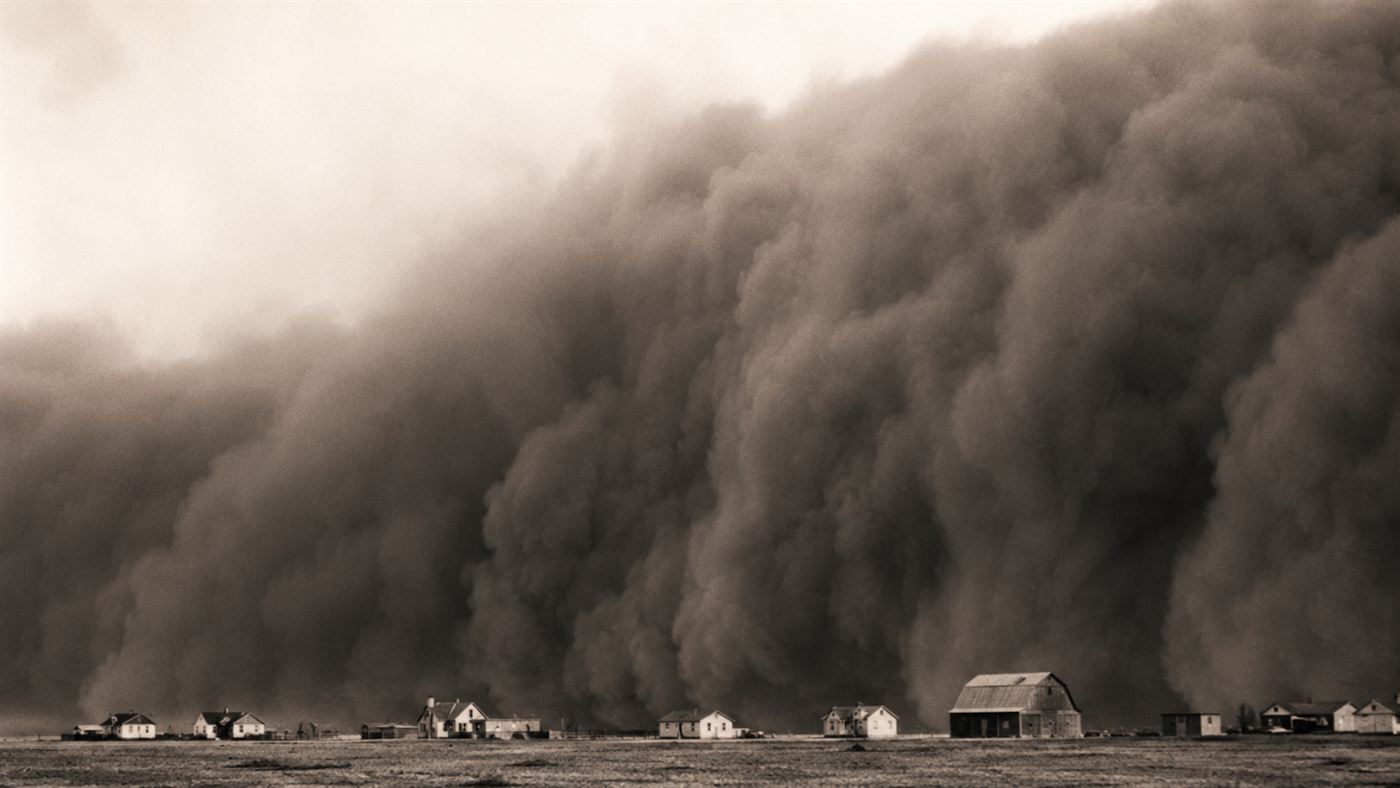
A rolling mountain of soil that swallowed whole towns in minutes. Illustration: Watts & Wild.
The date was April 14, 1935, and it became known forever as Black Sunday. It was the single worst storm in a decade of catastrophe on the American plains, the era we now call the Dust Bowl, when the soil itself rose up into the sky and blew away.
What makes the story so haunting is that this was not simply bad weather. The Dust Bowl was, to a large degree, a wound that people had inflicted on the land themselves, without ever meaning to. It is one of the clearest lessons in history about what happens when we push a landscape past what it can bear.
The short version: farmers tore up the tough native grass of the Great Plains to plant wheat, a long drought arrived, and the bare soil simply blew away in monstrous storms. Black Sunday was the worst of them, and the Dust Bowl it belonged to changed American farming forever.
The grass that held the plains together
For thousands of years the southern plains were covered in tough native grasses with deep, tangled roots. That root system was a living net, holding the soil in place through blazing summers, harsh winters and long dry spells. The grass was the only thing standing between the wind and the dirt.
Then came the plows. Through the 1910s and 1920s, encouraged by high wheat prices and wet years, settlers tore up tens of millions of acres of that grassland to plant crops. As long as the rains kept coming, the wheat grew and the gamble paid off. Nobody thought much about what was holding the plains together underneath.
When the rain stopped and the soil took flight
At the start of the 1930s the rains failed, and a brutal drought settled over the region. The wheat withered and died, leaving millions of acres of bare, powdery soil exposed to the constant prairie wind. With no grass and no roots left to anchor it, the topsoil had nothing to hold it down.
So the wind took it. Loose topsoil lifted into the air in vast clouds, and the Dust Bowl storms began, rolling black blizzards that buried fences, drifted against houses like snow, and turned afternoons dark. Year after year through the 1930s the storms came, stripping the land and choking everything that lived on it.
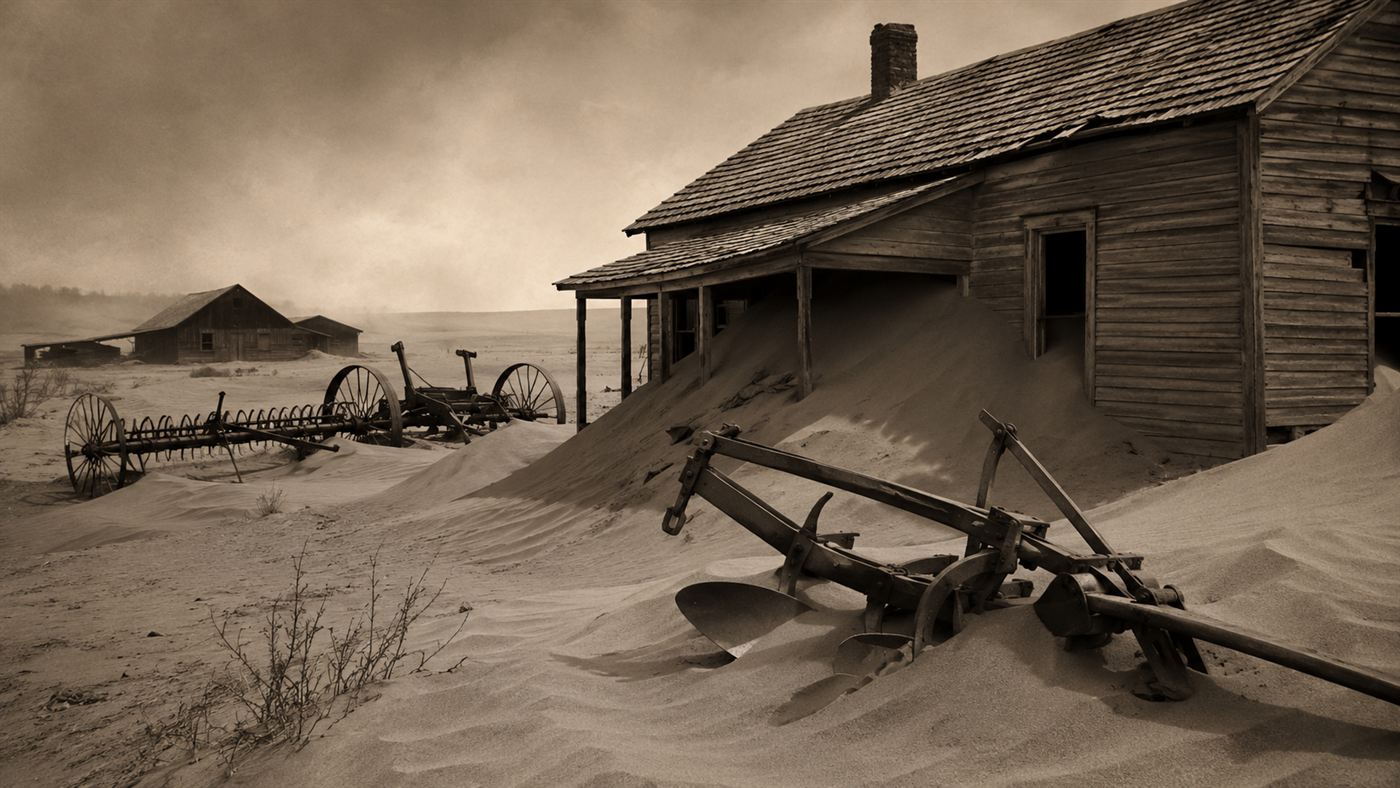
How bad was Black Sunday?
April 14, 1935 started out beautiful. After weeks of storms, the skies cleared and people across the plains went outside to enjoy the calm. Then, in the afternoon, they saw it on the horizon: a boiling black cloud, in places reaching up to two miles high, racing toward them faster than a person could run.
When the storm swept in it blotted out the sun completely, dropping whole towns into total darkness in the middle of the day. That single day is estimated to have torn away around 300 million tons of topsoil, and it was the storm that finally gave the Dust Bowl its name, coined by a reporter caught in the blackness.
The people the dust drove out
Behind the statistics were hundreds of thousands of ruined lives. Families breathed in so much dust that many fell sick with what was called dust pneumonia, and children died from it. Livestock suffocated in the fields, and farms that had been the work of a lifetime were simply buried.
Unable to grow anything in the dead land, around two and a half million people fled the plains during the decade, many heading west to California in search of work. Often lumped together and scorned as Okies, whatever state they came from, these refugees became one of the largest migrations in American history, immortalised in photographs and novels of the era. The Okies who reached California often found only more hardship waiting for them.
The honest catch
It is fair and important to say the drought was real and severe, and no farmer summoned it. The Dust Bowl was not caused by human hands alone, and a run of exceptionally dry, hot years would have hurt the region no matter what. Blaming the settlers entirely lets nature off too lightly.
But the scale of the catastrophe was undeniably man-made. Drought had always visited the Great Plains, and the native grass had always survived it. What turned an ordinary dry spell into an apocalypse was the choice to strip away that grass across a vast area first. The dust storms were the bill for that decision, delivered all at once.
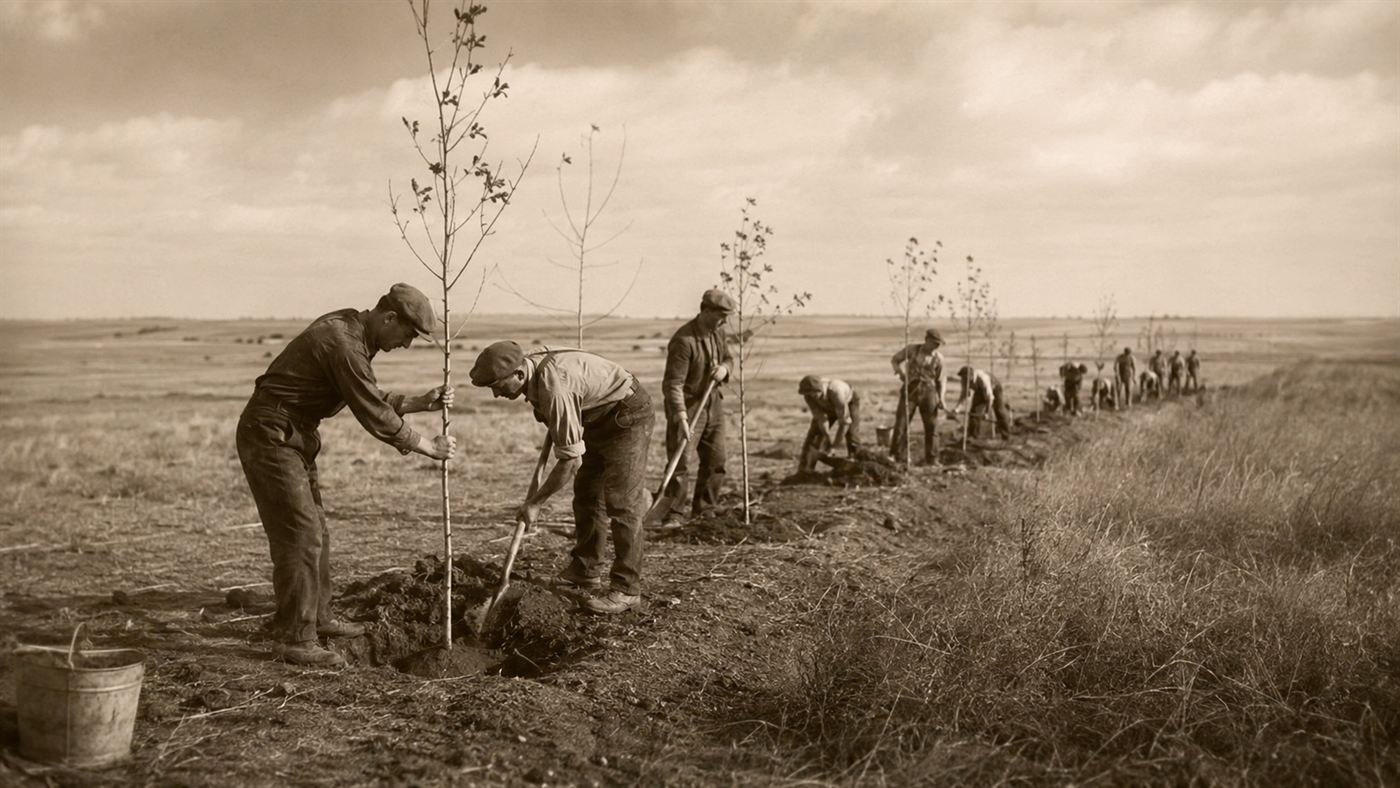
How the Dust Bowl changed the land for good
Out of the disaster came a revolution in how America treats its soil. The government created new agencies and taught farmers a set of techniques to keep the ground from blowing away: plowing along the curves of the land, planting cover crops, leaving stubble in the fields, and setting out long rows of trees to break the wind.
Those shelterbelts and soil conservation methods, along with the return of the rains, slowly brought the Great Plains back to life. The lesson was burned into the national memory, and it still shapes farming today. The Dust Bowl stands as proof that the ground beneath our feet is not infinite, and that treating it carelessly can darken the very sky.
A clear spring day turned to midnight when the plains rose into the sky, all because the grass that held the land had been torn away. When you look at how we farm and build today, do you think we have really learned that hard lesson, or just moved the damage somewhere else? Tell us what you think in the comments.
Related reading: the deadliest tornado in American history, which crossed three states with no warning. See also the earthquakes that made the Mississippi run backwards, and how the great bison herds of the same plains were almost wiped out and clawed back. See also the Ogallala Aquifer, the buried water that keeps this same region green.