A chemist won a bet in 1931 and created frozen smoke, the lightest solid on Earth, that now catches stardust and shields Mars rovers
Hold a piece of aerogel up to the light and your brain refuses to believe it. It looks like a slab of solid blue smoke, weighs almost nothing, and yet it is a rigid object you can pick up. It began as a bar bet between two chemists, and ended up flying through the tail of a comet.
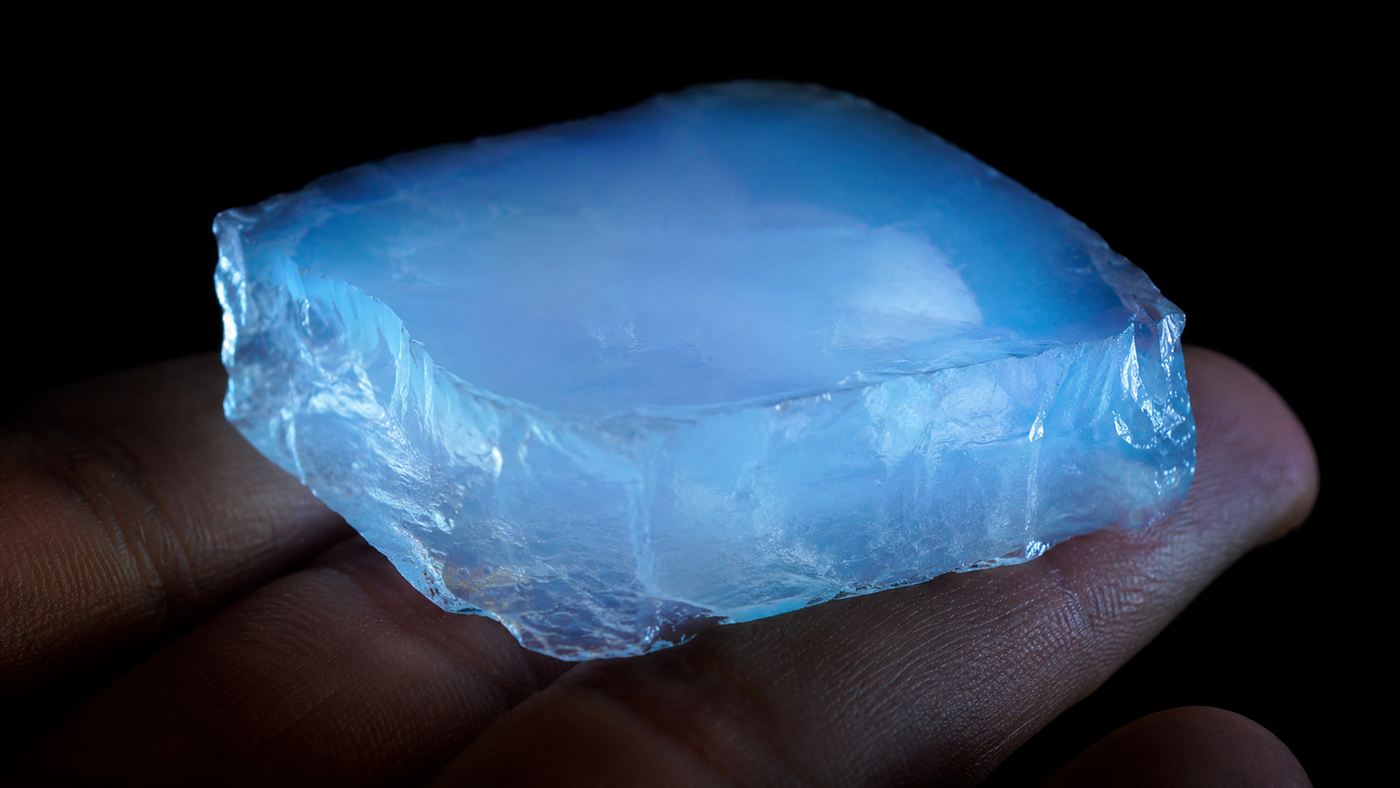
Aerogel: a solid that is almost entirely air, often called frozen smoke. Illustration: Watts & Wild.
The story really does start with a wager. As the American Physical Society recounts, in 1931 a chemist named Samuel Kistler made a bet with a colleague, Charles Learned, over who could replace the liquid inside a jelly with gas without the jelly shrinking. It sounds trivial. It is not. Try to dry a gel the normal way and surface tension drags the delicate internal structure inward, and the whole thing collapses into a shrunken lump.
Kistler found a way to cheat the physics. By raising the liquid to a special state, where the line between liquid and gas disappears, he could coax it out as a gas with no surface tension to crush the framework behind it. What was left was the gel's entire internal skeleton, intact, but now filled with air instead of liquid, a solid that was up to 99.8% nothing.
Why aerogel behaves like solid air
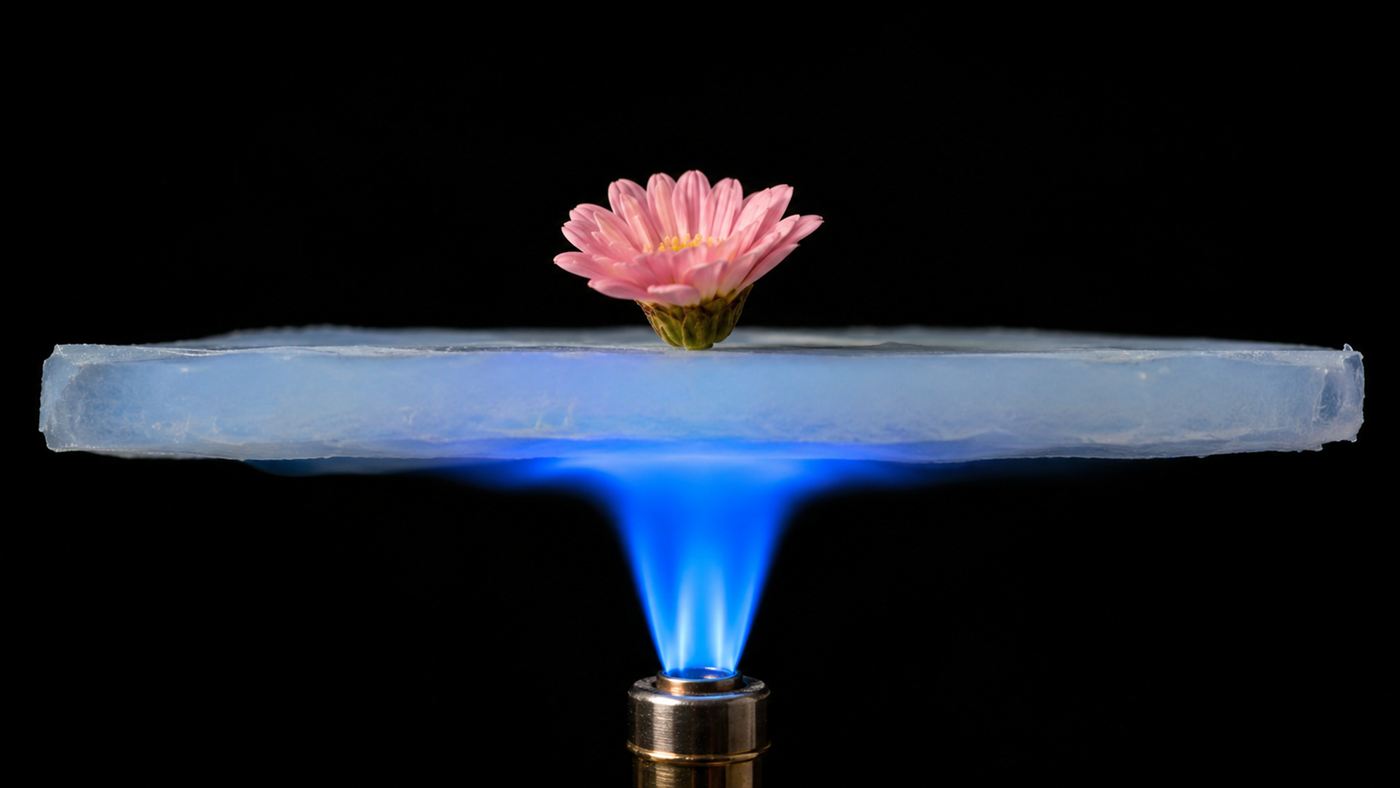
That emptiness is the whole point. Aerogel is a sponge of incredibly fine threads, mostly the same silica that glass is made of, woven so finely that air gets trapped in countless tiny pockets and can barely move. Because heat struggles to cross all those dead-air spaces, the material is a phenomenal insulator. You can press a blowtorch against one side of a thin aerogel tile and rest a flower or a bare hand on the other, and the flame simply never gets through.
It is also absurdly light. Silica aerogel held the Guinness World Record as the least dense solid ever made for years, and a block the size of a person can weigh less than a bag of sugar. Hold it and you barely feel it; the strangeness is that it is genuinely rigid, not soft like foam.
The day aerogel went to a comet
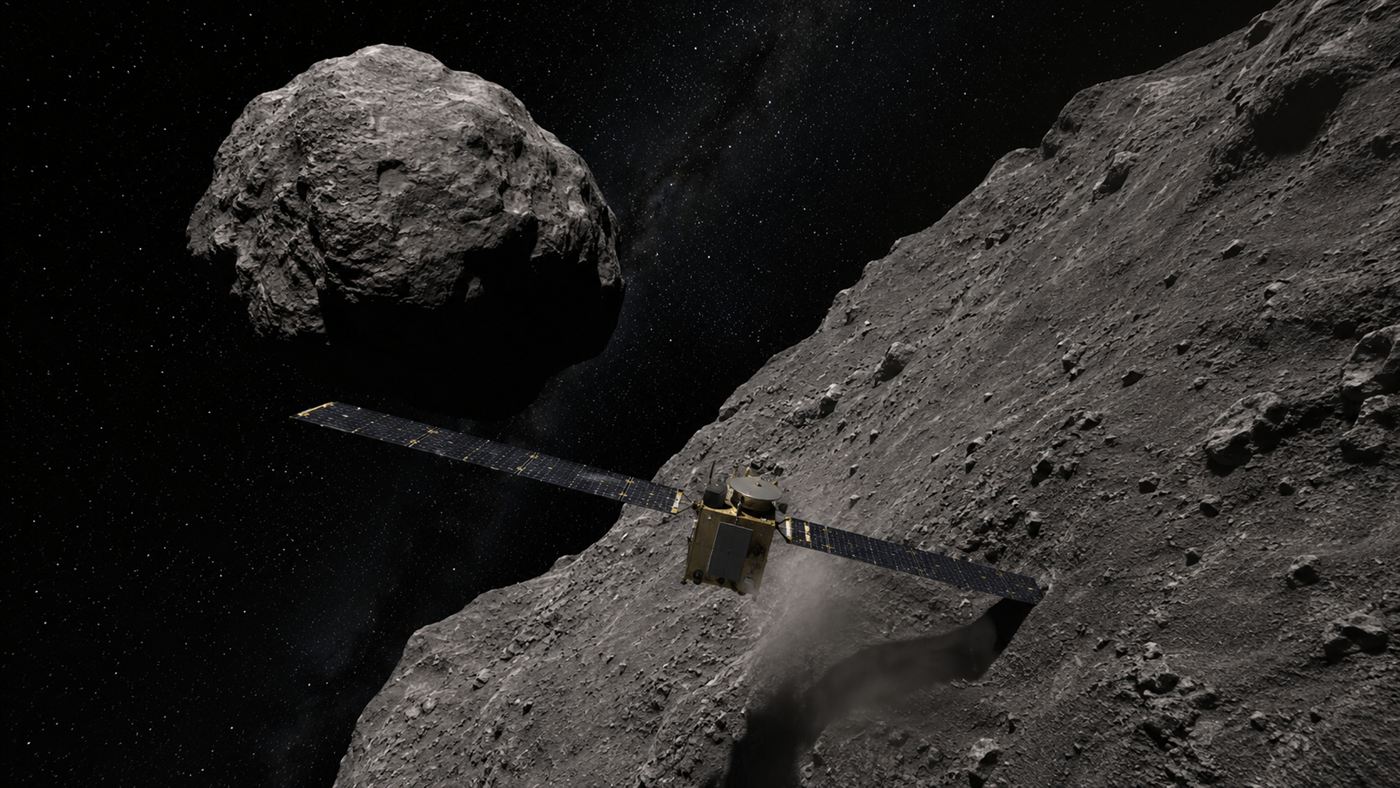
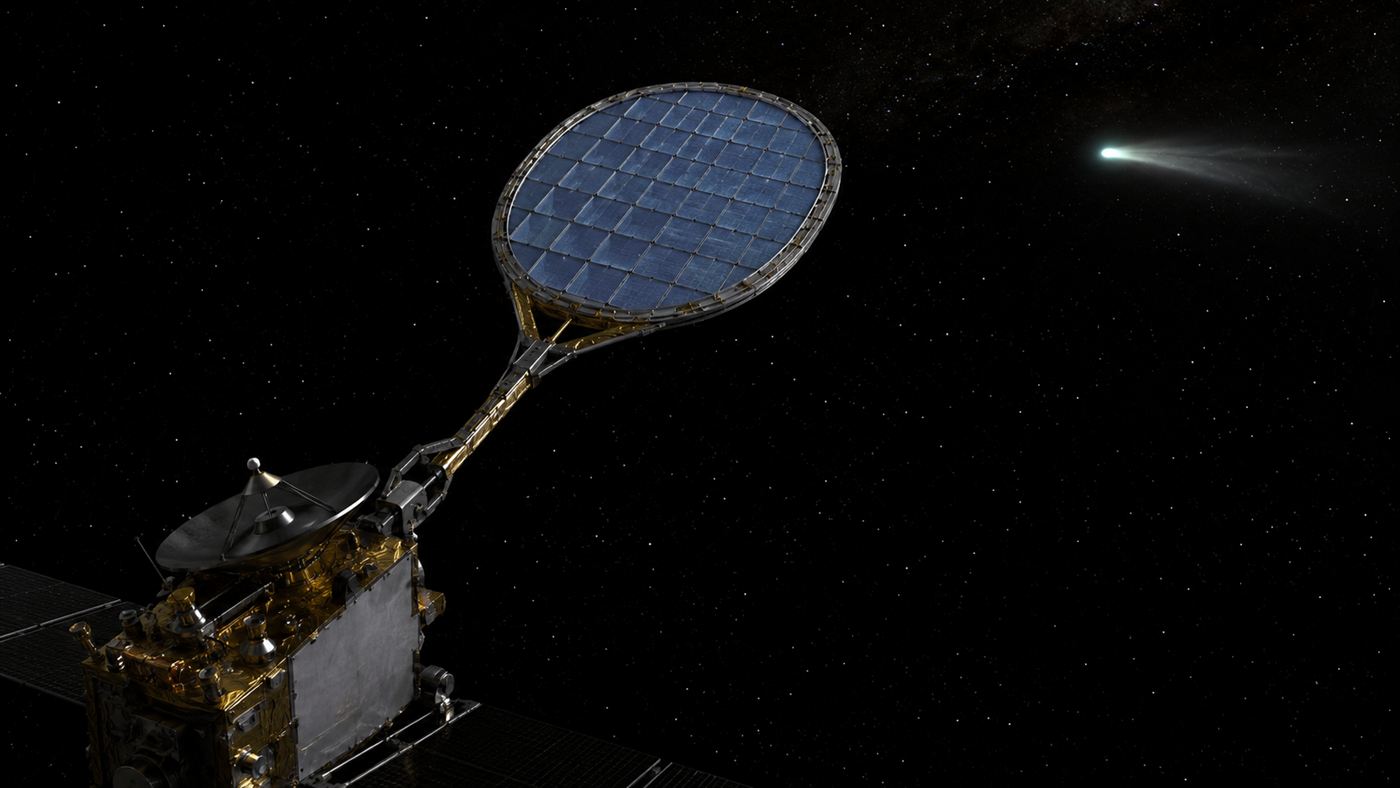
Its strangest job came in space. NASA's Stardust mission needed to catch dust from a comet, but those particles were screaming along at several kilometres per second, fast enough that any ordinary collector would have vaporised them on contact. As documented accounts of the mission describe, the spacecraft held out a grid packed with aerogel, and each speeding grain buried itself harmlessly in the soft, airy structure, slowing down over a tiny distance and coming to rest in a carrot-shaped track. For the first time, a few grains of a comet were carried gently back to Earth, cushioned by frozen smoke.
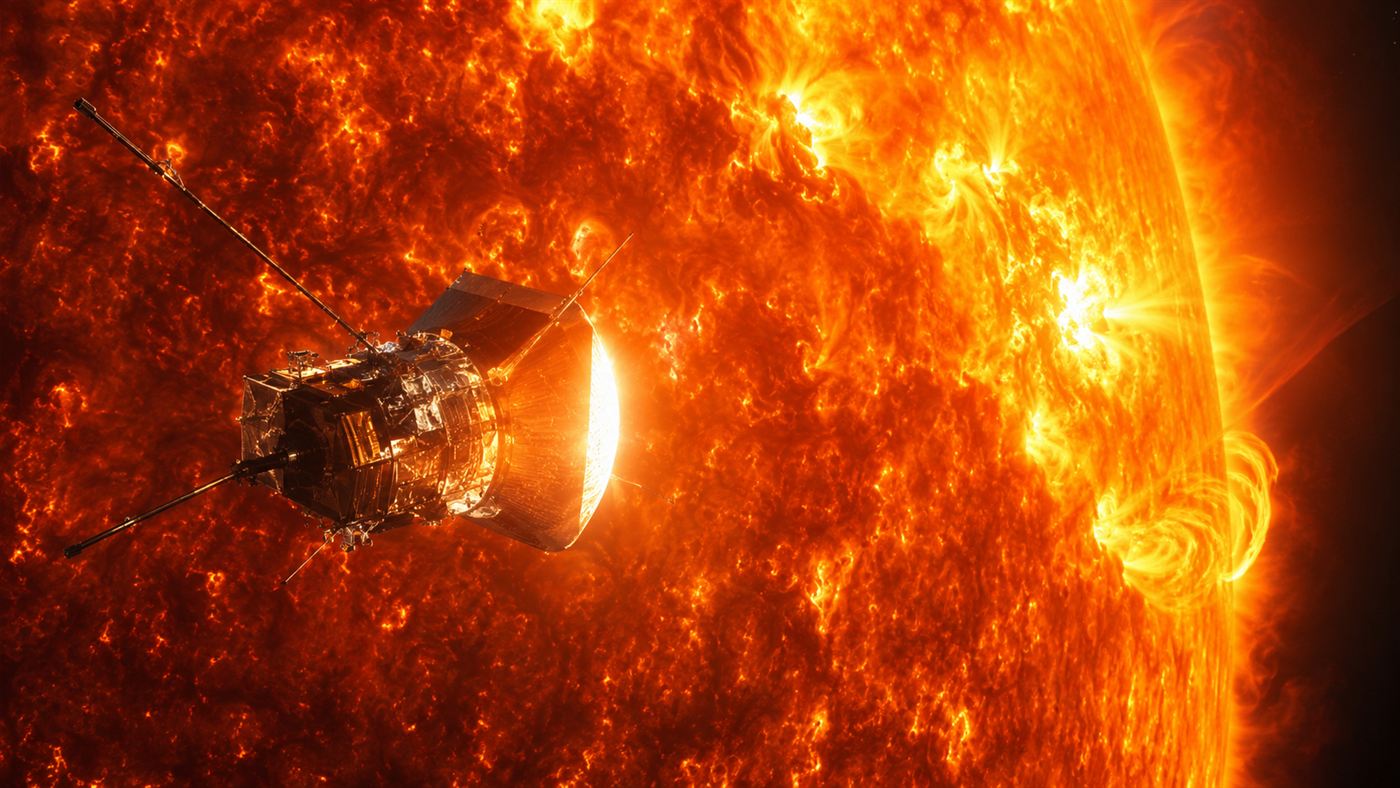
That same featherlight insulation has done humbler work too. Aerogel kept the electronics of Mars rovers warm through brutal Martian nights, and it has crept into the everyday world in the form of super-thin insulation for jackets, windows and pipes, places where you want to block heat without adding bulk or weight.
The honest catch
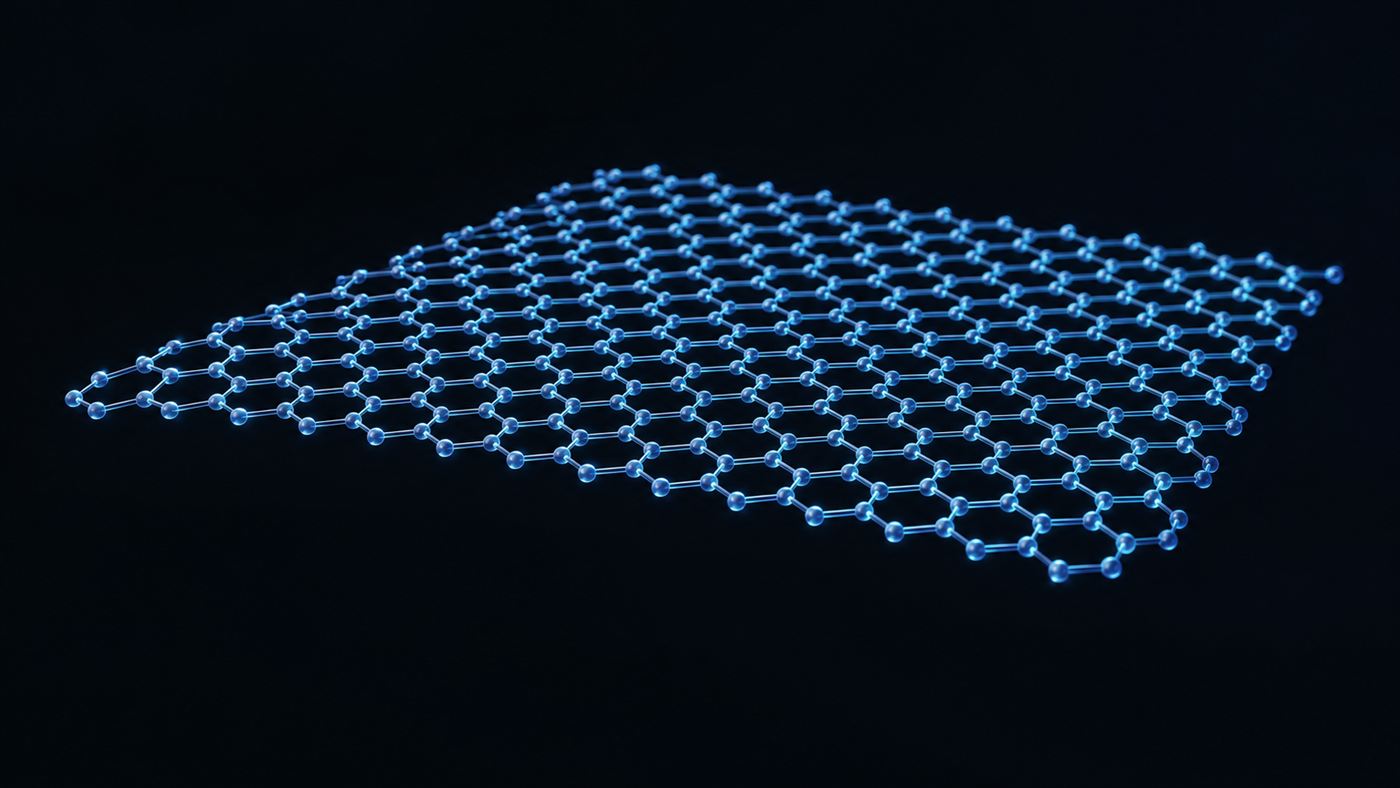
For all that, aerogel is not a wonder material that conquered the world, and it helps to know why. The classic silica kind is brittle and crumbly; squeeze it wrong and it shatters or crushes to dust, which makes it awkward to handle and easy to break. It is also expensive, because that clever supercritical drying takes time, pressure and care, which has long kept it out of cheap mass-market use. There is no single "aerogel" either; chemists now make versions from carbon, polymers and graphene, some flexible, some tougher, each with its own tricks, and newer materials have since stolen the lightest-solid crown. None of that dulls the wonder of it: a substance that is almost pure air, born from a bet, strong enough to be held and clever enough to fly to a comet. It belongs with the other accidental and improbable materials that reshaped what stuff can do, from the cloudy liquid that became bulletproof Kevlar to the blackest black ever made.
A material that is basically solid air won a bet, broke records, and flew through a comet's tail to bring a piece of it home. What everyday thing would you most want wrapped in something almost weightless that blocks heat like a wall? Tell us what you think in the comments.
Related reading: Vantablack, the strange material so dark it looks like a hole cut out of reality.