Two scientists peeled the strongest material on Earth off a pencil with sticky tape
The most celebrated new material of this century was not forged in a billion-dollar reactor or grown in a vacuum chamber. It was lifted off a lump of ordinary pencil lead with a strip of Scotch tape, on a Friday evening, by two physicists messing about for fun. What they peeled away was a single layer of atoms, and it turned out to be one of the strongest things ever measured.
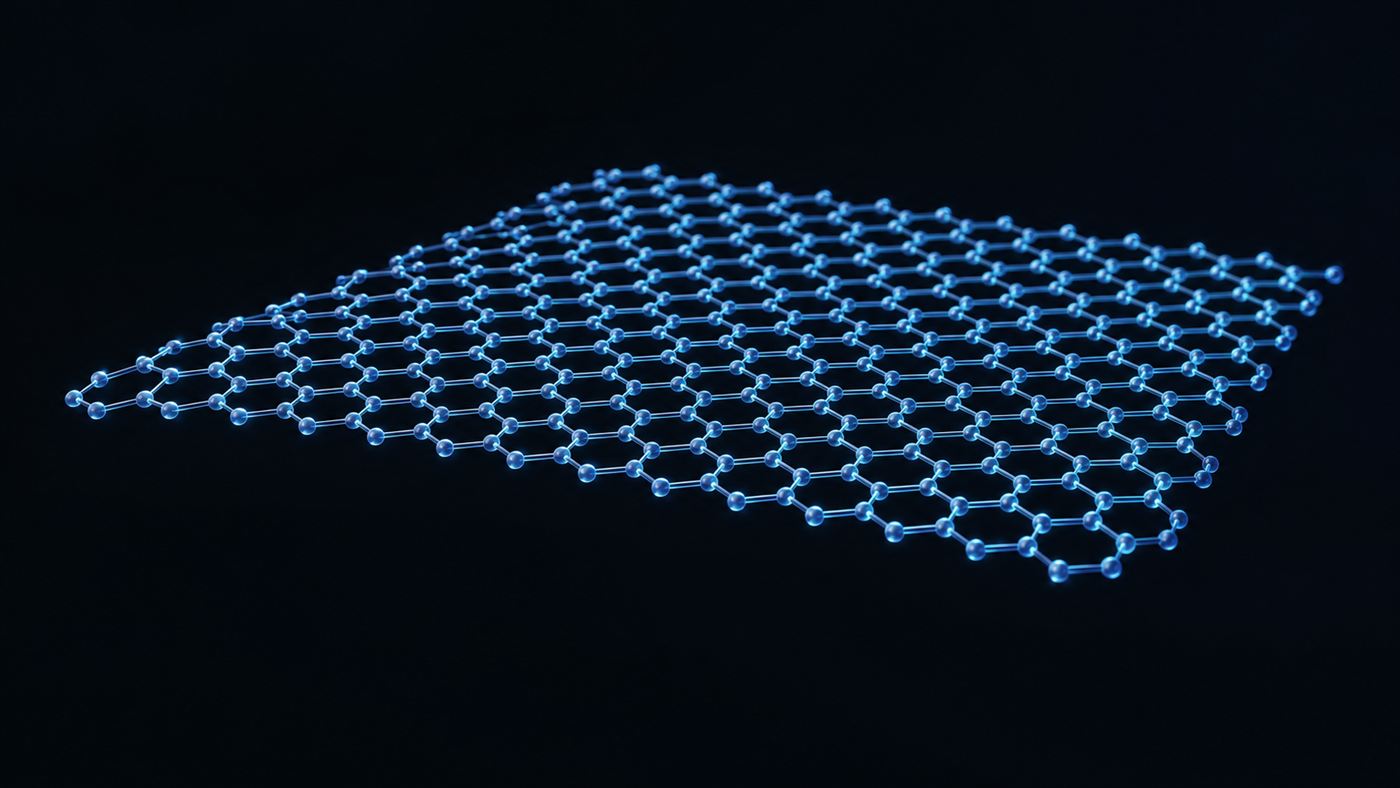
Graphene is a single sheet of carbon atoms locked into a honeycomb pattern. Illustration: Watts & Wild.
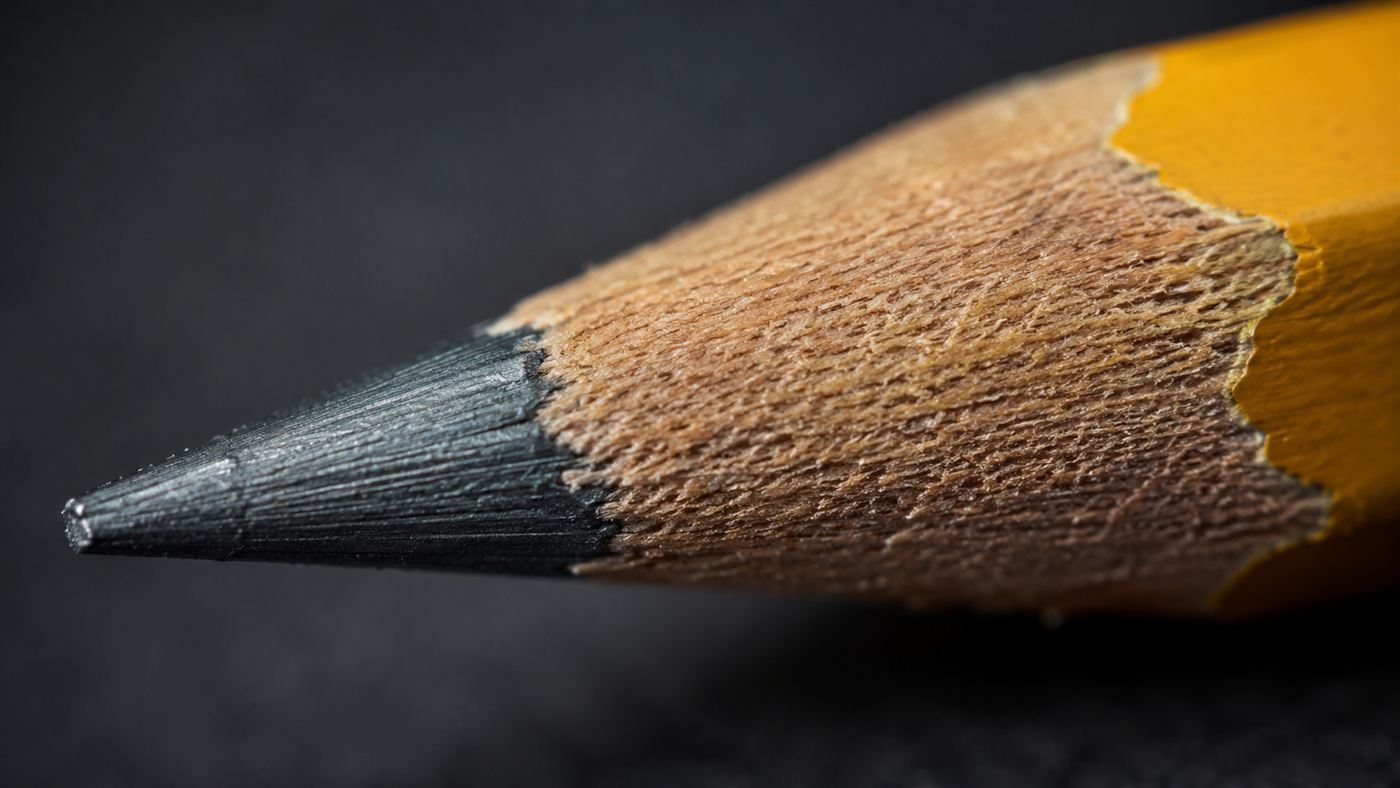
graphene is, in the simplest terms, one atom-thick layer of the graphite that fills a pencil. Carbon atoms can stack into the soft grey graphite you write with, but if you could pull off just a single sheet of that stack, you would hold something astonishing: a material only one atom thick, almost completely transparent, and stronger for its weight than anything we know.
For a long time, scientists believed such a thing could not even exist on its own. They thought a crystal a single atom thick would be too unstable, that it would crumple or fall apart. Graphene's discovery did not just hand us a new material. It overturned a piece of accepted physics.
What makes graphene a wonder material
The numbers are almost hard to believe. Graphene has been measured at well over a hundred times stronger than steel of the same weight, so strong that people like to say a sheet of it could hold the weight of an elephant balanced on a pencil point. It is also flexible, nearly transparent, conducts electricity better than copper, and carries heat superbly, all in a film a single atom thick.
That combination is why people started calling it a wonder material almost at once. A substance that is at the same time incredibly strong, bendy, see-through and electrically brilliant seems to break the usual rules, where being good at one property normally costs you another. Graphene appeared to be good at nearly everything.
The Friday night experiment with Scotch tape
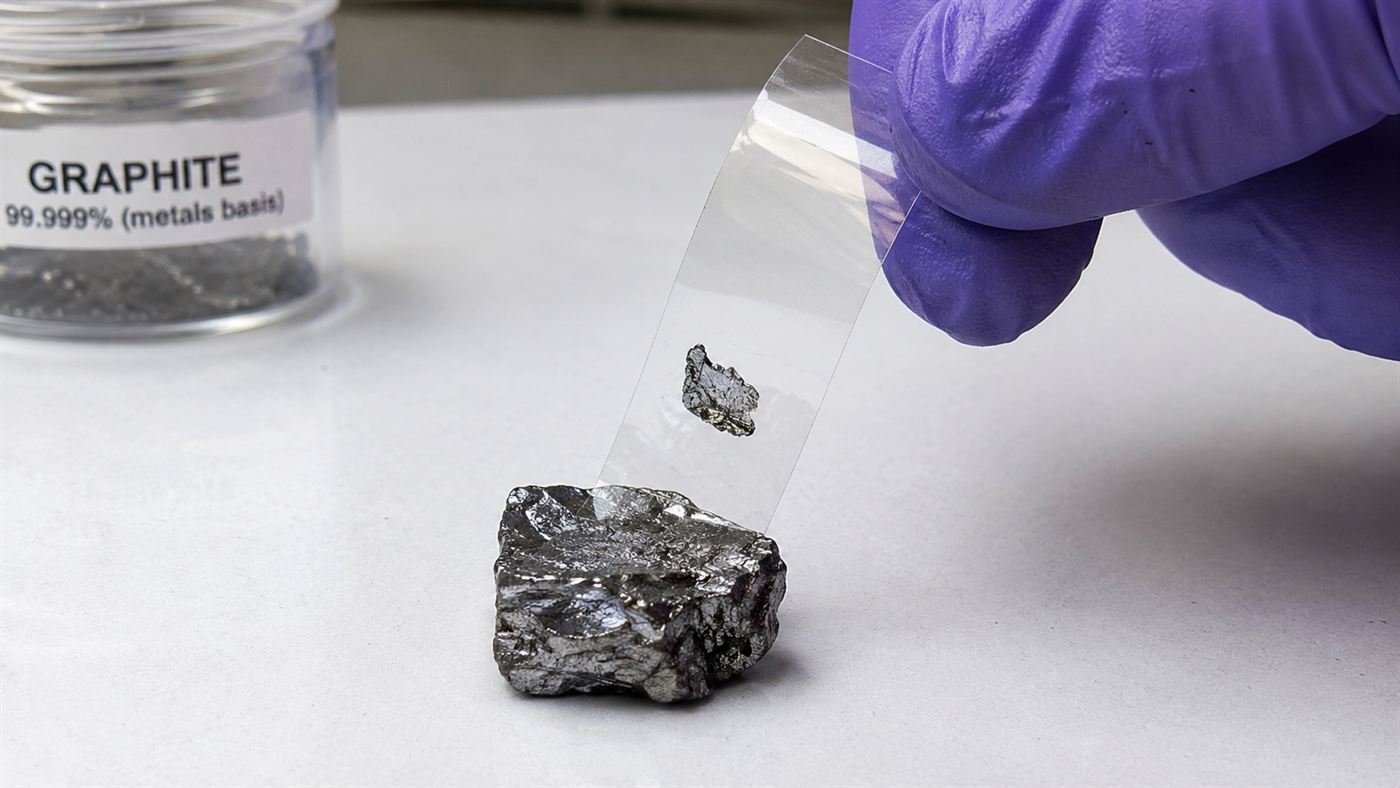
The discovery came in 2004 at the University of Manchester, from Andre Geim and his younger colleague Konstantin Novoselov. Geim ran a lab that kept a charming tradition of "Friday night experiments", playful side projects with no guarantee of results, done purely out of curiosity. One of them involved trying to make graphite as thin as possible, and the tool they reached for was a humble roll of Scotch tape.
They pressed the sticky tape onto a flake of graphite, peeled it off, and found a thin layer stuck to the tape. Then they folded the tape and pulled it apart again, halving the flake, and again, and again, splitting the graphite thinner and thinner until, at last, a patch just one atom thick was left behind. The hard part was not the peeling, it was spotting and proving that single layer, which they could only see at all because they placed it on a wafer of exactly the right thickness.
The material that shouldn't exist
What they had made was the first true two-dimensional material, a crystal essentially with no thickness at all. Because so many people had assumed this was impossible, simply showing that graphene was real and stable was a profound result. It opened the door to a whole new family of one-atom-thick materials and a new branch of physics to explore them.
Recognition came astonishingly fast. Most Nobel Prizes arrive decades after the work, once its importance is beyond doubt. Geim and Novoselov won the Nobel Prize in Physics in 2010, only six years after their tape-and-graphite experiment, a measure of just how big the discovery was judged to be.
The man with a Nobel and an Ig Nobel
There is a delightful footnote that says a lot about how this kind of science happens. A decade before his Nobel, Andre Geim had won a very different prize, the Ig Nobel, which celebrates research that first makes people laugh and then makes them think. His winning work was levitating a live frog in mid-air using powerful magnets, a stunt that was also a genuine demonstration of physics.
That makes Geim the only person ever to hold both a Nobel and an Ig Nobel, and it is no coincidence. The same restless, playful curiosity that floated a frog for fun is exactly what led, years later, to a Friday night with a roll of tape and the discovery of graphene. Serious breakthroughs and silly experiments, it turns out, often come from the same place.
The honest catch
For all the wonder, a dose of realism is fair. Graphene was hailed as a material that would soon transform everything, bendable phones, super-fast batteries, near-perfect filters, and progress has been slower and bumpier than those headlines promised. Making large, flawless sheets cheaply and reliably is genuinely hard, and much of what is sold as graphene today is a humbler flaky version rather than the perfect single layer.
But that is a story about hype outrunning manufacturing, not about the science being wrong. Graphene really is extraordinary, it really did rewrite what we thought a material could be, and it is slowly finding its way into composites, coatings, electronics and sensors. The dream of a single atomic sheet doing the impossible was never a fantasy. It just arrived, fittingly, the way the best science often does, one careful, patient layer at a time.
The strongest material ever measured was found with a roll of tape by people doing science for fun. Should we fund more playful, no-guarantee experiments, given that one of them gave us graphene? Tell us what you think in the comments.
Related reading: aerogel, the frozen smoke that is almost nothing and yet holds back fire and even space dust.