New Zealand's heaviest parrot fell to 51 survivors in 1995, and the conservation team that saved it gave every bird a name, a radio transmitter, and an individual recovery plan
The kakapo is the world's heaviest parrot, the only flightless parrot on Earth, and was functionally extinct for all practical purposes in the mid-1990s. The recovery plan that followed was unlike anything conservation had tried before: every surviving individual got a name, a transmitter, and its own dedicated human team.
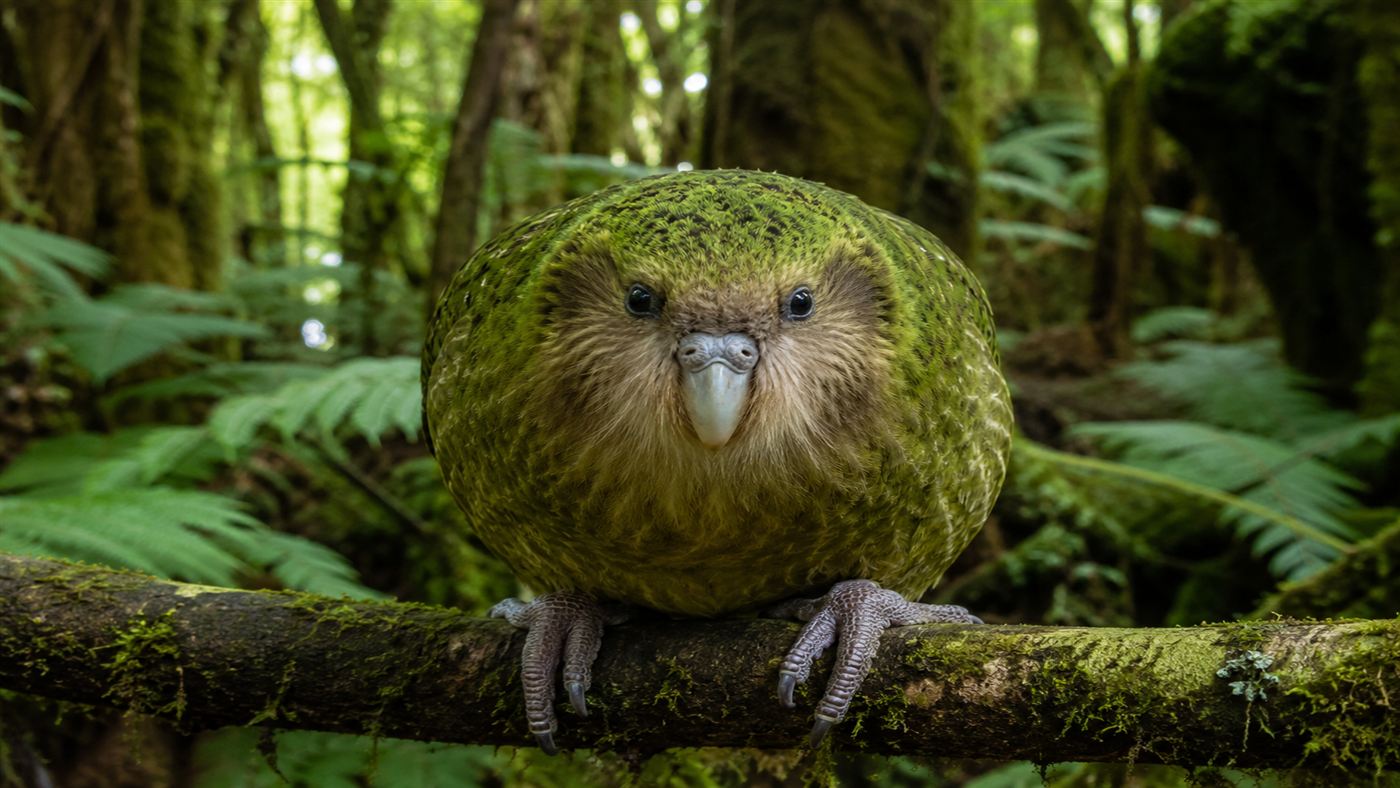
The kakapo, world's heaviest flightless parrot, survived only on predator-free offshore islands. Illustration: Watts & Wild.
In 1995, a New Zealand conservation officer named Don Merton had counted every kakapo alive on Earth. The number was 51. Merton had spent more than two decades searching for this owl-faced, mossy-green, flightless parrot across the fern-choked valleys of southern New Zealand, and he knew each bird's face. The kakapo had no defenses against introduced mammals. Stoats killed them. Cats killed them. Rats ate every egg. The species had been losing ground since humans first arrived in New Zealand, and by the mid-1990s it was losing the war.
What happened next was the most intensive individual-focused wildlife recovery in history. New Zealand's Department of Conservation launched the Kakapo Recovery Programme with a simple but radical premise: every kakapo would be treated as an individual, not a population statistic. Every bird got a name. Every bird got a radio transmitter. Every bird got a file, a health history, and a team of people who knew it personally. There are 252 kakapo alive today.
The kakapo (Strigops habroptilus) is the world's heaviest parrot, weighing up to 4 kilograms. It is flightless, nocturnal, and has a musty-sweet odor that makes it easy for predators to track. It is also one of the longest-lived birds on Earth, with lifespans exceeding 90 years. Before humans arrived in New Zealand roughly 700 years ago, the kakapo was one of the most common birds in the country. It had no land predators to evolve against and no reason to fly. By 1995, it had 51 individuals left.
How the kakapo went from everywhere to almost nowhere in 700 years
The collapse of the kakapo is a story in two chapters, separated by six centuries.
The first chapter began around 1280 CE when Polynesian settlers arrived in New Zealand carrying Pacific rats (kiore) and dogs.
The kakapo had spent millions of years evolving in the total absence of land mammals.
It had no instinct to flee from ground predators, no ability to fly to safety, and a habit of freezing in place when threatened, which works against a hawk but is fatal against a rat.
Kiore ate eggs and chicks.
Dogs killed adults.
The kakapo was already in serious decline when Europeans arrived in the nineteenth century and introduced a second wave of mammalian predators: stoats, cats, possums, and ship rats.
Stoats were the worst.
They are fast, tireless, and can climb trees to reach nests.
In years when stoat populations exploded following mast fruiting events, entire clutches of kakapo eggs and chicks could be wiped out across a region in a single season.
European settlers also hunted kakapo directly, and collectors took thousands for museum specimens.
By 1900 the kakapo had vanished from the North Island.
By the mid-twentieth century it was restricted to a few remote valleys in Fiordland and Stewart Island.
Don Merton joined what would become the Kakapo Recovery Programme in the 1970s, when the species' total known population was in double digits.
He spent years hiking into the most remote terrain in New Zealand looking for birds that were experts at staying hidden.
When Stewart Island was found to have a larger population than Fiordland in the 1970s, hope flickered, but feral cats were killing the birds there faster than they could be found.
The decision was made to move every kakapo to predator-free islands.
Moving every bird: the logic behind individual conservation at scale
The island strategy was the turning point.
New Zealand had invested heavily in clearing offshore islands of introduced predators, and by the late 1980s and 1990s several islands were available as sanctuaries.
Codfish Island (Whenua Hou), a 1,396-hectare island off the northwest tip of Stewart Island, became the primary kakapo sanctuary.
Every kakapo that could be found was transferred there.
On a predator-free island, the dynamic changed immediately.
Eggs survived.
Chicks survived.
But the kakapo recovery team quickly discovered that moving the birds was only step one.
The kakapo has one of the strangest breeding systems of any bird on Earth: it only breeds in years when the rimu tree produces a heavy crop of fruit.
Rimu mast years happen roughly every two to four years, depending on climate conditions.
In non-mast years, kakapo produce almost no eggs at all.
This means the entire recovery depends on a handful of good breeding seasons per decade, and every single egg matters.
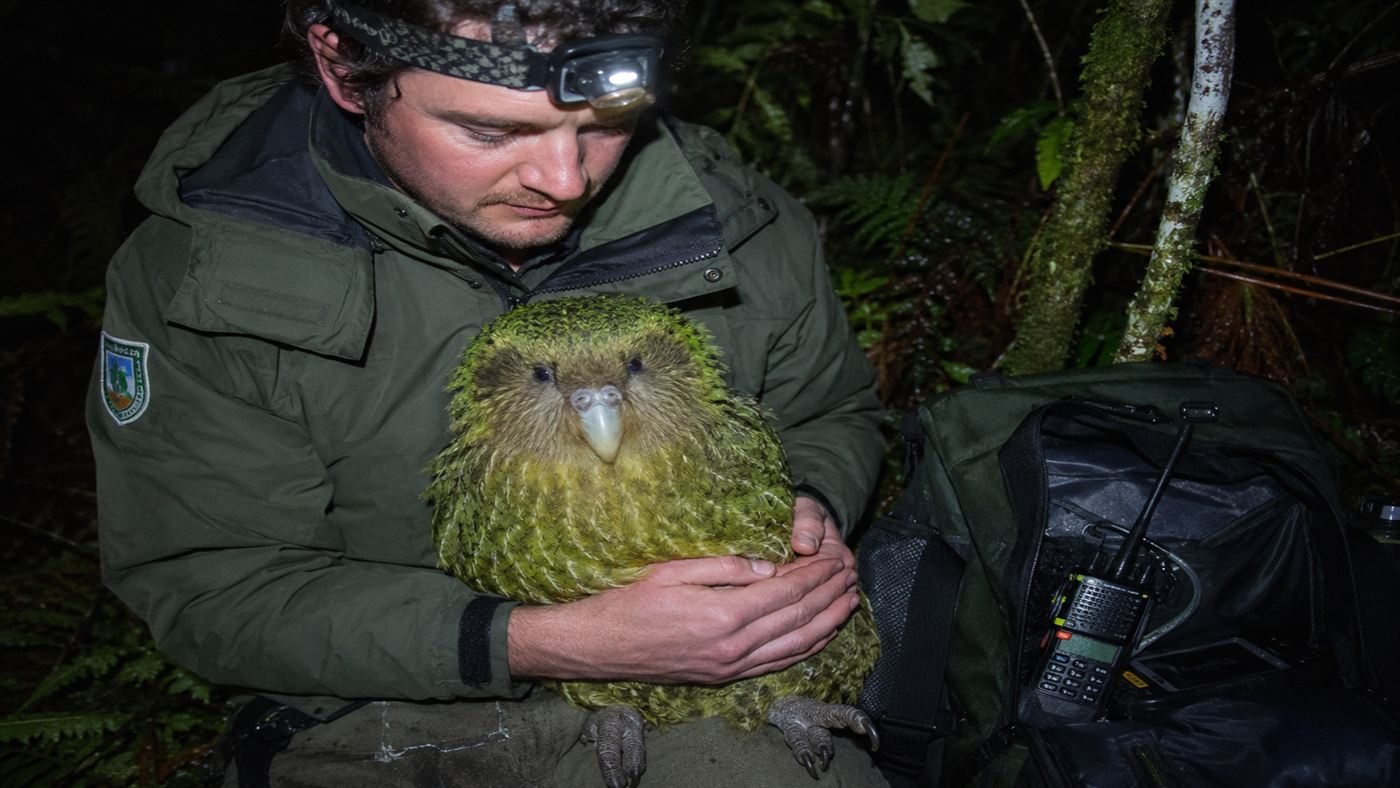
The team began supplementary feeding to boost female condition in mast years, monitoring every nest with cameras, and intervening when eggs or chicks were at risk.
If a female left her eggs unattended on a cold night, a ranger would incubate them artificially and return them before she came back.
If a chick was too light, it got supplementary feeding.
If a female showed signs of a nutritional deficiency, the food supply at her feeding station was adjusted.
The kakapo had stopped being a wild population managed at arm's length and had become something closer to a community of individuals with a dedicated support network.
Sirocco, the bird who became New Zealand's conservation face
Among the 252 kakapo alive today, one is probably the most famous endangered parrot in the world.
Sirocco was hatched in 1997 and became ill as a chick.
He was hand-raised by conservation staff while being treated, which meant he imprinted on humans rather than other kakapo.
When returned to Codfish Island, Sirocco showed no interest in female kakapo and considerable interest in people.
In 2009, during a BBC filming expedition with zoologist Mark Carwardine and Stephen Fry for the series "Last Chance to See," Sirocco climbed onto Carwardine's head and attempted to mate with it.
The footage went viral and has been viewed hundreds of millions of times.
New Zealand's Prime Minister later appointed Sirocco as the country's official "spokesbird for conservation."
He has his own social media presence, his own website, and a team of rangers who travel with him when he makes public appearances.
Sirocco's fame has done something that decades of conservation reports could not: it made the flightless parrot famous to people who had never heard of New Zealand wildlife.
For the broader recovery, fame matters because kakapo conservation is funded partly by donations and public support.
The programme tracks every contribution and publishes every bird's status online.
Supporters can follow the progress of individual birds by name: Alice, Bluster, Cascade, Cyndy, every one of the 252.
The 2019 season that changed the numbers
For most of the 2000s, the kakapo population grew slowly.
From 51 birds in 1995, the count reached 86 by 2005 and 147 by 2016.
Then 2019 delivered the most productive breeding season in recorded history.
A powerful rimu mast year across the kakapo islands triggered an extraordinary response.
The recovery team recorded 249 eggs and hatched 76 chicks, more than doubling the previous best season.
The population jumped from 147 to more than 200 in a single year.
Even in that extraordinary season, the team worked around the clock.
Rangers hiked to every nest through the night.
Eggs were weighed, candled, and monitored by remote camera.
Chicks too light to survive without help were taken to a crèche for hand-feeding before being returned to their mothers.
By 2022, the kakapo population had reached 252.
It was the highest number in decades, and it was still desperately small.
The honest catch
The kakapo recovery is a genuine triumph, but it is also a cautionary tale about what conservation looks like when it succeeds.
The kakapo today is not recovering in the wild.
It is surviving on a handful of managed islands from which predators are actively excluded, in a programme that requires constant human attention to function.
Remove the island management, and the species goes extinct within years.
Remove the supplementary feeding in mast years, and breeding success drops sharply.
Remove the egg monitoring and chick intervention, and many of those 76 chicks from 2019 would not have survived.
The kakapo is, in effect, on permanent life support, and the team that runs the Kakapo Recovery Programme is honest about this.
The goal is eventually to establish populations large enough and genetically diverse enough that the species could tolerate some losses without collapsing.
But 252 birds from a genetic bottleneck of 51 means the population still carries the marks of that near-extinction.
Low genetic diversity makes the species more vulnerable to disease and environmental change.
The recovery also faces a biological ceiling: kakapo breed slowly, only in good rimu years, and females do not breed every season even then.
There is no quick route to thousands of birds.
And the islands themselves are not unlimited: as the population grows, the available habitat on Codfish Island, Anchor Island, and the other sanctuaries becomes more constrained.
The question the recovery team is now working on is whether conservation genetics, assisted reproduction, and new island habitats can get the population to a point where the species has some chance of sustaining itself, rather than just surviving because humans keep it alive.
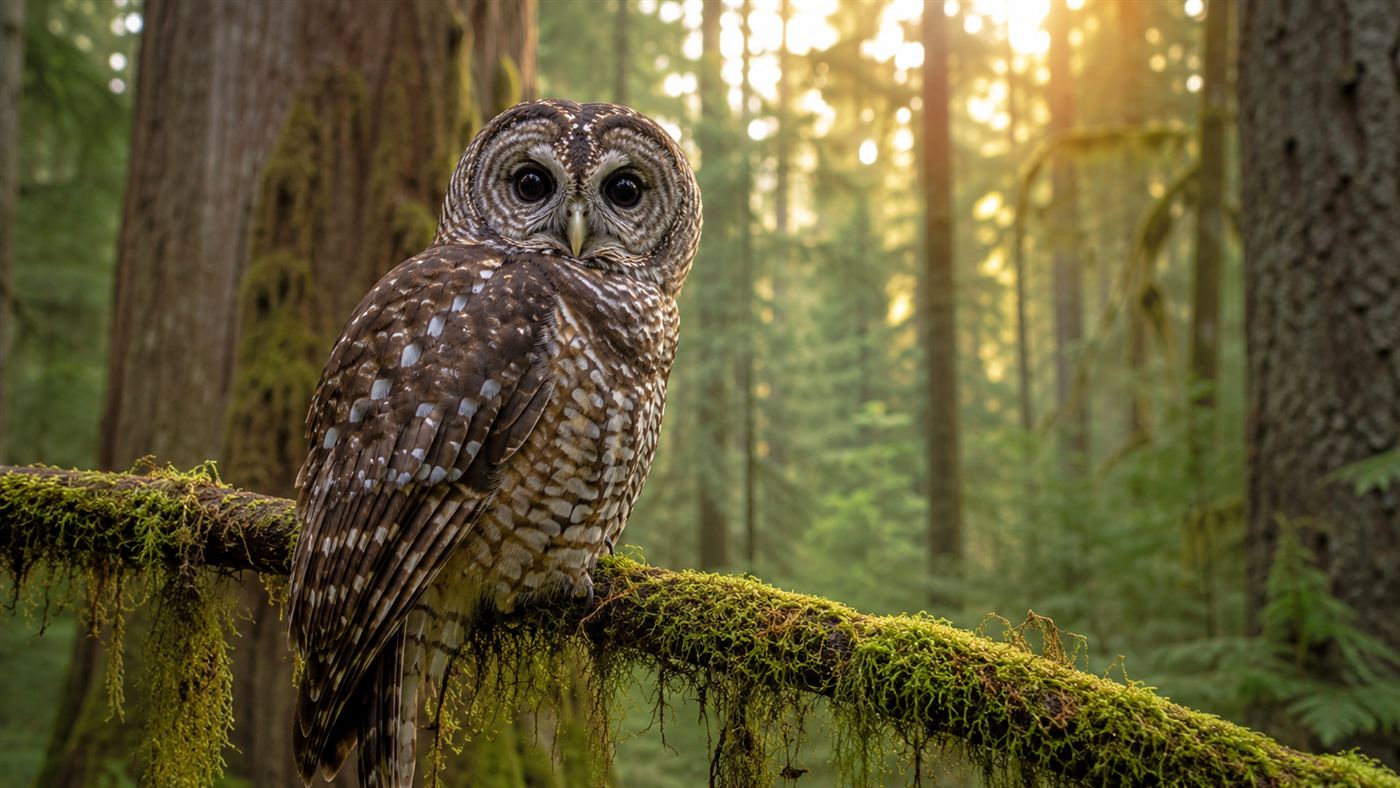
The northern spotted owl faces a different version of the same dilemma, where active management to save a species from one threat can expose it to another.
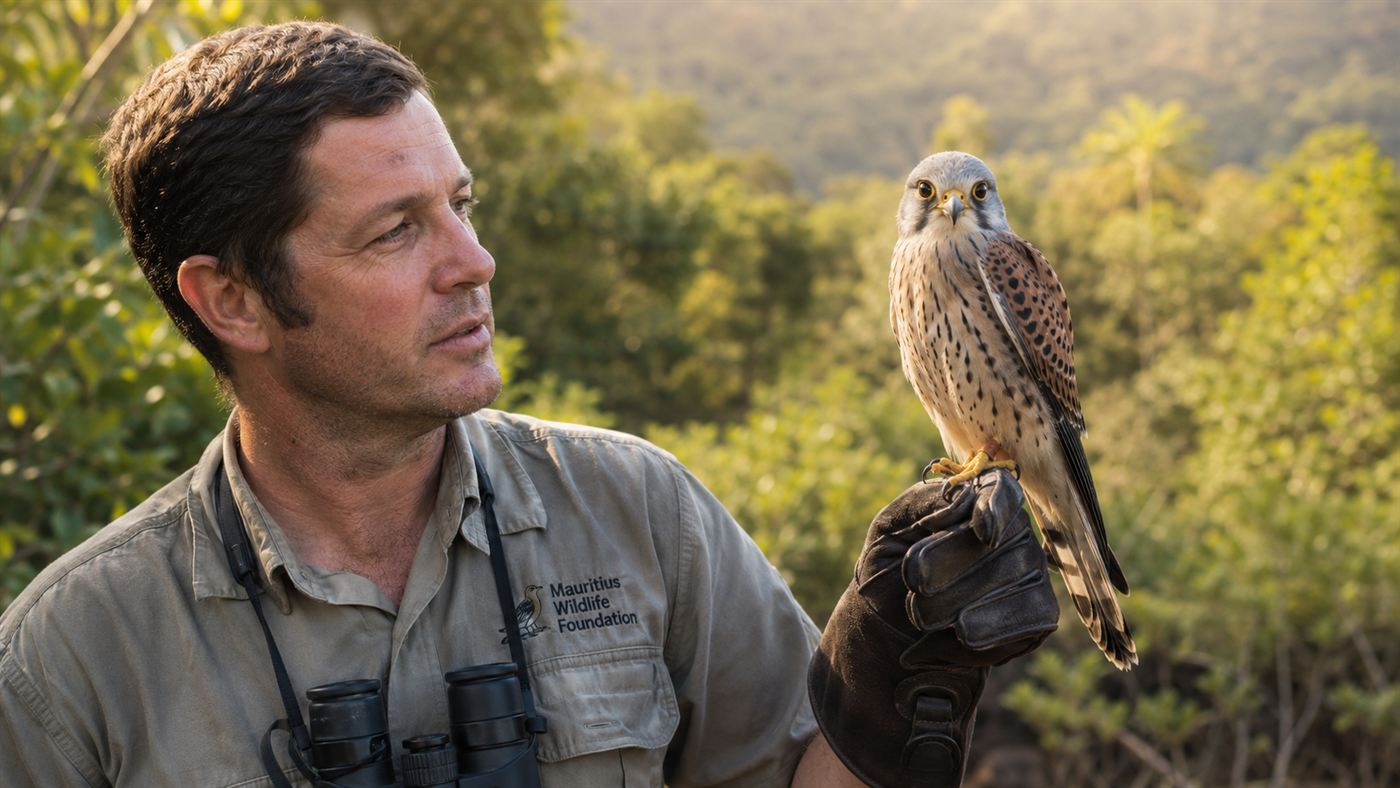
The Mauritius kestrel went from four individuals to 400 and still depends on intensive management to stay there.
The kakapo parrot is alive because of extraordinary human effort.
Whether 252 flightless parrots can ever become something that does not need constant tending is the question conservation will spend the next generation trying to answer.
The kakapo is one of the strangest and most charismatic birds on Earth, and it survives entirely because of decisions made by a handful of dedicated people over the past 30 years. Do you think intensive individual management like this is the future of conservation, or does it point to a deeper problem we still haven't solved?
Share your thoughts below.