A German city has carried its commuters under a hanging railway since 1901, and in 1950 a circus elephant leapt from a car into the river below
In the city of Wuppertal, the trains do not run on the ground, they fly beneath the track. The Wuppertal Schwebebahn suspension railway has dangled its passengers over a river for more than a century, and its strangest day involved an elephant.
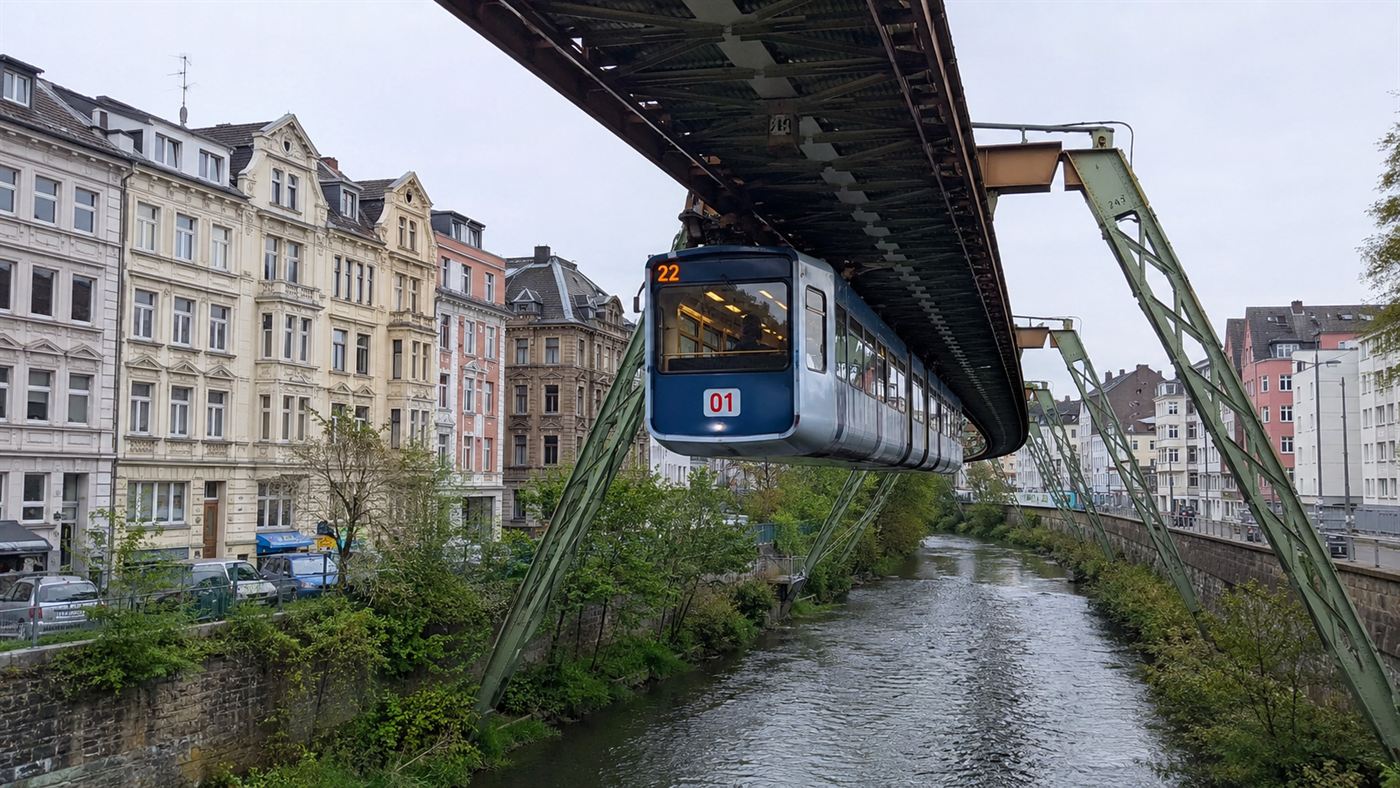
The Schwebebahn glides through Wuppertal hanging beneath a single steel rail. Illustration: Watts & Wild.
Most cities build their railways on the ground or, at most, on bridges above it.
Wuppertal did the opposite, and hung an entire railway from the sky.
What is the Wuppertal Schwebebahn? The Wuppertal Schwebebahn is the world's oldest electric suspension railway, opened in Germany in 1901. Its carriages hang from a single steel rail about 12 metres above the ground, running mostly over the Wupper river, and it still carries around 25 million passengers a year.
The Wuppertal Schwebebahn suspension railway hangs from the sky
The idea sounds upside down, and in a sense it is.
Instead of sitting on top of the rails, each carriage hangs underneath a single steel beam held up by giant iron arches.
For about 10 of its 13 kilometres the line floats directly above the Wupper river, with the rest threading over the streets of the city.
The whole network was dreamed up by the engineer Eugen Langen and threaded through Wuppertal with 20 stations along the way.
Riding it feels less like catching a tram and more like gliding through the rooftops in a gondola that someone bolted to the clouds.
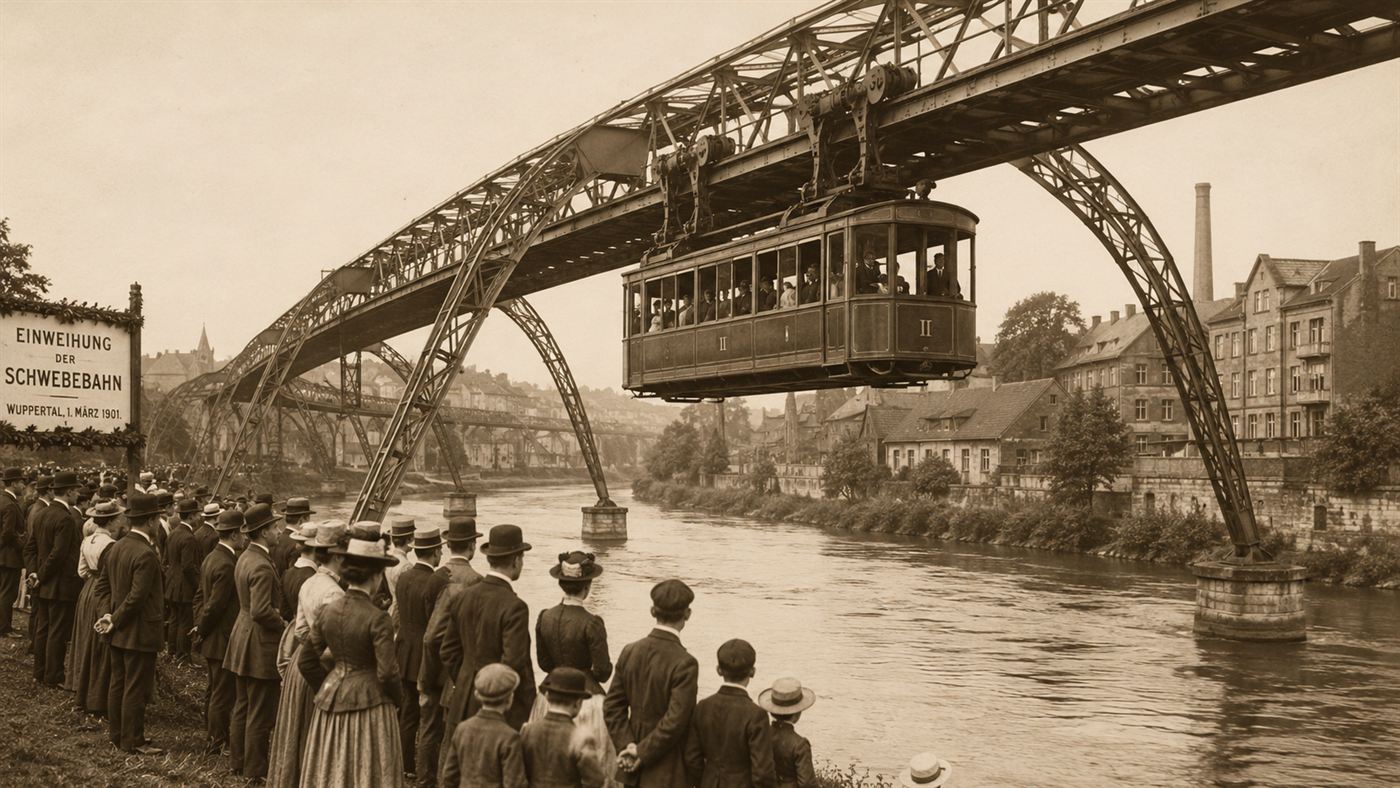
Built when everyone expected it to fail
When construction began in the late 1890s, plenty of people assumed the contraption would never work.
To calm the doubters, Emperor Wilhelm II himself rode a trial run in 1900, a year before the line opened to the public in 1901.
Far from collapsing, the Schwebebahn quietly became the backbone of the city and one of the most beloved railways in all of Germany.
It even survived the heavy bombing of the Second World War, after which Wuppertal patiently rebuilt its flying railway rather than let it die.
More than 120 years on, the same basic design is still carrying the city to work every morning.
The day an elephant fell from the sky
The Schwebebahn's most famous moment had nothing to do with engineering, and everything to do with a publicity stunt.
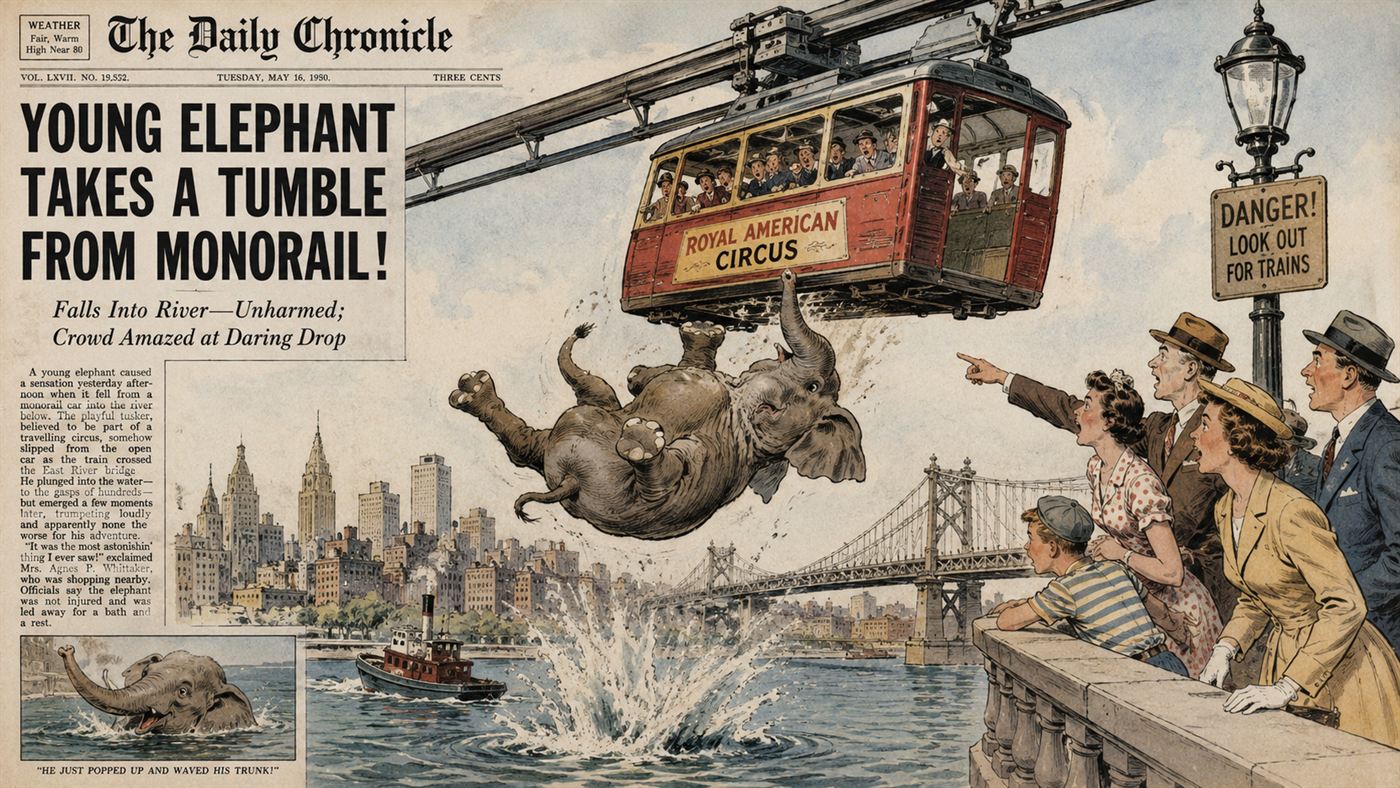
On 21 July 1950, a local circus decided it would be marvellous to put a young elephant named Tuffi on board a carriage.
High above the river, the frightened elephant panicked, crashed through the side of the car and fell about 10 metres down into the Wupper.
Astonishingly, Tuffi survived the plunge with only minor injuries, though several passengers were hurt in the chaos.
The image of an elephant tumbling from a flying train turned Tuffi into a local legend, complete with a statue and a place in the city's heart.
One of the safest rides in Germany
For all its odd looks, the hanging railway built a remarkable safety record.
Across more than a century it has carried well over a billion passengers above the streets and the river.
For most of that time it ran almost without serious incident, which is part of why the city trusted it so completely.
Engineers point to the simple physics of a carriage that hangs and swings gently rather than risking a derailment off the top of a rail.
In an age of bullet trains, this slow Victorian oddity remains one of the most reassuring commutes in Europe.
The honest catch
The story is not quite as spotless as the legend suggests.
In April 1999 a steel claw left on the track after maintenance derailed a carriage, which fell into the Wupper and killed five people, injuring dozens more.
It was a brutal reminder that even the safest system is only as good as the people maintaining it.
The tale of Tuffi, too, has been polished and exaggerated over the years until it sounds more charming than the frightening accident it really was.
And for all its fame, the Schwebebahn was never copied around the world, remaining a wonderful one-off rather than the future of transport its builders imagined.
The Schwebebahn is proof that a strange idea, built well and looked after, can outlast almost everything around it.
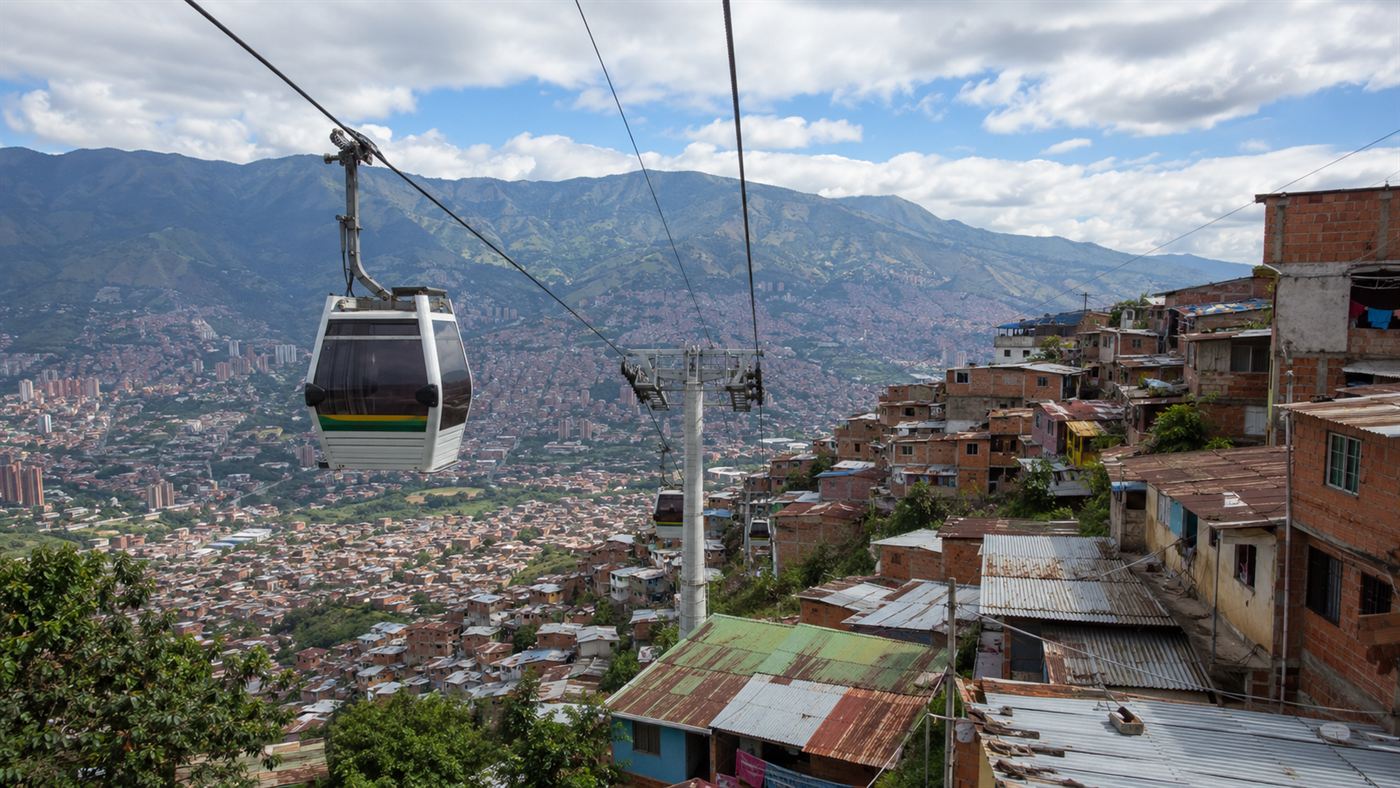
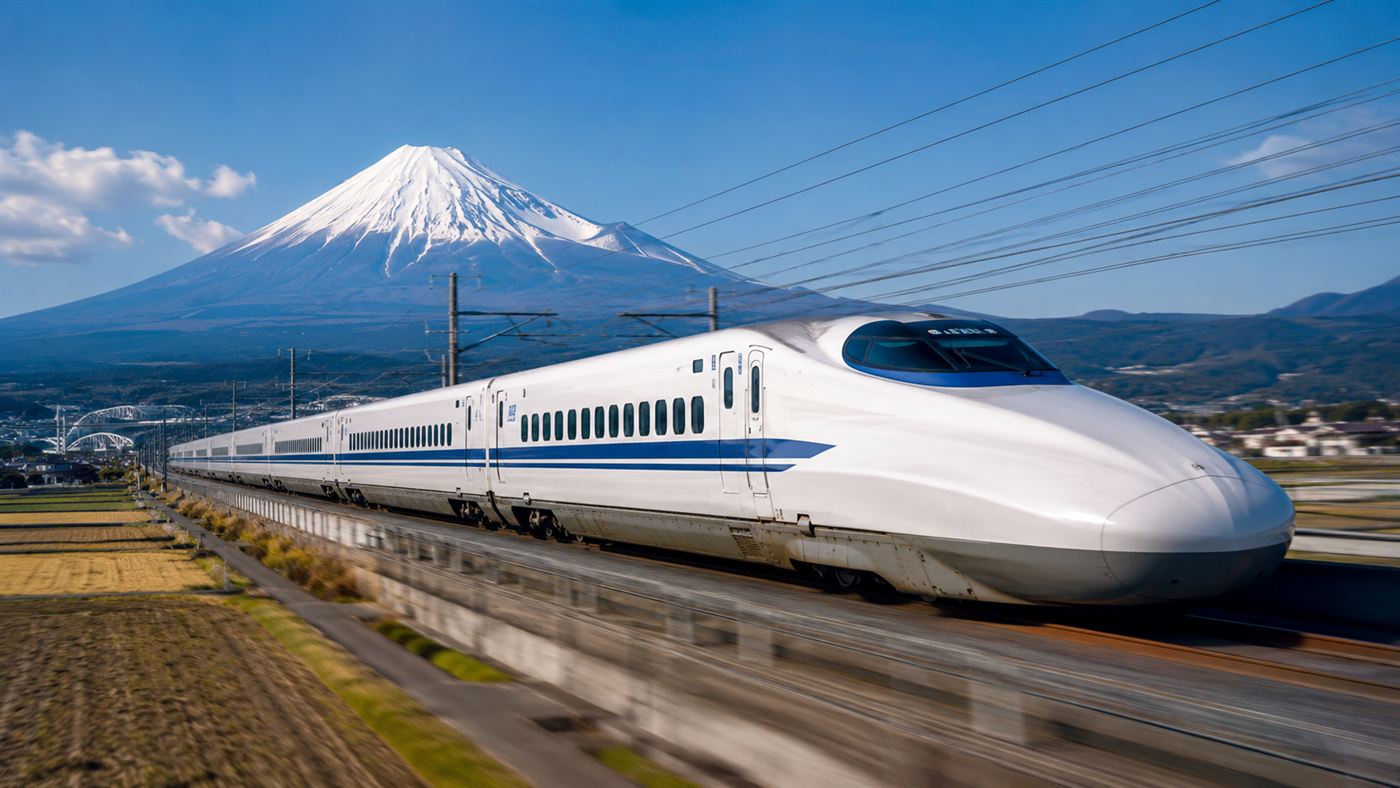
It belongs with the other bold experiments in moving people that we love, from the cable cars that lifted a Colombian city out of isolation to the bullet train that changed how the world rides the rails, and the Daddy Long Legs, the electric tram that ran through the sea on stilts.
If a hanging railway from 1901 can still outrun a city's traffic today, what other forgotten ideas should we be dusting off, and would you trust a train that dangles you over a river? Tell us in the comments.