A Victorian inventor built an electric tram on stilts and drove it straight through the sea
In the 1890s, bathers on the Brighton seafront could watch a strange machine come wading toward them across the waves: a small building on four enormous legs, gliding through the sea with passengers waving from its deck. It was called Daddy Long Legs, and it was a genuine electric railway that ran not beside the sea but through it.
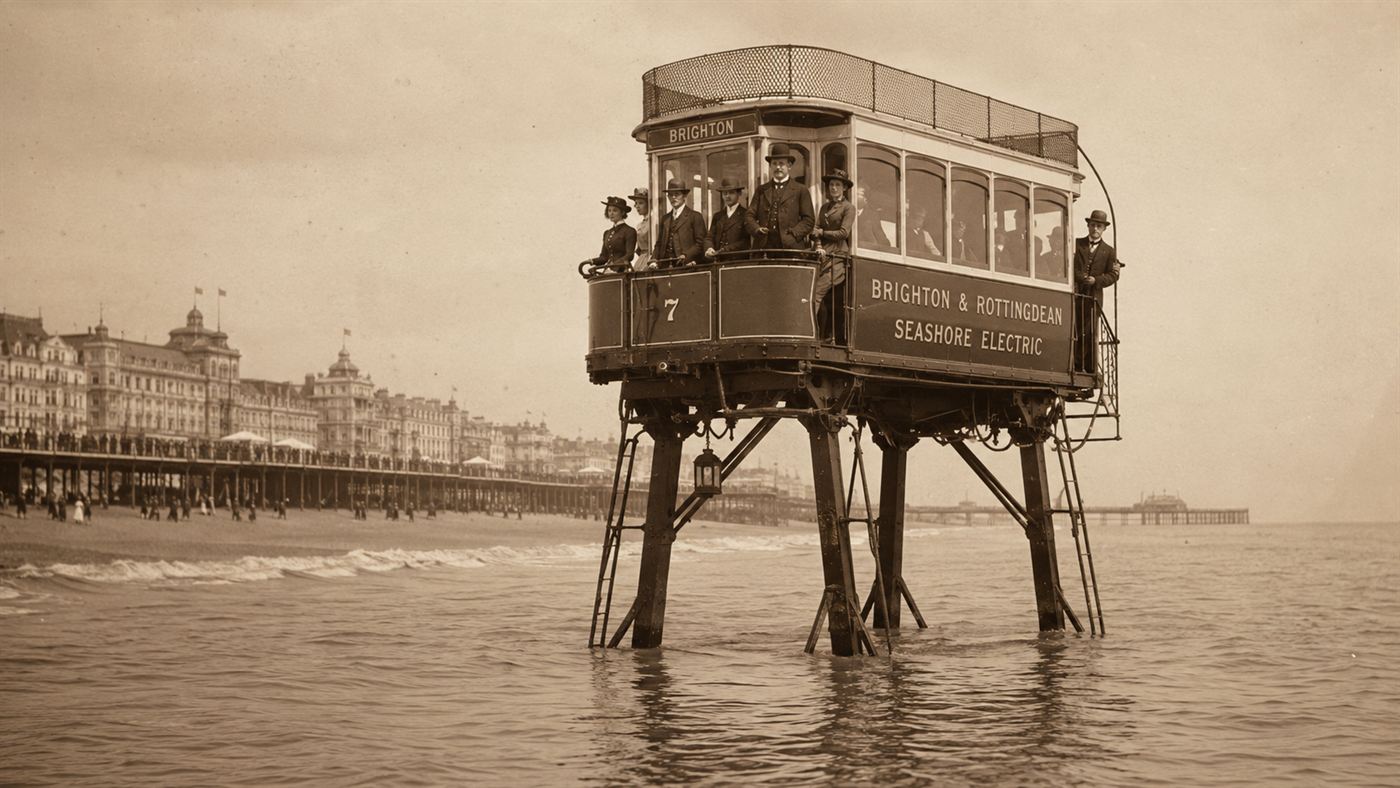
A tram the size of a small house, carried through the waves on four tall legs. Illustration: Watts & Wild.
Some inventions are too strange to have ever existed, except that they did. The Daddy Long Legs is one of them, a Victorian electric railway whose car stood on legs taller than a house and rolled along tracks bolted to the floor of the English Channel. For five brief years it really worked, ferrying day trippers along the Sussex coast through the open sea.
It was the boldest idea of a man who had already given Brighton something remarkable, and who simply refused to let a few miles of crumbling cliffs get in his way.
The man who electrified Brighton
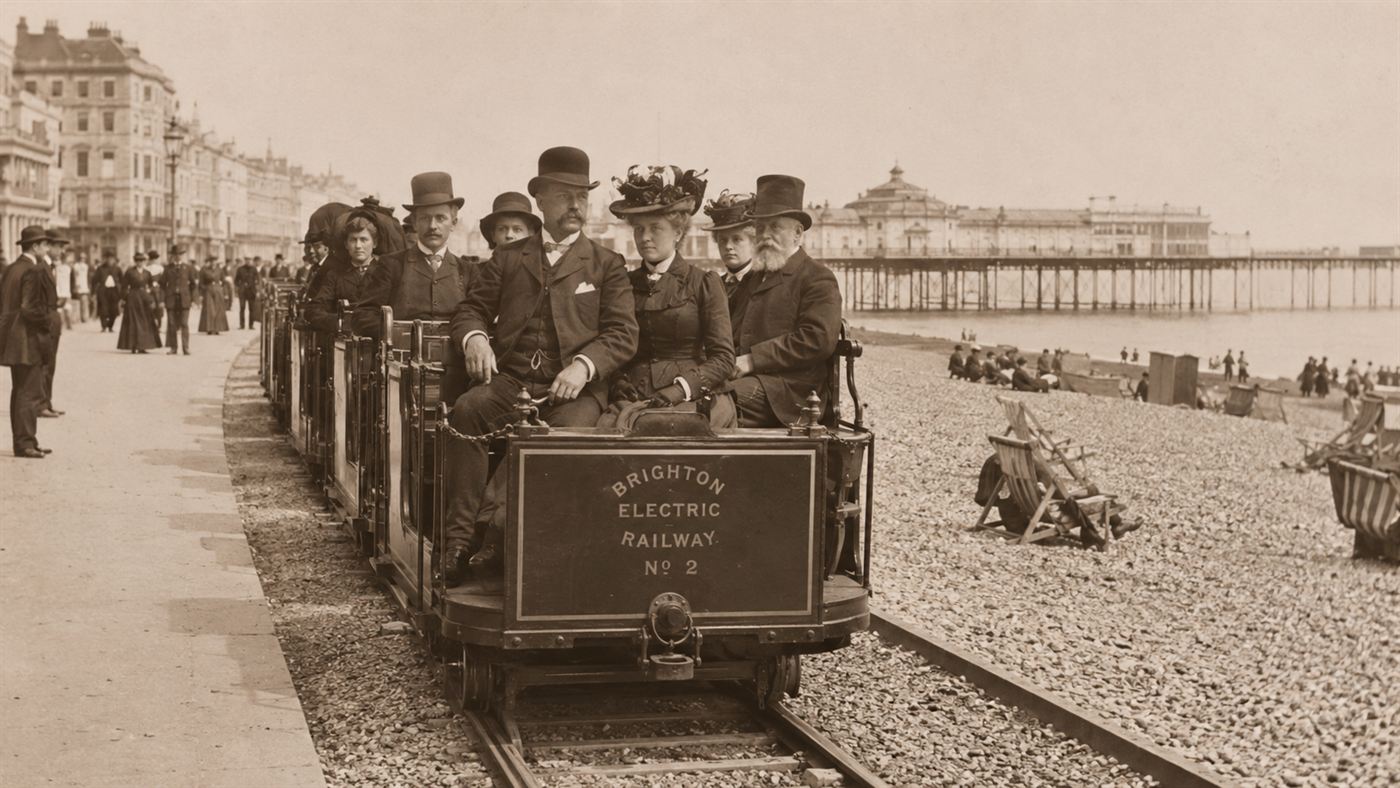
The inventor was Magnus Volk, a restless Brighton engineer fascinated by electricity at a time when most of Britain still ran on gas and steam. In 1883 he opened Volk's Electric Railway along the seafront, a little electric line that, astonishingly, still carries passengers today and is counted as the oldest operating electric railway in the world.
Volk wanted to extend his railway eastward to the village of Rottingdean, but the way was blocked by tall, crumbling chalk cliffs that made a normal track along the shore almost impossible. Rather than tunnel through the cliffs or give up, Volk decided to go around them, by running his railway out into the sea itself.
How the Daddy Long Legs railway crossed the sea
The solution was as audacious as it sounds. Two parallel tracks were laid on concrete sleepers fixed to the seabed, and onto them Volk set a single huge car, officially named Pioneer. The car sat on four legs about 24 feet tall, lifting its deck high above the water so it could keep running even when the tide came in and the rails below vanished beneath the waves.
Electricity reached it through an overhead cable, exactly like a street tram, except that this tram was wading through the sea. From the beach it looked impossible, a parlour with windows and a promenade deck striding across the water on spindly legs, which is precisely how it earned the affectionate nickname that stuck: Daddy Long Legs.
A tram that needed a sea captain
Because the car spent its working life out on the water, the authorities did not treat it as a railway at all. They treated it as a vessel. To get its licence, the Daddy Long Legs had to carry a qualified sea captain on board, along with a lifeboat and a ship's bell, as if it were a ferry rather than a tram.
The result was one of the most charming sights in Victorian Britain: passengers in their Sunday best, sitting on the deck of an electric tram, being steered through the sea by a captain, with a lifeboat hanging ready beside them. It was slow, wading along at little more than walking pace, but for a seaside outing the journey was the whole point.
Wrecked in a week, rebuilt, then doomed
The sea, however, was never going to make it easy. The line opened in November 1896, and within about a week a fierce storm flung the Pioneer over and wrecked much of the track. Volk rebuilt the whole thing and had it running again the following year, refusing to be beaten by the very element his railway was designed to cross.
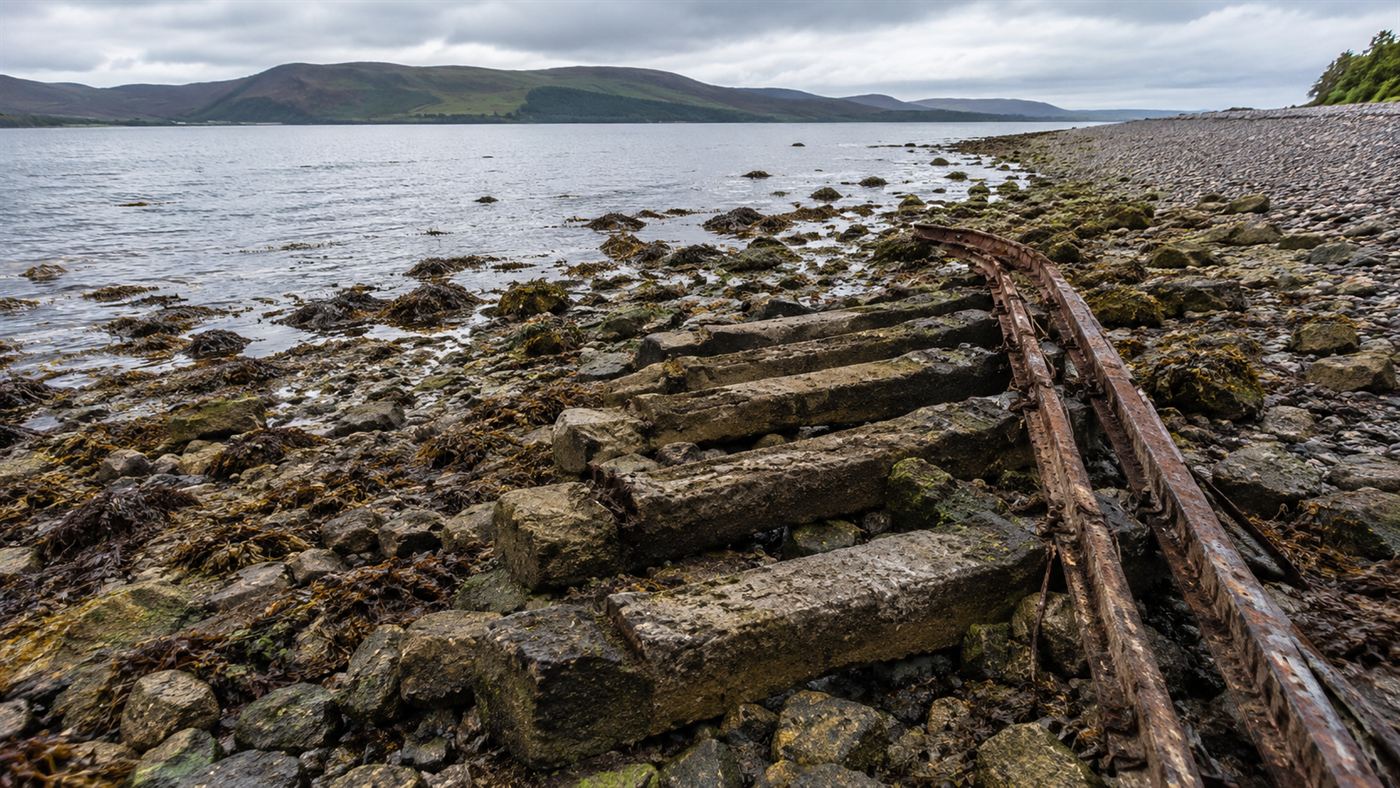
What finally killed it was not the weather but the town. By 1901 the council needed to build new sea defences along that stretch of coast, and the works meant the railway's track had to be moved further out. Volk could not raise the money to relocate his strange creation, and so the Daddy Long Legs was abandoned. At very low tide, the stumps of its concrete sleepers can still be seen poking out of the water off Brighton, the ghostly footprints of a railway that walked on the sea.
What was the Daddy Long Legs railway?
Stripped of the romance, it was a short-lived electric line that solved an awkward stretch of coast in the strangest way anyone has ever tried. It was never fast, never very profitable, and never safe from the storms that battered it, which is why it lasted only five years. But it was a real, working, electric-powered railway that carried paying passengers through the open sea, and nothing quite like it has been built since.
One honest note: Volk's earlier seafront line is the oldest electric railway still running, not the first ever built, since others had demonstrated electric trains a few years before him. That takes nothing away from the sea railway, though. The Daddy Long Legs remains one of those gloriously impractical Victorian experiments that remind us how wild the early days of electricity really were.
A tram with a captain and a lifeboat, striding through the sea on legs, is exactly the kind of beautiful madness the early electric age threw up. Would you have bought a ticket to ride an electric parlour through the waves, or is some weather simply not meant to be crossed by rail? Tell us what you think in the comments.
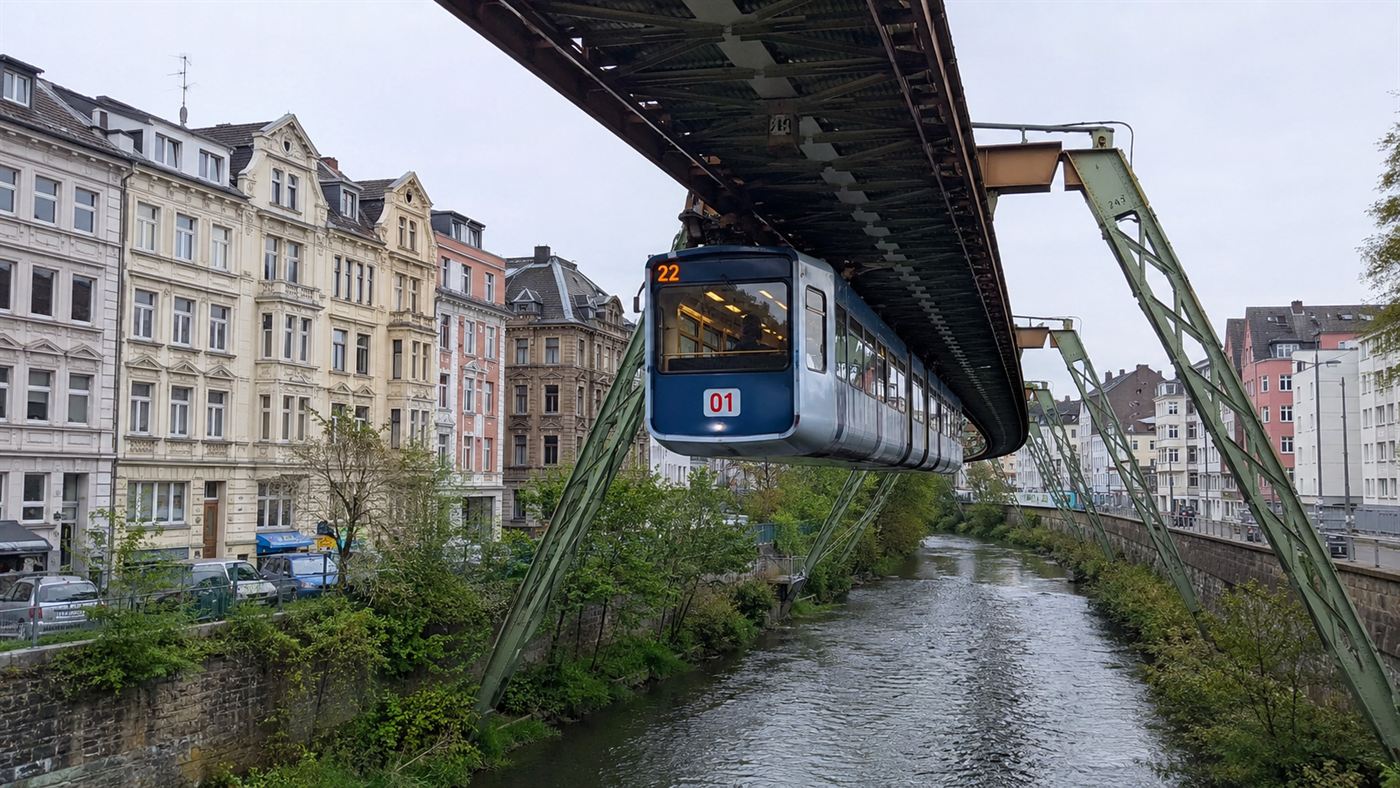
Related reading: the Wuppertal Schwebebahn, the hanging railway that has dangled commuters over a German river since 1901.