The orphaned cub who became a soldier in the Polish army
A group of exhausted, exiled Polish soldiers were crossing the deserts of Iran in 1942 when they met a boy with a bundle. Inside was a tiny, half-starved bear cub. They bought him for a few coins and some tinned food, and they had no idea they had just adopted a comrade who would march with them all the way to one of the bloodiest battles of the war. Wojtek the bear became a real, enlisted soldier.
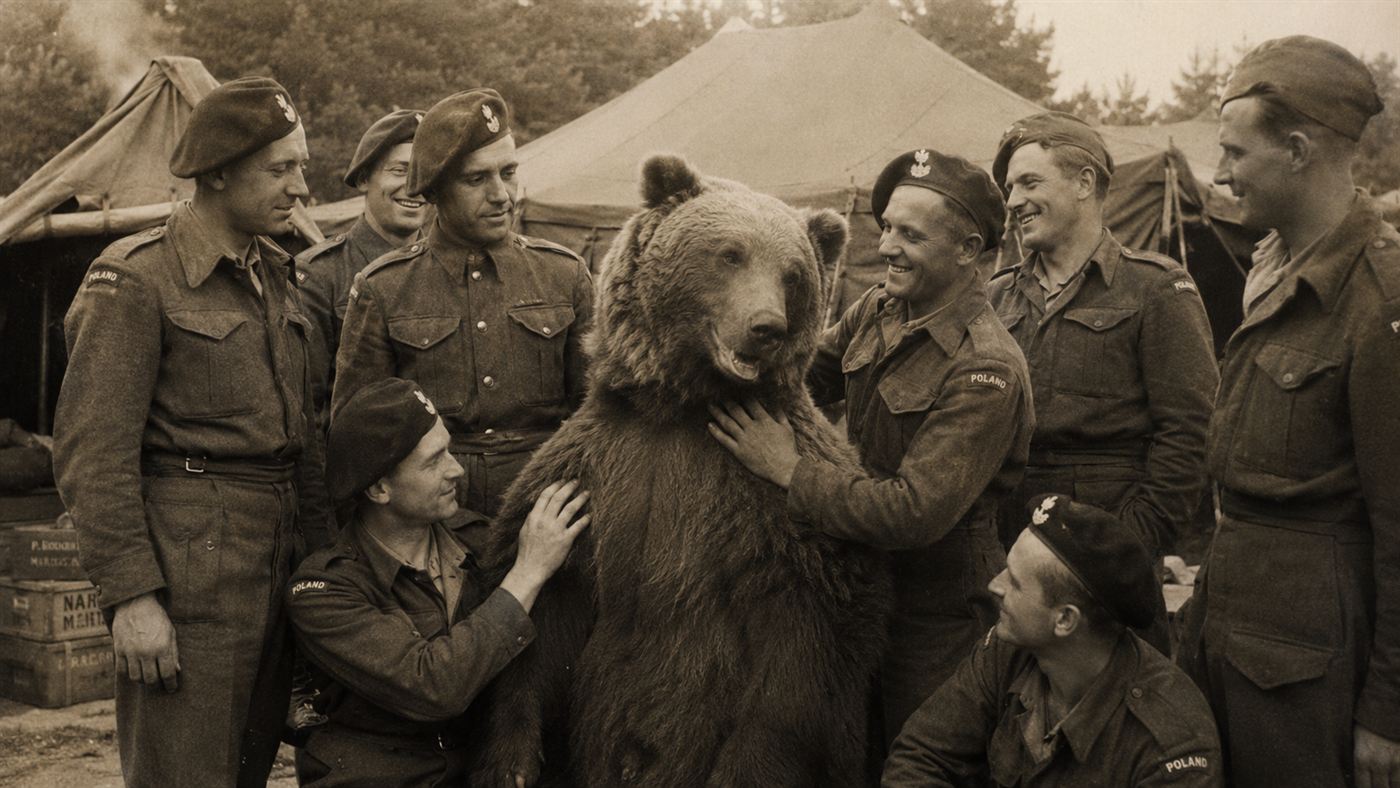
A bear who lived, travelled and was mustered in with his unit. Illustration: Watts & Wild.
It is the kind of story that sounds made up, and yet the paperwork is real. To the men of the 22nd Artillery Supply Company, Wojtek was not a pet or a mascot but one of their own, with a rank and a serial number to prove it.
His tale is funny and astonishing, but underneath it is something sadder and more human: a band of soldiers far from a homeland they might never see again, who found a family in a bear.
An orphan bought for a few tins of food
The Polish soldiers who found Wojtek were themselves survivors, released from Soviet camps and making their long way west to fight alongside the Allies. Near Hamadan in Iran they came across a young boy with an orphaned Syrian brown bear cub, its mother shot by hunters. The soldiers took the cub in, feeding the tiny, weak animal condensed milk from an old vodka bottle until he grew strong.
They named him Wojtek, an old Polish name that roughly means happy warrior, and he grew up among them as one of the unit. He learned to wrestle playfully with the men, to salute, and to enjoy thoroughly un-bearlike habits, drinking beer and even eating lit cigarettes. For homesick soldiers a long way from everything they knew, the growing bear became a beloved morale-booster and a reason to smile.
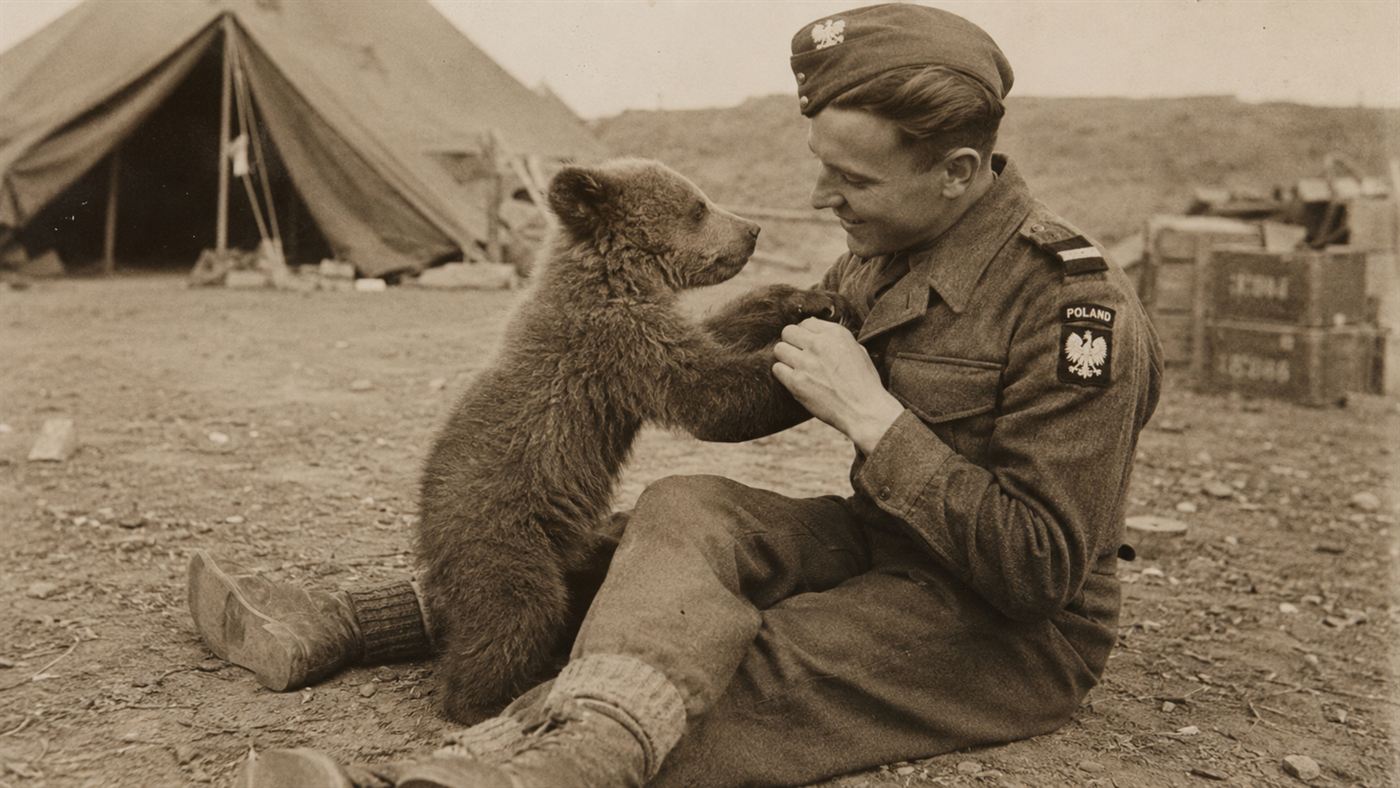
How Wojtek the bear became a soldier
The problem came when the unit was ordered to sail from Egypt to Italy in 1943. The British transport ships did not allow pets or mascots aboard, and no one was willing to leave Wojtek behind. So the Polish army solved it in the most literal way possible, officially enlisting Wojtek as a private soldier, complete with a name, a rank, a paybook and a service number.
Now that he was, on paper, a serving member of the 22nd Artillery Supply Company, no rule could keep him off the ship. Wojtek sailed to Italy as a soldier among soldiers, and would later be promoted to corporal. What began as a way to dodge a regulation turned a beloved bear into something no army had quite seen before.
Carrying shells at Monte Cassino
In 1944 the unit reached the savage fighting at Monte Cassino, where the Allies were battering against German positions on a fortified hilltop. Wojtek's company had to haul heavy crates of artillery ammunition up to the guns. Watching the men work, Wojtek began copying them, picking up crates of shells in his paws and carrying them, reportedly without ever dropping one.
The sight so captured his comrades that the company adopted a new emblem: a bear carrying an artillery shell, which became their official badge and is still worn today. It is worth being honest here, because the legend has grown over the years. Wojtek really did live with an artillery supply unit and carry ammunition crates, but some accounts of him calmly lugging live shells through the thick of battle are almost certainly romanticised. What is solid is remarkable enough on its own.
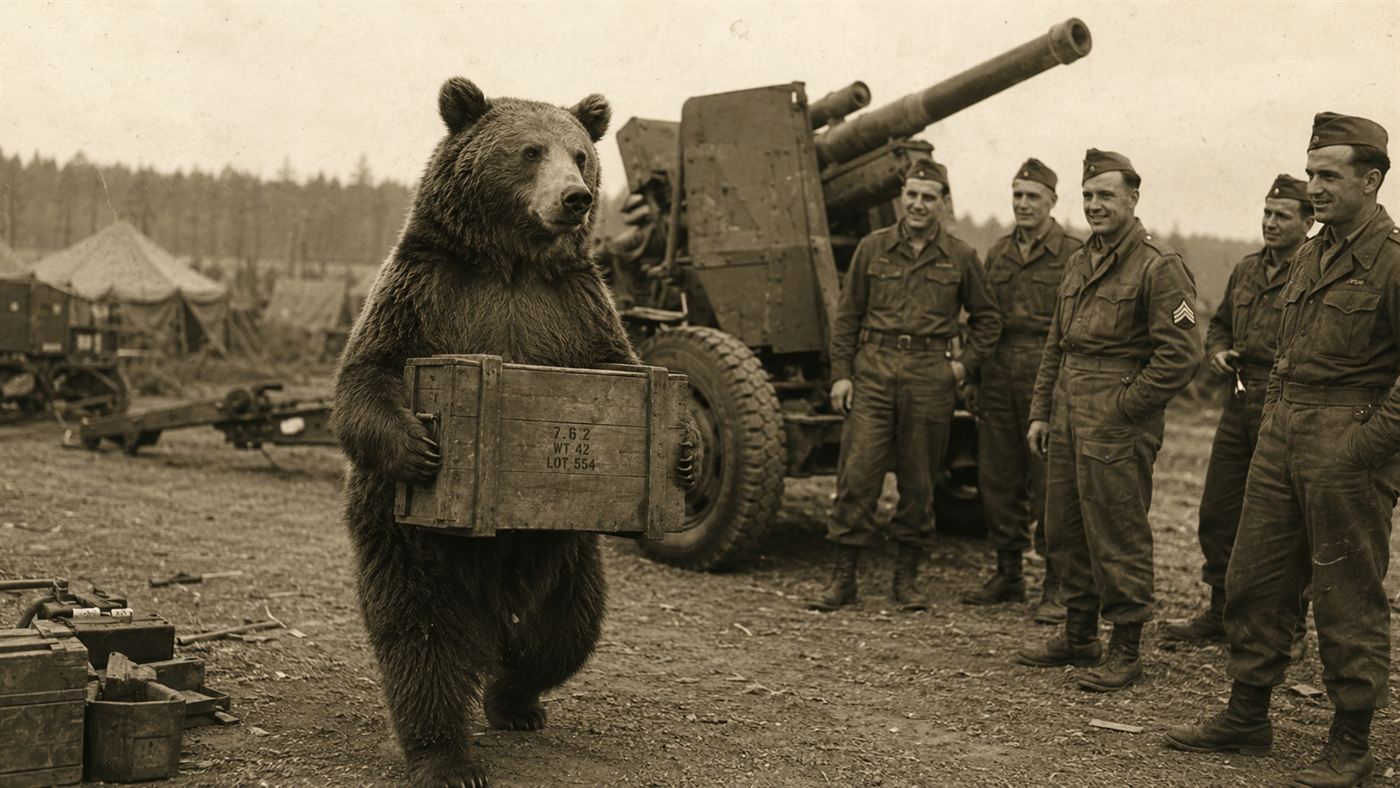
A bear who never went home
When the war ended, the Polish soldiers found themselves unable to return to a homeland now under Soviet control, and many were demobilised in Scotland. Wojtek went with them. In 1947 the bear who had crossed deserts and battlefields with the Polish army was handed over to Edinburgh Zoo, where he would spend the rest of his life.
His old comrades visited him there for years, sometimes climbing into the enclosure, and it was said he still brightened at the sound of Polish being spoken. He died at the zoo in 1963. Today statues of Wojtek stand in Edinburgh and Krakow, watched over by a bear who is remembered not for being a curiosity, but for being a small, warm anchor of home for men who had lost almost everything else.
Was Wojtek the bear a real soldier?
Officially, yes. Wojtek was formally enlisted as a private in the 22nd Artillery Supply Company, given a rank, a paybook and a serial number, and later promoted to corporal, which is exactly how he was allowed to travel with the unit by ship.
That does not mean he fought the way a human soldier did, and it is fair to separate the documented bear from the tall tales. He was an enlisted mascot who lived, trained and travelled with an army unit and helped carry its supplies. The deeper truth of the story is less about heroics and more about belonging, a bear given a uniform because the men could not bear to lose him.
What happened to Wojtek the bear after the war?
He spent his final years in Scotland. After the unit was demobilised, Wojtek was given to Edinburgh Zoo in 1947 and lived there until his death in 1963, visited often by the former soldiers who had raised him.
For those men, exiles who could not go home, the bear in the Edinburgh enclosure was a living link to the war they had survived and the country they had left behind. That is why his statues still draw quiet crowds today. Wojtek's story endures not because a bear once wore a uniform, but because of what he meant to the lonely soldiers who loved him.
A starving cub bought for a few coins became an enlisted soldier and then a nation's memory of survival. What is it about a shared animal that can hold a group of frightened, far-from-home people together? Tell us what you think in the comments.
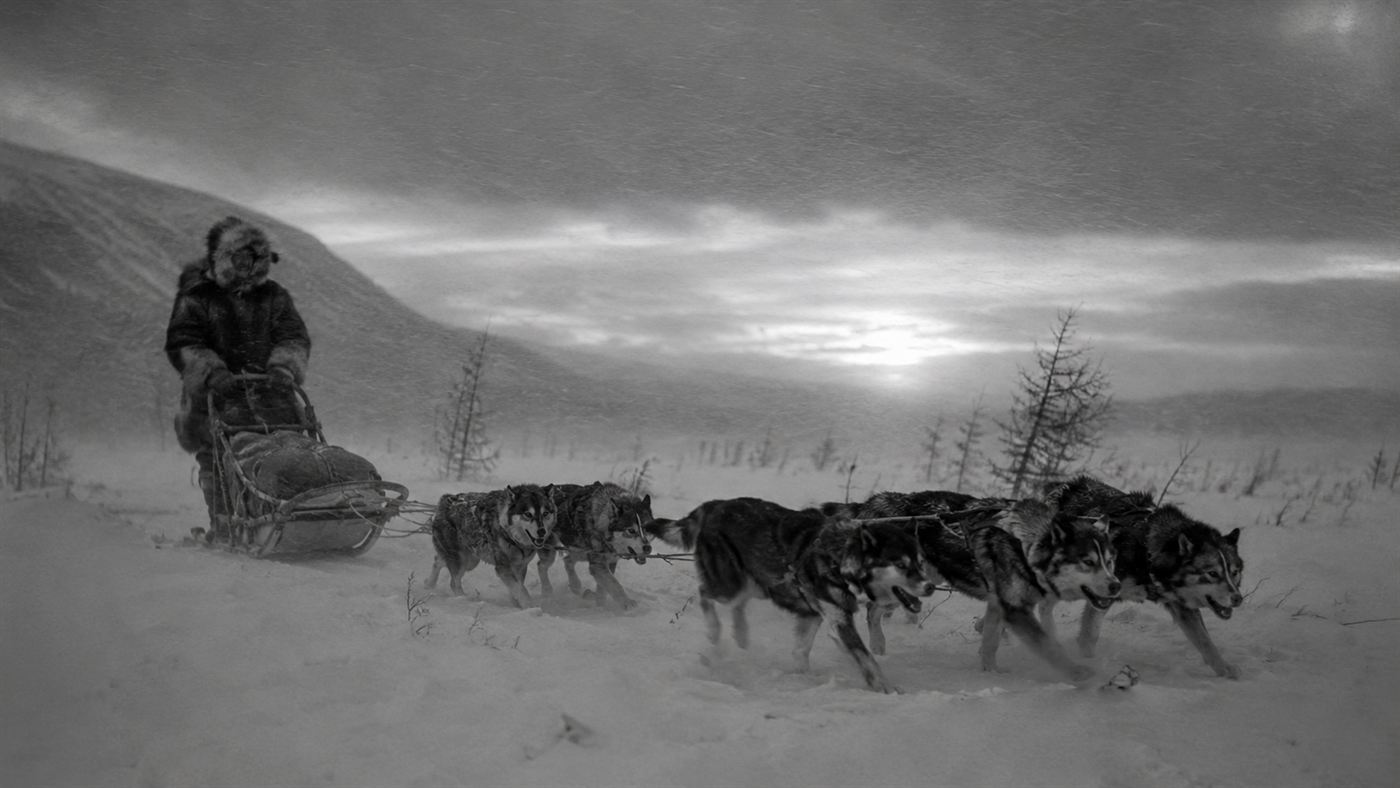
Related reading: Balto and Togo, the sled dogs who raced life-saving medicine across the frozen Alaskan wild, and the scientists who starved to death guarding a seed bank through the siege of Leningrad.