The night Martians invaded the radio, and the panic that mostly wasn't
On Halloween eve in 1938, a young Orson Welles went on the radio and told America that Martians were landing in New Jersey. The story goes that the country erupted in terror, with families fleeing their homes and clogging the roads to escape the invasion. It is one of the most famous nights in broadcasting history. It is also, in large part, not true. The War of the Worlds broadcast panic was mostly invented.
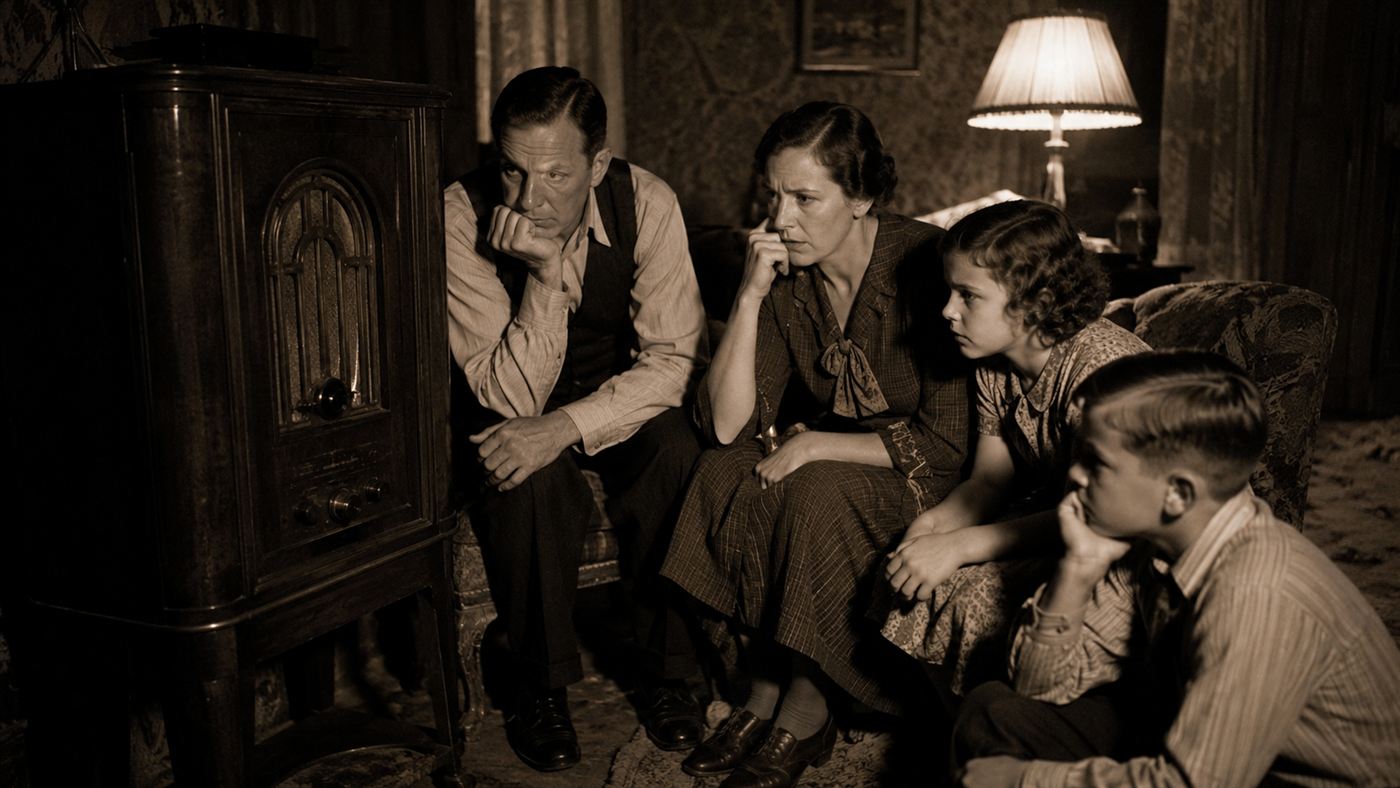
The broadcast that supposedly terrified a nation. Illustration: Watts & Wild.
The tale of the night the radio made America panic is told as a warning about the power of mass media to fool a gullible public. It is repeated in textbooks and documentaries to this day. But when researchers went back and actually checked, they found that the most famous part of the story, the mass panic itself, was largely a myth.
The real story is in some ways more interesting, because it is not about how easily people are scared, but about how easily a good legend can be built and believed.
The night the Martians landed
On 30 October 1938, Orson Welles and his Mercury Theatre on the Air presented a radio adaptation of H.G. Wells's novel The War of the Worlds on the CBS network. Welles cleverly staged the story as a string of breaking news bulletins, interrupting fake dance music with reports of strange explosions and then a Martian craft landing at Grover's Mill, New Jersey.
For a listener who tuned in late and missed the clear introduction, the effect could be genuinely unsettling. Announcers described tentacled invaders and heat rays in the calm, urgent voice of real reporters, and the show built its terror slowly and convincingly. As a piece of radio drama it was a masterpiece, and that craftsmanship is exactly what would later feed the legend.
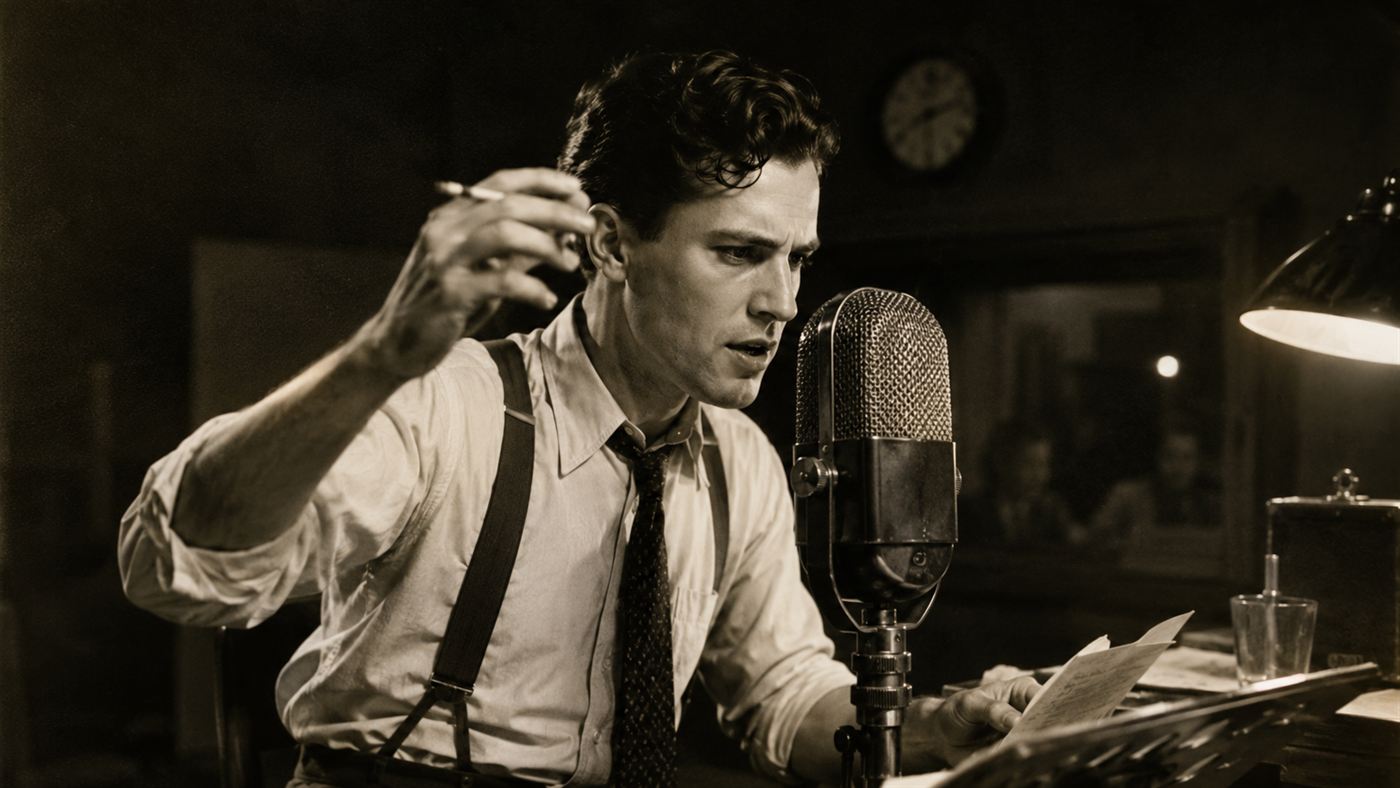
How the War of the Worlds broadcast caused a panic
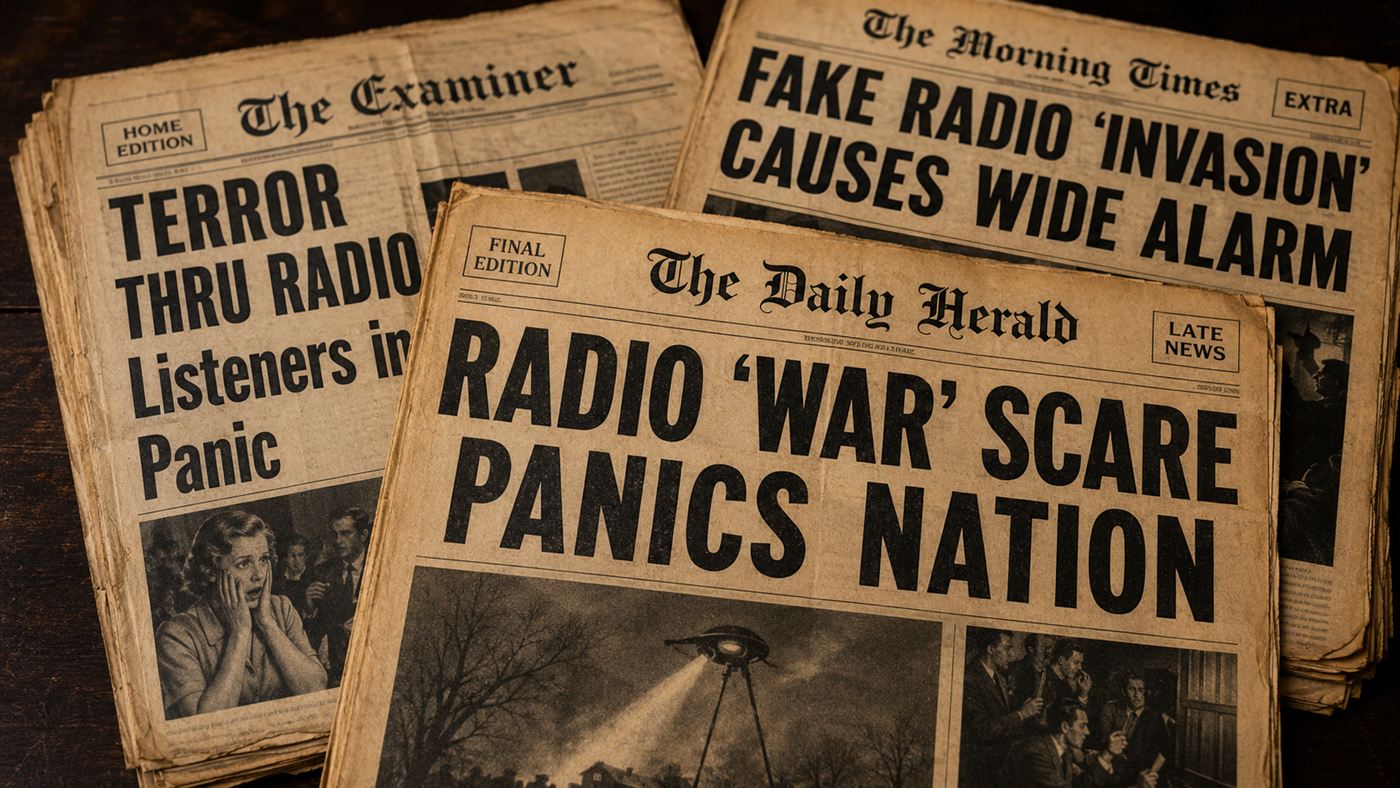
The next morning, the newspapers told a thrilling story. Front pages across the country described terrified Americans fleeing their homes, jamming phone lines, and praying in the streets, all because of a radio play about Martians.
It was the kind of tale that writes itself, and it stuck. Over the following years it grew in the retelling, helped along by a 1940 academic study that took the panic largely at face value and by the show's own makers, who were happy enough to be remembered as the men who frightened a nation. The broadcast became the textbook example of media hysteria, proof of how a single voice on the airwaves could send millions into a frenzy.
The panic that mostly wasn't
There is just one problem. When historians looked at the evidence, the great panic shrank dramatically. Ratings from that night show that very few people were even listening, because most of the country was tuned to a far more popular comedy show on a rival network.
The newspapers, it turned out, had every reason to exaggerate. Radio was a young rival stealing their advertising, and a story about reckless broadcasters terrifying the public was a useful way to discredit it. There were certainly some frightened and confused listeners, and a scattering of real incidents, including anxious calls to the police near Grover's Mill. But the image of a whole nation in coast-to-coast hysteria simply does not hold up. It is fair to say the panic was not nothing, but it was a long way from the legend.
The making of Orson Welles
If anyone truly benefited from the night, it was Welles himself. The supposed panic turned a 23-year-old theatre director into a household name almost overnight, and helped open the door to Hollywood and his masterpiece, Citizen Kane.
He spent the rest of his life with a complicated relationship to the legend, at times apologetic, at times quietly delighted to be the man who scared America. The story endured because everyone involved had a reason to keep it alive: the newspapers had their cautionary tale, the scholars had their case study, and Welles had his myth. The War of the Worlds broadcast really did happen, but the panic around it tells us less about a gullible audience than about how willingly all of us, then and now, believe a story too good to check.
Did the War of the Worlds broadcast really cause panic?
Far less than you have been told. A handful of listeners were genuinely scared and there were scattered real incidents, but there was no nationwide mass hysteria, and most Americans were not even tuned in to hear it.
What makes the case so instructive is that the myth of the panic spread far more widely than any real fear ever did on the night. The lasting hysteria did not happen in 1938 living rooms; it happened on the printed page and in the decades of retelling that followed. The broadcast became frightening mainly in memory.
Who made the War of the Worlds broadcast?
A very young Orson Welles. Welles and his Mercury Theatre on the Air produced the program for CBS, turning H.G. Wells's invasion novel into fake news bulletins that aired on 30 October 1938.
He went on to become one of the most celebrated filmmakers of the twentieth century, and this single hour of radio remained one of his most famous works. It is a fitting legacy for a born showman: a performance so convincing that the story about it grew even bigger than the story he actually told.
The most famous media panic in history barely happened, and the myth of it outran the truth for almost a century. How many stories do we all "know" to be true simply because they have been repeated so many times? Tell us what you think in the comments.
Related reading: the Max Headroom hijack, the masked figure who seized two Chicago TV stations and was never caught, and the Cardiff Giant, the stone man that fooled America and then spawned a fake of itself.