Copenhagen turned a trash-burning power plant into CopenHill, a 90-meter artificial mountain with a 400-meter ski slope on its roof, and made the thing every city hides its proudest landmark
CopenHill looks like a ski mountain that wandered into a Danish harbor. It is actually one of the cleanest waste-to-energy plants on Earth, burning 400,000 tonnes of the city's garbage a year, with a 400-meter ski slope, hiking trails and a climbing wall bolted onto its roof.
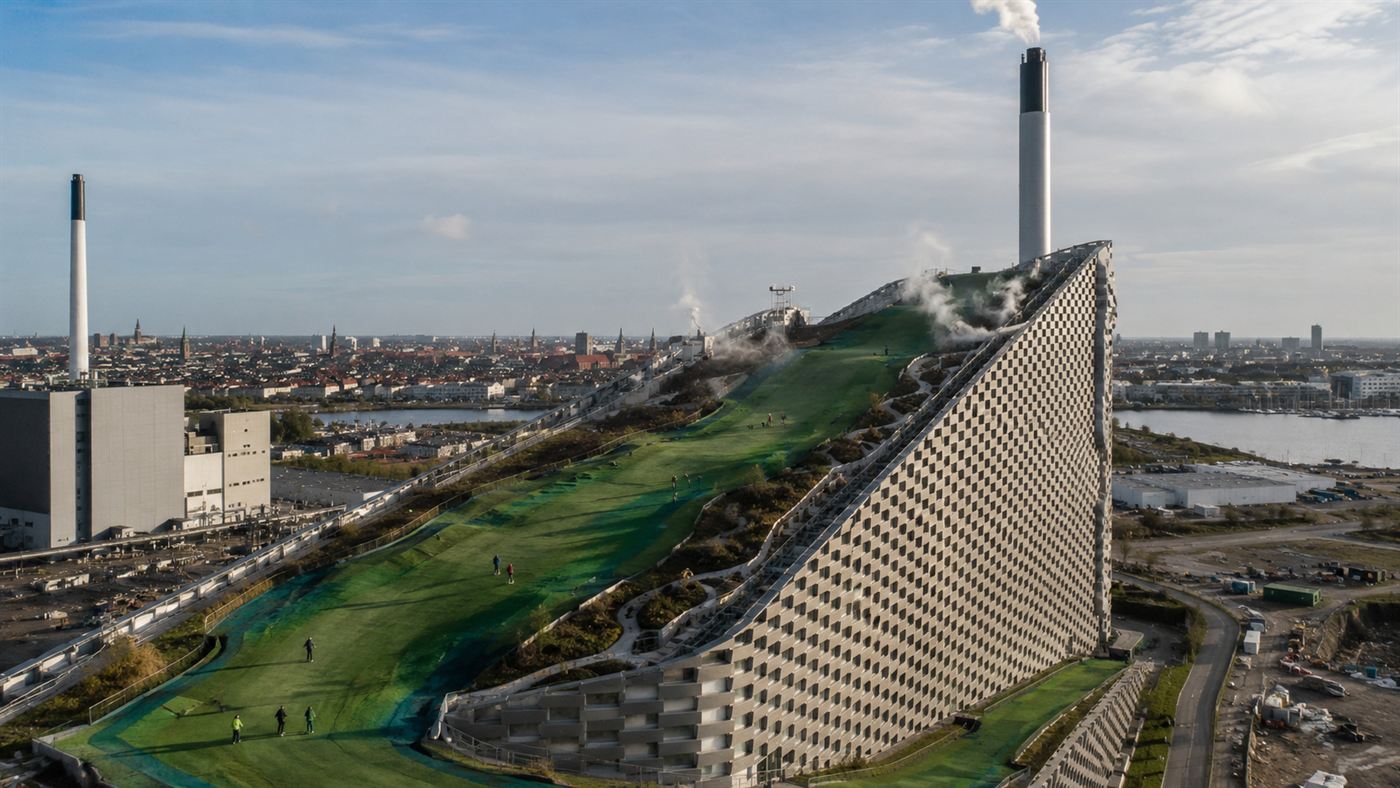
The roof of a working incinerator, reimagined as a year-round ski slope above Copenhagen. Illustration: Watts & Wild.
CopenHill rises out of the flat Copenhagen waterfront like a slab of alpine landscape that took a wrong turn. From the harbor it reads as a long, tilted green mountain, with skiers carving down its face and walkers climbing a trail up the side. Underneath that slope, running around the clock, is a furnace that swallows the household trash of more than half a million people and turns it into power and heat.
The building is officially called Amager Bakke, and it is a waste-to-energy plant, the kind of facility most cities push to the edge of town and hope nobody thinks about. The Danish architect Bjarke Ingels and his firm BIG had a stranger idea. As Dezeen reported when the slope opened in 2019, they decided to put the dirtiest job in the city underneath the most joyful one, and let people ski down the roof of their own incinerator.
What is CopenHill? CopenHill, officially Amager Bakke, is a waste-to-energy plant in Copenhagen that burns about 400,000 tonnes of rubbish a year to make electricity and heat. Its sloping roof doubles as a 400-meter public ski slope, hiking trail and climbing wall, which opened to visitors in October 2019.
How does a waste-to-energy plant work?
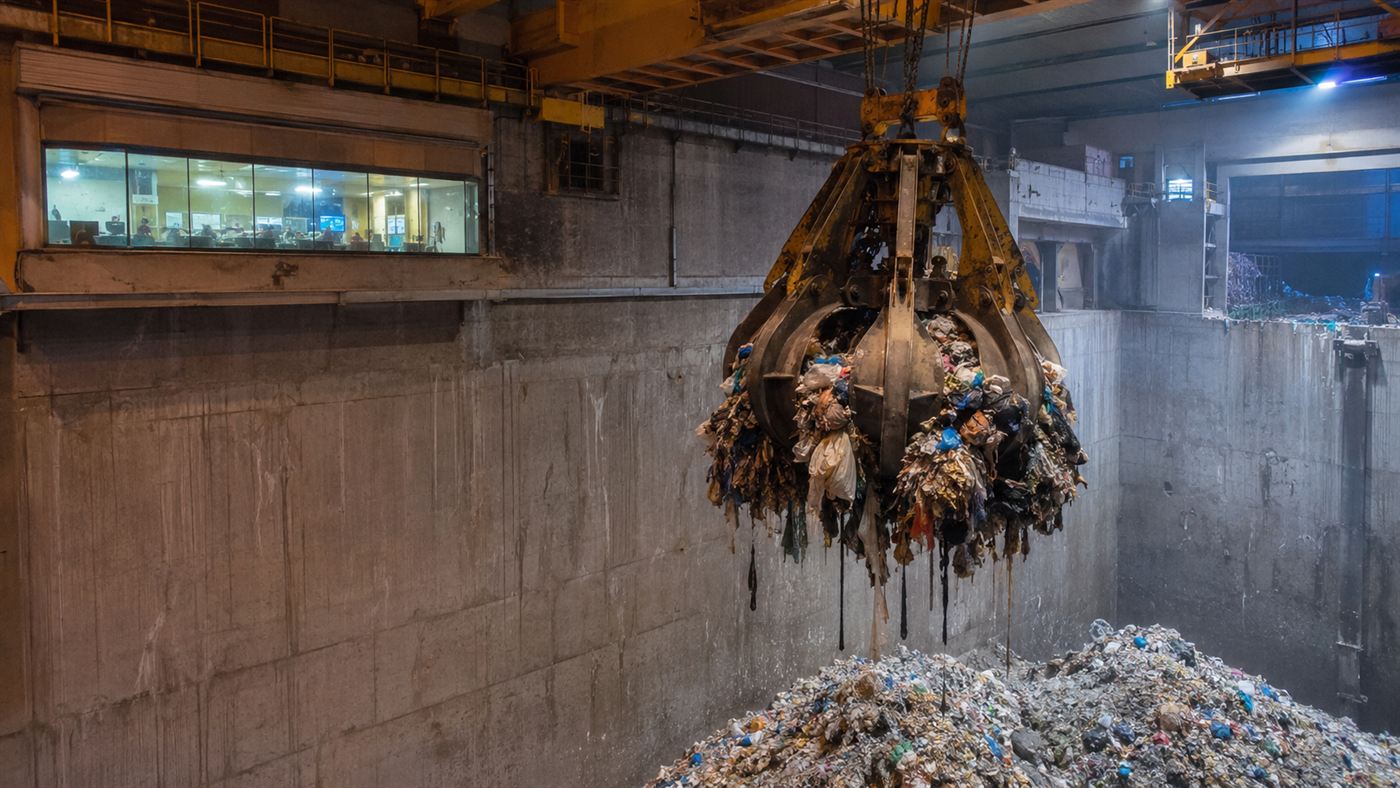
Strip away the ski slope and CopenHill does an old job in a modern way. Trucks tip sorted, non-recyclable household waste into a vast bunker, a giant claw feeds it into furnaces, and it burns at high temperature. The heat boils water into steam, the steam spins a turbine, and the turbine makes electricity. The hot water left over is not wasted either: it flows into Copenhagen's district heating network and warms people's radiators.
The numbers are substantial. According to ArchDaily, the plant converts around 400,000 tonnes of waste a year into enough electricity for 60,000 homes and heat for 160,000. It replaced a worn-out 1970s incinerator on the same site, with far better filters on the chimney. In Denmark, burning what cannot be recycled to heat homes is not exotic, it is ordinary infrastructure, which is exactly why a waste-to-energy plant could become a public playground without anyone panicking.
Why put a ski slope on a power plant?
The honest answer is that Bjarke Ingels wanted to prove a point. He talks about something he calls hedonistic sustainability, the idea that going green should make daily life more fun rather than just demand guilt and sacrifice. A power plant is the perfect test, because nothing about a furnace says joy. If you could make people want to spend their weekend on top of one, you could change how a whole city feels about its own infrastructure.
Copenhagen also had a very practical gap to fill. It is famously, stubbornly flat, with no real hills and unreliable snow, so a population of keen skiers had nowhere local to practice. The new plant was going to be the tallest structure for miles whether anyone liked it or not. Turning that bulk into an artificial mountain, open to the public, answered both problems at once and gave the city a landmark it could actually use.
Skiing, hiking and one of the world's tallest climbing walls
The rooftop ski slope is the part that stops people mid-scroll, and up close it delivers. It runs 400 meters from the 90-meter summit to the bottom, with a 180-degree turn halfway, surfaced not in snow but in a green synthetic mat that lets people ski and snowboard all year round. There are gentle nursery runs near the top and steeper pitches lower down, plus a lift and a rental shop, exactly like a real resort.
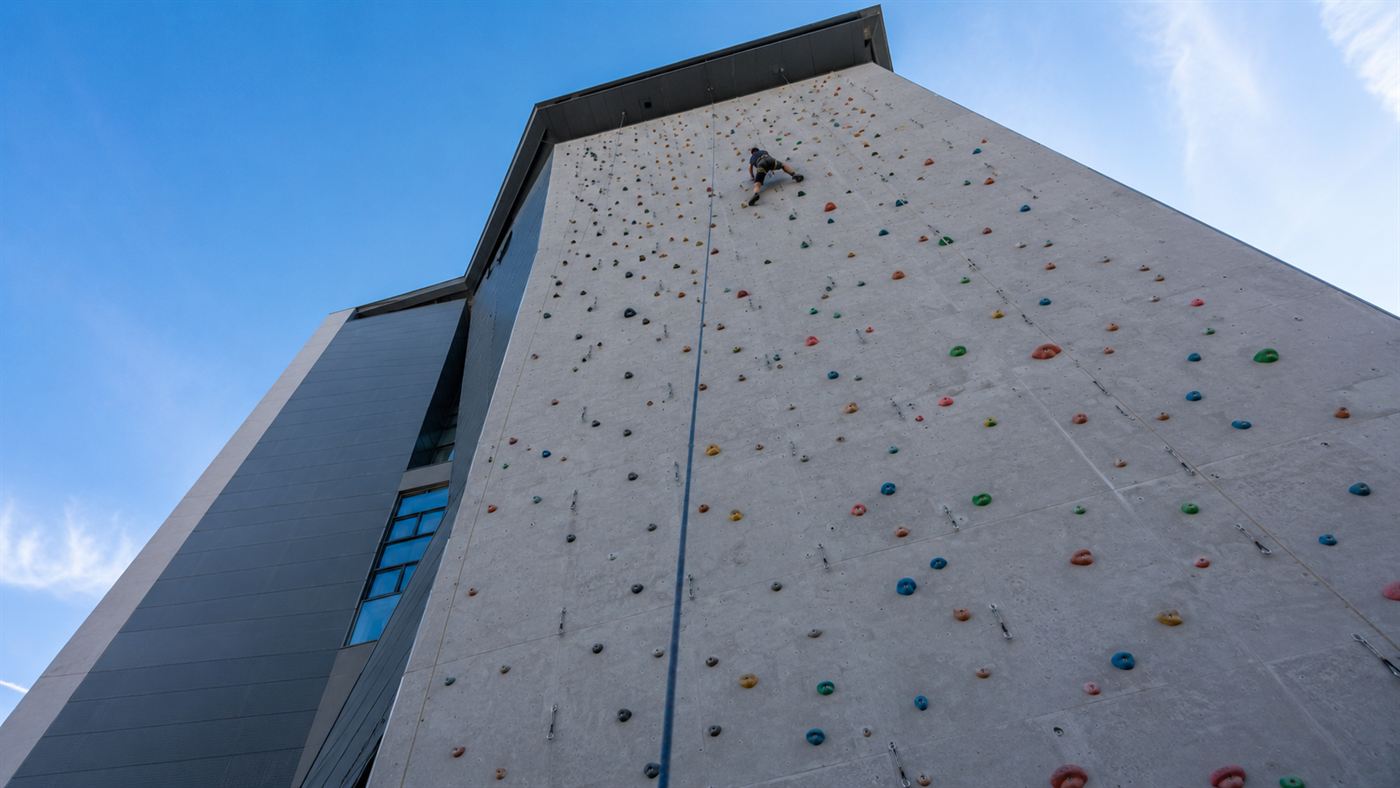
The slope is only the headline. A hiking and running trail planted with trees and shrubs climbs the long edge of the building, free for anyone to walk, ending at a rooftop bar with a view over the city and the sea. Bolted to the tallest vertical face is a climbing wall of around 85 meters, among the tallest artificial climbing walls anywhere. None of it pretends the plant is not there. You are always, very clearly, standing on a working incinerator.
The CopenHill smoke ring that was supposed to count the carbon
One of the boldest ideas for CopenHill never fully arrived. BIG wanted the chimney to puff out a perfect ring of steam for every tonne of carbon dioxide the plant released, a slow, visible counter floating over the city to remind everyone that even clean-looking energy has a cost. It was meant to turn an invisible problem into public theater.
In practice the smoke-ring generator proved temperamental and was repeatedly delayed, and for long stretches the rings simply did not fly. It is a small, telling footnote: the building's engineering as a power plant works beautifully, while its most poetic flourish was the part that struggled. The mountain you can ski is real. The carbon you cannot see is still going up the stack, ring or no ring.
The honest catch
It is worth being clear-eyed about what CopenHill is and is not. Burning rubbish for power is genuinely better than letting it rot in a landfill, where it would leak methane, a far more potent greenhouse gas. But a waste-to-energy plant still emits carbon dioxide, and a furnace this hungry needs a steady diet, which is why Denmark sometimes imports waste to keep its incinerators fed. Critics argue that can quietly compete with recycling, since a city that has built a giant furnace has a reason to keep filling it.
The operators know this, and CopenHill is now in line to be fitted with carbon capture to scrub much of that CO2 from its exhaust. None of that erases the achievement. A city took the least lovable building it owns, made it cleaner than the thing it replaced, and then handed the roof back to its citizens as a park. That is a rare and genuinely useful idea, even with a smudge of smoke over it.
A city took the building everyone wanted to hide, the furnace that burns its garbage, and turned it into the tallest, busiest mountain for miles. Would you rather your city buried its power plants out of sight, or made them places you actually want to go? Tell us what you think in the comments.
Related reading: The power station hidden inside a Welsh mountain that can wake from standby and light up a nation in 16 seconds.