America's largest offshore wind farm is rising 27 miles off Virginia Beach, one giant turbine at a time
In 2026, the biggest clean-energy construction site in the United States is not on land at all. It is a patch of open Atlantic where Coastal Virginia Offshore Wind is planting 176 towering machines, and this year it crossed two milestones at once: it started feeding real power to the coast, and it passed the point of no return.
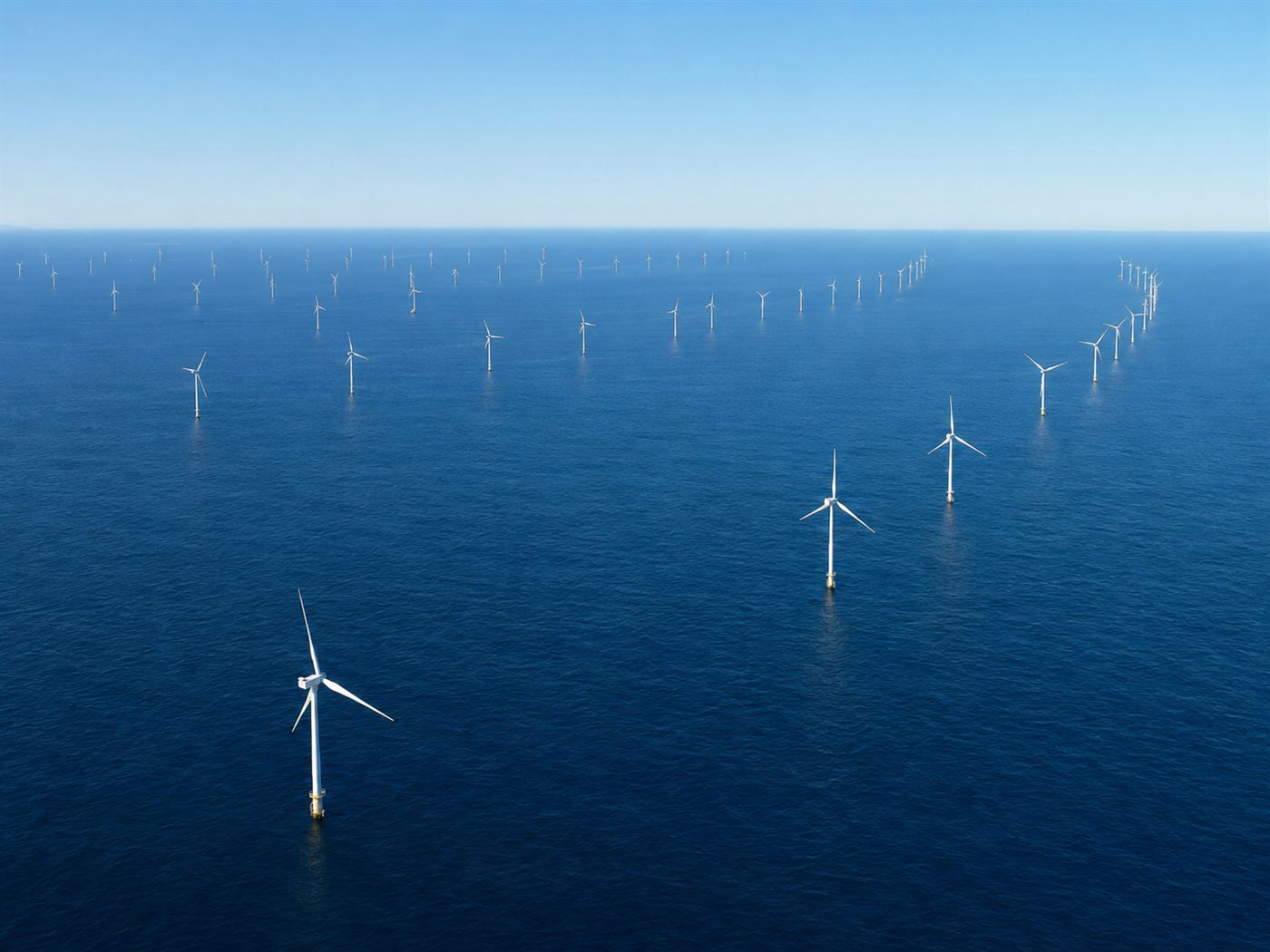
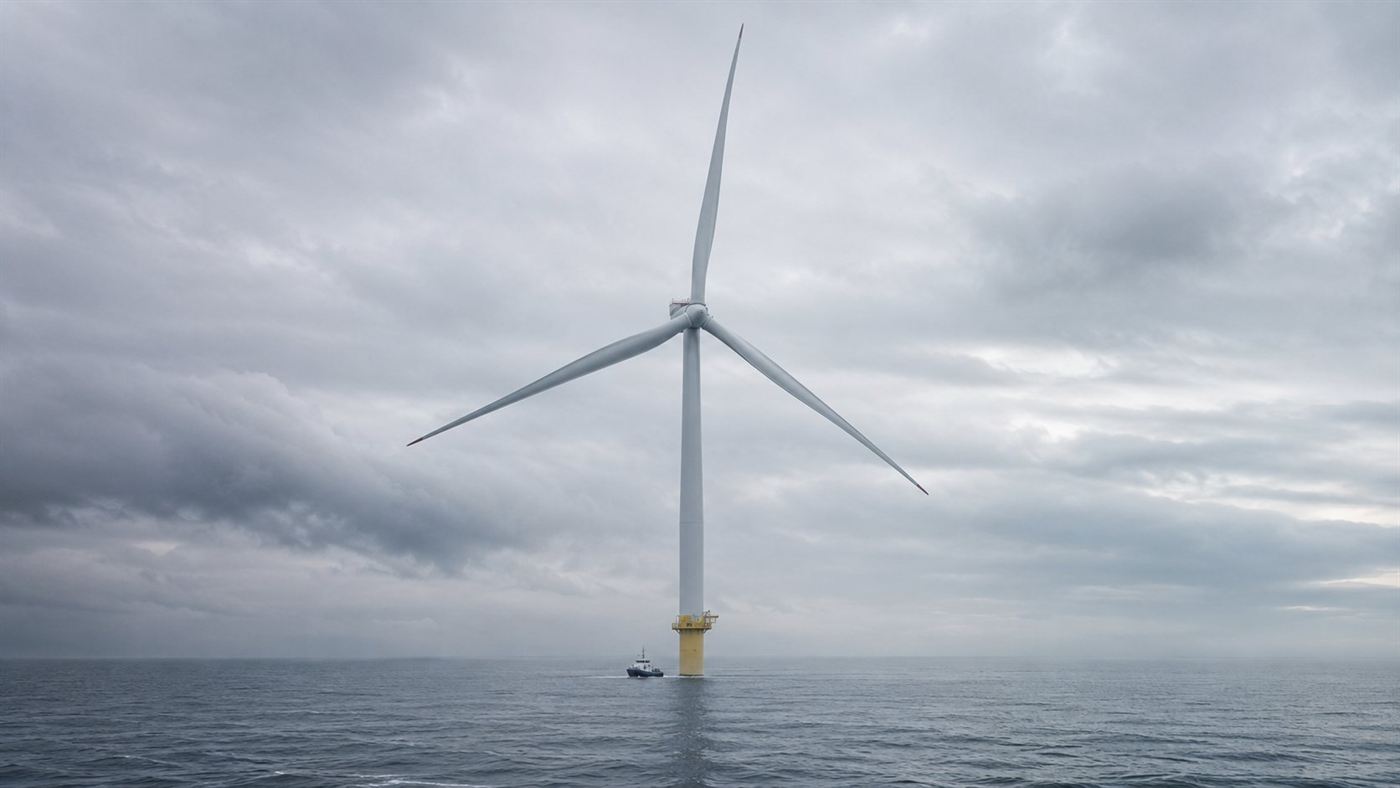
The largest offshore wind farm in the United States, taking shape off the Virginia coast. Illustration: Watts & Wild.
On March 23, 2026, Dominion Energy announced that Coastal Virginia Offshore Wind had begun sending electricity to shore for the first time. By mid-2026 the project had pushed past 70 percent complete, with all 176 foundations driven into the seabed and most of the connecting pieces in place, moving into the slower, fiddlier final stretch of hanging the turbines themselves.
The numbers are the kind that stop you for a second. The finished farm will carry 176 turbines rated at 14.6 megawatts each, for a total of about 2.6 gigawatts, enough at full tilt to power as many as 660,000 homes. It sits roughly 27 miles off Virginia Beach, far enough that from the sand you will barely see it.
The short version is that after years of plans, lawsuits and delays, the United States finally has a genuinely enormous offshore wind farm, and it is switching on right now rather than someday.
What Coastal Virginia Offshore Wind actually is
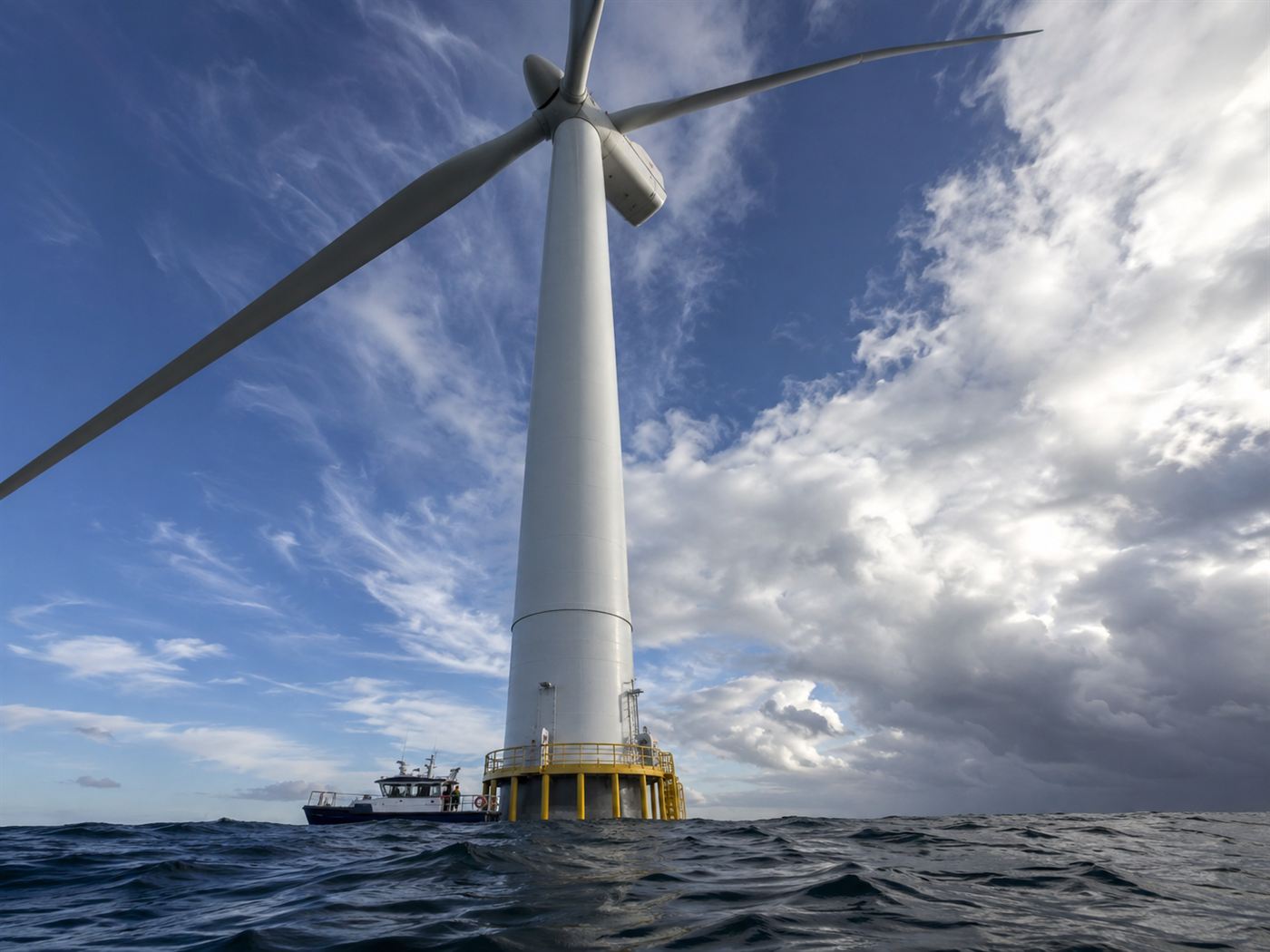
Each machine is a Siemens Gamesa turbine with a rotor 222 metres across, a spinning circle wider than two American football fields laid end to end. Mounted on steel foundations called monopiles hammered deep into the ocean floor, the towers stand high enough that a large ship could pass beneath the blades at their lowest point.
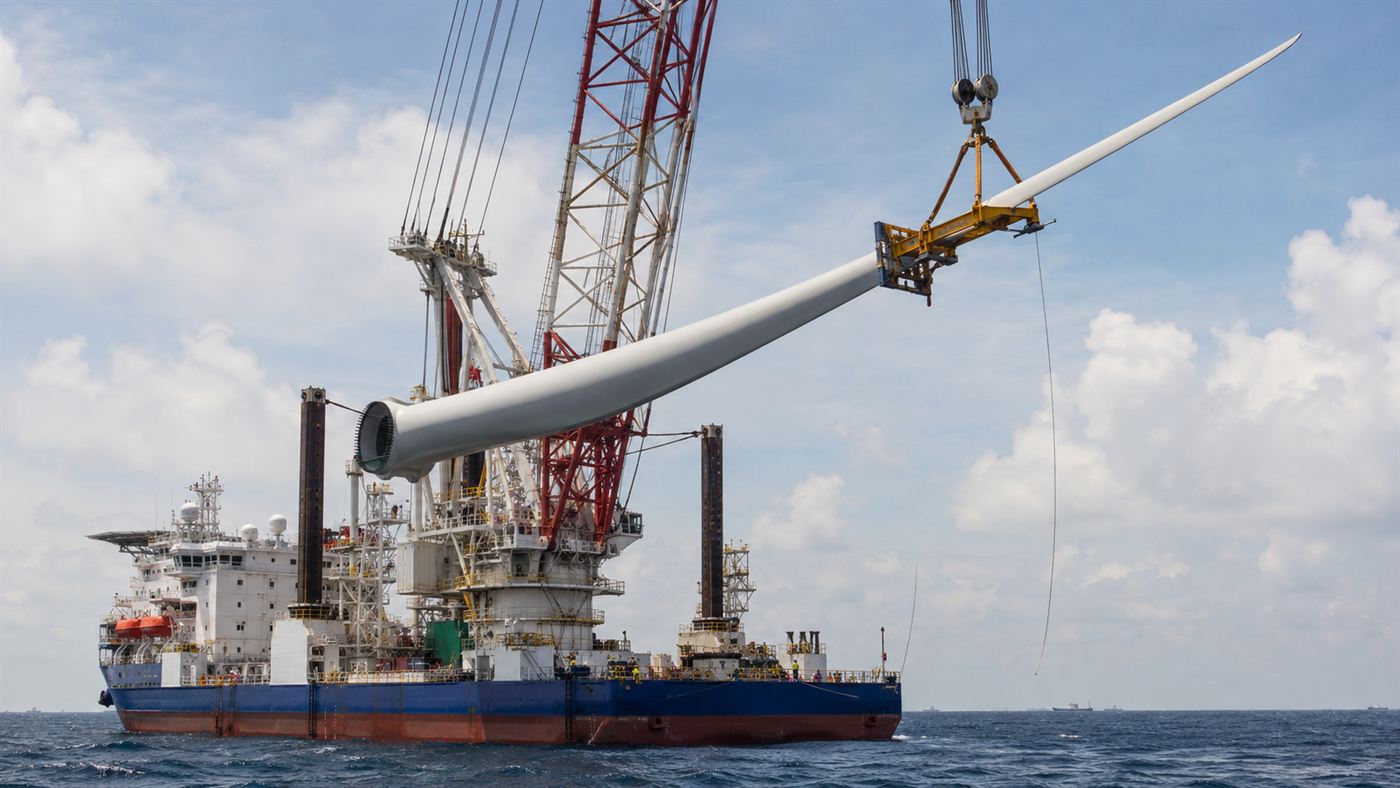
Building at sea is brutally hard. Everything has to be floated out on specialised vessels, lifted in narrow weather windows, and bolted together while the Atlantic heaves underneath. Each blade sweeps an area wider than a football field, and every one of those 176 turbines had to be raised in a choreography of cranes, tugs and tight schedules. Dominion Energy is running the whole build, and it is by any measure one of the most complex industrial projects in the country.
Why build a power plant in the ocean at all
The obvious question is why go to all this trouble offshore, when a wind farm on land is far cheaper to build. The answer is the wind itself. Out over the ocean it blows harder and far more steadily than it does over hills and fields, so each machine spends more of its life generating near its full output, which is why the industry keeps pushing into deeper water despite the cost.
There is a second reason, and it is about geography. The dense, power-hungry cities of the American East Coast sit right next to the sea but have almost no spare land for sprawling energy projects. A wind farm parked just over the horizon can pump electricity straight into those coastal grids without carving up the countryside, feeding the grid exactly where demand is highest.
Is offshore wind worth the cost?
This is where the story stops being a simple triumph. Coastal Virginia Offshore Wind has not been cheap or smooth. A legal fight in early 2026 forced a temporary pause on construction, and that stoppage alone is reported to have cost Dominion Energy more than 200 million dollars, on top of a build already running to well over 10 billion.
Offshore wind in America has spent years fighting headwinds that have nothing to do with the weather: shifting politics, court challenges, tangled permits and a hostile turn against the industry at the national level. That this project reached the water and started generating anyway is precisely what makes it notable. It is proof that the thing can actually be finished in United States waters, not just promised.
The honest catch
The temptation is to read 660,000 homes and picture the coast quietly running on sea breeze. The catch is in the word peak. That figure is what the farm can do when every turbine is spinning hard, and the wind does not always oblige. On calm days the output falls, and the grid still needs other sources ready to fill the gap, which is why big batteries and firm power plants remain part of the same picture.
There are real costs beyond money too. Conservationists worry about the effect of construction noise and spinning blades on whales and seabirds, and those concerns deserve honest study rather than dismissal. None of that erases the achievement. The largest thing America has ever built at sea for clean power is now turning off Virginia Beach, and it is genuinely impressive. It is also, like every energy source we have, a trade rather than a miracle, and worth seeing clearly for what it is.
Sources: Utility Dive on CVOW delivering power, Power Engineering, and Dominion Energy's project page.
A forest of machines taller than skyscrapers is quietly going up where no one can quite see it. Would you rather live near a wind farm out at sea, or the power plant it might replace on land? Tell us what you think in the comments.
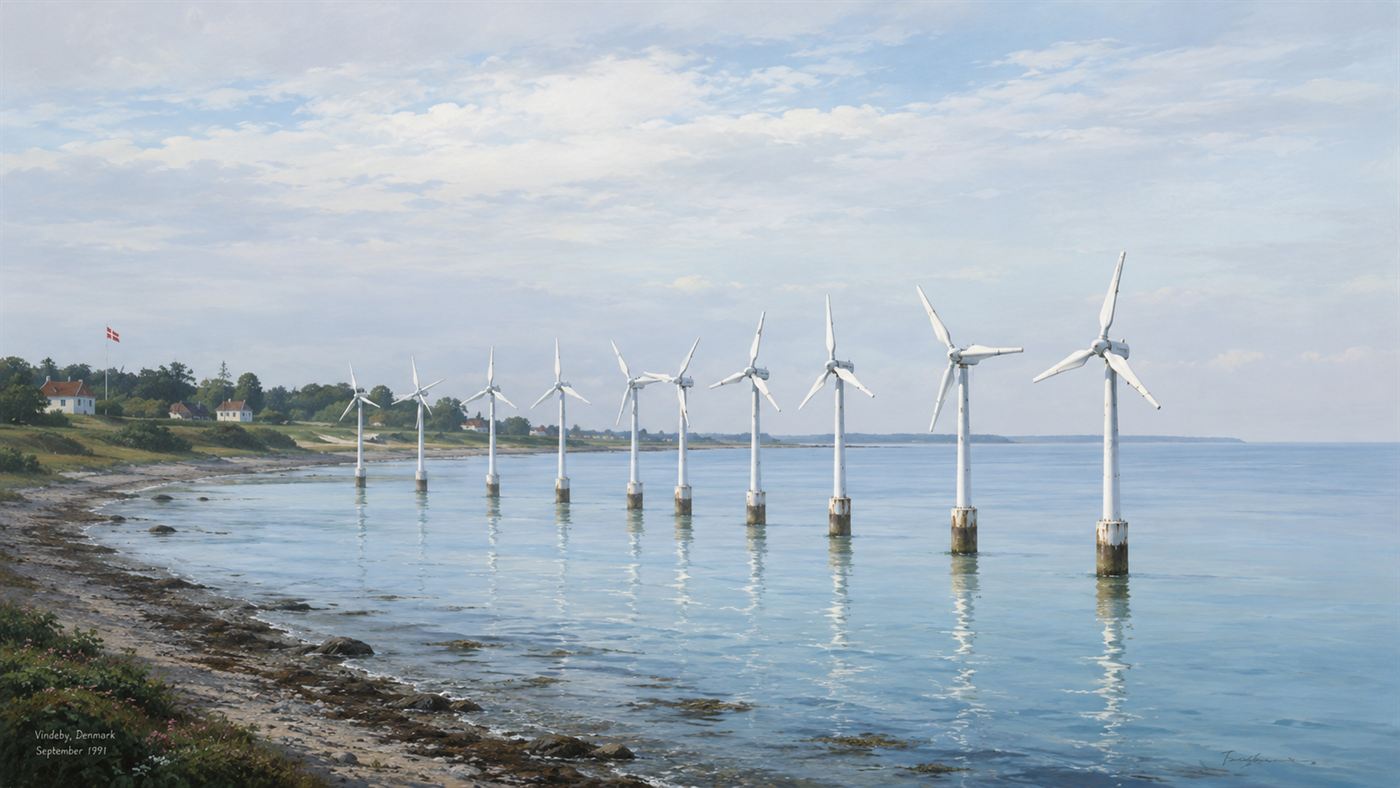
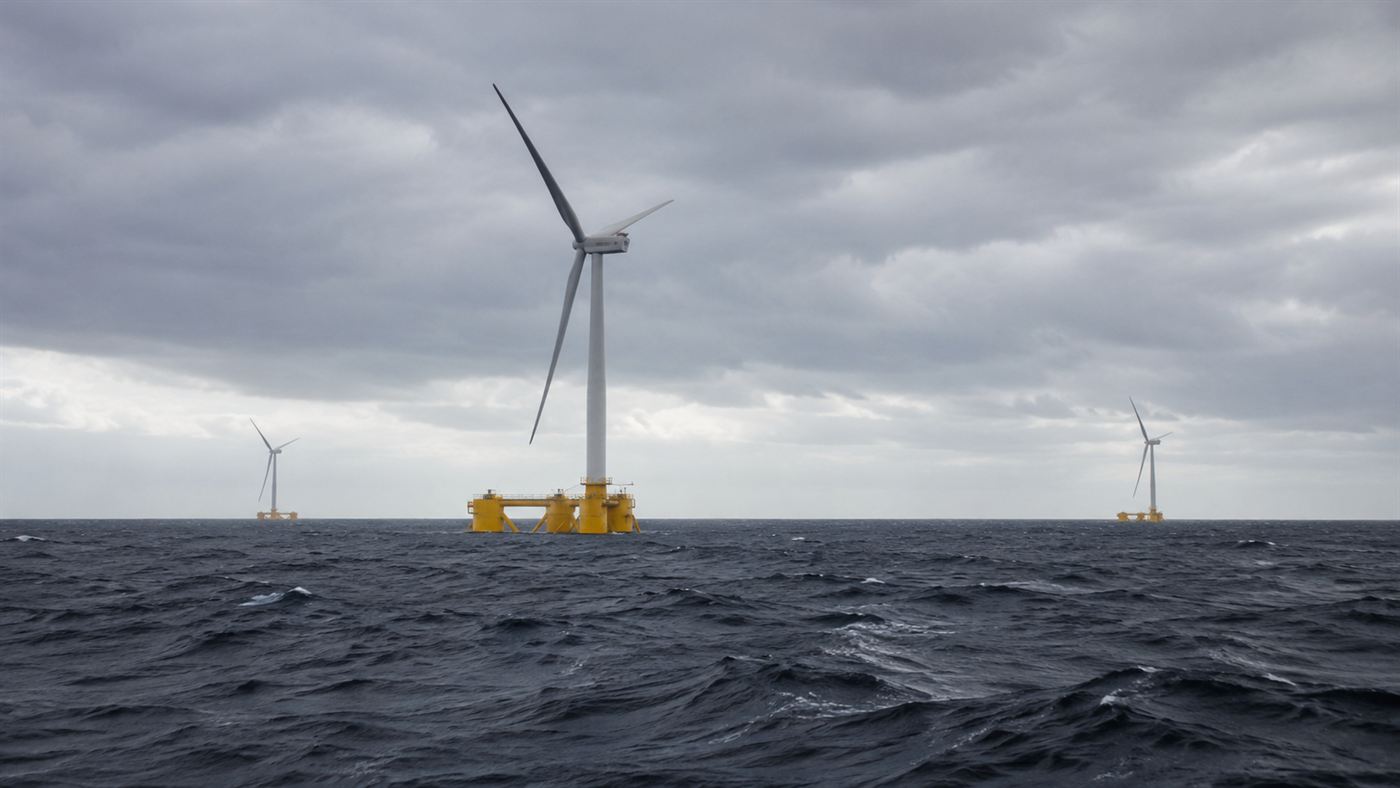
Related reading: the tiny Danish project that became the world's first offshore wind farm. See also the record-breaking 26 megawatt turbine pushing the limits of scale, and the floating wind farms that work in water too deep for foundations. On land, SunZia became the largest clean energy project in US history in 2026.