Wind turbines used to need shallow water to stand up, until an oil company floated five of them in the deep North Sea and built the world's first floating wind farm
A floating wind farm sounds like a contradiction, since wind turbines are enormous, top-heavy things that seem to need solid foundations. But off the coast of Scotland, five of them ride the open ocean on ballasted floats, tethered by chains, and that first floating wind farm has quietly become the best-performing one on Earth.
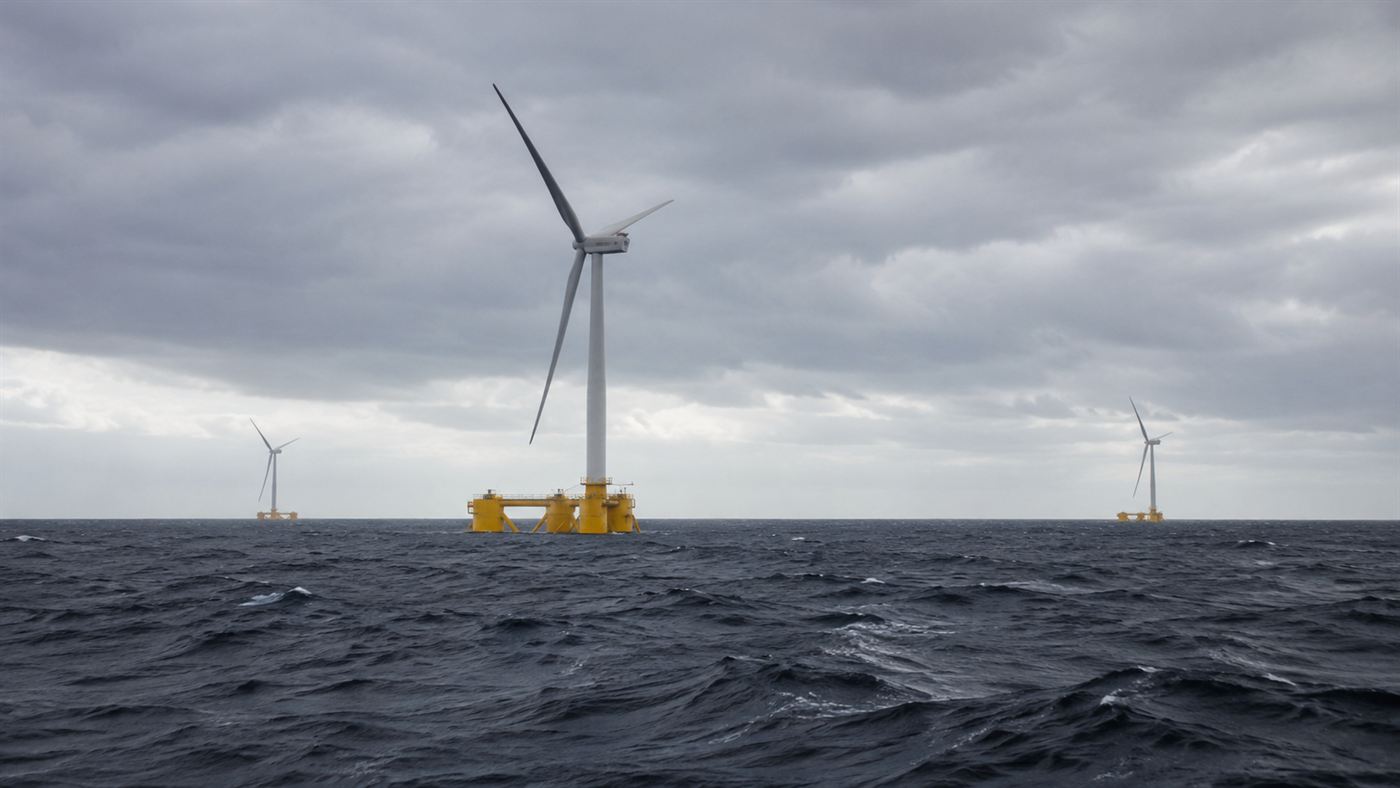
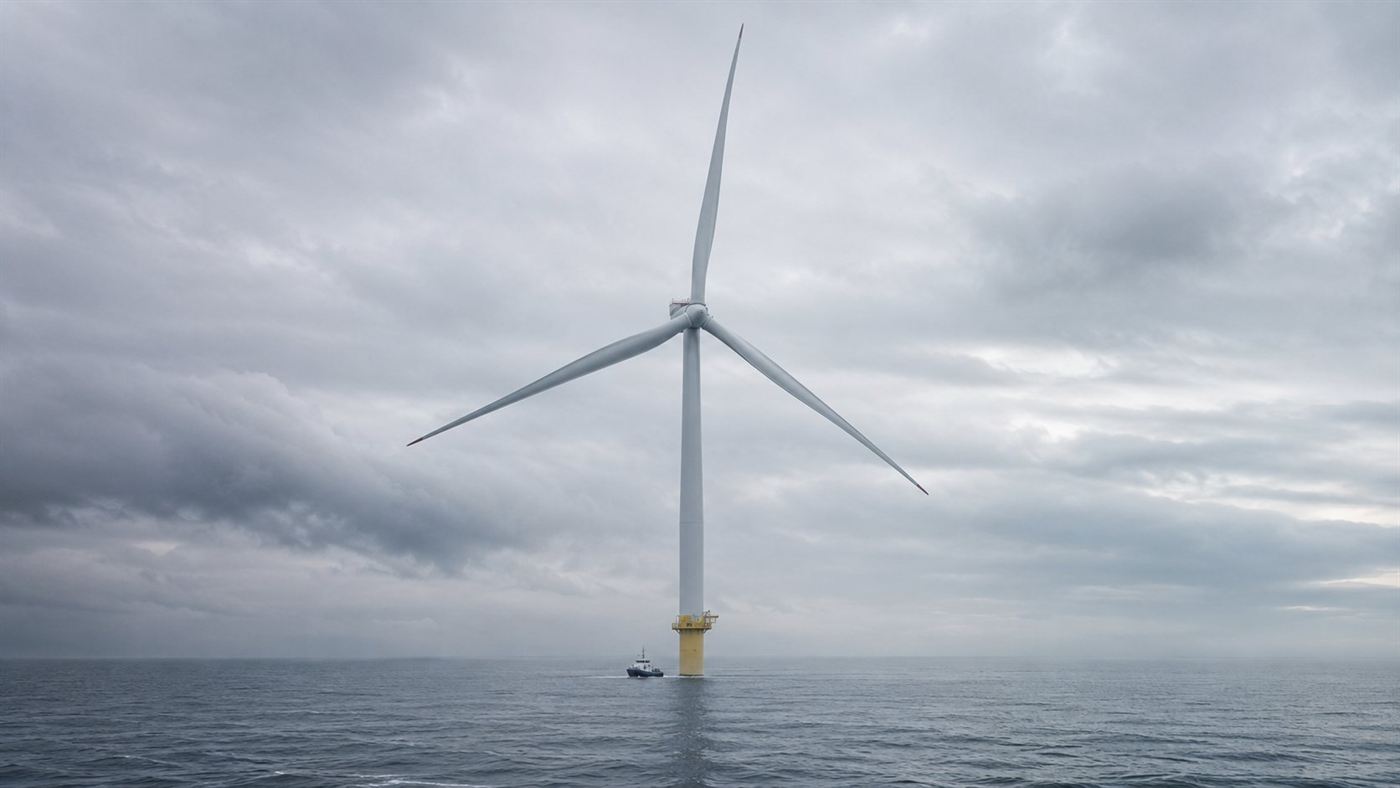
Turbines on the open ocean: a floating wind farm reaches the deep water fixed foundations cannot. Illustration: Watts & Wild.
A floating wind farm exists for one simple reason: the best wind is out in the deep ocean, where you cannot build. For decades, offshore wind turbines could only go where the water was shallow enough, up to around fifty metres, to drive a steel foundation into the seabed. That ruled out most of the sea, including the windiest, steadiest stretches far from shore, where roughly four-fifths of the world's offshore wind resource actually sits.
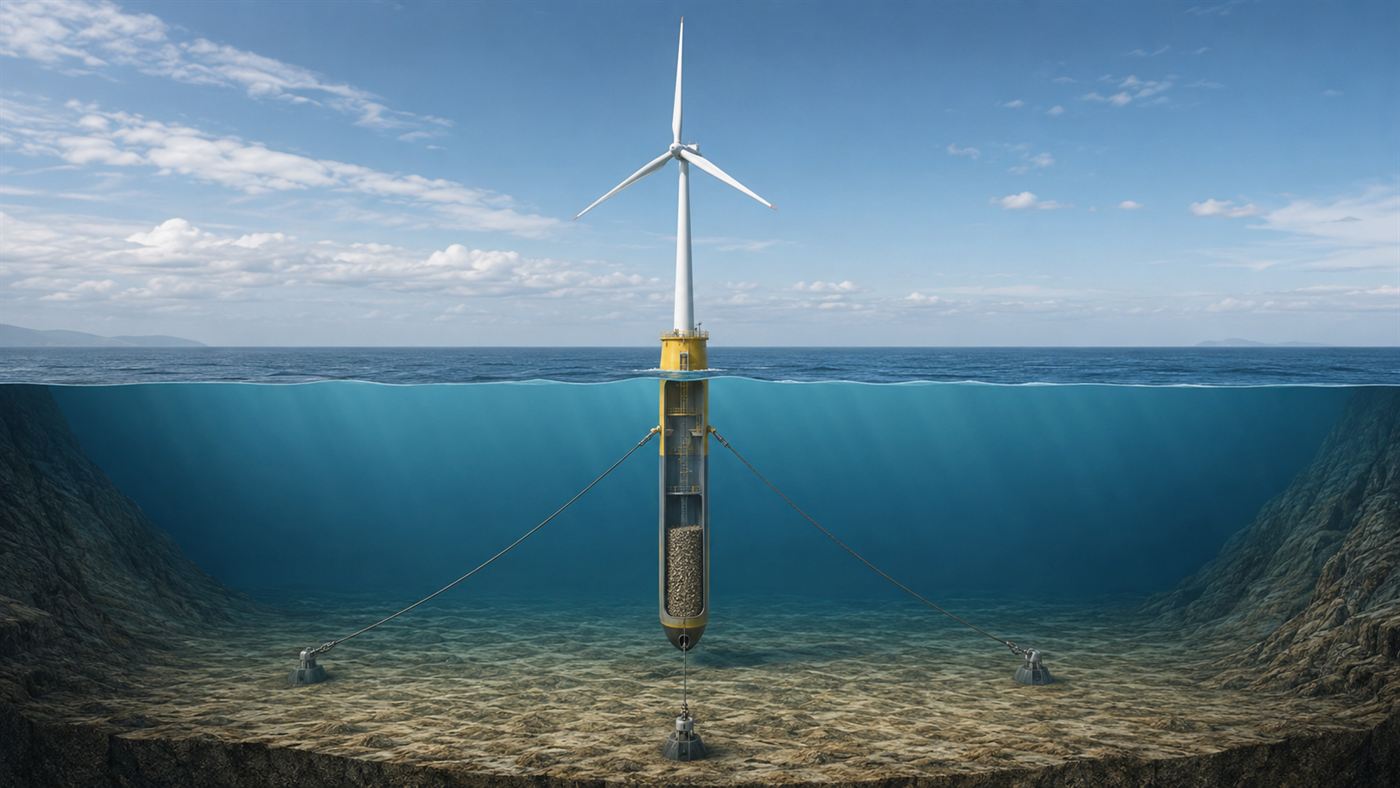
Hywind Scotland, switched on in October 2017 about 25 kilometres off Peterhead, broke that limit. As its builder Equinor describes it, the five turbines stand in water more than 95 metres deep, far too deep for any fixed foundation, by not touching the bottom at all. Each one balances on top of a giant floating tube, held upright by ballast and tethered to the seabed by three mooring chains, and the whole thing was built by Equinor, the Norwegian state oil company.
What is a floating wind farm? A floating wind farm is an offshore wind farm whose turbines sit on floating platforms tethered to the seabed, rather than on fixed foundations. This lets them operate in deep water, far from shore, where the wind is strongest. The first, Hywind Scotland, began running in 2017.
Why the floating wind farm was needed
The limitation was never the turbine but the seabed. A fixed offshore turbine stands on a foundation hammered or screwed into the bottom, and that only works in relatively shallow water; beyond roughly sixty metres deep it becomes impractical and absurdly expensive. Since coastlines drop away quickly in many of the windiest places, most of the open ocean was simply off-limits to wind power, no matter how good the wind blowing across it.
That is a vast amount of energy to leave on the table. Estimates put the great majority of the world's offshore wind potential in deep water, past the reach of fixed foundations, off coasts from California to Japan to the Mediterranean. A floating wind farm is the key that unlocks it, because a platform that floats does not care whether the seabed is fifty metres down or five hundred.
How you float a turbine
The Hywind design uses what engineers call a spar-buoy, and it works like a fishing float scaled up to monstrous size. Beneath each turbine hangs a long steel cylinder filled with heavy ballast at the bottom, so the whole structure floats upright with most of its mass deep below the waterline. That low center of gravity makes it remarkably stable, righting itself against waves and wind the way a weighted buoy bobs back upright when you push it over.
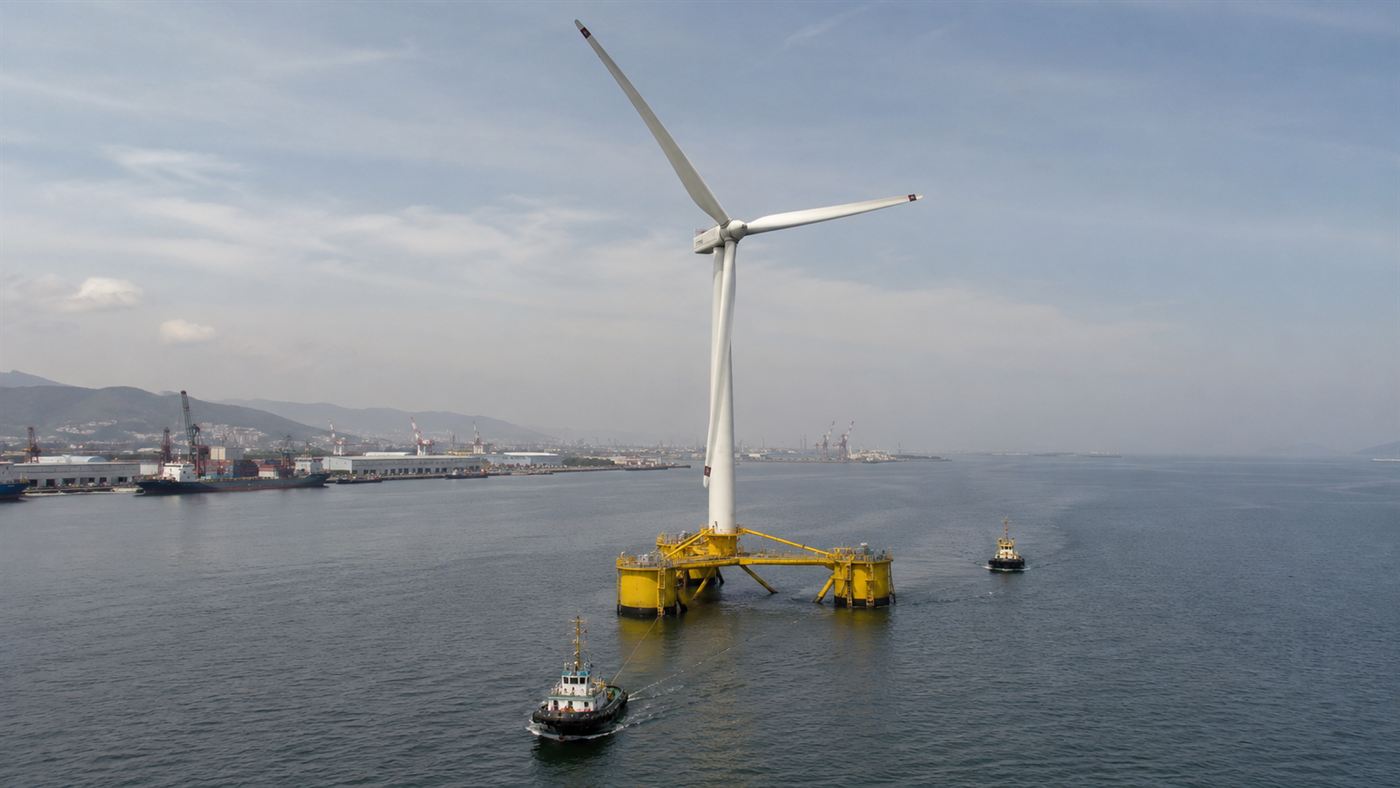
Three mooring lines run from the float down to anchors on the seabed, holding the turbine in position without bearing its weight. One of the quietly clever advantages is assembly: a floating wind farm can be put together in the calm of a harbour and then towed out to its site under tow, and, when something breaks, the whole turbine can be towed back to port for repair instead of sending crews and cranes far out to sea.
The oil company that built it
It is no accident that the first floating wind farm came from an oil company. Equinor, formerly Statoil, had spent decades building and operating enormous floating structures in the North Sea to drill for oil and gas, and that hard-won expertise in keeping huge things stable in deep, violent water transferred almost directly to floating wind. The skills built to pull fossil fuels out of the sea turned out to be exactly what was needed to harvest the wind above it.
The irony deepened with the company's next project. Hywind Tampen, finished in 2022 and now the world's largest floating wind farm, was built specifically to supply power to Equinor's Snorre and Gullfaks oil and gas platforms in the Norwegian North Sea. In other words, an oil company built floating wind turbines to run its oil rigs, an arrangement that is either a neat step toward cleaner extraction or a tidy emblem of the energy transition's contradictions, depending on your mood.
The best-performing wind farm in the world
Whatever you make of who built it, the performance settled the technical argument. Over its first five years, Hywind Scotland ran at a capacity factor of around 54 percent, meaning it produced more than half of the absolute maximum it theoretically could, which is extraordinary. A good fixed offshore wind farm manages around 40 percent, and a typical onshore one closer to 30, so the floating pilot quietly became the best-performing offshore wind farm anywhere.
That number is the whole case for floating wind in one statistic. Out in the deep water, far from the drag of the land, the wind is stronger and steadier, and turbines spend far more of their time generating near full output. A floating wind farm does not just reach places fixed turbines cannot; it reaches the places where the wind is best.
The honest catch
Floating wind is proven, but it is not yet cheap. Building and mooring a floating platform still costs more than a fixed foundation in shallow water, the farms so far are small pilots rather than the giant arrays that bring prices down, and connecting power from far out at sea adds its own expense. For now a floating wind farm leans on subsidies and the deep pockets of energy majors, not on beating fixed offshore wind on cost.
There is the awkwardness, too, of the technology being pioneered by the oil industry and, in one case, used to power oil platforms. None of that changes the underlying breakthrough. By floating turbines instead of fixing them, engineers opened up the windiest four-fifths of the world's coasts to clean power, and proved, with the best-performing wind farm on the planet, that the deep ocean is not a barrier to wind energy but its richest frontier.
By floating wind turbines in deep water instead of bolting them to the seabed, engineers opened up most of the world's windiest coasts, and the first farm to try it became the best-performing one on Earth. Should the world pour money into floating wind now, or wait for the price to come down first? Tell us what you think in the comments.
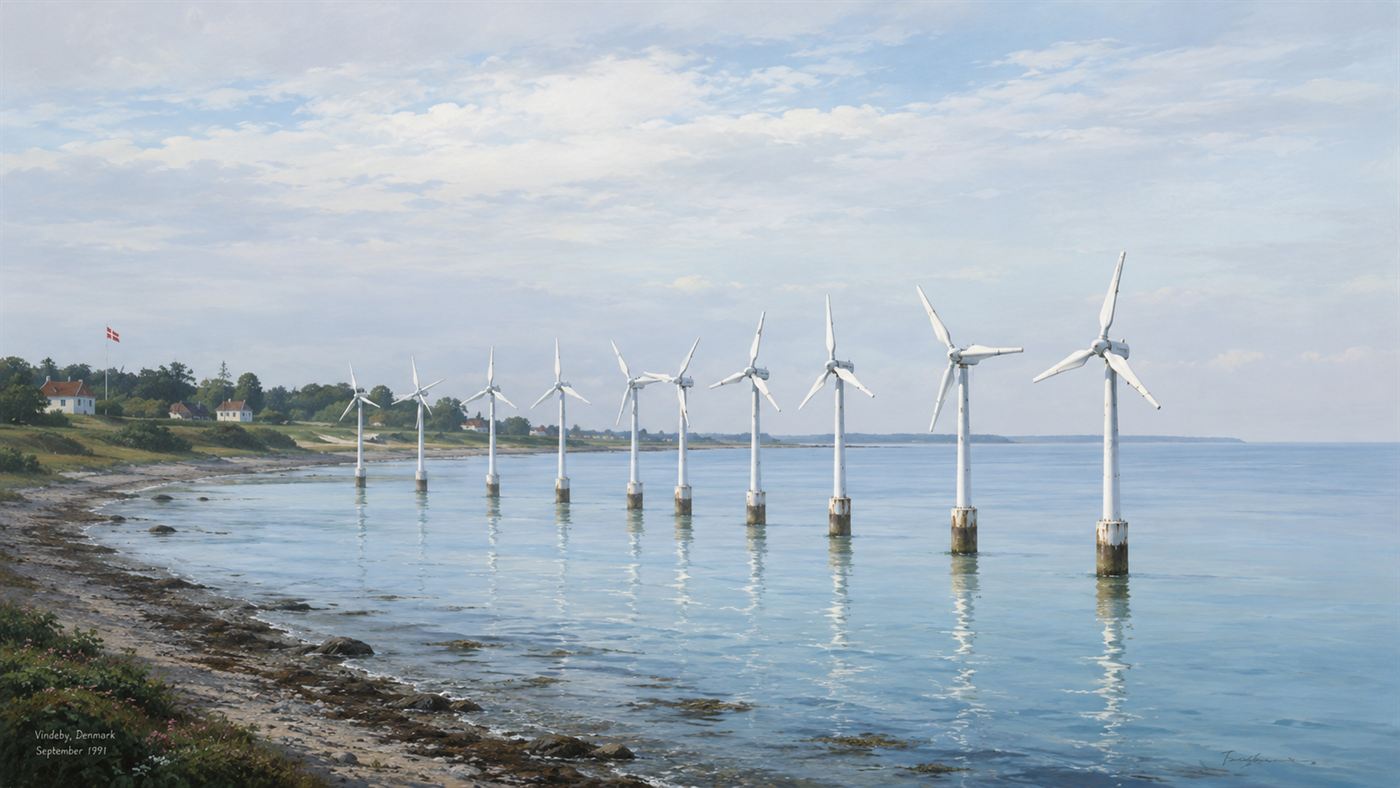
Related reading: The eleven small turbines off Denmark that became the world's first offshore wind farm.