The 200-ton machine that streamed music in 1906
Picture lifting your telephone in New York in 1906, asking the operator for music, and hearing a live concert pour out of the receiver. No radio existed yet, no records played in your parlour, and yet the sound was real, generated by a machine across town the size of a house. The Telharmonium was the world's first music streaming service, more than a century before Spotify.
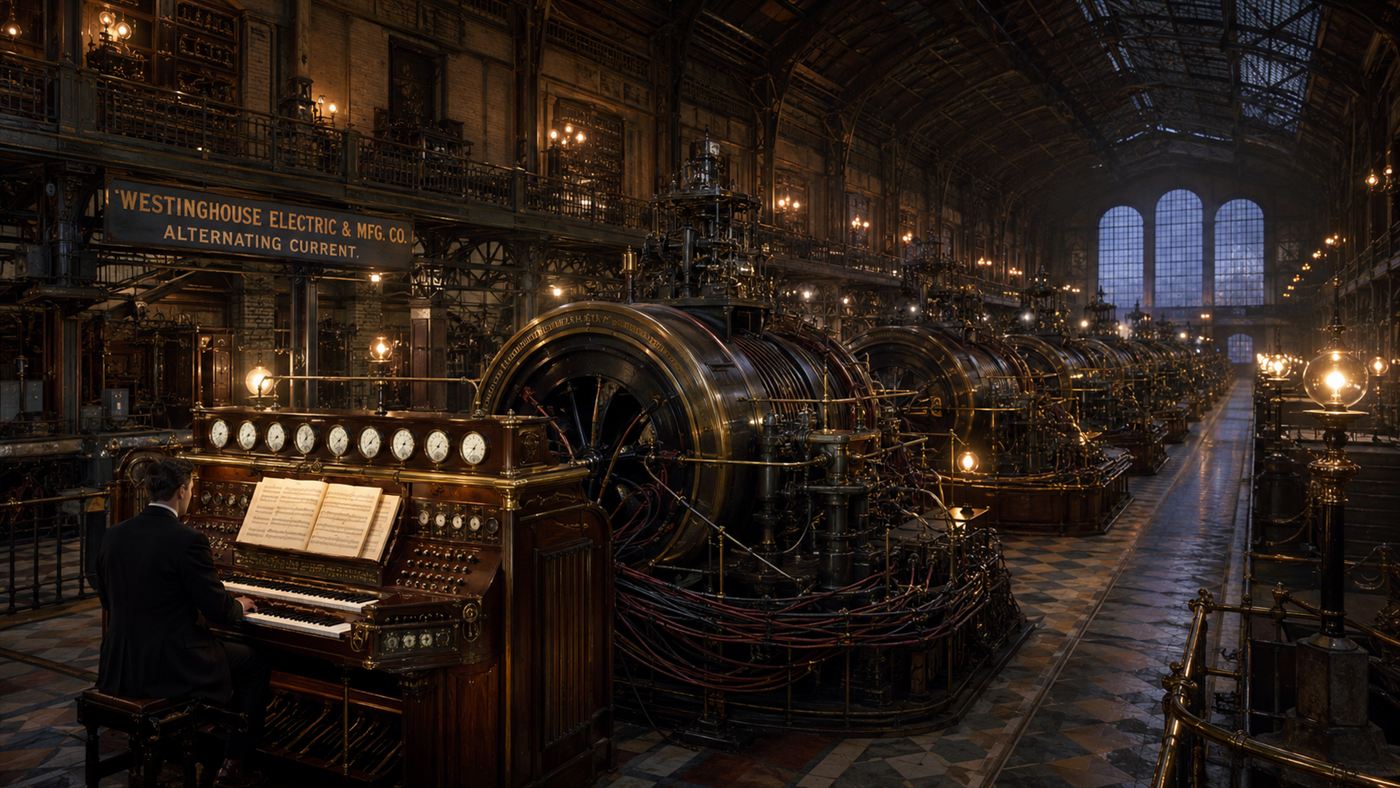
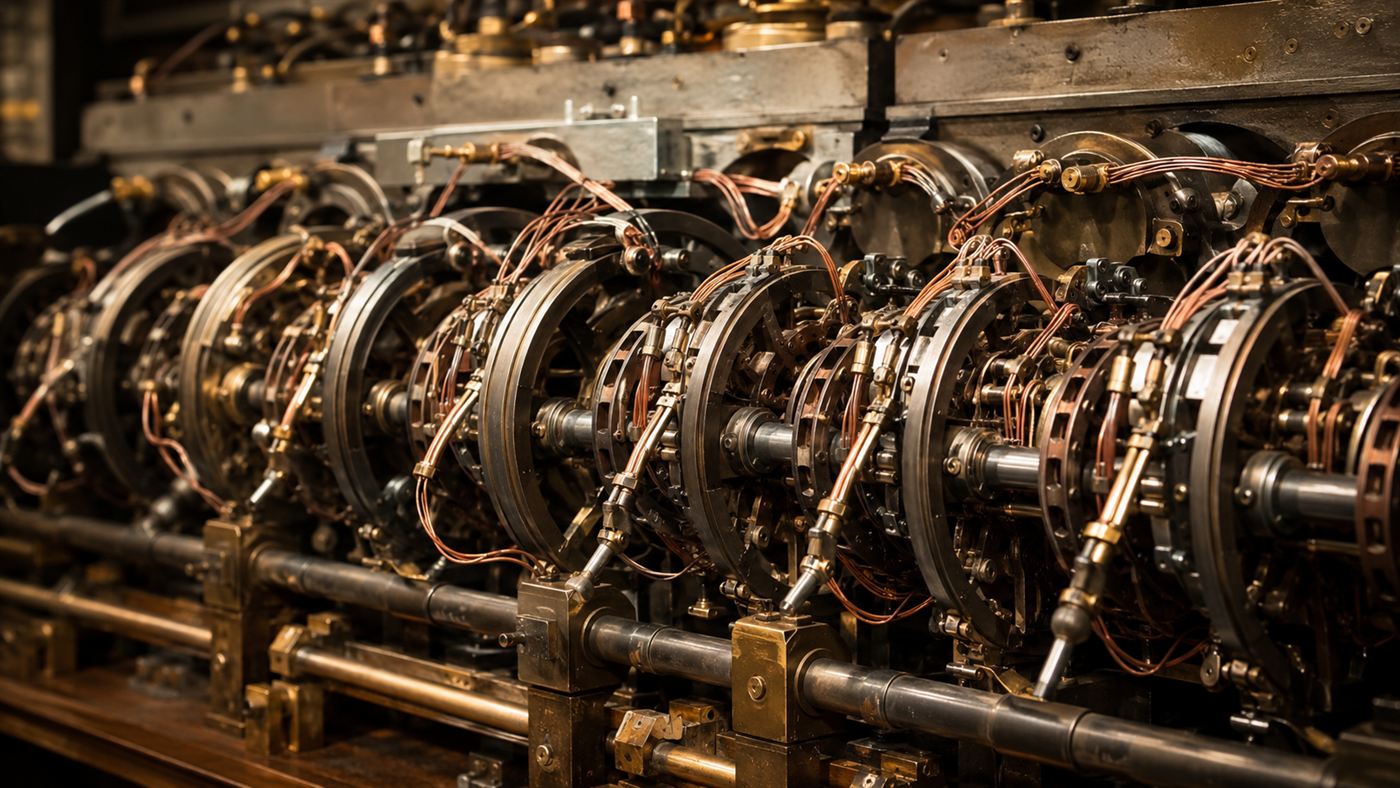
A musical instrument the size of a power station, played live for a city. Illustration: Watts & Wild.
We think of streaming music as a thing of fibre optics and phones, a very modern miracle. But the basic dream, music on demand piped into your home from somewhere far away, is much older than that. An American inventor built a working version of it in the age of horse-drawn carriages, using nothing but spinning electrical machines and the telephone network.
It was visionary, it was beautiful, and it was so far ahead of its time that the world around it simply could not cope.
The Spotify of 1906
The man behind it was Thaddeus Cahill, a lawyer and inventor who first patented his idea back in 1897. His plan was simple and astonishing: generate music electrically at a central station, then send it down ordinary telephone wires to anyone who subscribed.
By 1906 he had set up shop in New York at a building grandly named Telharmonic Hall. Subscribers, from restaurants and hotels to private homes, could pick up the telephone, ask to be connected to the Telharmonium, and have live music stream straight into the room. They paid a monthly fee for the service, and they could listen around the clock. In an age before radio, it felt like magic conjured out of the wall.
How the Telharmonium streamed music down phone lines
The sound was made by electricity itself. Inside the machine, dozens of spinning metal tonewheels generated electrical tones, which were blended together to build up musical notes and sent out along the telephone lines as a signal.
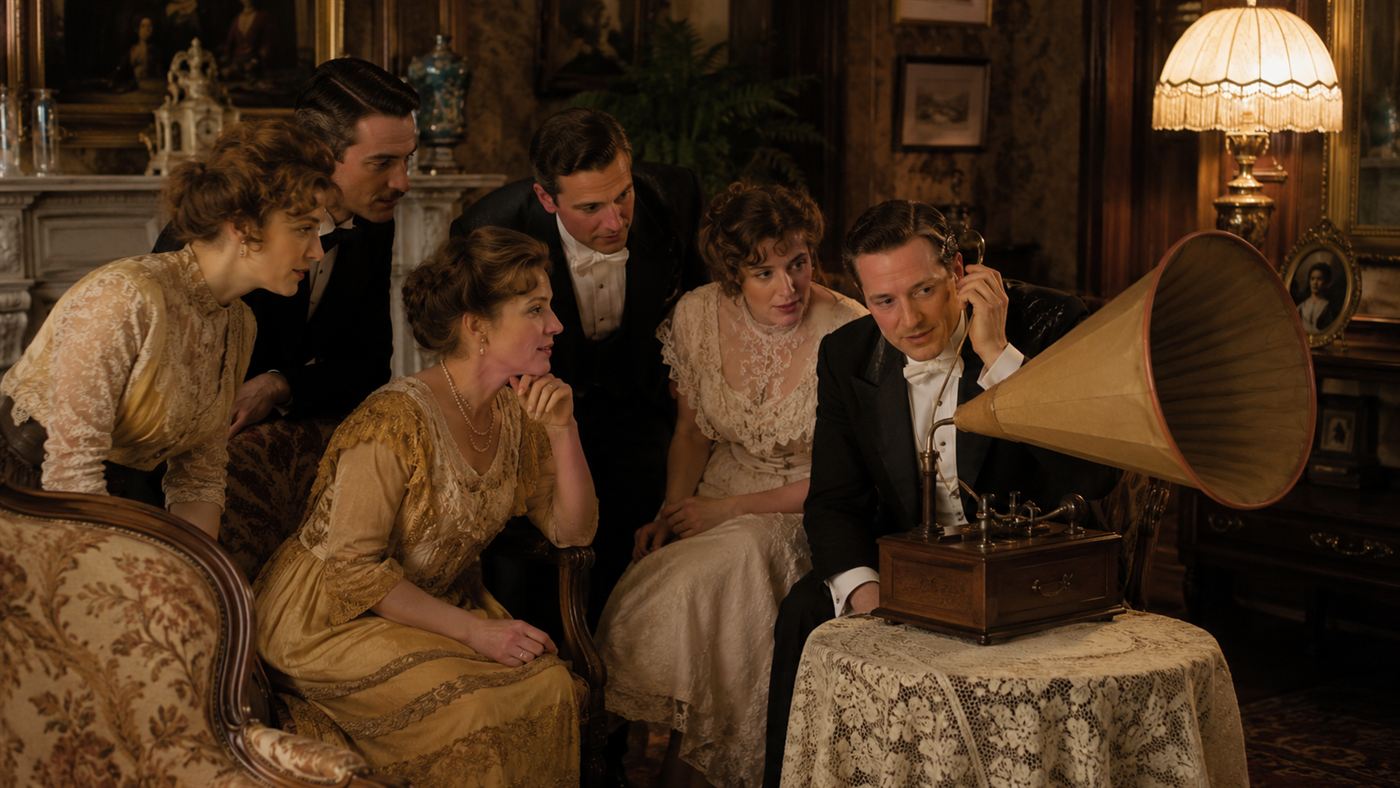
Because loudspeakers had not been invented yet, listeners heard the music through the earpiece of their telephone, often with a large paper funnel strapped over it to make the sound fill the room. The way the Telharmonium built notes by adding simple tones together was decades ahead of its time, and it is now seen as the first true electronic instrument, a direct ancestor of the synthesizer that would not become common until the second half of the century.
Two hundred tons of music
What made the Telharmonium so hard to live with was its sheer size. The main machine weighed around 200 tons, stretched some 60 feet long, and had to be shipped into New York in about thirty railway boxcars.
This was an instrument that filled an entire floor of a building and needed its own small power plant of spinning generators to play a tune. When it gave its first public concert in September 1906, hundreds of curious New Yorkers crowded in to hear it, amazed that electricity could be coaxed into melody at all. For a brief moment it seemed the future of music had arrived, humming away in midtown Manhattan.
Killed by a crossed line
The trouble was that the telephone network was never built to carry a power station's worth of music. The Telharmonium's strong signals leaked across the wires, so ordinary callers would suddenly hear ghostly music bleeding into their phone conversations.
The telephone company was not amused, and eventually refused to let Cahill send his concerts over its lines. The machine was also hugely expensive to build and run, and then radio arrived, able to broadcast music through the air to thousands of people at once without a single wire to a single subscriber. The company behind the Telharmonium went bankrupt around 1914, the giant instruments were eventually scrapped, and not one survives today. The world had glimpsed streaming music a hundred years early, then forgotten it almost completely.
What was the Telharmonium?
It was the first great electronic instrument, and the first streaming service. The Telharmonium generated music electrically with spinning tonewheels and delivered it live over telephone wires to subscribers across New York, decades before either the synthesizer or broadcast radio existed.
It is worth being fair about the word "streaming". This was not digital, and it reached only as far as the telephone wires could carry it. But the core idea, music made in one place and delivered on demand to listeners somewhere else, is exactly what we do today, just with copper and electromagnets instead of servers and screens.
Why did the Telharmonium fail?
It was too big, too power-hungry, and too far ahead of its wires. The Telharmonium's signals interfered with normal phone calls, the telephone company shut it out, and radio soon offered a far cheaper way to send music to far more people.
So one of the boldest inventions of its age quietly disappeared, remembered now mostly as a strange footnote. Yet every time a song streams into your headphones from a machine you will never see, you are hearing the idea that Thaddeus Cahill chased with two hundred tons of spinning metal, a full century before the rest of the world caught up.
A machine the weight of a blue whale streamed music into people's homes a century before we called it streaming. How many of today's "brand new" ideas were quietly invented long ago and simply lost? Tell us what you think in the comments.
Related reading: Wardenclyffe Tower, Tesla's dream of sending power and messages through the air itself, and the Bersey electric cabs, London's silent battery taxis of 1897.