Decades before the electric bus, a Swiss town ran one on a giant spinning flywheel charged at the kerb
Long before lithium batteries, engineers found another way to store electricity on wheels. The gyrobus carried passengers using nothing but a heavy flywheel, spun up at the roadside and left to coast the route.
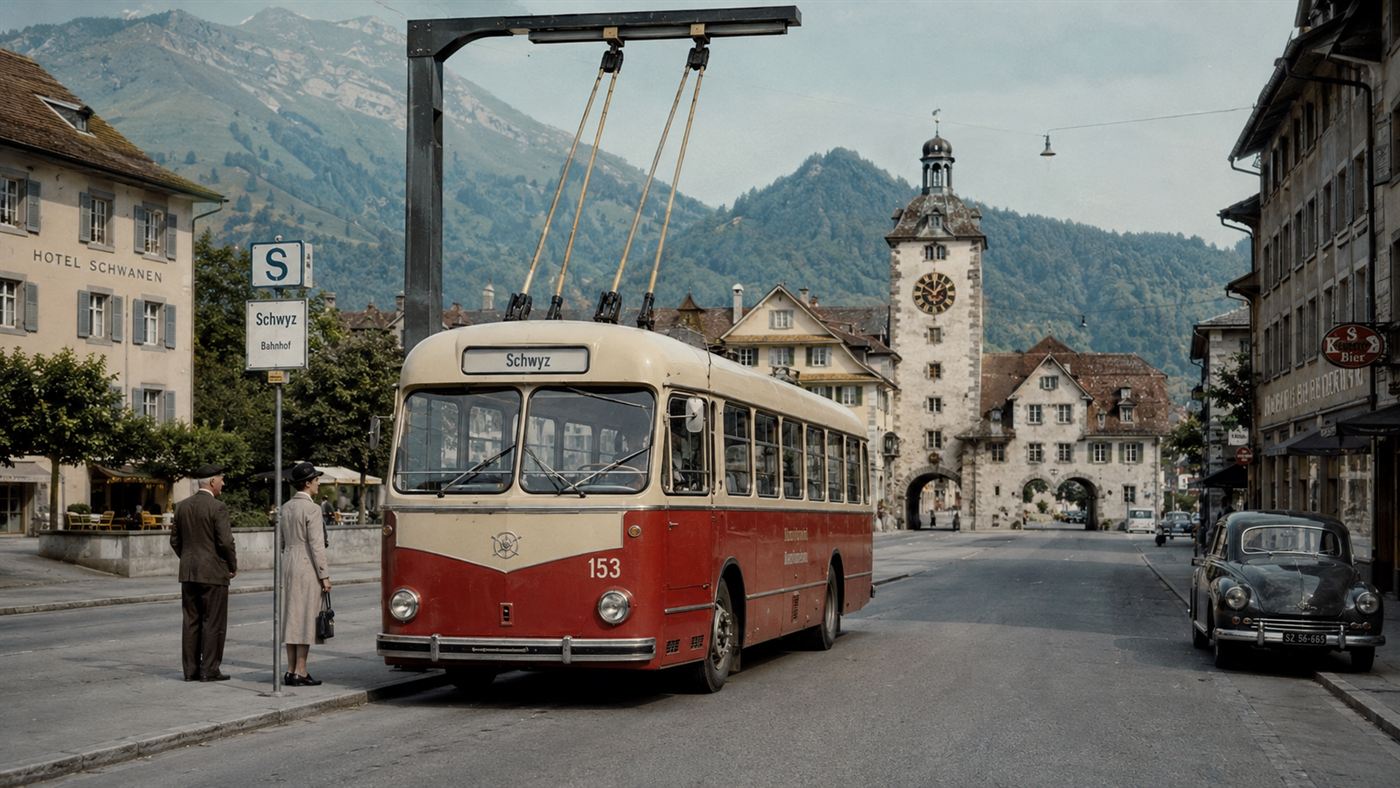
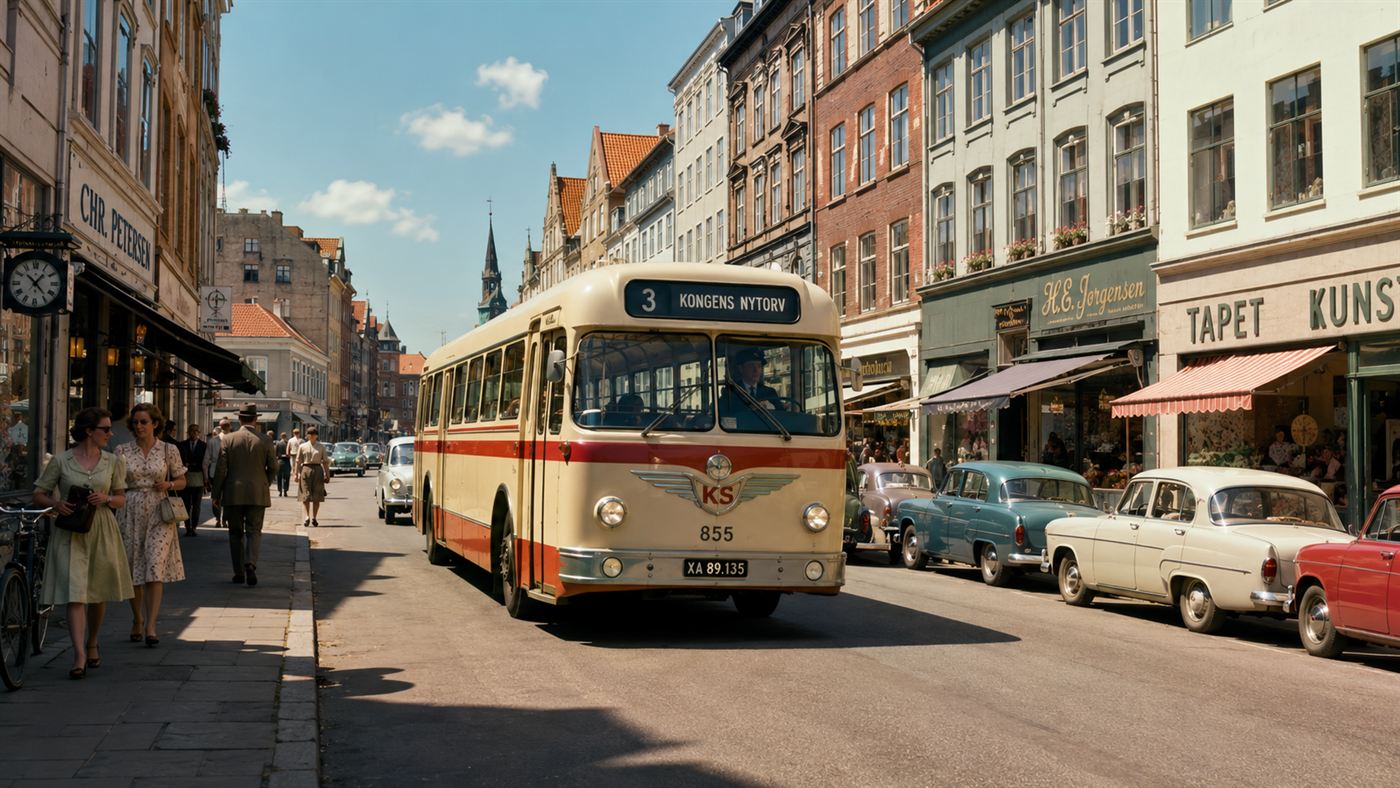
A gyrobus charges its flywheel at a roadside post before coasting on. Illustration: Watts & Wild.
The idea of an electric bus that charges in minutes sounds thoroughly modern, yet the gyrobus flywheel bus did exactly that in the 1950s.
Yet a Swiss company was running one in the 1950s, and its secret was not a battery at all.
What was the gyrobus? The gyrobus was a 1950s electric bus that stored its energy in a heavy spinning flywheel instead of a battery. At special posts the flywheel was spun up to about 3,000 revolutions per minute, and the bus then coasted on that stored motion for several kilometres before recharging.
The gyrobus flywheel bus had no engine and no wires
The gyrobus was developed by the Swiss firm Maschinenfabrik Oerlikon around 1950.
Instead of a diesel engine or a trail of overhead wires, it carried a steel flywheel weighing around 1.5 tonnes that stored energy as spinning motion.
A flywheel is simply a heavy wheel that, once spinning fast, keeps going and holds a surprising amount of energy.
On the bus, an electric motor could either spin that wheel up to store energy or be driven by it to move along.
It was, in effect, a mechanical battery on wheels, decades before chemical batteries were good enough for the job.
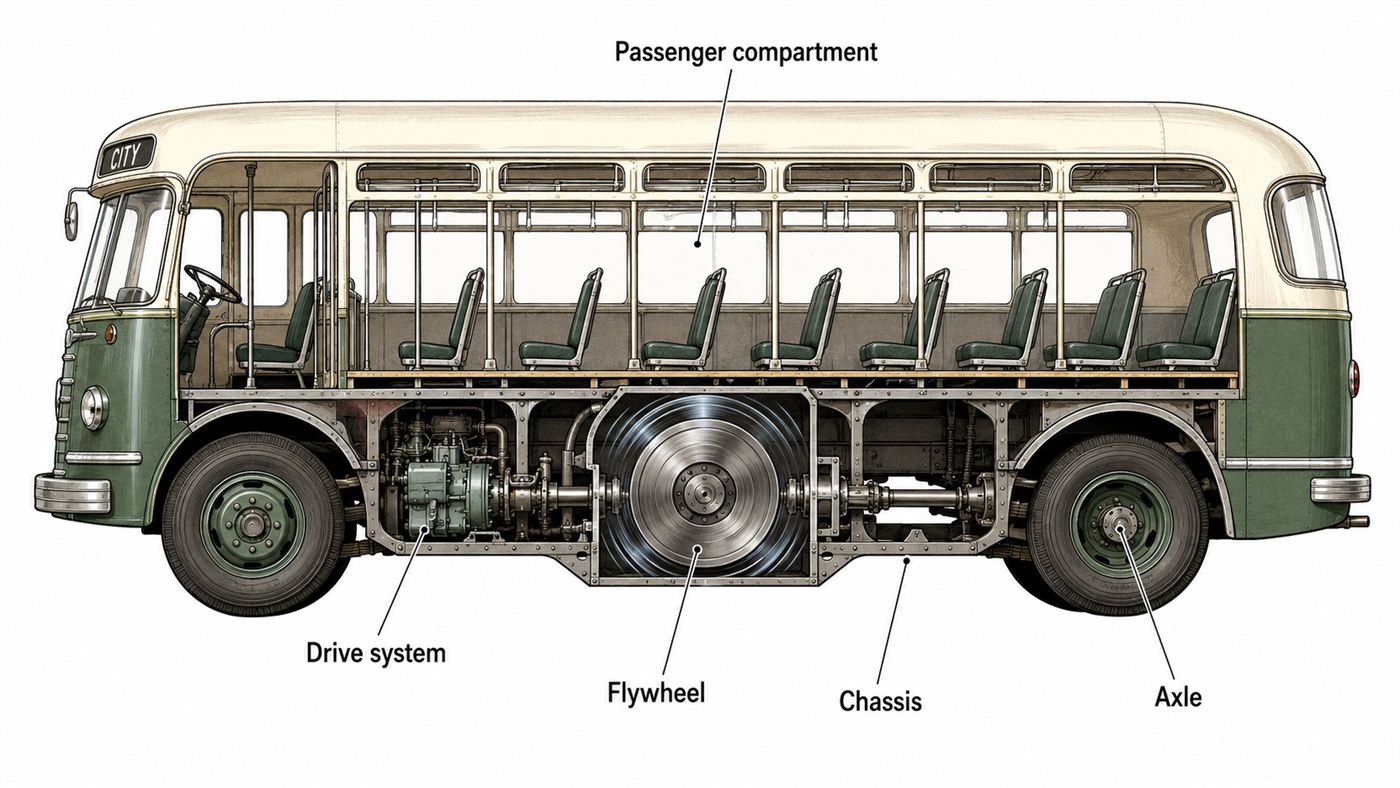
Spinning up at the kerb
To recharge, the bus pulled up at a station and raised three poles to touch overhead contacts.
Mains electricity then spun the flywheel up to around 3,000 revolutions per minute in a few minutes.
Fully wound up, the bus could drive roughly 6 kilometres on level ground before it needed another top-up.
It cruised at a respectable 50 to 60 kilometres per hour, quietly and without a puff of exhaust.
Passengers boarded a clean, smooth electric bus at a time when most buses rattled and smoked.
Where it actually ran
This was no mere prototype, because the gyrobus carried real passengers in three countries.
The first line opened in 1953 in Yverdon-les-Bains in Switzerland and ran for several years.
Others followed in Leopoldville, now Kinshasa, in what was then the Belgian Congo, and in the Belgian city of Ghent.
For a brief moment in the 1950s, the spinning-wheel bus looked like a genuinely practical way to move people.
Then, almost as quickly as it had appeared, it spun itself out of service.
Why it spun out of favour
The gyrobus carried some heavy drawbacks along with its heavy flywheel.
All that spinning steel made the bus weigh a great deal, so it used a lot of electricity to get anywhere.
The special charging stations were expensive to build, and the short range meant they had to be dotted closely along every route.
The spinning flywheel also behaved like a giant gyroscope, subtly resisting the bus as it tried to turn.
By around 1960 the sums no longer added up, and the last gyrobus lines were quietly closed.
The honest catch
It is tempting to call the gyrobus a failure, but that misses the more interesting truth.
It really was too heavy and too thirsty to compete in its own time, and it never spread beyond a handful of routes.
Yet the core idea, storing energy in a spinning wheel, never went away at all.
Flywheels now smooth out power grids, and racing cars recover braking energy with flywheel systems, while some modern buses again use them to save fuel.
The gyrobus was not so much wrong as simply early, a clever answer waiting for the rest of technology to catch up.
The gyrobus is a reminder that good ideas are not always wrong, sometimes they just arrive before the world is ready for them.
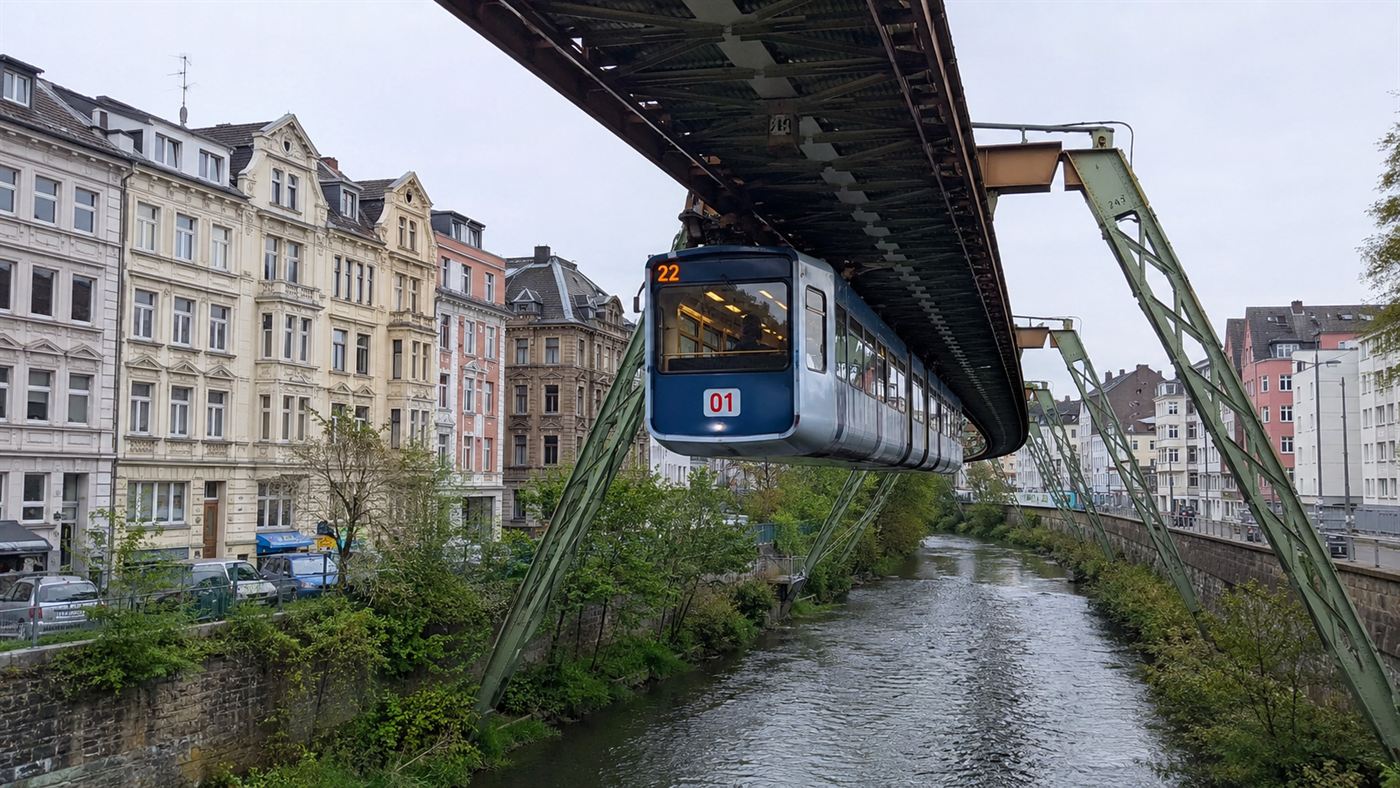
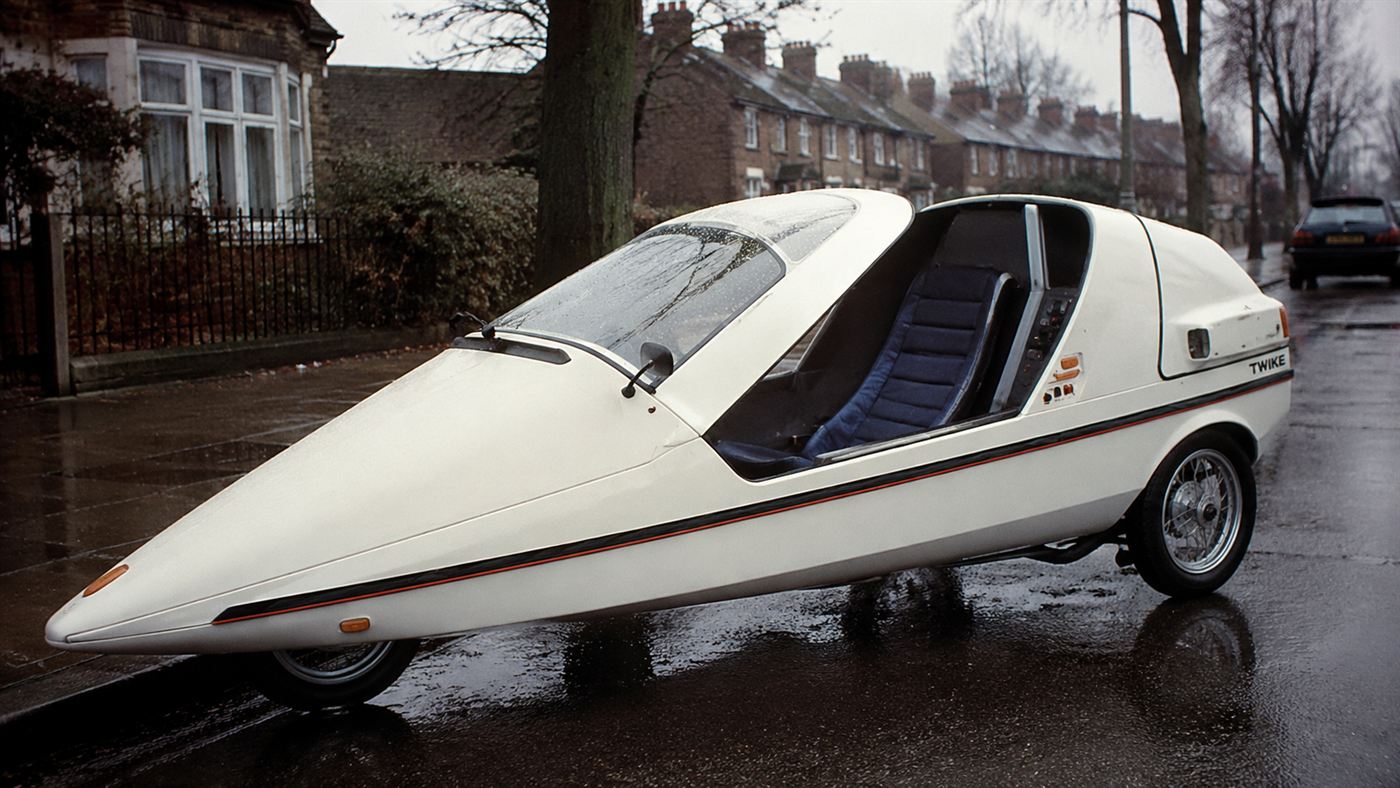
It belongs with the other bold experiments in moving people that we love, from the railway that hangs from the sky to the tiny electric trike that flopped ahead of its time.
If a spinning wheel could power a bus seventy years ago, what other forgotten ideas are quietly waiting for their moment, and would you ride a flywheel bus today? Tell us in the comments.