London had silent electric taxis in 1897, then threw them away
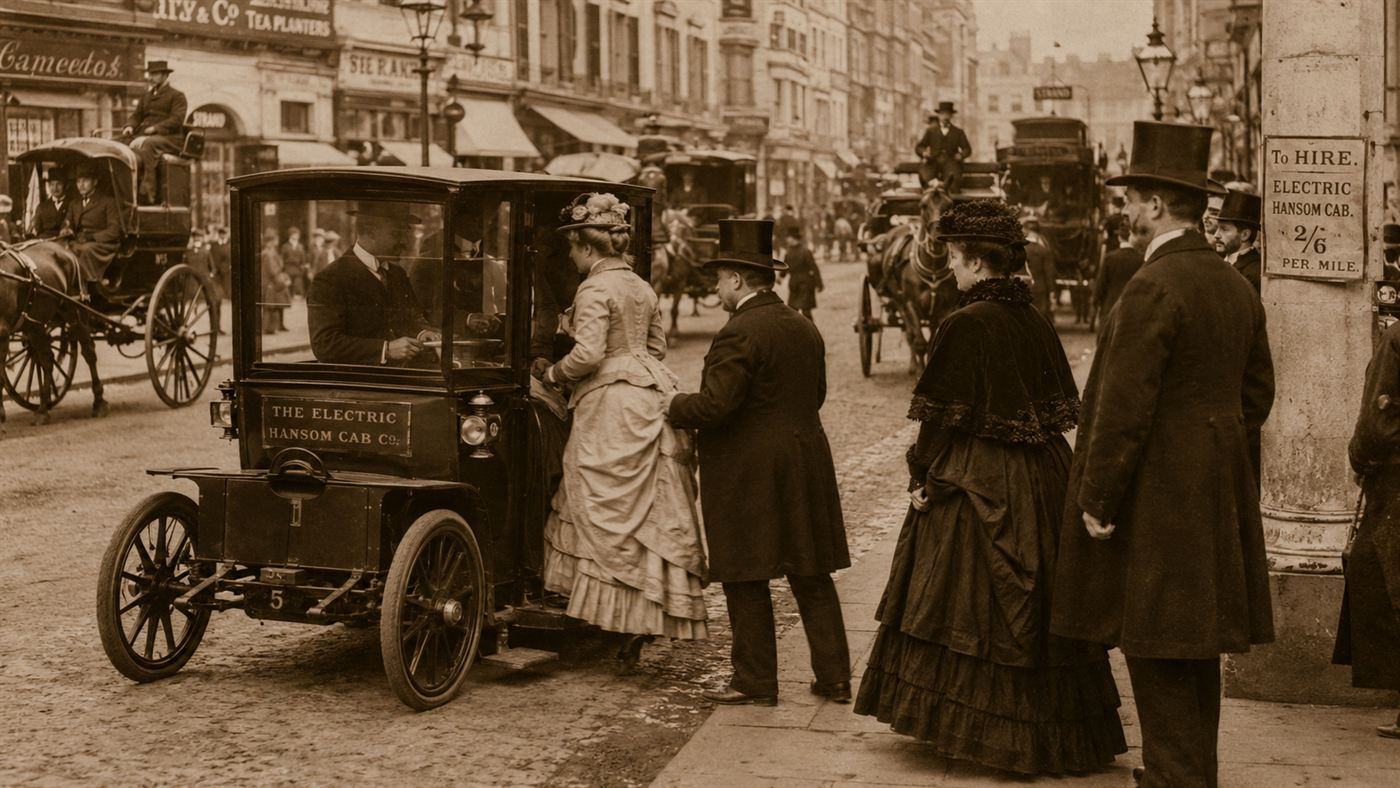
We tend to think of the electric car as something brand new, a clever answer to a modern problem. But step onto a London street in the summer of 1897 and you would have seen a fleet of quiet, battery-powered cabs gliding past the horses, humming softly as they went. They were clean, they were modern, and within two years they had vanished almost without trace. The Bersey electric cabs were the future, a century too early.
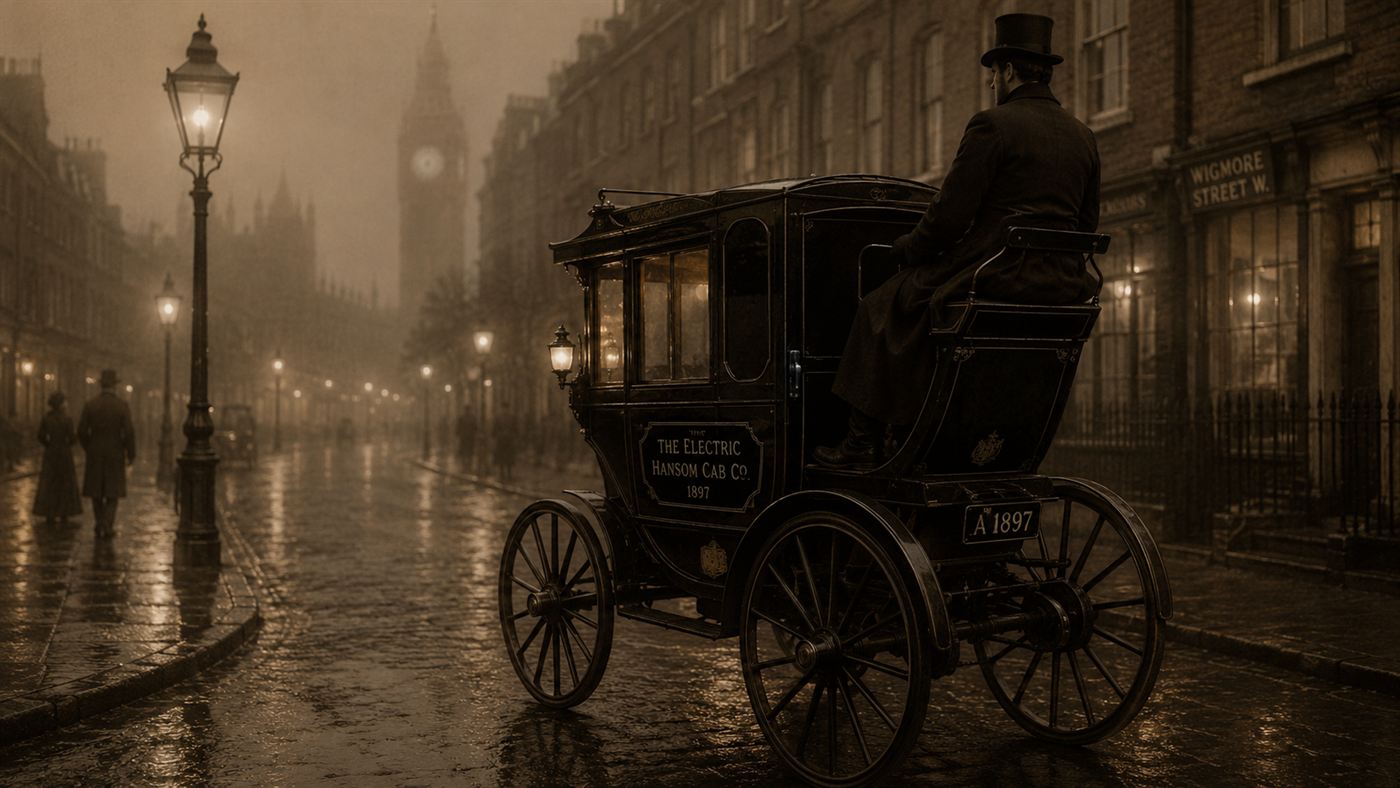
A silent, battery-powered cab on the streets of Victorian London. Illustration: Watts & Wild.
It is easy to assume that progress runs in a straight line, that the electric vehicle simply had to wait for the right technology to be invented. The truth is stranger and more humbling. London tried the electric taxi well over a hundred years ago, made it work for a while, and then let it die.
The story of how, and why, says a lot about how new ideas really succeed or fail.
The Hummingbirds of 1897
The cabs were the brainchild of a young engineer named Walter Bersey, who launched London's first fleet of self-propelled taxis in August 1897. His electric carriages were nicknamed the Hummingbirds, for the soft humming noise they made as they ran, and dozens of them were soon plying for hire across the capital.
For passengers used to the clatter of hooves and the smell of a horse-drawn city, the experience was something close to magical. The cabs were smooth and almost silent, with no animal to tire and no engine to splutter. To climb into one was to glimpse a cleaner, quieter version of the city, the kind of future that, more than a century later, we would start chasing all over again.
Heavy batteries and a clever design
Underneath that elegant carriage, though, the engineering was a constant battle with weight. The cabs were powered by an enormous bank of batteries weighing around 700 kilograms, slung beneath the chassis on springs, which gave the vehicle a modest range and a top speed of only about 12 miles per hour.
Bersey thought carefully about how to make the system practical. The heavy battery packs were designed to be swapped out, so a depleted cab could be quickly refreshed rather than left to charge for hours, an idea strikingly similar to the battery-swapping schemes being trialled for electric vehicles today. It was clever, forward-thinking work. But the sheer mass of those early batteries was also the seed of the whole project's downfall.
Why the Bersey electric cabs failed
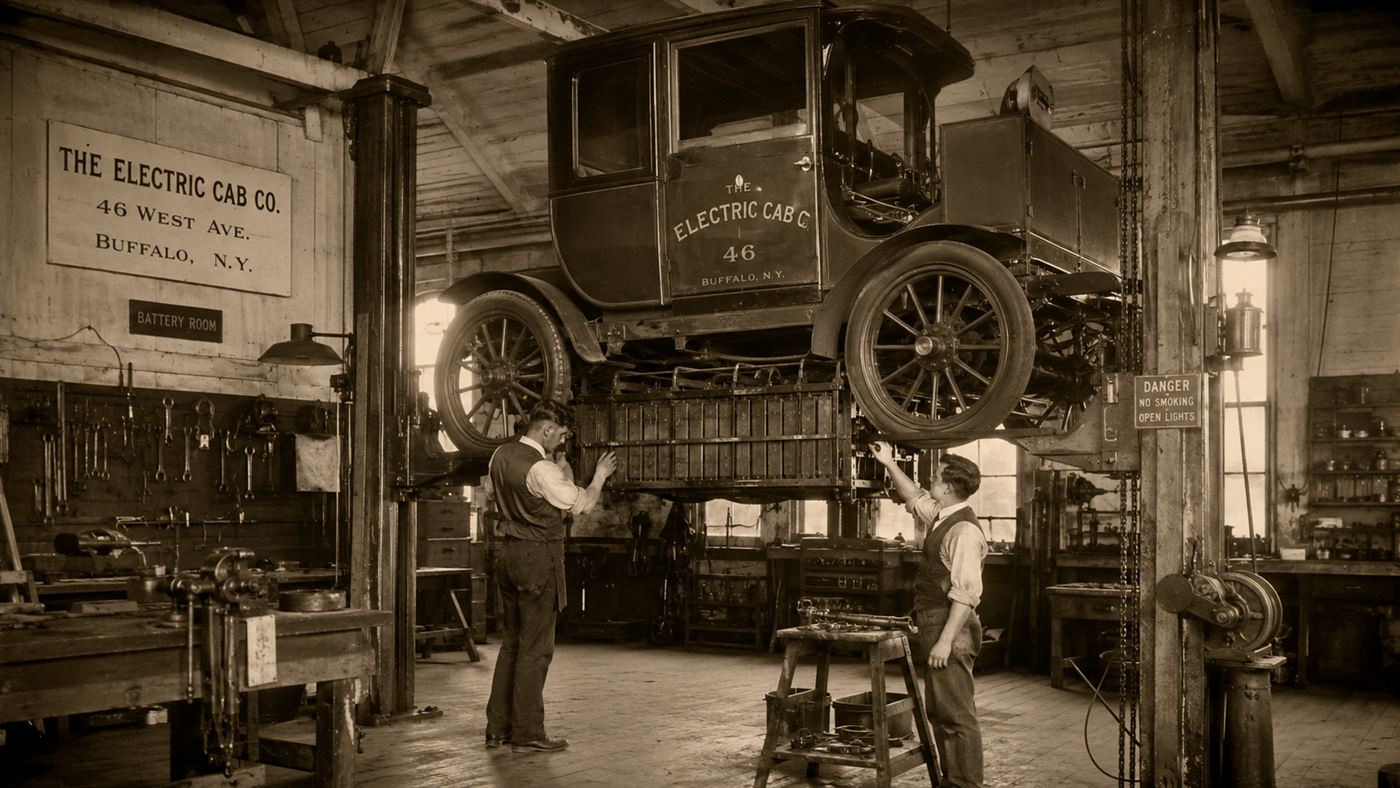
The weight that made the cabs possible was also what doomed them. The two-tonne vehicles chewed through their solid tyres at an alarming rate, and the constant vibration cracked the delicate plates inside the batteries, so both had to be replaced again and again at great expense.
The repair bills steadily outran the fares, and the service slid from a celebrated novelty into a money-losing operation. There was bad publicity too, including accidents, and one Bersey cab driver earned an odd place in history as the first person convicted of drink-driving a motor vehicle. By 1899, just two years after the Hummingbirds first took to the streets, the company was wound up and the cabs were sold off piecemeal. London went back to horses, and then to petrol, and the electric taxi was forgotten.
What were the Bersey electric cabs?
They were London's first proper taxis, and they ran on electricity. The Bersey electric cabs were battery-powered carriages introduced in 1897, the city's first self-propelled vehicles for hire, quiet enough to earn the nickname Hummingbirds before petrol had taken over the roads at all.
That order of events still surprises people. The electric cab did not come after the petrol cab as an improvement; it came first, and lost. For a short while the cleanest, most modern way to cross London was already electric, decades before the internal combustion engine had fully won the city, which makes their disappearance all the more poignant.
Why did the Bersey electric cabs fail?
They were beaten by their own batteries and tyres. The cabs were too heavy for the materials of their day, wearing out costly tyres and shaking their fragile batteries to pieces, until the running costs made the whole fleet unprofitable.
It is worth being fair about what that failure means. The Hummingbirds did not prove that electric vehicles were a bad idea; they proved that a good idea can arrive before the world is ready to support it, before batteries were light enough, tyres tough enough, or roads smooth enough. It would take another century, and a great deal of new technology, for London's taxis to hum again. When they finally did, they were following a path first traced in 1897.
London quietly rode the future in 1897 and then parked it for a hundred years. How many of today's "new" solutions are really old ideas finally meeting a world ready for them? Tell us what you think in the comments.
Related reading: the Telharmonium, another Victorian-era invention that glimpsed the future and then vanished, and Luigi Galvani, whose twitching frog legs sparked the battery and the idea behind Frankenstein.