A 660-ton golden ball hangs inside this skyscraper to stop it swaying in a typhoon
Near the top of one of the world's tallest buildings, in a city battered by typhoons and shaken by earthquakes, hangs a giant golden sphere the weight of a hundred elephants. It is not art, and it is not decoration. The huge ball inside Taipei 101 is there to keep the whole tower from making people sick.
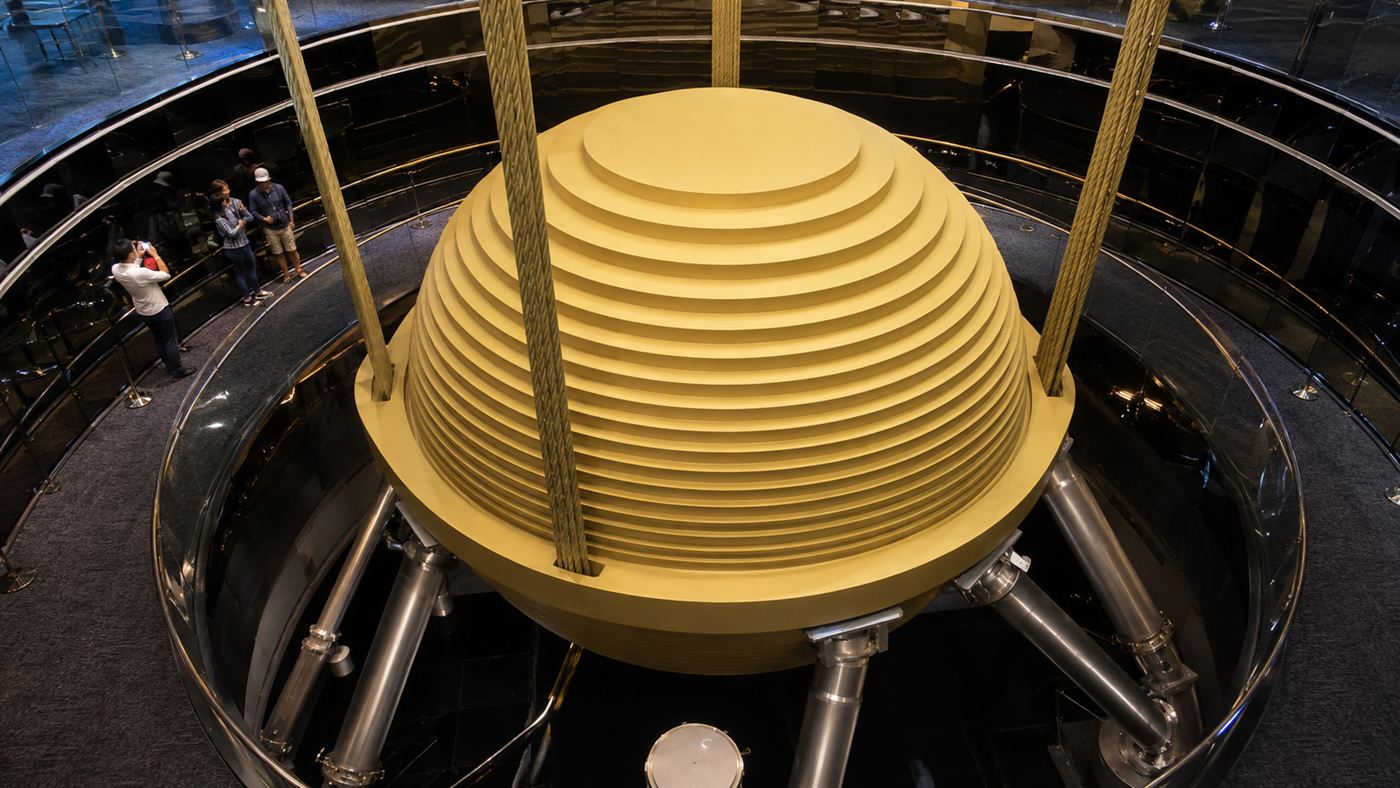
The golden sphere hangs in a multi-storey atrium near the top, where visitors can stand beside it. Illustration: Watts & Wild.
Tall buildings have a secret problem that has nothing to do with falling over. Long before a skyscraper is in any danger of collapsing, the wind can set it gently swaying, enough to make the people working near the top feel queasy, like passengers on a slow ship. Taipei 101 solves that problem with the largest pendulum ever hung inside a building.
It is one of the rare pieces of hidden engineering that has become a tourist attraction in its own right, and once you understand what it does, it is hard not to find it beautiful.
How Taipei 101 stays still in a storm
Taipei sits in one of the most demanding places on Earth to build tall, lashed by Pacific typhoons and perched on the earthquake-prone edge of two grinding tectonic plates. To cope with the wind, Taipei 101 was given a tuned mass damper, a massive weight hung high in the tower that swings against the building's motion and cancels much of it out.
The principle is simple and clever. When a gust shoves the tower to one side, the heavy ball, hanging on long cables, lags behind and swings the opposite way, pulling against the sway and draining its energy. The result is a building that barely moves when, without the damper, its upper floors would be rolling enough to upset a cup of tea.
The biggest pendulum in the world
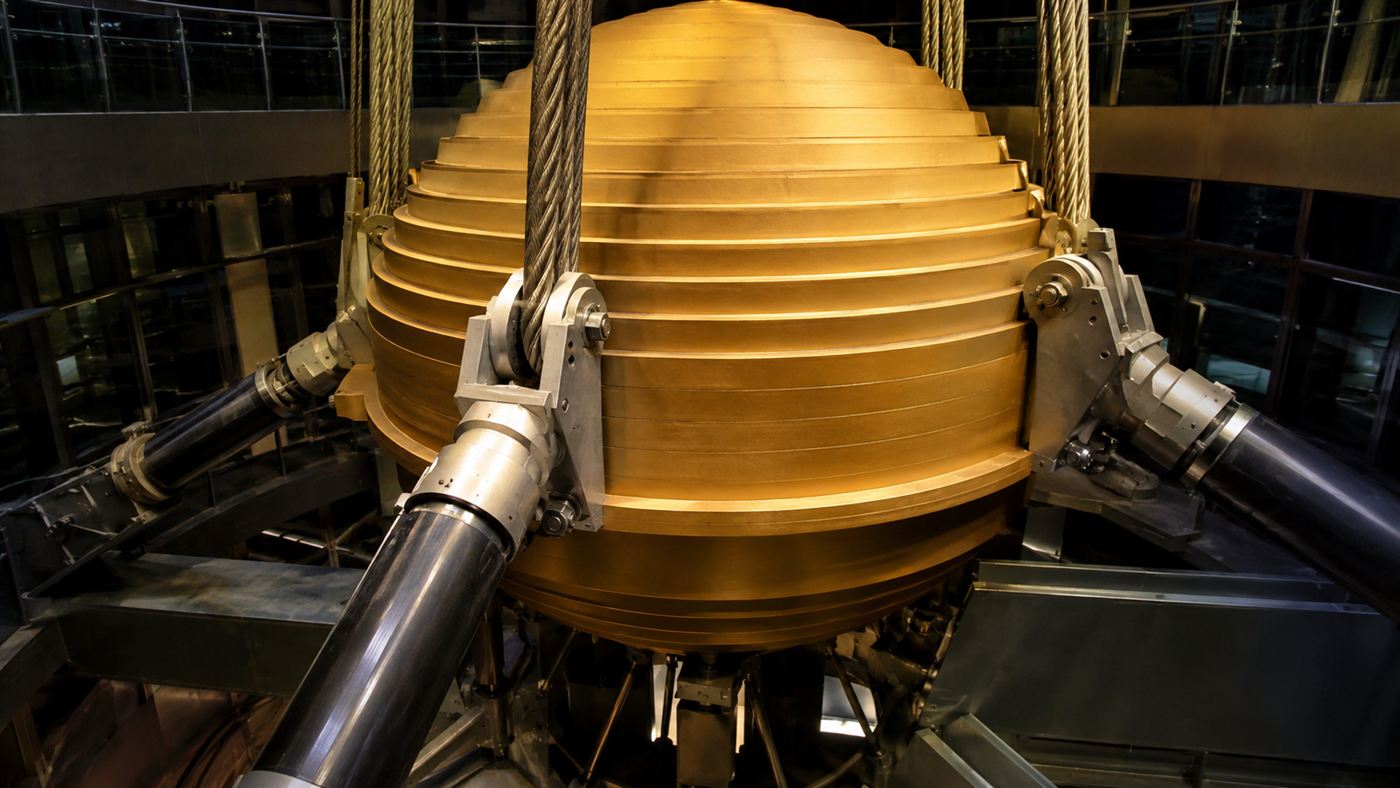
The numbers behind the sphere are as impressive as the idea. The damper is a 660-ton ball, about 5.5 metres across, built from 41 thick steel plates welded together and slung from 92 enormous steel cables between the 87th and 92nd floors.
Unlike most safety systems, which are sealed away out of sight, this one was deliberately put on show. Visitors to the observation decks can stand right next to the golden sphere, watch it hang in its open atrium, and even buy souvenirs of its cartoon mascot. It is a rare case of a building proudly displaying the very thing that protects it.
The day a typhoon moved the ball a metre
For most of the year the sphere barely stirs, nudging back and forth by tiny amounts as ordinary winds come and go. Then, now and then, nature tests it properly. When Typhoon Soudelor struck in August 2015, the damper swung about a metre to each side, the largest movement ever recorded, as it soaked up the force of the storm.
That single image, a 660-ton ball gliding a full metre through the air while the people below stayed steady on their feet, captures the whole idea better than any diagram. The more violently the wind tried to shake the tower, the harder the sphere worked to hold it calm.
What is the ball inside Taipei 101?
It is the building's balance organ, in effect. The sphere is a carefully tuned counterweight, matched to the natural rhythm at which the tower likes to sway, so that it always swings at just the right moment to oppose the motion. Get that tuning wrong and a damper does nothing; get it right, as here, and it can cut the sway by around 40 percent.
It is the same trick, scaled up to monstrous size, that engineers use in everything from tall chimneys to long footbridges that wobble when crowds cross them. Taipei 101 simply did it bigger, and braver, than anyone had before, and then invited the public in to admire it.
How tall is Taipei 101?
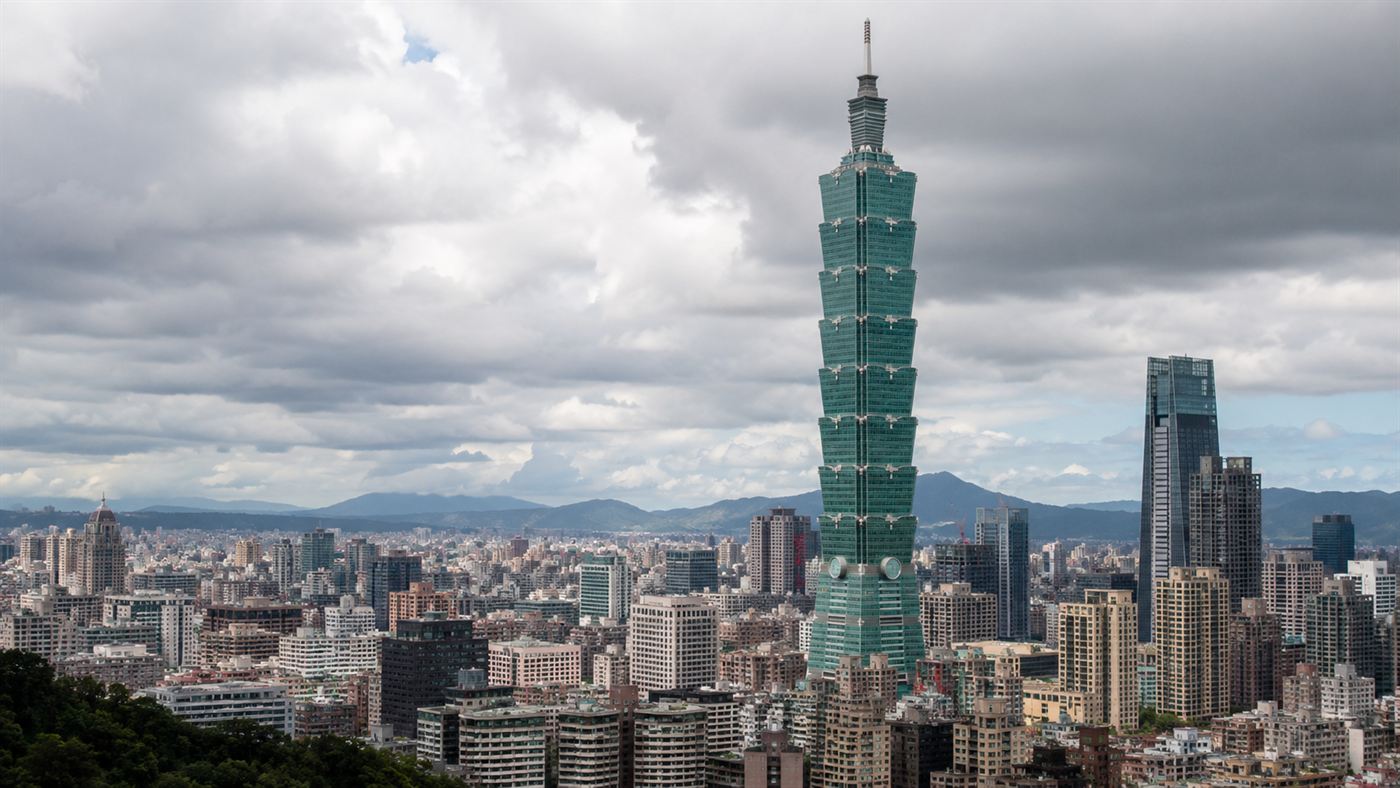
The tower rises about 508 metres, and for six years it was the tallest building on the planet, until Dubai's Burj Khalifa took the crown in 2010. What makes it remarkable is less its height than where it stands, holding firm in a corner of the world that throws both typhoons and earthquakes at it.
One honest point is worth making: the golden ball is mainly there to tame the slow sway caused by wind, not to save the tower from a great earthquake. That job belongs to the building's deep foundations and massive steel-and-concrete frame, which were tested even during construction, when a strong quake in 2002 struck the unfinished tower. The damper keeps daily life comfortable; the bones of the building keep it standing.
A 660-ton ball that swings so people half a kilometre up cannot feel the storm is one of engineering's quietest marvels. Would you ride a lift to the 89th floor just to watch a giant pendulum hold a skyscraper still? Tell us what you think in the comments.
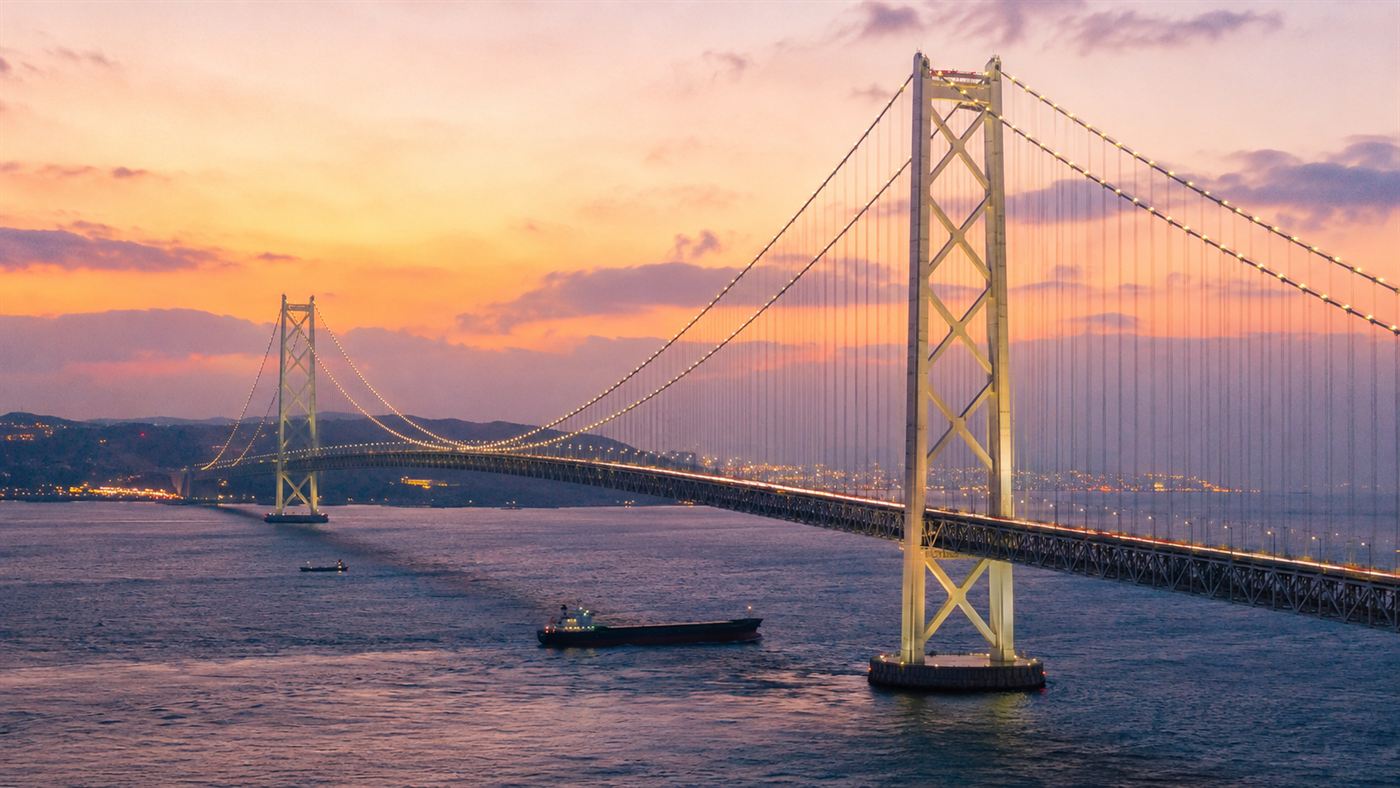
Related reading: the Akashi Kaikyo Bridge, whose towers were pushed apart by an earthquake mid-construction, or the Burj Khalifa, the tallest building ever, shaped to outwit the desert wind.