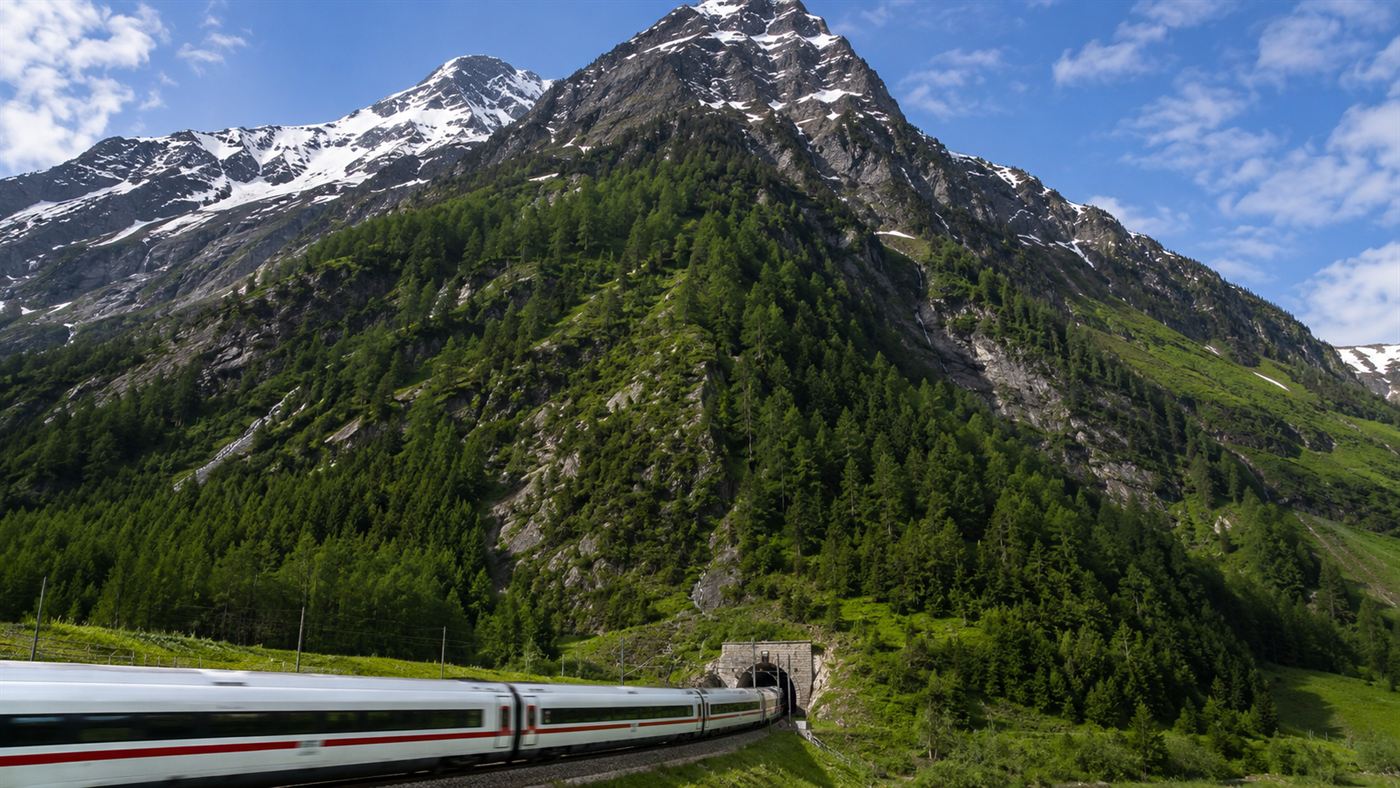
The Hong Kong-Zhuhai-Macau Bridge runs 55 km across the open sea, then suddenly dives into a tunnel on the seabed so that ships can sail right over the traffic
Imagine driving out across the ocean for the better part of an hour, the water stretching to the horizon on both sides, when the road in front of you simply plunges beneath the waves. Above your head, container ships glide past. This is the strangest stretch of the longest sea crossing ever built, and it exists to solve a very real problem.
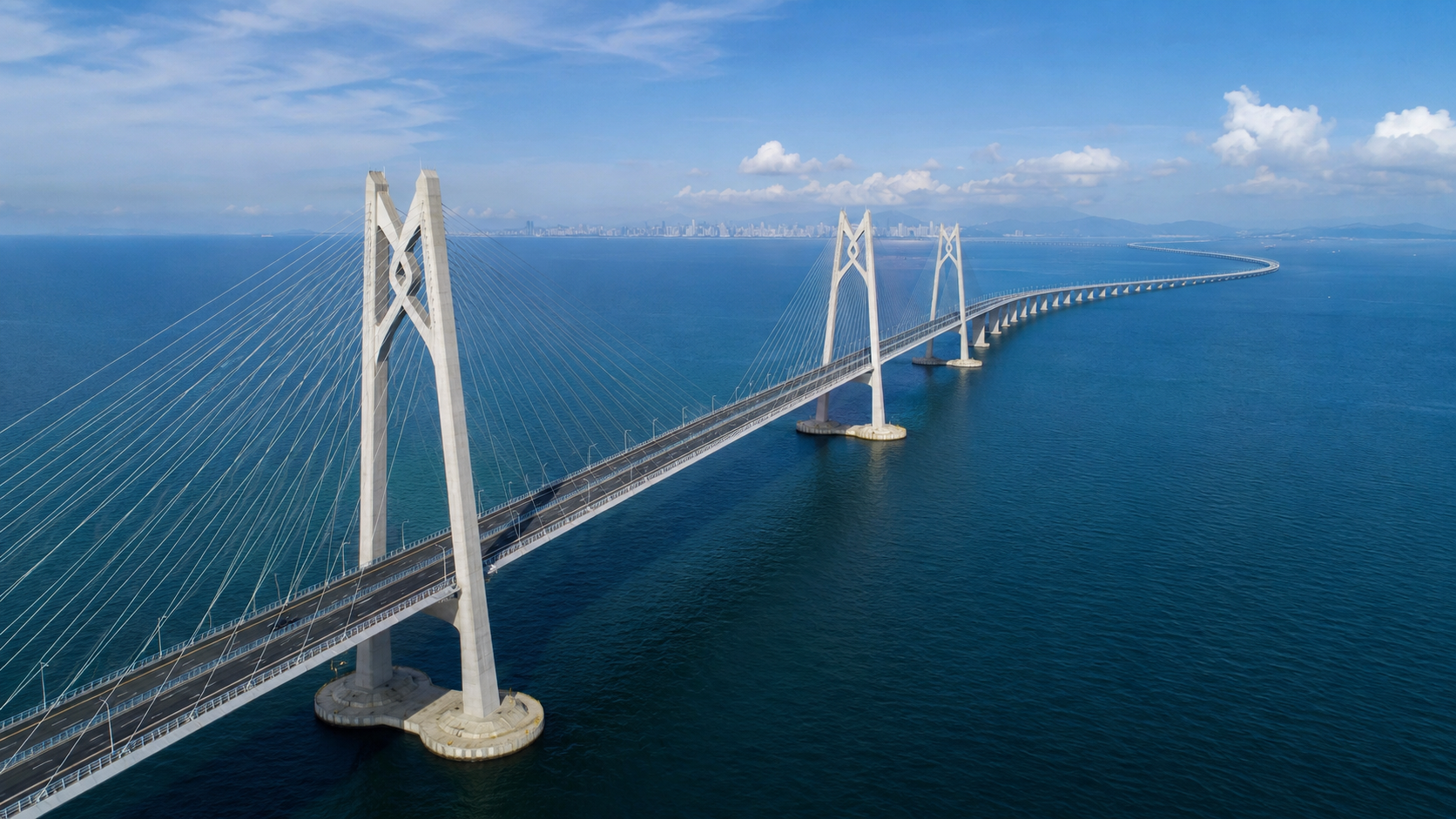
The 55 km crossing curves across the Pearl River estuary toward the horizon. Illustration: Watts & Wild.
The Hong Kong-Zhuhai-Macau Bridge is a record-breaker by any measure: at 55 kilometres, it is the longest sea crossing and the longest open-sea fixed link anywhere on Earth. It ties together three cities, Hong Kong, the mainland boomtown of Zhuhai, and the casino enclave of Macau, across the wide, busy mouth of the Pearl River.
But the headline number is not what makes engineers stop and stare. It is the middle of the crossing, where one of the world's grandest bridges deliberately stops being a bridge at all and disappears under the sea.
What is the Hong Kong-Zhuhai-Macau Bridge?
Opened to traffic on 24 October 2018 after nearly nine years of construction, the crossing is not a single bridge but a system. It strings together three graceful cable-stayed bridges, four artificial islands, and a long undersea tunnel into one continuous link. It was designed to last 120 years and to shrug off the typhoons and earthquakes that regularly batter this coast.
The point of it was time and money. A journey between Hong Kong and Zhuhai that once meant a long ferry ride or a four-hour road trip around the estuary was cut to well under an hour. The whole thing is the physical backbone of China's plan to weld the Pearl River Delta into a single connected megaregion of tens of millions of people.
Why the bridge dives under the sea
Here is the clever part. The Pearl River estuary is one of the busiest shipping lanes in the world, with enormous cargo vessels constantly moving in and out. A continuous high bridge would either block those ships or need towers so tall they would interfere with planes landing at nearby Hong Kong airport. You cannot have a bridge that stops the ships, and you cannot have towers that threaten the aircraft.
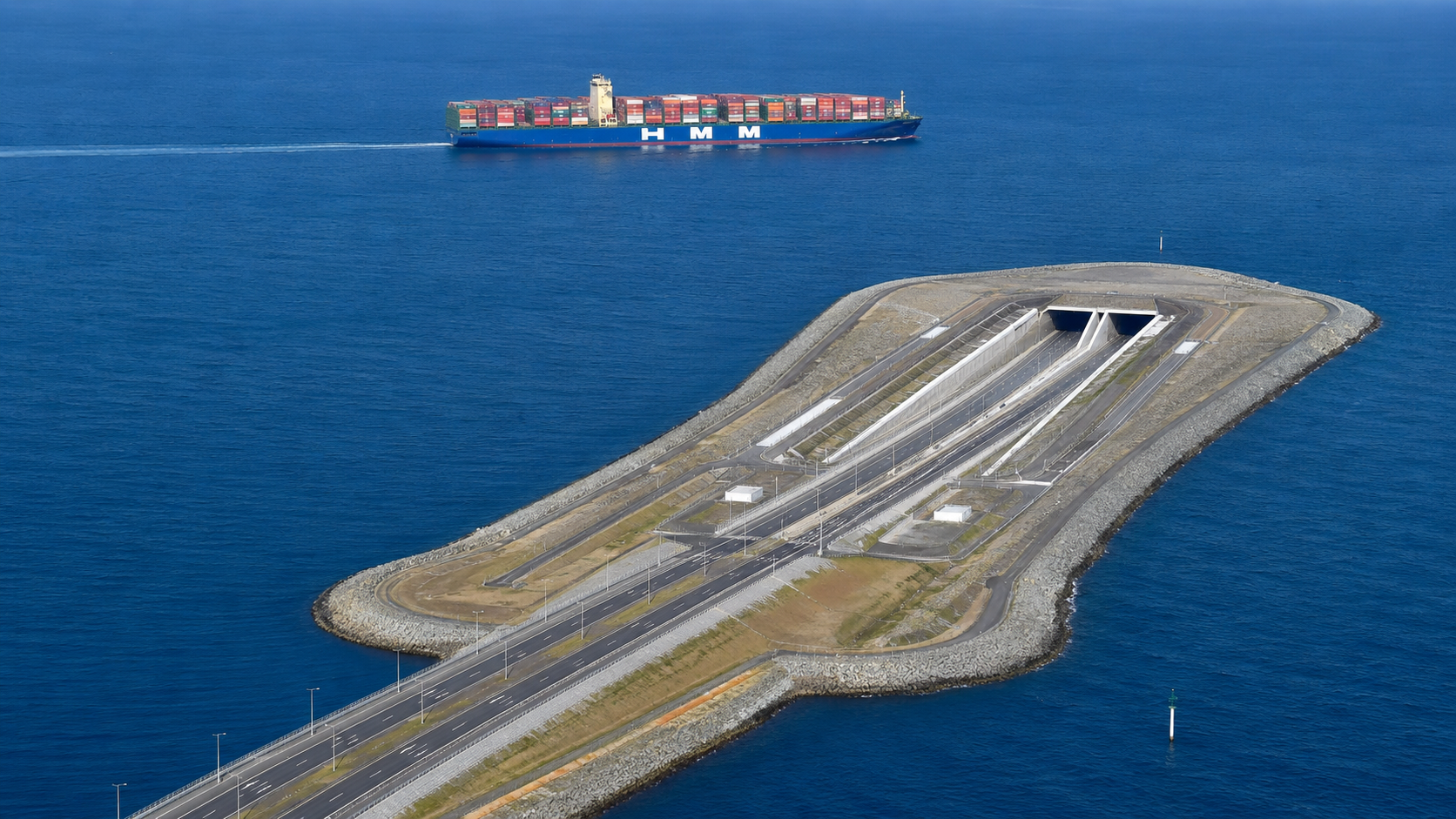
So for a critical 6.7-kilometre stretch, the engineers sent the road down to the bottom of the sea instead. The traffic vanishes into a tunnel on the seabed, and the ships sail serenely over the top, neither one aware of the other. It is a genuinely elegant answer to a problem that looked impossible: how to cross the water without getting in the way of the water's own traffic.
Two islands and 33 sunken tubes
To get the cars from the bridge down into the tunnel and back up again, the builders had to manufacture land out of nothing. They created two artificial islands in the open sea, poetically named the Blue Dolphin and White Dolphin islands, as the ramps where bridge becomes tunnel.
The tunnel itself was not bored through rock. It is an immersed tube, assembled from 33 giant prefabricated concrete sections, each one floated out to sea and then carefully sunk into a trench on the seabed and joined to the last, like threading enormous beads underwater. Each section had to seal perfectly against the next, in the dark, under the pressure of the sea, with no margin for a leak. Doing that 33 times in a row is one of the great quiet feats of modern engineering.
What did it cost to build?
The official price tag came in around 127 billion yuan, roughly US$18.8 billion, making it one of the most expensive single pieces of infrastructure ever built. That figure covers the dredging, the islands, the tunnel, the bridges and the years of labour by tens of thousands of workers.
It carried a human cost as well. Over the course of construction, 19 workers died, and many hundreds more were injured building a structure in the open sea, against tides, typhoons and time. Those numbers are a sober reminder that a bridge this size is not just concrete and steel but the labour, and sometimes the lives, of the people who raise it.
The honest catch
For all its brilliance, the bridge has not been an unqualified triumph, and it is worth being honest about that. On opening day, fewer than 1,500 private cars crossed, against forecasts of nine thousand or more a day, because strict permits limit which vehicles can use it. For years critics called it a spectacular but underused symbol, a road to nowhere near its predicted capacity, though shuttle-bus passenger numbers have since climbed into the tens of thousands daily.
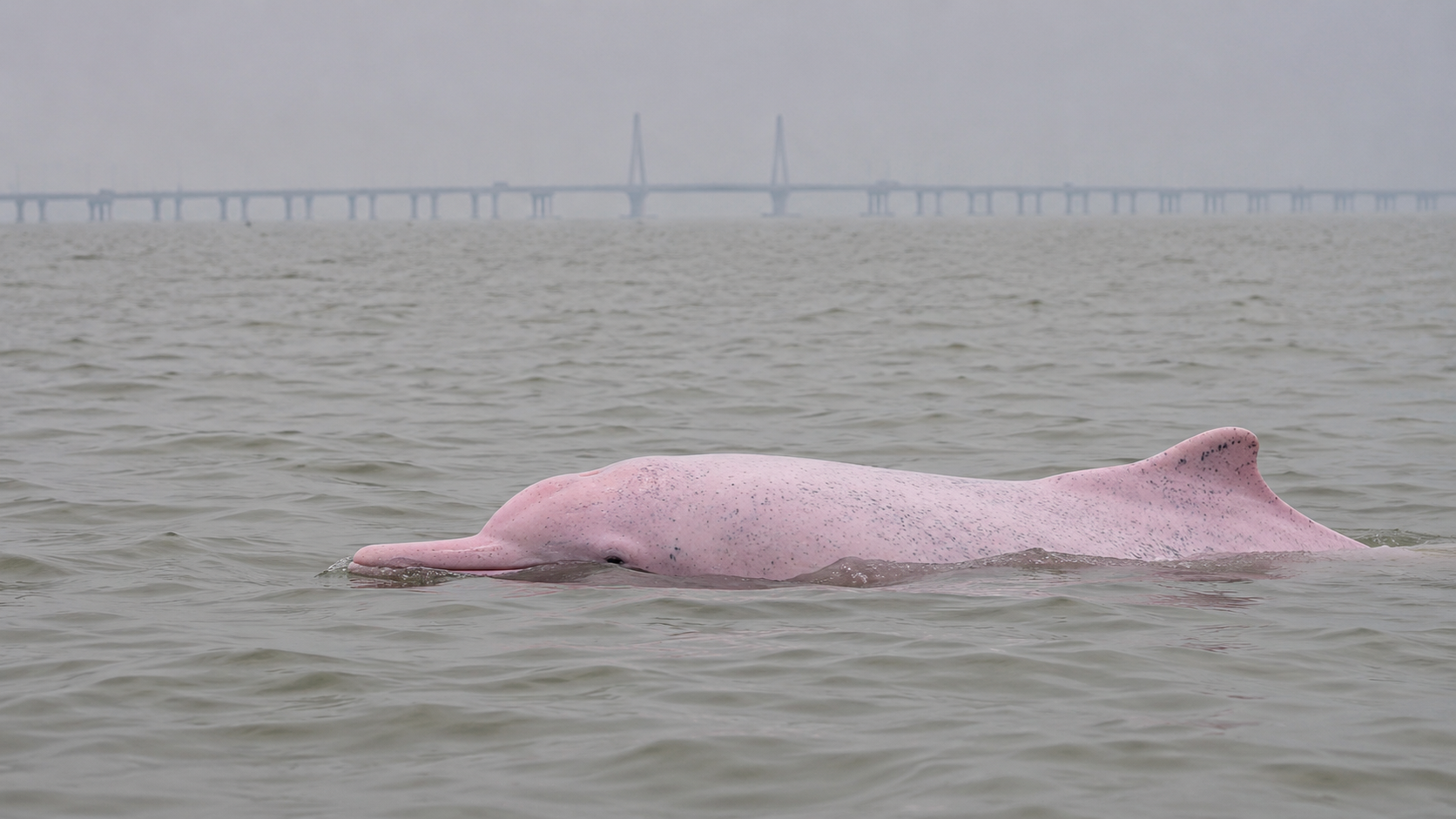
There was an environmental price too. These are the waters of the rare Chinese white dolphin, the famous pink dolphin of the delta. Conservation groups recorded the local population near Lantau falling sharply during the construction years. A bridge built to bring people closer together pushed one of the region's most beloved animals further away.
Why the Hong Kong-Zhuhai-Macau Bridge still matters
Even with the doubts, the crossing stands as a statement about what large-scale engineering can now do. Building a fixed link across 55 kilometres of open, typhoon-prone, ship-crowded sea, and solving the shipping problem by simply going under it, was unthinkable a generation ago. The techniques perfected here, especially the deep immersed-tube tunnel, are already shaping how the next sea crossings will be built.
It is also a near-perfect example of the trade-off at the heart of every mega-build. You can connect cities, shrink journeys and break records, but the bill always comes due in money, in lives, and in the quiet corners of nature that were there first. The Hong Kong-Zhuhai-Macau Bridge is both the marvel and the warning, written in the same 55 kilometres of road.
A 55 km bridge dives under the sea so ships can pass over it, at a cost of $18.8 billion, 19 lives and a vanishing dolphin. When a mega-build breaks every record but harms the people and nature around it, is it still a success? Tell us what you think in the comments.
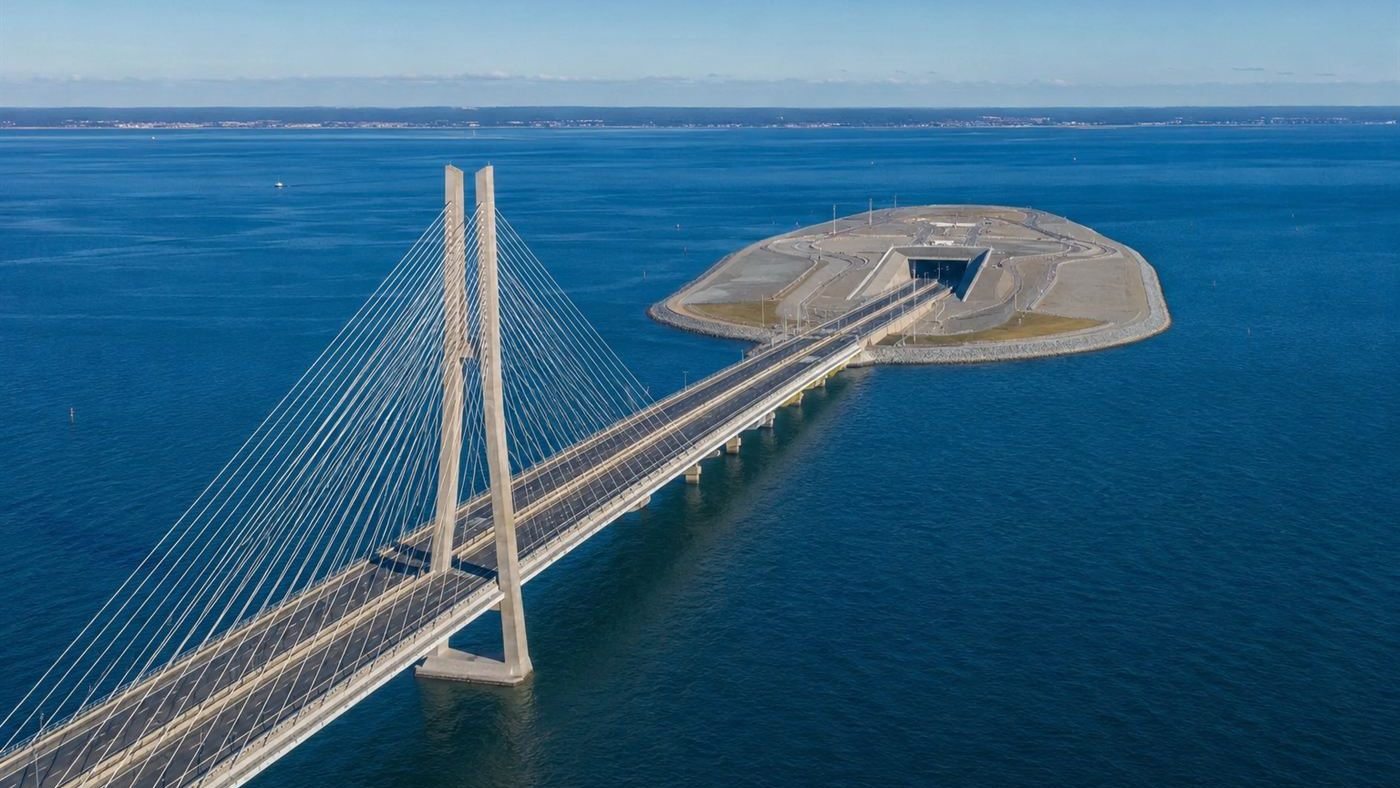
Related reading: The Oresund link between Denmark and Sweden plays the same trick, turning from a bridge into a tunnel on an island built just for the job.