Some Americans got so furious with a neighbour or the city that they built an entire house purely to annoy them, and a handful of these spite houses are still standing today
Most buildings go up for money, shelter or pride. A rare few go up for something far pettier: revenge. Scattered across American cities are homes that were built mainly to block a view, ruin a plan, or make a hated neighbour's life miserable, and some of these grudges in wood and brick have outlived everyone involved.
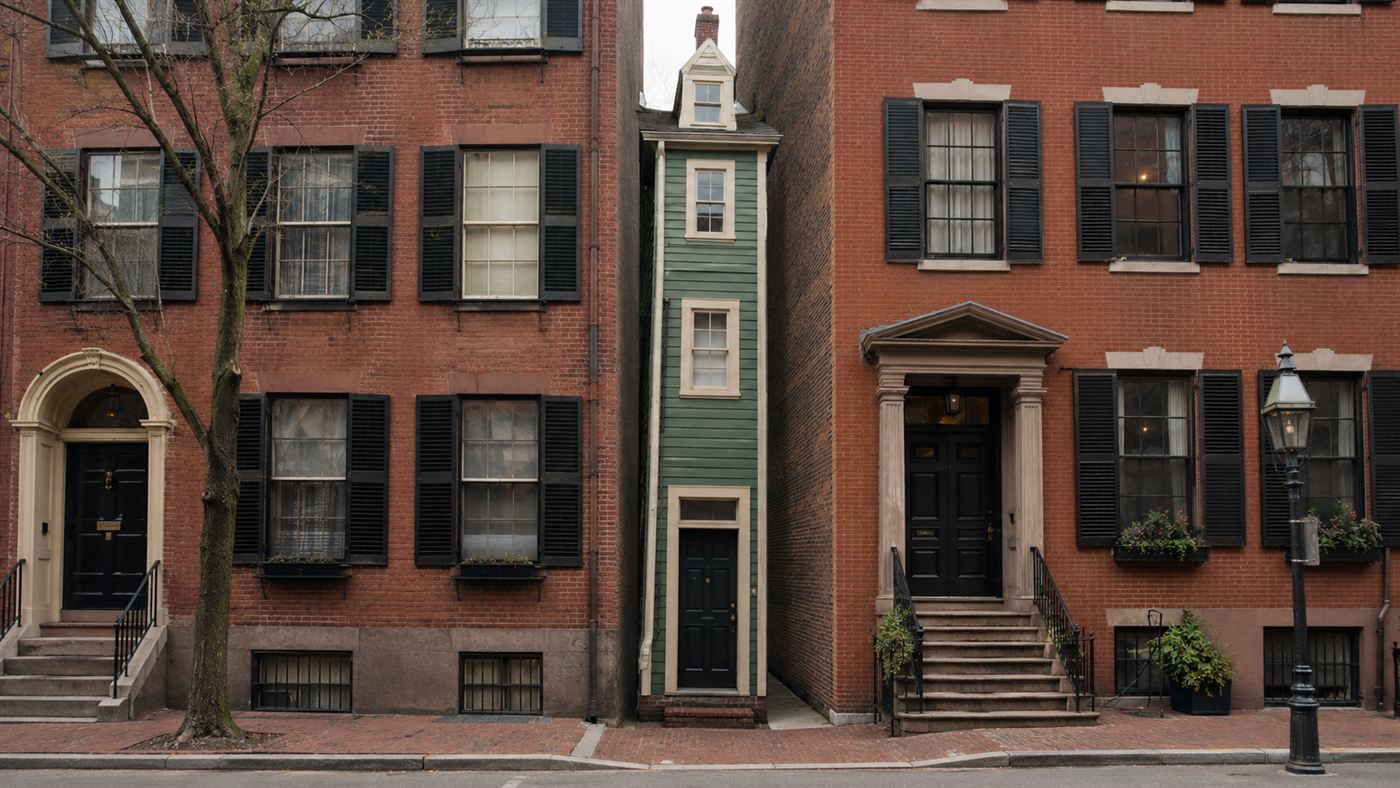
A whole house squeezed onto a sliver of land, built to block a view. Illustration: Watts & Wild.
There is a special category of building that architects rarely brag about and city guides love to point out. They are called spite houses, and their entire reason for existing is to irritate somebody. Not to make money, not to be comfortable, just to win an argument in the most permanent way imaginable.
Some are famous local landmarks, others are quiet oddities you would walk straight past. What they share is a story of a feud so bitter that one side decided the perfect revenge was not a lawsuit or a punch, but a permanent structure their enemy would have to look at forever.
The short version: over the past couple of centuries, angry Americans have poured real money into buildings designed mostly to spite a rival. Some blocked a view, some choked off a road, and a surprising number of these spite houses are still standing, admired now for the very pettiness that created them.
The four-foot grudge in Boston
The most beloved example is the Skinny House in Boston's North End, a green wooden home that is roughly ten feet across at its widest and squeezes down to about six. Inside, some passages are so tight that a visitor has to turn sideways to get through, and the widest doorway is under three feet.
The legend behind it is pure family warfare. As the story goes, two brothers inherited a plot of land, and while one was away at war the other built a large house that took up most of it. The returning brother found only a useless strip left, so he built a tall, absurdly thin home on it purely to block his sibling's light and view. The Skinny House has stood as a monument to that grudge ever since.
Why would anyone build a spite house?
It sounds insane to spend a fortune out of pure anger, but the logic of a property dispute makes it horribly rational. If you own a strip of land next to someone you loathe, a building is the one weapon they cannot ignore, appeal, or easily remove. It sits in their sightline every single day.
A house is also strangely final. A rude letter can be thrown away and a lawsuit eventually ends, but a wall of brick outlives the argument, the lawyers, and often the people themselves. That permanence is exactly the point, which is why a property dispute over a narrow lot has, again and again, ended with someone hiring a builder instead of a lawyer.
Houses built to block a view
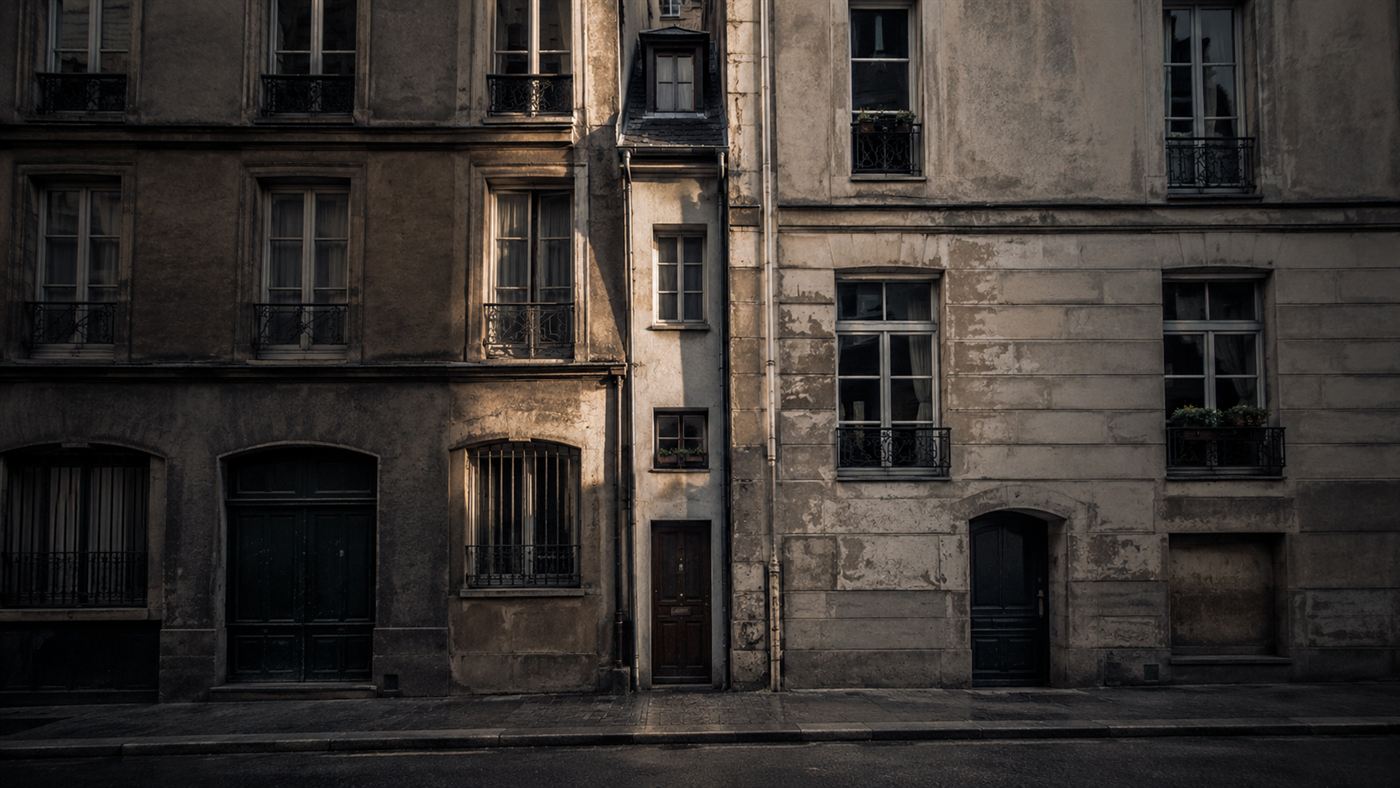
Many spite houses share one goal: to steal a view or a beam of light from someone who wanted it. A builder finds a thin, seemingly worthless narrow lot right where it will do the most damage, then puts up something tall and narrow that walls off a neighbour's window, garden, or prized ocean outlook.
Cities from Alameda in California to Frederick in Maryland have their own celebrated versions, each with a tale of a landowner, a developer, or a jilted party who refused to sell and built instead. Some are elegant and genuinely liveable, others are little more than a habitable fence, but all of them started as a message aimed squarely at somebody next door.
When a wall is cheaper than a house
Not every act of architectural revenge is a full home. The cheaper cousin of the spite house is the spite fence, a barrier built absurdly high or ugly purely to ruin a neighbour's outlook. In the nineteenth century some of these reached staggering heights, blotting out sun and sky over the property next door.
These grew so common and so nasty that several American states eventually passed a spite fence law, capping how high you could build a barrier if its only real purpose was malice. That such laws had to be written at all tells you how many people were willing to spend serious money just to spoil someone else's day.
The honest catch
It is worth being honest that the label often outshines the facts. Many so-called spite houses have romantic origin stories that historians cannot fully prove, and a fair number were probably built for ordinary reasons, then explained later with a better tale. A weirdly narrow house on an odd lot invites a legend whether or not one is true.
Sometimes the real cause was simply an awkward scrap of land, a strange inheritance, or a builder making the best of a bad plot. The spite story is just more fun than the paperwork. So while genuine grudge-built homes absolutely exist, it pays to enjoy the folklore with a pinch of salt rather than treating every skinny house as proof of an ancient feud.
Why we love a house built on a grudge
There is something oddly delightful about a spite house, which is why cities protect and celebrate them. They are proof that architecture is not always cold and rational, that a building can carry a raw human emotion for centuries after the emotion itself has cooled. A tiny, defiant house on a useless strip of land is a joke that never stops being told.
They also flip the usual story of property, where everything is about value and profit. A spite house is the opposite, a decision to lose money on purpose just to win. That is so human, and so absurd, that we cannot help but love the people petty enough to have done it.
People once spent a fortune building homes with the main goal of annoying someone next door, and we still point them out with a grin. Would you ever be angry enough to build a whole house just to spite a neighbour, if the law let you? Tell us what you think in the comments.
Related reading: the mansion a grieving widow kept building for 38 years, with stairs that lead nowhere. See also the brothers who filled their brownstone with 140 tons of hoarded junk, and the densest human settlement that ever existed. And read how the Pig War nearly set two empires fighting over a single hog.