Cincinnati spent years digging a full subway under its streets in the 1920s, then ran out of money before a single train ever ran, and the finished tunnels still sit empty a century later
Under the streets of Cincinnati there is a complete subway with platforms, stairwells and more than two miles of tunnel. It was built, sealed, and then simply left. No train has ever run through it, and a hundred years later it is still down there, waiting for passengers who never came.
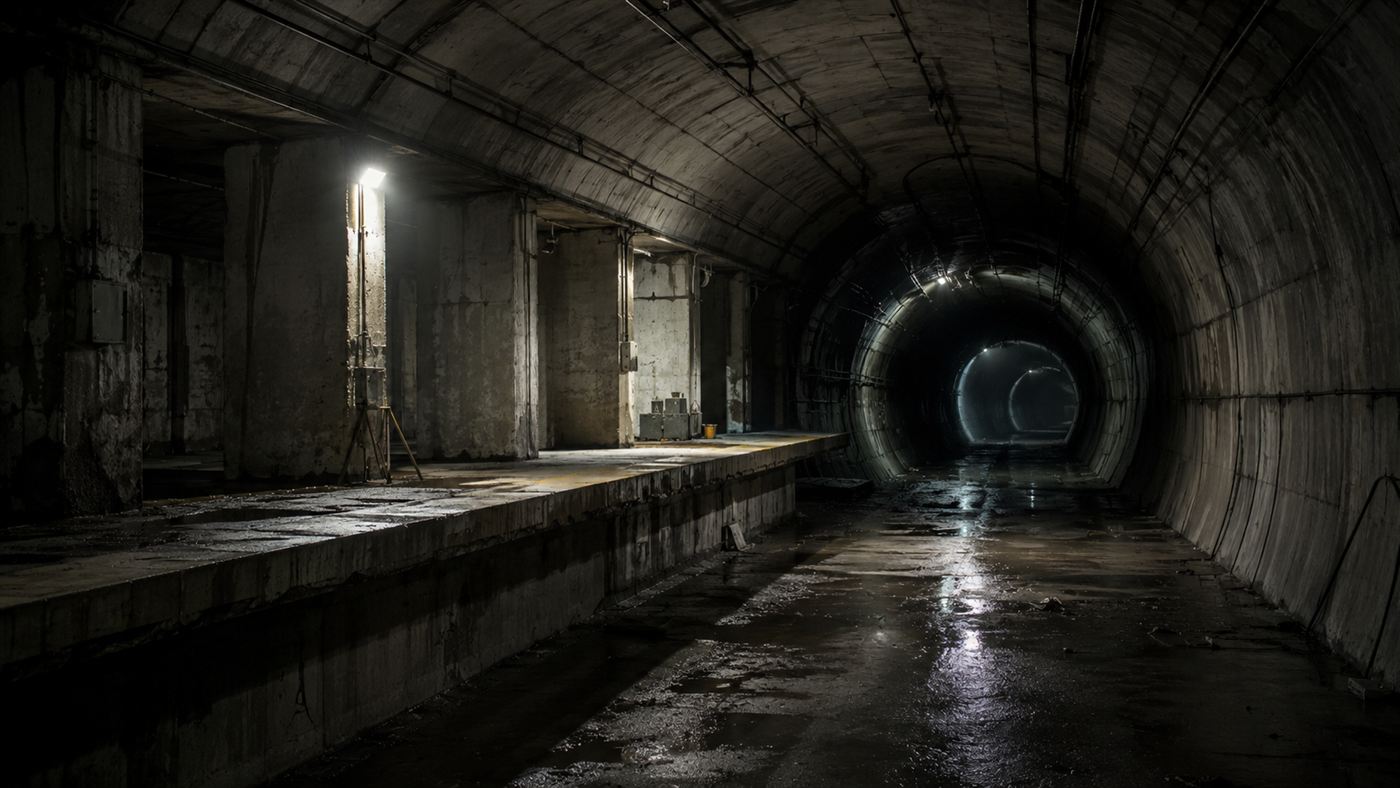
A finished platform that never saw a single train. Illustration: Watts & Wild.
Most cities that dream of a subway either build one or never break ground. Cincinnati did something stranger. It voted the money, dug the tunnels, poured the platforms, and got most of the way to a working transit line, then stopped cold and walked away from the whole thing. The result is the largest abandoned subway in the United States.
The Cincinnati subway is not a myth or a scrapped blueprint. It is a real, physical network of tunnels sitting under the modern city, much of it in surprisingly good shape. To understand how a place spends a fortune on a subway and then never runs a train, you have to go back to a filthy, stinking canal.
The short version: the city drained an old canal, used the empty ditch as a ready-made trench for a rapid transit line, and started building in 1920. Then costs exploded, the money ran dry, the politics turned, and the Cincinnati subway was abandoned unfinished, never to carry a passenger.
From a dead canal to a grand plan
By the early 1900s the Miami and Erie Canal that ran through Cincinnati was a foul, half-abandoned relic, more open sewer than waterway. City boosters had a neat idea: drain the canal bed and drop a rapid transit line into the empty channel, with a wide boulevard running on top. Two problems solved with one dig.
In 1916 voters approved a six million dollar bond to build a loop of rapid transit around the city. On paper it was elegant and cheap, because the old canal bed handed the engineers a trench that was already carved through the heart of downtown. Then the timing fell apart.
Why the money ran out mid-dig
The First World War froze construction before it began, and by the time crews finally started digging in 1920 the world had changed. Wartime and post-war inflation had savaged the budget, so the same six million dollars now bought a fraction of what it once would have. The plan was too big for the purse.
Workers built roughly two and a quarter miles of tunnel and several stations, some in open trench along the canal bed, some bored under the hills. But the fixed bond could not stretch to tracks, trains, power systems or the outer sections. By 1925 the money was gone, and construction on the Cincinnati subway simply stopped.
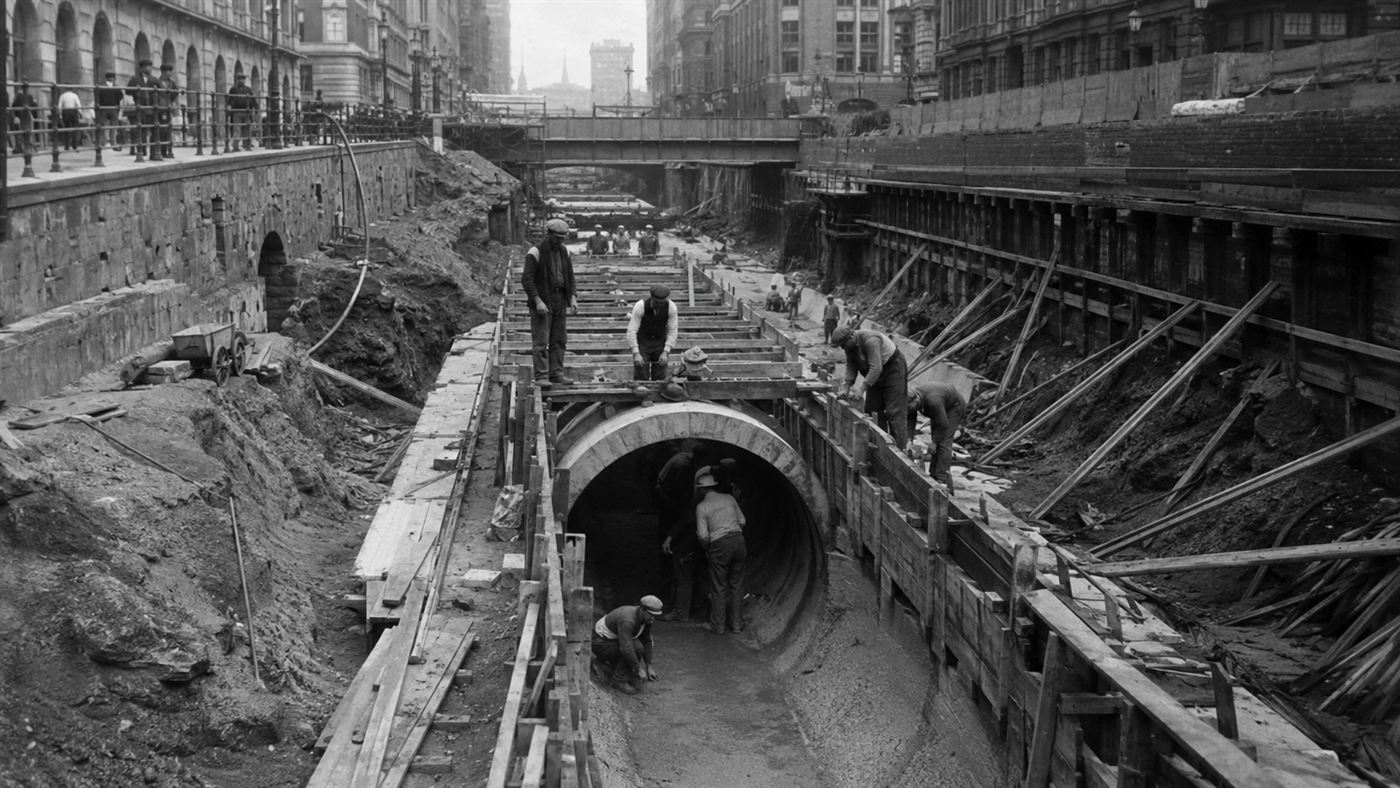
A finished tunnel with nowhere to go
What was left was almost heartbreaking in its completeness. The abandoned tunnels were solid and dry, the stations had their platforms, and above them the promised boulevard, Central Parkway, was finished and opened to traffic. Drivers rolled along Central Parkway with no idea a ghost railway sat directly beneath their wheels.
For decades the city argued about what to do with it. Every so often someone proposed finishing the Rapid Transit Loop, or converting it, or filling it in, and every plan collided with the same wall of cost. Meanwhile the debt on the original bond was not cleared until 1966, meaning Cincinnati paid off a subway it never once used for forty years.
How big is the abandoned Cincinnati subway?
It is genuinely large, which is what makes it so surreal. More than two miles of twin-track tunnel run under the city, complete with the shells of stations that would have served thousands of riders a day. No other American city ever sank this much into a subway and then left it silent like the Cincinnati subway did. Nothing on this scale was ever built and then left unused anywhere else in American transit.
The structure has aged remarkably well because it was sealed before it could ever be worn out. The city now runs a large water main through part of the abandoned tunnels and has threaded fiber-optic cable through others, so the empty subway quietly earns its keep as underground real estate even without a single train.
The honest catch
It is tempting to call this pure incompetence, but that is not quite fair. The people who planned it were not fools. They were ambushed by a once-in-a-generation spike in costs, a world war, and a fixed pot of money that could not legally grow to match. Locking in a hard budget for a project that would take years turned out to be the fatal flaw.
There is a second twist that sealed its fate: the automobile. Even as the tunnels sat empty, Cincinnati was falling in love with the car, and the political appetite for an expensive public railway drained away. By the time anyone seriously wanted mass transit again, the cost of finishing a half-built 1920s system was simply too high to swallow.
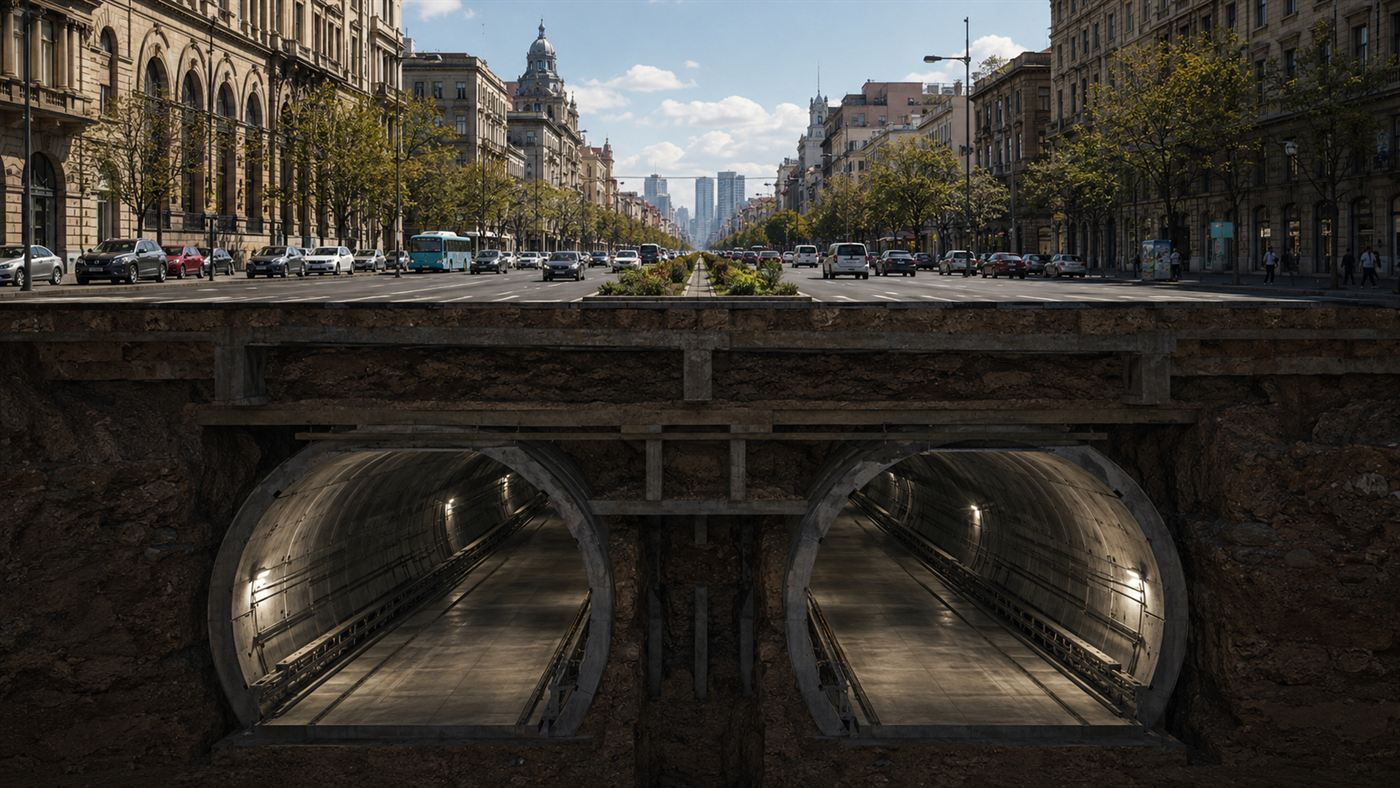
A ghost line that still shapes the city
The Cincinnati subway never became what its planners dreamed, but it never fully died either. It survives as a strange civic landmark, a place the city occasionally opens for tours so people can walk platforms that never heard a train announcement. For anyone who loves the roads not taken, it is hard to beat.
It stands as a warning and a wonder at once. A warning about big infrastructure locked to fixed budgets in uncertain times, and a wonder that a full subway can lie perfectly preserved beneath a busy modern street, its tiled stations empty, patiently outlasting every plan ever made to bring it back to life.
A whole subway was built beneath a great American city and then abandoned before a single passenger ever rode it. Would you rather your city finished the ghost tunnels under its streets or sealed them up as a monument to a plan that failed? Tell us what you think in the comments.
Related reading: the secret pneumatic subway a New York inventor built under Broadway without permission. See also the vast business city carved inside a Kansas City mine, and the Pennsylvania town abandoned to a fire burning under its streets.