China just switched on the world's largest floating solar farm in the open sea, 2.3 million panels riding the waves 8 kilometres off its coast to power 2.6 million homes from water instead of land
Solar farms need flat, empty land, and crowded coastal China is short of it. So at the end of 2025 the country did something audacious: it built a one-gigawatt offshore floating solar farm out in the open sea, anchoring 2.3 million panels to the seabed 8 kilometres off the Shandong coast.
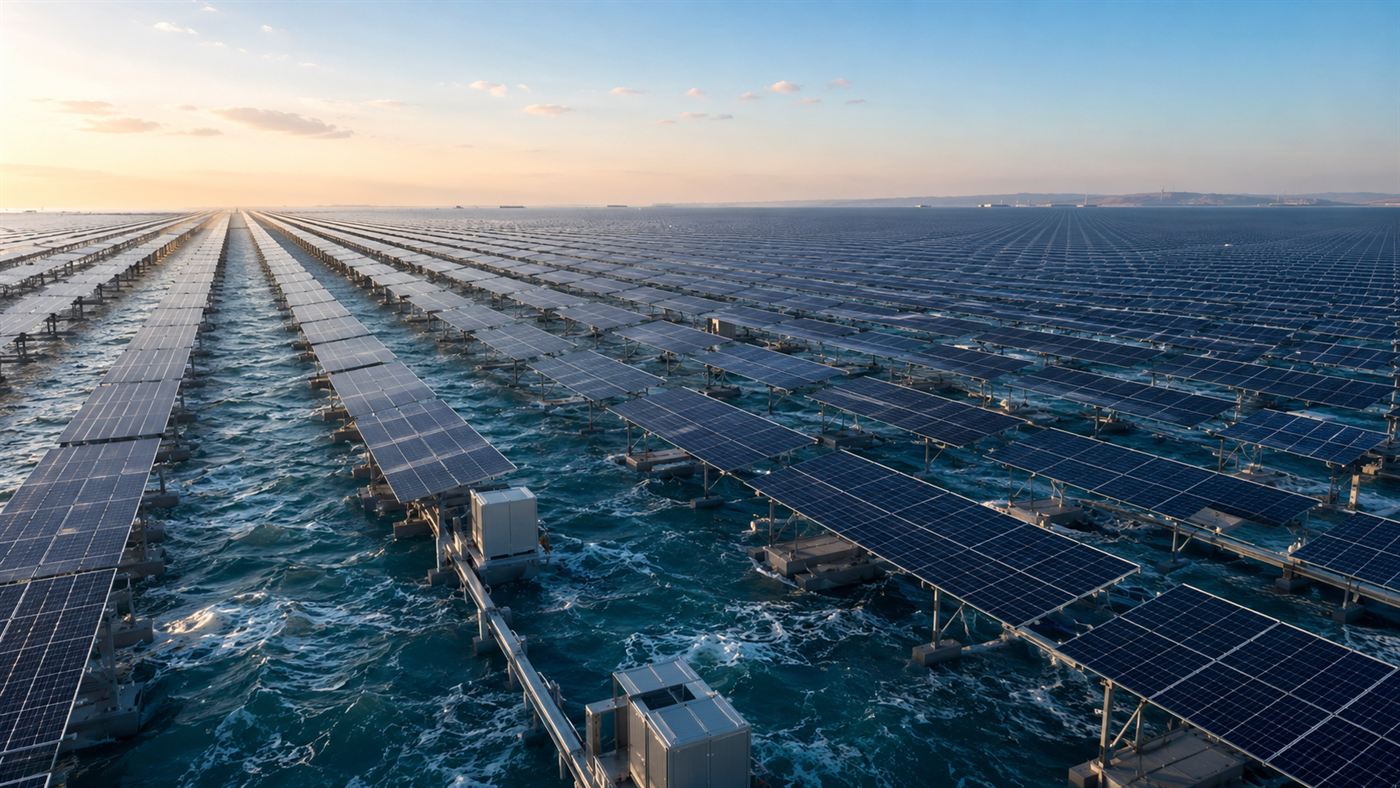
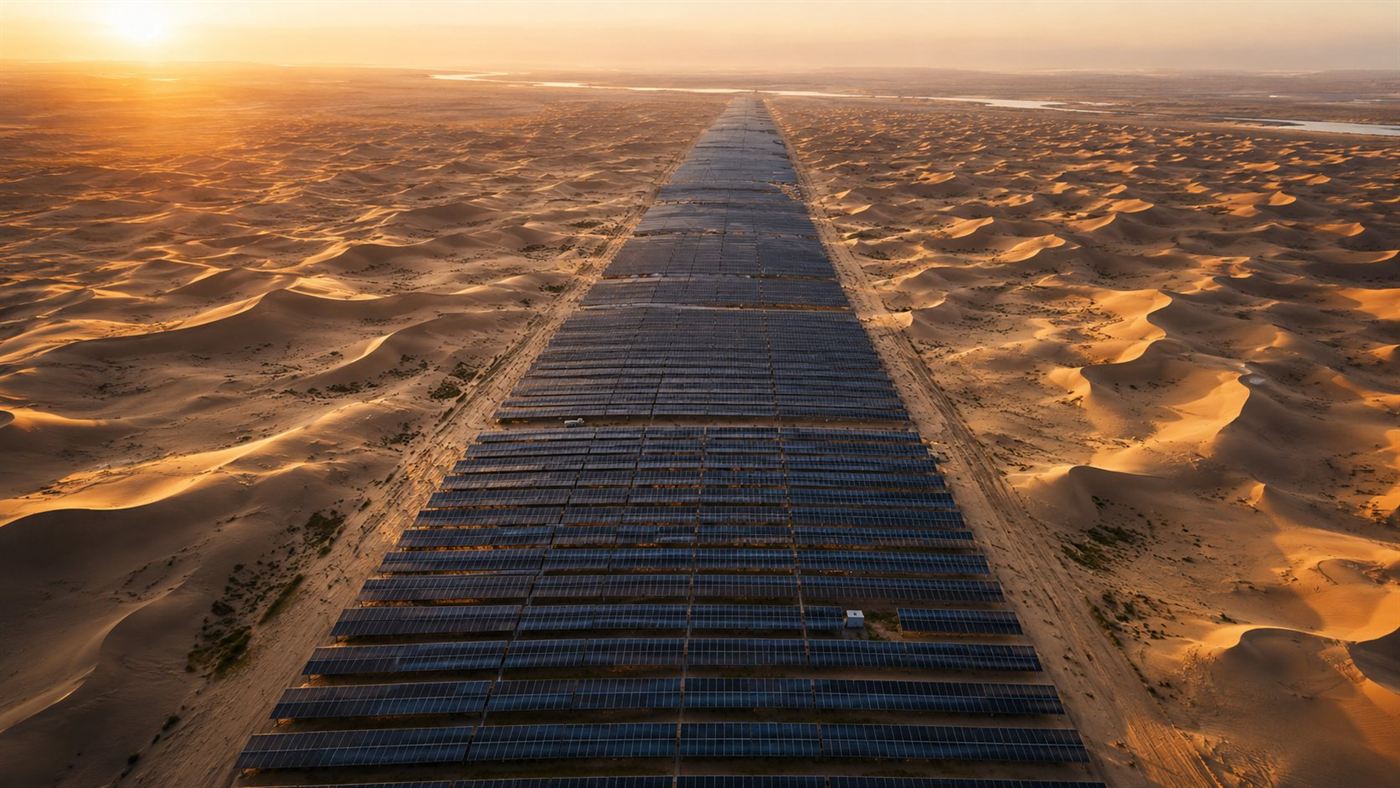
Rows of panels stretch to the horizon on the open sea, far from any shore. Illustration: Watts & Wild.
Most solar farms are a familiar sight by now, a field of dark panels tilted at the sun in a desert or on a hillside. The one China connected to its grid in late December 2025 is something the world had not seen before. It floats, it sits out in the open ocean far from land, and at one gigawatt it is the largest sea-based solar plant ever built.
Built by the China Energy Investment Corporation, the plant sits about 8 kilometres off the city of Dongying, in Shandong province, spread across more than 1,200 hectares of shallow coastal water. As Microgrid Media reported when the project came online, it carries 2.3 million solar panels mounted on 2,934 steel platforms anchored to the seabed by thousands of piles, and underwater cables carry the electricity back to shore. It cost around 1.2 billion dollars.
Why build solar on the sea at all
The obvious question is why anyone would put a solar farm somewhere as hostile as the open ocean. The answer is land, or the lack of it. China's industry and its biggest cities crowd along the eastern coast, exactly where electricity is needed most and where flat, cheap, empty land is hardest to find. The sea just offshore, by contrast, is wide open and unused.
There is a bonus, too. Water cools the panels, and a cooler solar panel is a slightly more efficient one, so a sea-based array can squeeze a little more power out of the same sunshine than a baking desert field. Put those together, demand on the coast, no spare land on the coast, and a large stretch of calm shallow sea right there, and a floating power station starts to look less mad than it first sounds.
The hard part is staying in one piece
The catch, of course, is that the ocean is trying to destroy your power plant at all times. Salt water corrodes metal, waves and currents heave at anything anchored in them, and this coast sees typhoons. Building a delicate electrical machine to survive out there, for decades, is the real achievement, and it is why the project leans on nearly three thousand sturdy steel platforms pinned to the seabed rather than the simple floating pontoons used on calm inland reservoirs.
To make the most of the power it gathers, the plant also includes battery storage, which the developer says lifts its useful output by around 20 percent by soaking up surplus generation rather than wasting it. The result is a machine designed not just to float, but to keep working reliably in one of the more punishing places you could choose to put glass and silicon.
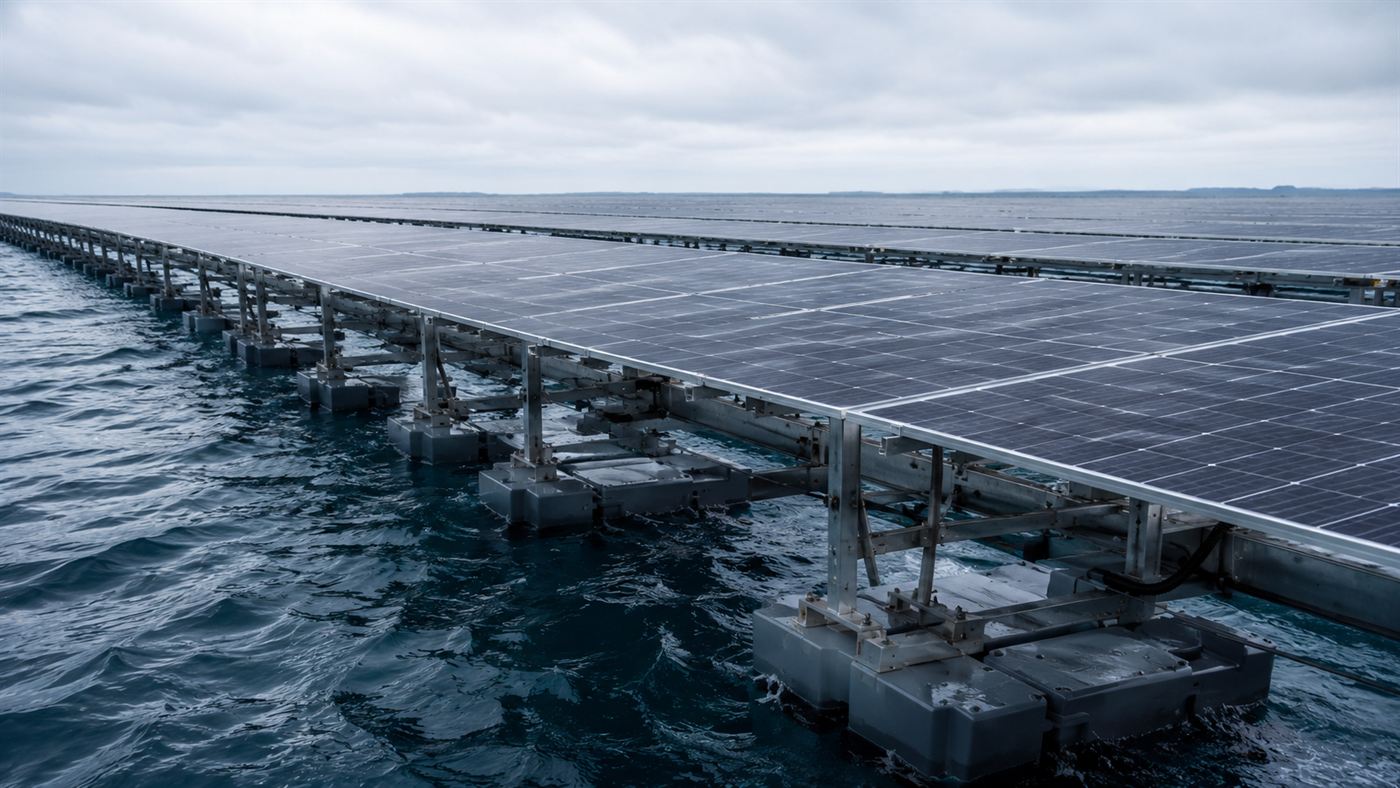
What a gigawatt at sea actually delivers
The output matches the ambition. According to figures reported across the energy press, the plant is expected to generate about 1.78 terawatt-hours of electricity a year, which is enough to cover the needs of roughly 2.6 million households. In doing so it should cut more than 500,000 tonnes of carbon emissions annually compared with burning coal for the same power.
Those numbers matter because of where the electricity lands. This is clean power generated right next to the dense coastal cities that consume it, with no need to string it halfway across the country from a distant desert. As Marine Insight notes in its survey of the largest floating solar projects, China has been pushing hard into water-based solar precisely to solve this mismatch between where its sun-soaked open space is and where its demand sits.
The honest catch
For all its scale, offshore floating solar is not a free lunch, and it is worth being clear about the trade-offs. Building and maintaining anything in salt water is expensive and difficult, so the cost per unit of power is higher than for a plain solar field on dry land. Corrosion never sleeps, repairs mean sending boats and crews out to sea, and a serious typhoon is a threat that a desert array never has to worry about.
There are open questions about the sea itself, too. Covering a large patch of water with panels changes the light and temperature beneath them, and the long-term effect on fish, birds and the local marine ecosystem is still being studied. This is a young technology operating at a brand-new scale, and a single gigawatt-sized plant is a bold experiment as much as a finished answer. The promise is real, but so is the list of things still to prove.
Why an offshore floating solar farm matters
The deeper story here is about room to grow. The world has far more sea than spare flat land, and most of humanity lives near a coast. If solar can be made to work reliably and affordably out on the water, it unlocks an enormous new space to build clean power exactly where it is needed, without paving over farmland or forest to do it.
One gigawatt of panels bobbing on the sea off Shandong is the first real test of that idea at full scale. It will not be the last. Whether floating solar stays a clever answer to China's particular shortage of coastal land or becomes a standard way to power the world's seaboard cities depends on what the next few years out on the water teach us. For now, the largest solar farm ever built on the open sea is quietly turning waves and sunlight into electricity. Would you welcome a vast field of solar panels floating off your nearest coast, or does the sea feel like the wrong place to build a power station? Tell us what you think in the comments.
Related reading: China is building a 400 km solar great wall across a desert it once called the Sea of Death, aiming for 100 GW by 2030 to help power Beijing.