In 1968 one man showed off the mouse, hyperlinks and video calls in a single demo
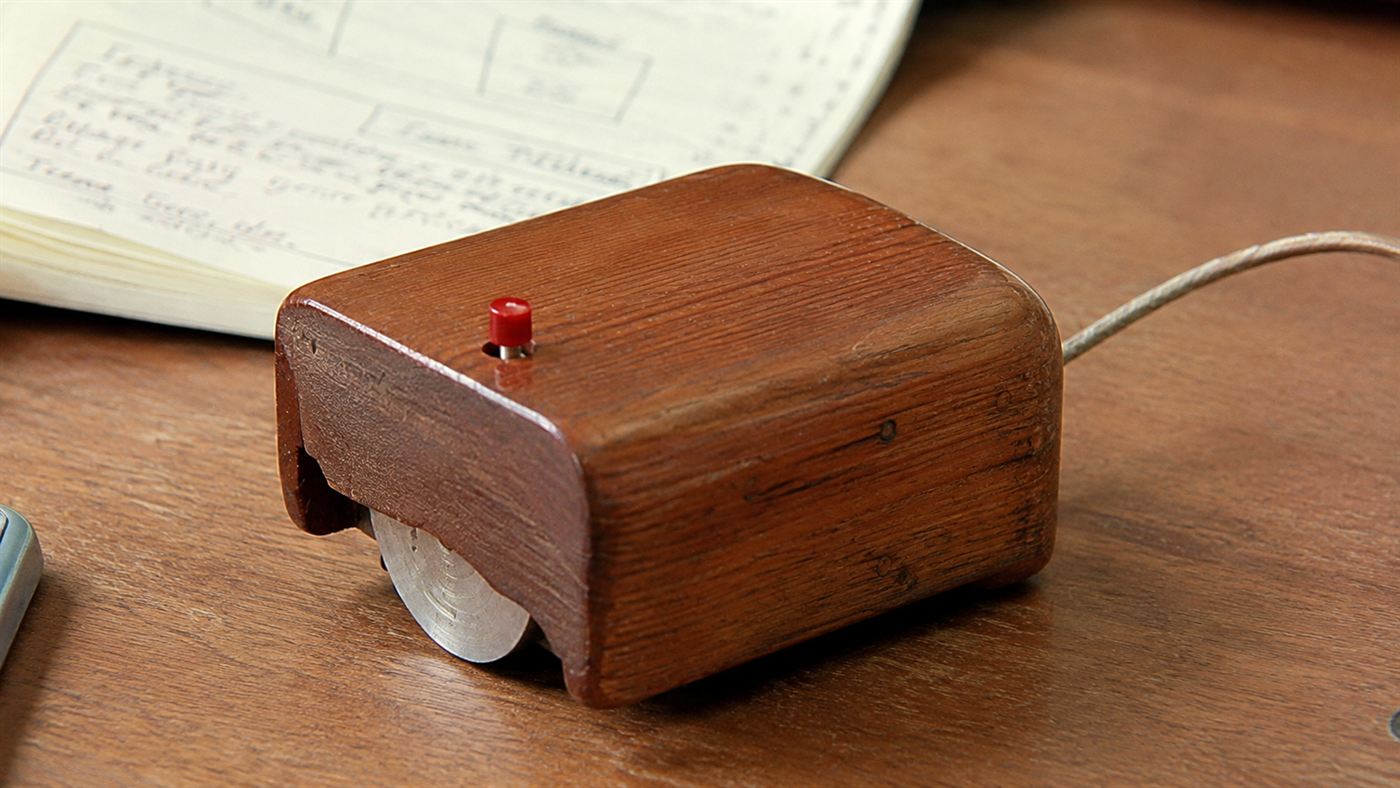
A computer engineer sat down on a San Francisco stage in 1968, in front of a thousand colleagues, and calmly used a machine that looked like it had fallen out of the next century. He clicked a small wooden box, opened windows, followed links, and spoke face to face with a colleague miles away. The Mother of All Demos showed the future of computing decades before it arrived.
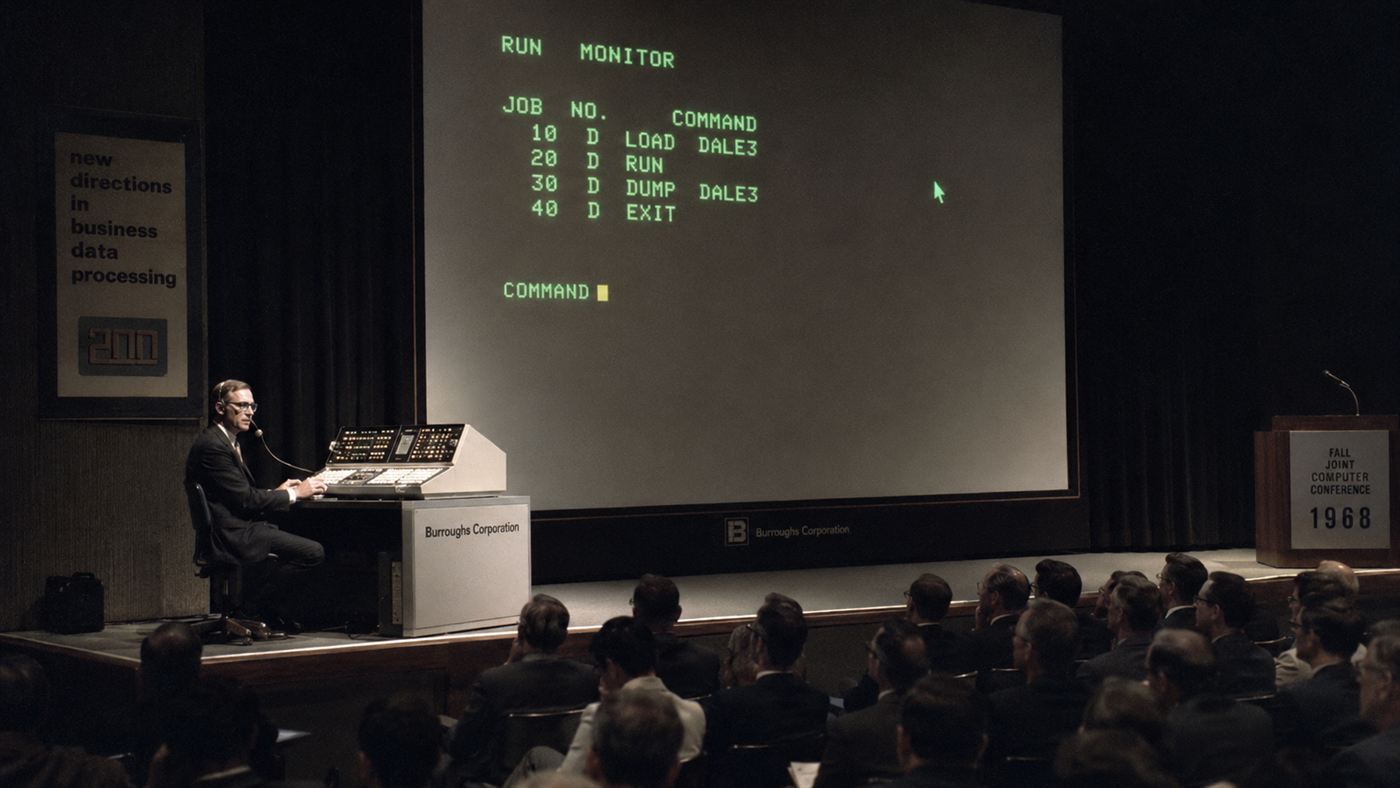
On one stage in 1968, an audience watched the personal computer arrive, fully formed, far too early. Illustration: Watts & Wild.
Think of everything you do on a computer in a normal hour. You move a mouse, click on windows, follow links between documents, type into a word processor, and perhaps jump on a video call. Almost every one of those things was demonstrated, working, on a single afternoon in 1968, when most computers were room-sized machines fed with punch cards.
The man behind it was an engineer named Douglas Engelbart, and the 90 minutes he spent on stage have a fitting nickname in computing history.
Ninety minutes that saw the future
The setting was a computer conference in San Francisco on 9 December 1968. Engelbart, who worked at the Stanford Research Institute, was given a large hall and a 90-minute slot in front of around a thousand fellow professionals. What they expected was a typical technical talk. What they got was something close to science fiction.
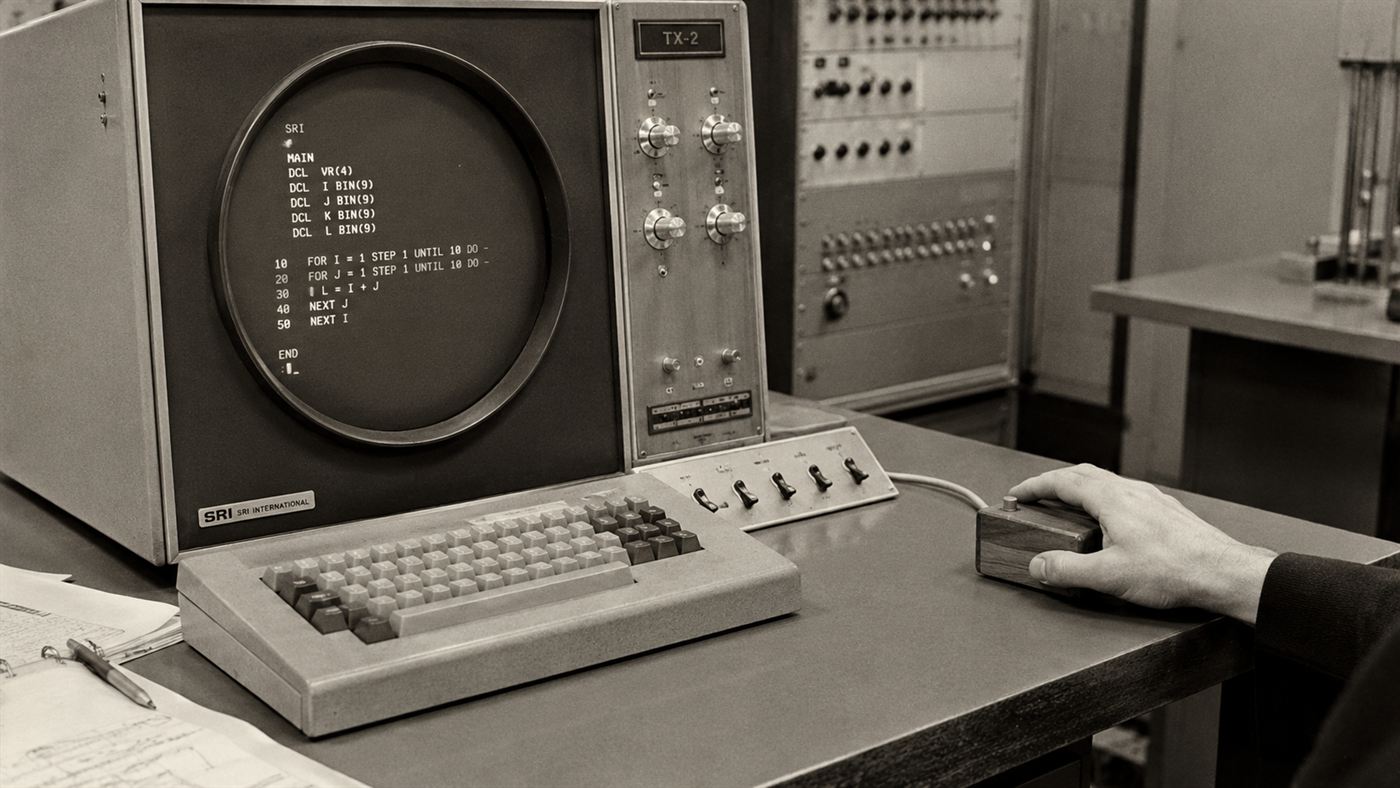
Sitting at a custom console with a screen, a keyboard and a strange little hand-held device, Engelbart walked calmly through a working system while the audience watched it all happen live on a big screen above him. For many in the room, it was the first time they had seen a computer respond instantly to a human, rather than chew on a stack of cards and spit out paper hours later.
What the Mother of All Demos showed
The list of firsts packed into that session is almost hard to believe. The Mother of All Demos introduced the computer mouse, on-screen windows, hypertext links, word processing, version history and real-time collaborative editing, along with a live video call, all in one go.
Any single one of those would have been a landmark. Engelbart showed them stitched together into one smooth system called NLS, the oN-Line System, as if the future had simply been delivered early and nobody had told the rest of the world yet. People in that hall later described it as the moment they saw what computers were truly for.
The trick behind the magic
The demo was not only a feat of ideas but of raw stagecraft. The computer running NLS was not even in the building. The actual machine sat about 30 miles away at the lab in Menlo Park, and its screen was beamed to the San Francisco stage over a pair of custom microwave video links.
Engelbart's colleague Bill English and the rest of the team had spent months building the rig that made it look effortless: cameras pointed at distant monitors, receiver dishes on the auditorium roof, and two channels of video carrying the picture across the bay. When Engelbart appeared to chat live with a teammate back at the lab, the audience was watching an early video conference held together with hand-built equipment.
The future arrived, but not for him
Here is where the story turns bittersweet. Engelbart's grand aim was not gadgets but using computers to augment human intelligence, to make people collectively smarter. Yet the world was slow to follow, his funding faded, and many of his brightest colleagues drifted off to a new lab at Xerox called PARC.
At PARC those ideas were refined into the Alto computer, which in turn inspired Apple's Macintosh and, later, Microsoft Windows. The mouse and the windows became everyday objects worth fortunes, but Engelbart himself never grew rich from them and spent years feeling his deeper vision had been misunderstood. The man who demonstrated the future watched other people build and sell it.
What was the Mother of All Demos?
In short, it was the public birth of modern computing, compressed into a single sitting. It proved that the mouse, the screen full of windows and the linked, shared document were not far-off dreams but things that already worked in 1968.
One honest footnote: the catchy name was coined much later, by a writer in 1994, not on the day itself. And the demo was the work of a whole team, not one lone genius, building on earlier thinkers who had imagined linked information machines. That takes nothing away from the achievement; it simply shares the credit more fairly.
Who was Douglas Engelbart?
He was a quiet, stubborn American engineer who decided early in his career that the most important problem he could work on was helping humanity think better together. Long before the personal computer existed, Engelbart was convinced that machines should amplify the human mind, and he spent a lifetime trying to prove it.
History eventually caught up with him. He received major honours late in life, and the tools he showed in that hall are now used by billions of people every day, usually without a thought for the man who first held up a wooden mouse and clicked.
Everything on your desk and your screen was shown working in a single 1968 demo, by a man most people have never heard of. Why do we remember the companies that sold these ideas, but forget the engineer who showed them first? Tell us what you think in the comments.
Related reading: Shuji Nakamura, who invented the blue LED that lit the world and was paid almost nothing for it, or the world's first webcam, invented just to watch a coffee pot.