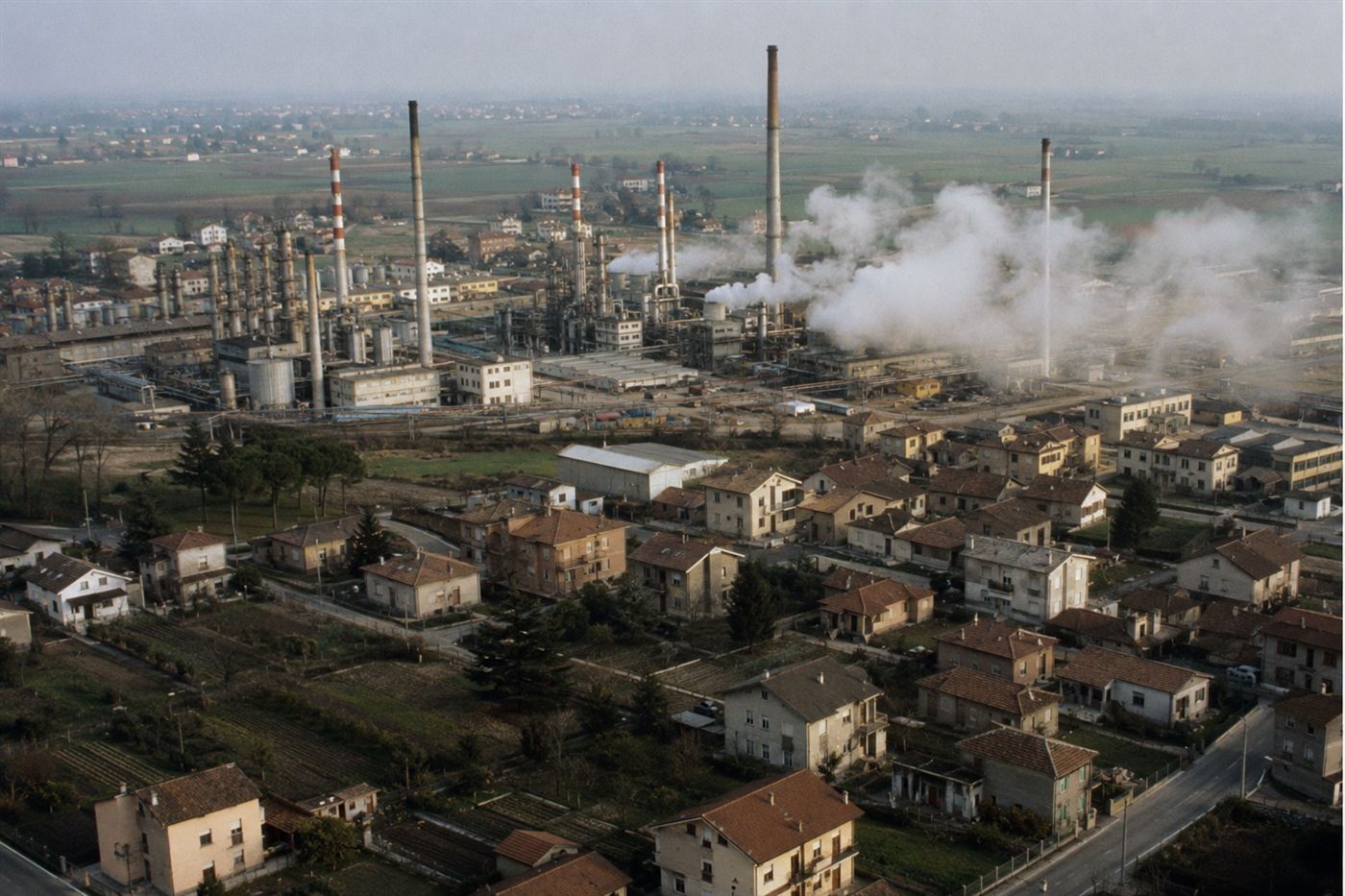
The Seveso disaster started on a Saturday morning in July 1976, when a reactor at the ICMESA chemical factory in Meda, a small town in the Lombardy region of northern Italy, was being shut down for the weekend. A safety valve burst under excess pressure and released a cloud of gas above the surrounding area. ICMESA was a subsidiary of Givaudan, which was in turn owned by the Swiss pharmaceutical company Roche, and it was making trichlorophenol, an intermediate product used in herbicide production. One of the contaminants in the release was 2,3,7,8-tetrachlorodibenzo-p-dioxin, known as TCDD. Between one and three kilograms of it drifted south over the rooftops and fields of Seveso.
TCDD is the most toxic synthetic compound ever produced. Scientists measure its effects in picograms, which are one-trillionth of a gram. The cloud from the ICMESA reactor was invisible, and it had no smell that most people would notice at the concentrations it reached. The first sign that something had gone wrong came within hours, when the chickens in the fields south of the factory started dying.
The Seveso disaster was a 1976 industrial accident at the ICMESA chemical factory in Meda, Italy, that released TCDD, the most toxic form of dioxin, over a residential area. Children outdoors developed chloracne. Some 37,000 people lived in the affected zones. The disaster gave Europe its core industrial safety law, now known as the Seveso Directive.
What caused the Seveso disaster in July 1976?
The ICMESA factory at Meda was making 2,4,5-trichlorophenol, or TCP, for use in herbicide manufacturing.
TCP is not acutely dangerous in normal production conditions.
The problem in the Seveso disaster was the temperature inside the reactor.
When TCP is produced at temperatures above around 230 degrees Celsius, a side reaction occurs and TCDD forms as an impurity.
ICMESA's process normally ran well below that threshold.
On July 10, 1976, the reactor was shut down at noon on a Saturday without completing the full cooling protocol.
The operators left for the weekend.
The reactor continued to heat from residual exothermic reactions inside.
By early afternoon the temperature inside had exceeded 300 degrees Celsius.
At approximately 12:37 p.m., the bursting disc on the reactor's safety valve gave way.
A cloud of TCDD-contaminated steam and TCP particles was released from the reactor over roughly twenty minutes, drifting south-southwest on a light breeze over the nearby towns.
The total amount of TCDD released is estimated at between one and three kilograms.
That does not sound like much.
TCDD is lethal to guinea pigs at doses of less than a microgram per kilogram of body weight.
By mass, a single kilogram of TCDD contains enough toxin to kill millions of animals.
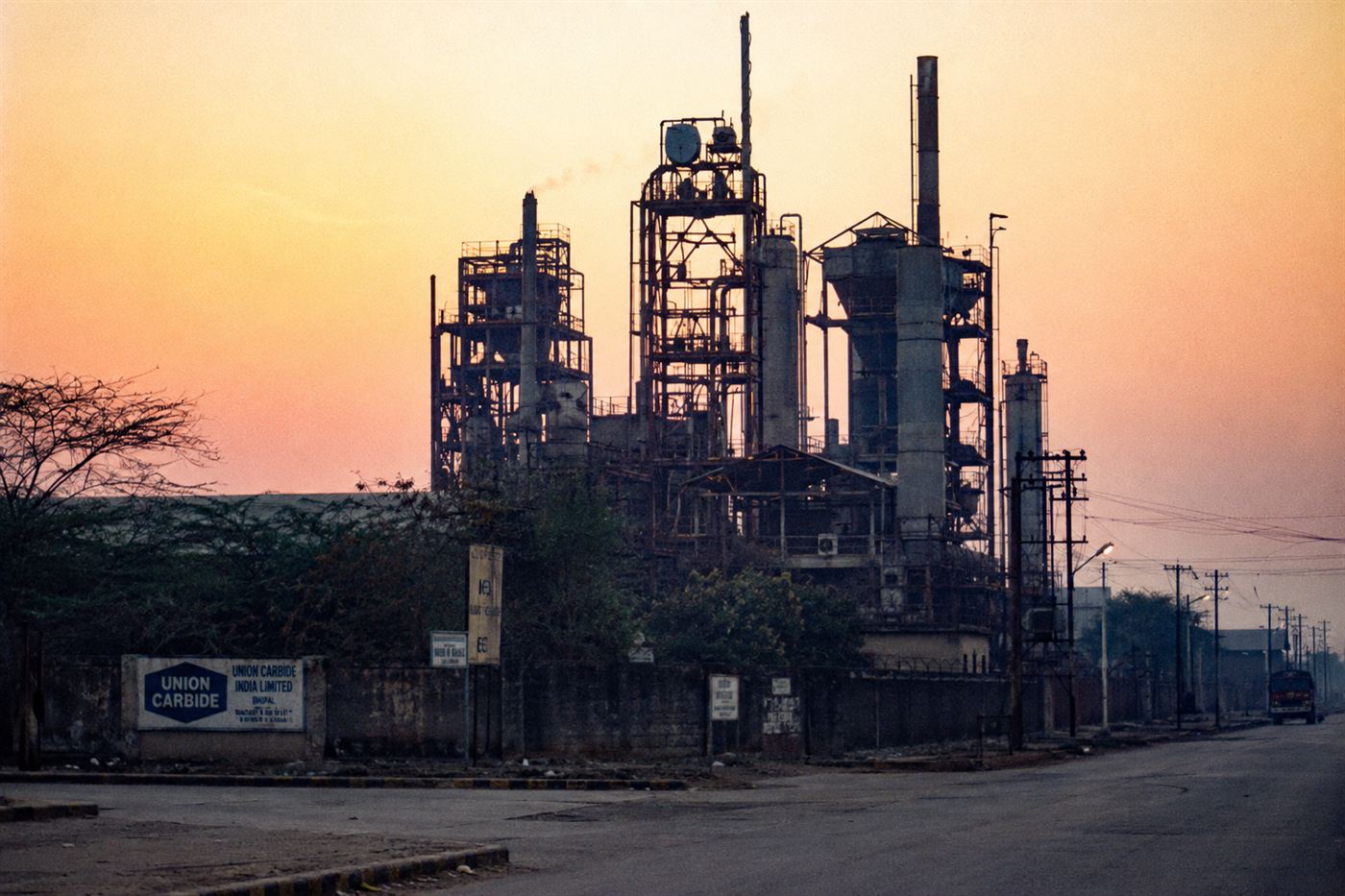
The same regulatory tolerance that let ICMESA operate for decades in an Italian suburb without adequate emergency planning would later enable the Bhopal disaster in India in 1984, when a Union Carbide plant released toxic gas over a sleeping city and killed thousands.
What did the dioxin cloud do to Seveso and its animals?
The dioxin cloud drifted over vegetable gardens, fields, and residential streets south of the factory.
Children were playing outside on a Saturday afternoon.
Some noticed a fine white powder settling on their hands and faces, with a faint acid smell.
Adults assumed it was a normal industrial emission from the factory that had always been there.
Within hours, small animals began dying across the fields south of ICMESA.
Chickens, rabbits, cats, and birds fell in the areas with the highest dioxin deposition.
Within days, children who had played outdoors began developing chloracne, a persistent and disfiguring skin condition specific to dioxin exposure.
Chloracne is not ordinary acne.
It involves deep cysts, blackheads, and lesions across the face, neck, and upper body that can take years to resolve and may leave permanent scarring.
The children of Seveso developed it on their faces, backs, and limbs.
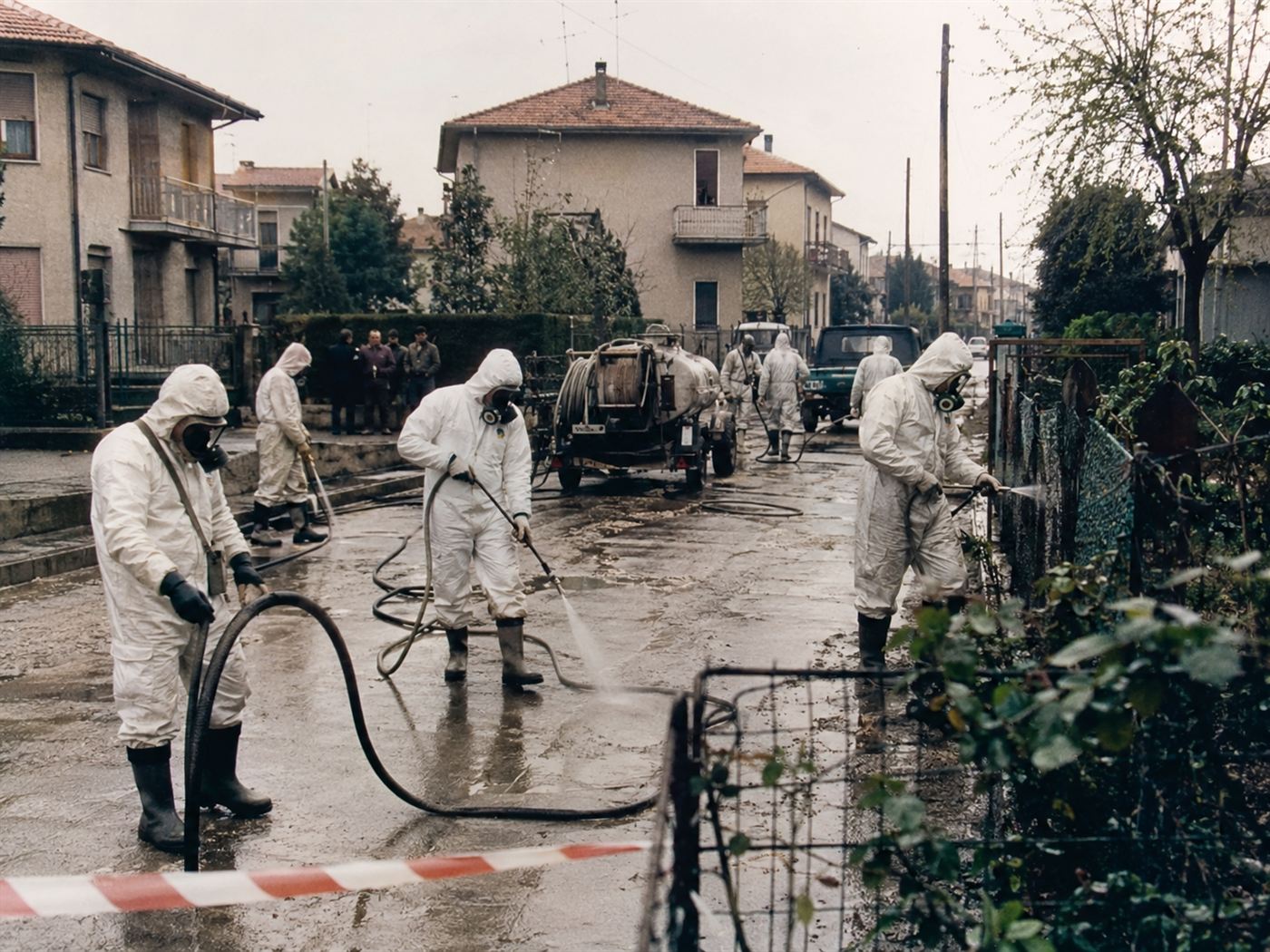
By the end of July 1976, the contaminated area had been divided into three zones based on TCDD soil concentration.
Zone A, nearest the factory, had concentrations above 50 micrograms per square metre of TCDD.
Zone B covered concentrations between 5 and 50 micrograms.
Zone R, the widest area, included a broader zone of precautionary concern.
More than 37,000 people were included in the affected zones across all three.
Zone A was fully evacuated: 736 people were told to leave their homes.
All domestic animals in Zone A were destroyed, a total of more than 80,000 animals including chickens, pigs, cattle, and pets.
How did Italy respond to the Seveso disaster?
For the first ten days after the accident, ICMESA told Italian authorities that the reactor had released only TCP.
It did not disclose the presence of TCDD.
That delay meant that local children had already spent days playing in contaminated gardens, eating from contaminated vegetable plots, and handling contaminated soil before the authorities understood the scale of what they were managing.
The pattern fits a well-documented corporate response to chemical disaster: deny, minimise, then admit only what the evidence eventually forces out.
The Radium Girls had faced the same strategy from their employer in the 1920s, when the US Radium Corporation told workers that radium was harmless while the men handling it in the office wore lead shielding.
When the presence of TCDD was confirmed at Seveso, the Italian government declared a state of emergency.
The disaster became a national political crisis almost immediately.
One of its most charged dimensions was the question of abortion.
TCDD is known to cause foetal abnormalities in animal studies, and women who had been pregnant during or near the time of the release feared for their unborn children.
About 37 women from the contaminated zones sought therapeutic abortions.
Italy at the time had no general abortion law: terminations were only permitted in narrow medical circumstances, and the Catholic Church opposed them forcefully.
The regional health authorities eventually authorised a small number of abortions on medical grounds, but the controversy divided the country.
The Seveso disaster is cited by historians of Italian law as a factor, among several, in the passage of Italy's 1978 law legalizing abortion.
Where did the forty-one drums of contaminated soil disappear to?
The cleanup of Zone A produced an enormous quantity of extremely hazardous waste: contaminated soil, building debris, plant material, and the remains of the slaughtered animals.
This material was classified as among the most dangerous industrial waste in Europe because of its TCDD content.
Italian authorities contracted a French waste disposal company, A.R.I.S., run by a businessman named Erwin Böhm, to transport the waste to a licensed incinerator.
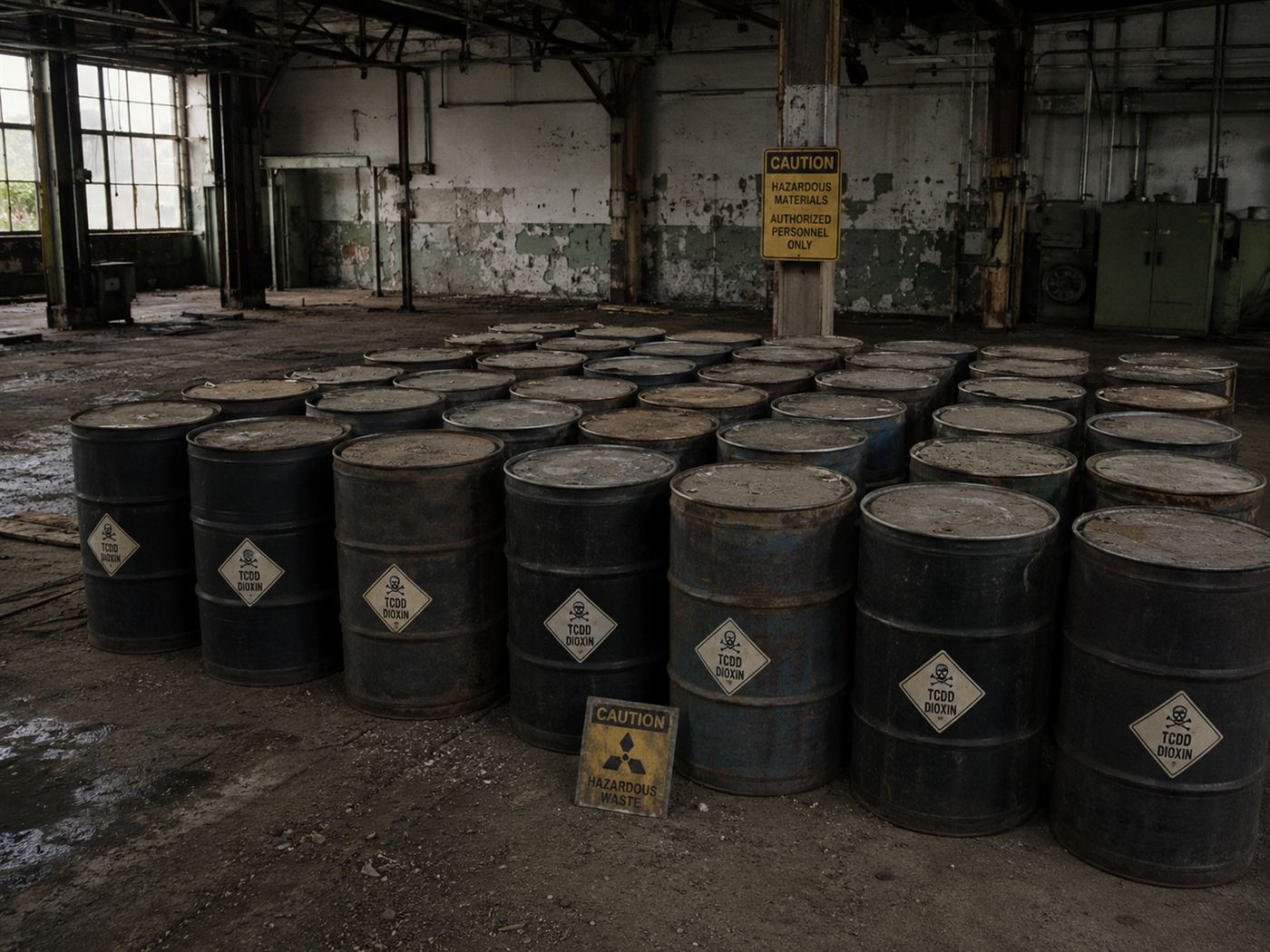
In September 1982, six years after the Seveso disaster, forty-one sealed metal drums containing approximately 41 tonnes of TCDD-contaminated waste left Italy.
Then they vanished.
For nine months, no official could locate them.
Italian authorities asked Böhm where the drums had been taken.
His answers were evasive.
Investigators found evidence that the forty-one drums had crossed into France, Germany, and the Netherlands, as Böhm sought an incinerator willing to accept TCDD-contaminated material.
None would.
In February 1983, a journalist pursuing the story discovered the forty-one drums in an abandoned slaughterhouse near Saint-Quentin in northern France.
The drums were in poor condition and some had leaked into the building.
The contaminated waste was recovered, returned to Italy, and eventually incinerated in Basel, Switzerland.
Böhm was prosecuted for illegal waste disposal.
The episode made visible a problem that the Seveso disaster had not originally exposed: hazardous industrial waste, once created, could simply be passed around Europe indefinitely.
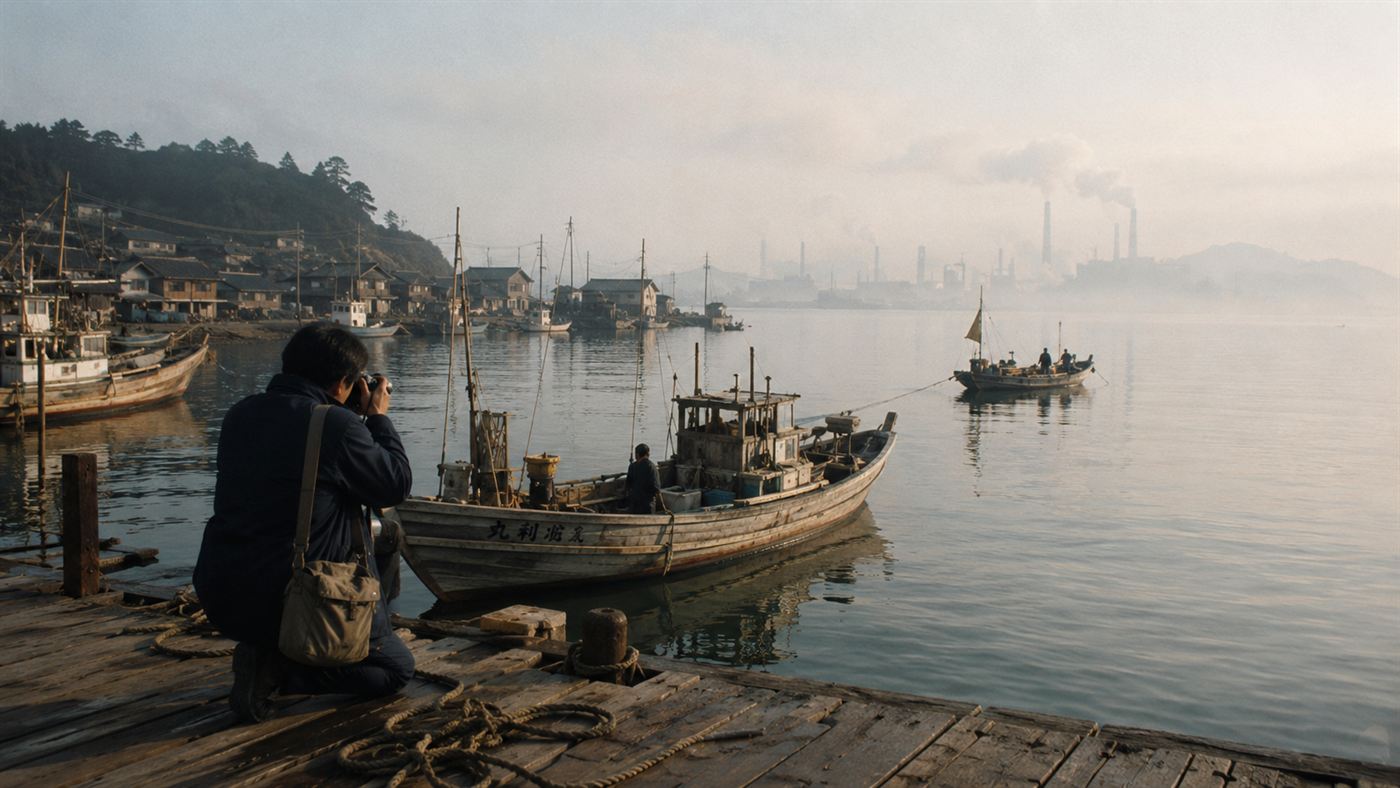
It was the same logic that had enabled the Chisso Corporation's mercury dumping in Minamata Bay in Japan for over a decade: as long as disposal cost money and accountability was uncertain, the cheapest option was to make the problem someone else's.
How did the Seveso disaster change European industrial safety law?
The Seveso disaster produced one of the most durable institutional legacies of any industrial accident in history.
In 1982, the European Economic Community passed Council Directive 82/501/EEC, known as the Seveso Directive.
The Seveso Directive required companies storing or using hazardous chemicals above certain threshold quantities to register with government authorities, produce detailed safety assessments, and maintain emergency plans for the surrounding communities.
Before the Seveso Directive, chemical factories in many European countries were not legally required to disclose what they were producing, in what volumes, or what would happen if a major accident occurred.
The Seveso disaster changed that entirely.
The directive was updated as Seveso II in 1996, which added requirements around land-use planning near hazardous sites and public access to emergency information.
Seveso III, passed in 2012, aligned the framework with updated chemical classification systems across the European Union.
Today the Seveso Directive and its successors regulate more than 12,000 industrial sites across Europe.
Authorities must maintain public registers of what is being made, in what quantities, and what emergency procedures apply.
Communities near major chemical facilities have a legal right to know what their neighbours are producing.
The principle behind the Seveso Directive is straightforward: the hazard has to be declared before the accident, not discovered during it.
That principle did not exist in European law before a Saturday afternoon in Meda in 1976.
The honest catch
The long-term health effects of the Seveso disaster are genuinely uncertain, and they remain so fifty years later.
TCDD is one of the most intensively studied toxic compounds in the world, and long-term studies of the Seveso population have produced mixed results.
Some research has found elevated rates of certain cancers among people who lived in the affected zones, including non-Hodgkin lymphoma and breast cancer.
Other studies, including work conducted by the International Agency for Research on Cancer, found no statistically significant increase in overall cancer mortality among the exposed population.
The children who developed chloracne in 1976 largely recovered over years, though some bore lesions and scars for longer.
The women who had sought abortions after the Seveso disaster found themselves at the centre of a national moral debate that they had not asked to join.
The ICMESA executives were convicted of criminal negligence in 1983 and received four-year prison sentences.
All sentences were suspended.
Nobody served a prison term for the Seveso disaster.
Roche, the ultimate owner of ICMESA, paid out compensation totalling around 145 million Swiss francs to the affected population, while continuing to dispute its level of direct responsibility.
The contaminated land of Zone A was decontaminated over many years and is now the Bosco delle Querce, the Oak Forest of Seveso, a public park used by walkers, cyclists, and schoolchildren.
The TCDD does not biodegrade.
Under the park, in the soil, it is still there.
Sources
The Oak Forest of Seveso is beautiful. Children play there now, on soil that still contains TCDD. What do you think industrial companies owe to the communities they operate next to?