China opened the world's highest bridge in Guizhou on September 28, 2025, its deck soaring 625 meters above the Beipan River, nearly nine times the height of the Golden Gate
For generations, Guizhou's fractured gorges trapped whole communities, where a single canyon crossing could eat up to two hours. On 28 September 2025 that same brutal terrain crowned the province as the bridge capital of the world, with a deck hanging 625 meters above the river.
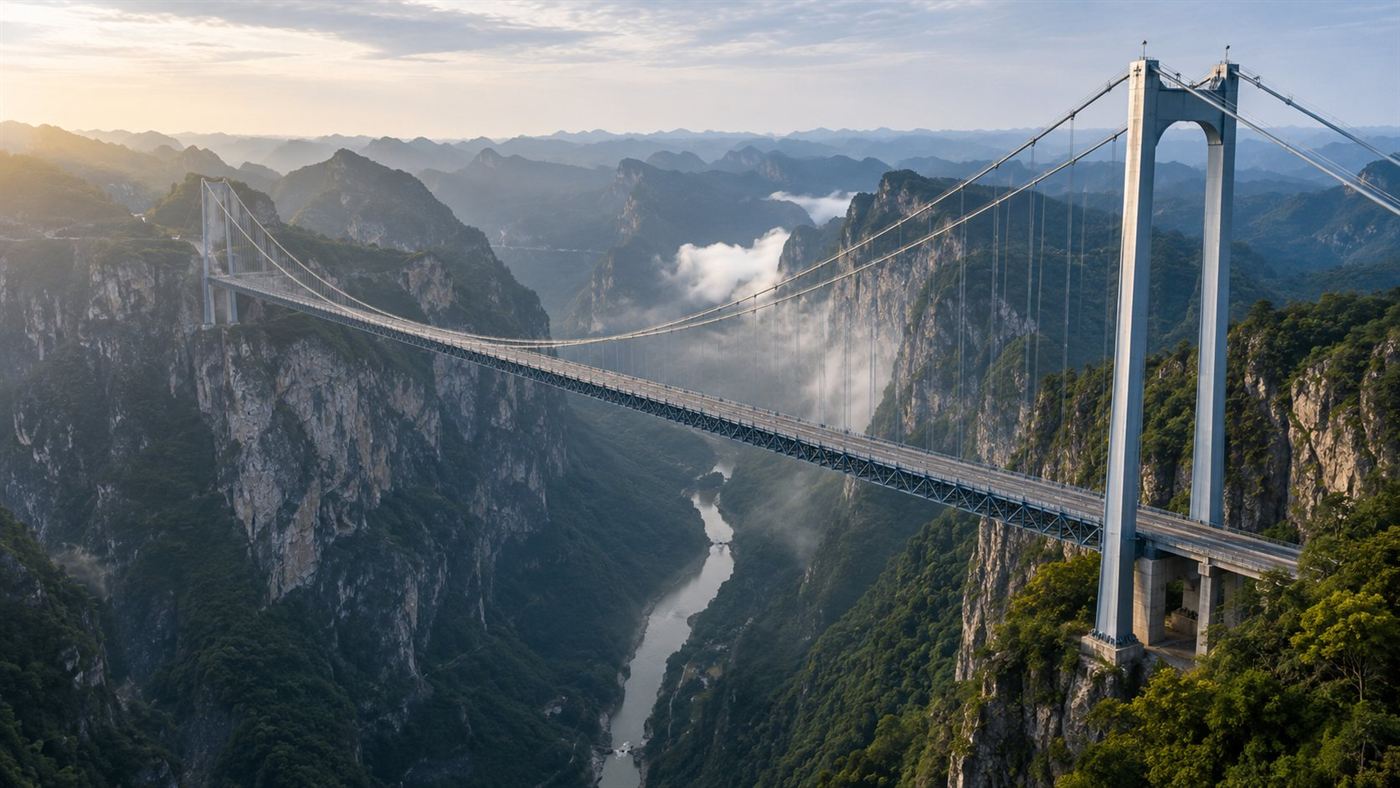
The Huajiang Grand Canyon Bridge hangs 625 meters above the Beipan River in Guizhou. Illustration: Watts & Wild.
The terrain that defined Guizhou for centuries was also its prison. The province in mountainous southwest China is sliced apart by deep, fractured gorges, the kind of country where two villages can sit a few hundred meters apart across a canyon and yet take an hour or more to reach by road. For a long time that geography helped keep Guizhou one of China's poorest and most isolated places. But now the same landscape that once trapped its people is home to the world's highest bridge.
On 28 September 2025, after about three years of construction, the Huajiang Grand Canyon Bridge opened to traffic across the Huajiang Canyon. Xinhua reported that the bridge opened as the world's highest, with its deck soaring 625 meters above the Beipan River, nearly nine times the height of San Francisco's Golden Gate Bridge. The structure carries the Liuzhi-Anlong Expressway, and in a single stroke it turned a journey that could swallow a couple of hours into a matter of minutes.
Why it ranks as the world's highest bridge
The number that matters here is 625 meters, the distance from the bridge deck down to the surface of the Beipan River. That clearance is what makes the Huajiang span the world's highest bridge, a ranking based on how far the road sits above the water or ground below, not on the height of the towers themselves. NBC News noted that China broke its own record with the crossing, opening the world's highest bridge 625 meters above the Beipan River.
The previous title holder was just upstream. The Duge Bridge, also called the Beipanjiang Bridge, crosses the same river with a deck about 565 meters above the water and opened in 2016. According to Wikipedia's record of the project, the Huajiang span surpassed the Duge Bridge to take the global crown, meaning the world's two highest bridges now hang over the same Guizhou river within sight of one another.
To picture the scale, set it against a landmark almost everyone knows. The roadway of the Golden Gate Bridge sits roughly 67 meters above the bay at its center. A deck at 625 meters is close to nine of those stacked on top of each other, a height where the river below shrinks to a thread and clouds sometimes drift through the gorge beneath the cars.
The engineering behind the span
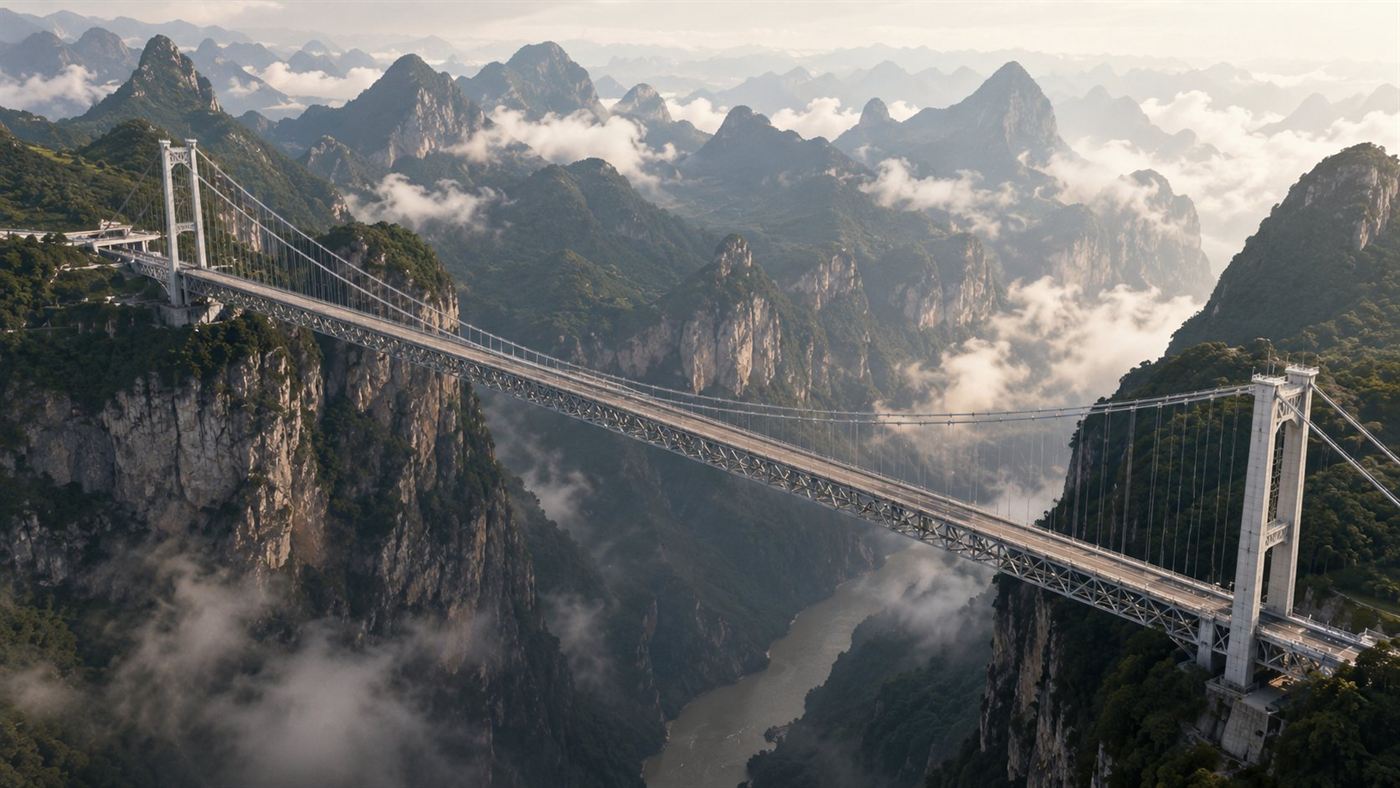
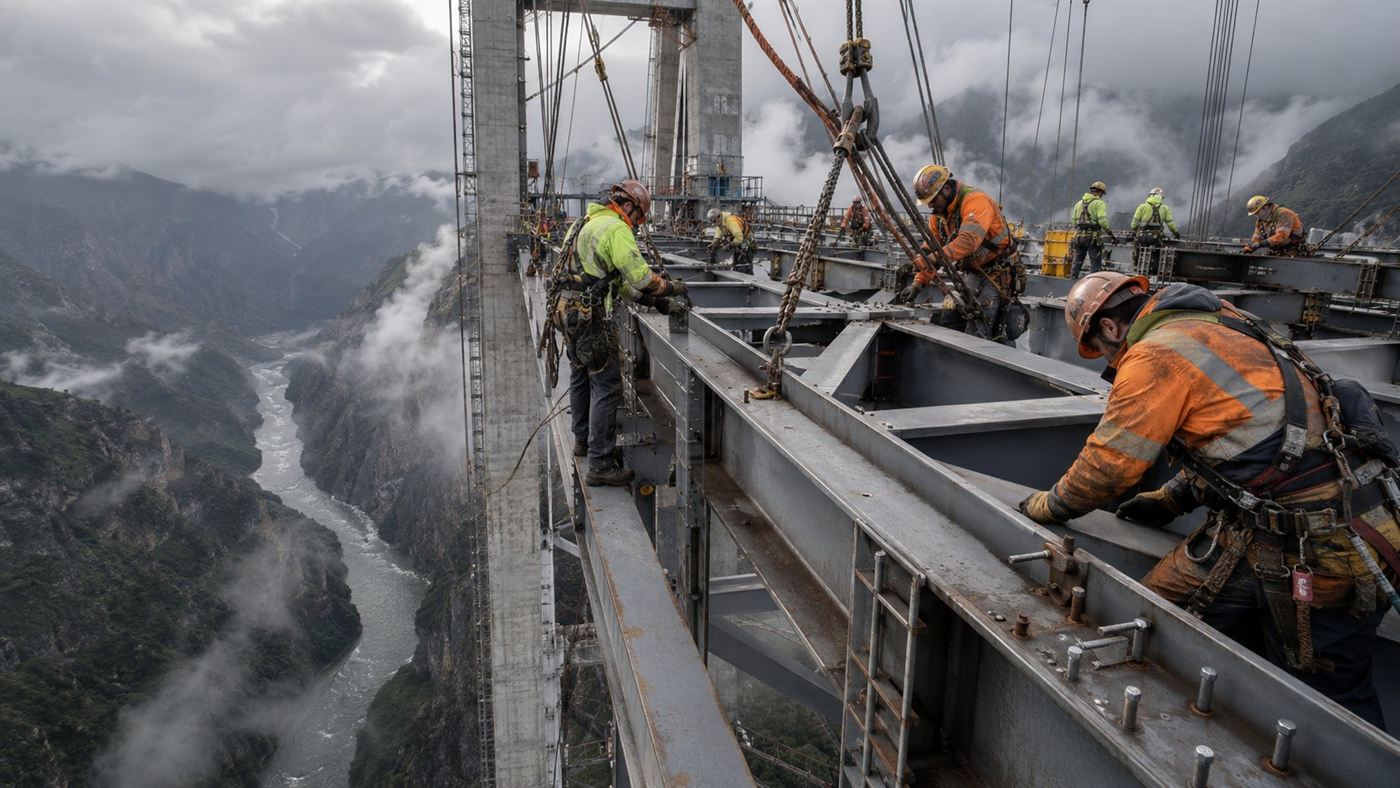
This is not simply a tall bridge, it is a long one across a wide tear in the earth. The Huajiang Grand Canyon Bridge is a steel truss girder suspension bridge with a main span of 1,420 meters and a total length of 2,890 meters. Xinhua described it as carrying those headline dimensions across the Huajiang Canyon, and Wikipedia records it as the world's longest-span steel truss girder suspension bridge built in mountainous terrain.
Holding that deck steady took two enormous towers. The Wikipedia entry lists the north tower at 262 meters and the south tower at 205 meters, anchors driven into the rough cliffs on either side of the gorge. Those figures are the structural height of the bridge, separate from the 625 meter drop to the river, and they hint at the force involved in suspending a kilometer and a half of steel roadway in open air.
The Wikipedia record also puts the construction cost at roughly 2.1 billion RMB, a sum that bought not just a crossing but a piece of infrastructure meant to rewire how an entire corner of the province moves. The expressway it carries, Guizhou's S57, links the Liuzhi Special District to Anlong County, two places the canyon had long held at arm's length.
Two hours cut to two minutes
The most striking thing about the bridge is not its size but what it does to time. Before it opened, getting across the gorge meant a slow grind down one side and back up the other, sometimes by mountain pass, sometimes by ferry. Now the same trip takes about as long as a song.
The exact figures vary by source and by which old route you measure against. NPR reported that the world's highest bridge cut the crossing to roughly two minutes, echoing the official figure that Xinhua and NBC cite of about two hours down to two minutes. Wikipedia frames it slightly differently, putting the old journey at around 70 minutes by mountain passes and ferries and the new one at just over a minute. Either way, a crossing that used to govern the rhythm of daily life now barely registers.
How Guizhou became the world's bridge museum
The Huajiang span is the crown, but it sits atop a remarkable collection. Guizhou has quietly become a bridge superpower. Xinhua reports that the province is now home to nearly half of the world's 100 highest bridges, including the top three, a concentration of record-breaking spans found nowhere else on earth.
The scale of construction is staggering. The province has built or has under construction more than 30,000 bridges, a body of work so dense that it has earned Guizhou the nickname the world's bridge museum. The deep gorges that once isolated its towns turned out to be the perfect training ground for an engineering culture obsessed with crossing them.
There is a logic to the reversal worth pausing on. The very feature that made Guizhou poor, terrain too broken for easy roads, became the reason it now leads the planet in bridge-building. Necessity bred expertise, and expertise bred records, until the province that travel once forgot started setting the global benchmark for getting across the impossible.
A bridge that doubles as a theme park
Engineers did not stop at moving cars across the canyon. The Huajiang Grand Canyon Bridge was designed from the start to pull in visitors, and it leans hard into the spectacle of its own height. NPR reported that the bridge offers an unusually theatrical menu of attractions for a piece of expressway infrastructure.
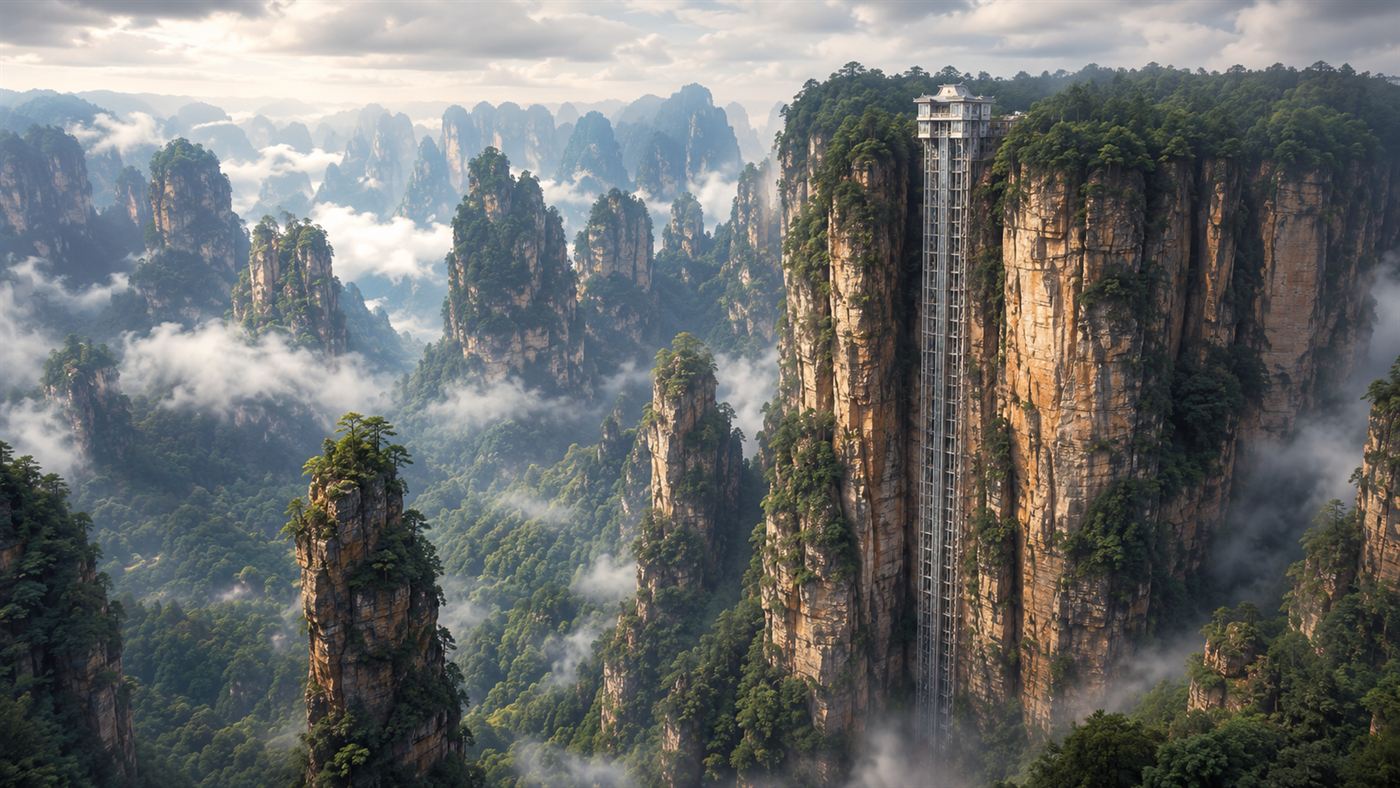
From the deck, thrill-seekers can bungee jump into the gorge or walk a glass-floored sky bridge that puts the 625 meter drop directly beneath their feet. NPR also described a glass elevator roughly 679 feet tall that carries visitors up a tower to a panoramic sky cafe, where the view stretches across the canyon that once cut this region off. The recognition has followed the ambition: TIME named the Huajiang Grand Canyon Bridge to its 2026 World's Greatest Places list.
The tourism is more than a gimmick. NPR reported in June 2026 that the bridge brought unprecedented high-speed internet access and investment to one of China's most remote regions, linking isolated communities into the highway network and the wider economy. For places long stranded by the gorge, the structure that draws bungee jumpers is also the cable that connects them.
The honest catch
The records are real, but a few of them deserve a careful read. The headline 625 meter figure is a measure of deck-to-river clearance, the vertical drop to the water, not the structural height of the bridge. That distinction is why the Huajiang span ranks as the world's highest bridge rather than the world's tallest structure, two very different superlatives that headlines tend to blur together.
The dramatic time-saving is genuine but imprecise. Official Chinese sources put it at two hours down to two minutes, while Wikipedia cites 70 minutes down to just over one minute, so the exact before-and-after depends entirely on which old route you compare against. It is a transformation either way, but the neat numbers carry more certainty than the evidence quite supports.
It is also worth being clear about where much of the most vivid framing comes from. A good deal of the record-and-modernization narrative originates with Chinese state media such as Xinhua, so the boldest superlatives are best read as attributed claims rather than independently audited facts. The bridge is genuinely extraordinary. The point is simply to know which numbers are measured and which are messaged.
Guizhou spent generations defined by canyons it could not cross. Now it owns nearly half of the world's highest bridges and a span that turns a two-hour ordeal into a two-minute drive. Would you walk across that glass-floored sky bridge 625 meters above the river, or is that a view best admired from the ground? Tell us in the comments.
Related reading: China has begun building a 137 billion dollar megadam in the Himalayas.