A German engineer bolted two spinning towers to a ship in 1924 and sailed it to New York, then cheap oil buried the idea, until rotor sails came back to cut cargo emissions
In the 1920s a German inventor's ship crossed the Atlantic pushed by two giant spinning cylinders instead of canvas or a full tank of fuel. The shipping world shrugged and moved on. A century later, rotor sails are quietly bolting onto real cargo ships again.
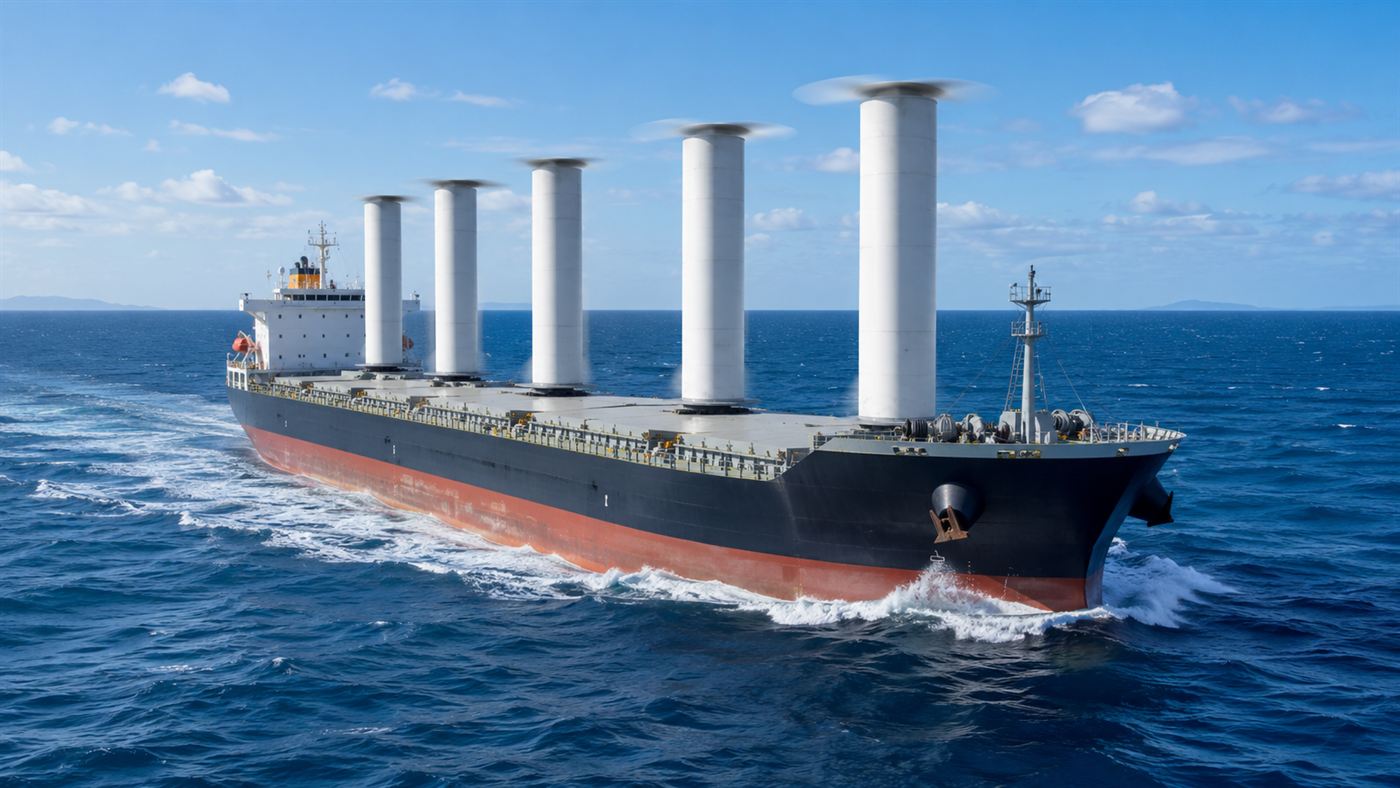
Modern rotor sails stand on the deck of a cargo ship, spinning to catch the wind. Illustration: Watts & Wild.
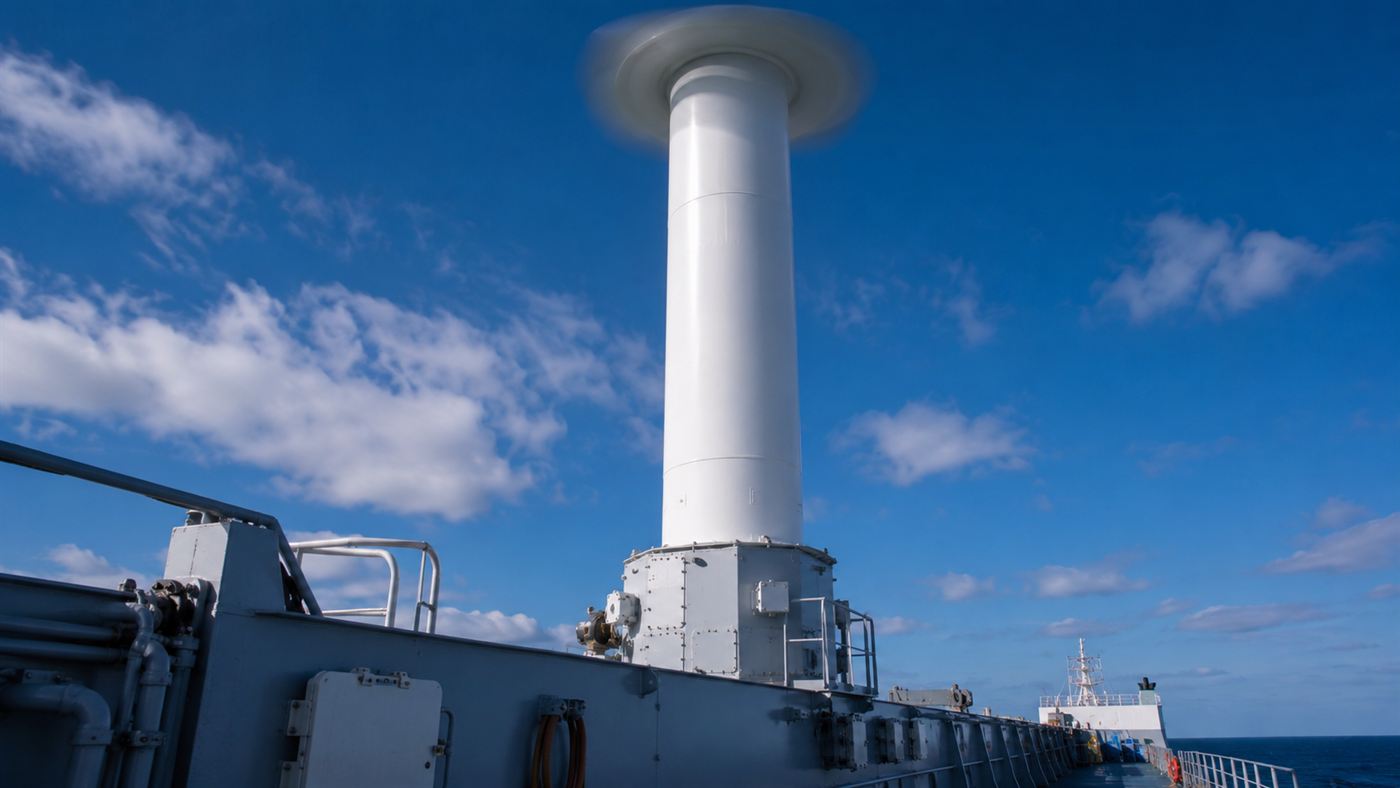
Rotor sails look like something a child drew when asked to imagine a ship of the future: fat white columns standing on the deck, quietly spinning, with no canvas and no obvious purpose. Yet those spinning towers are doing real work, using nothing but the wind to shove a heavy vessel across the ocean and let its engines ease off the throttle. The strangest part is that the idea is not new at all. It is almost exactly a hundred years old, and it already crossed the Atlantic once before the world decided it was not worth the bother.
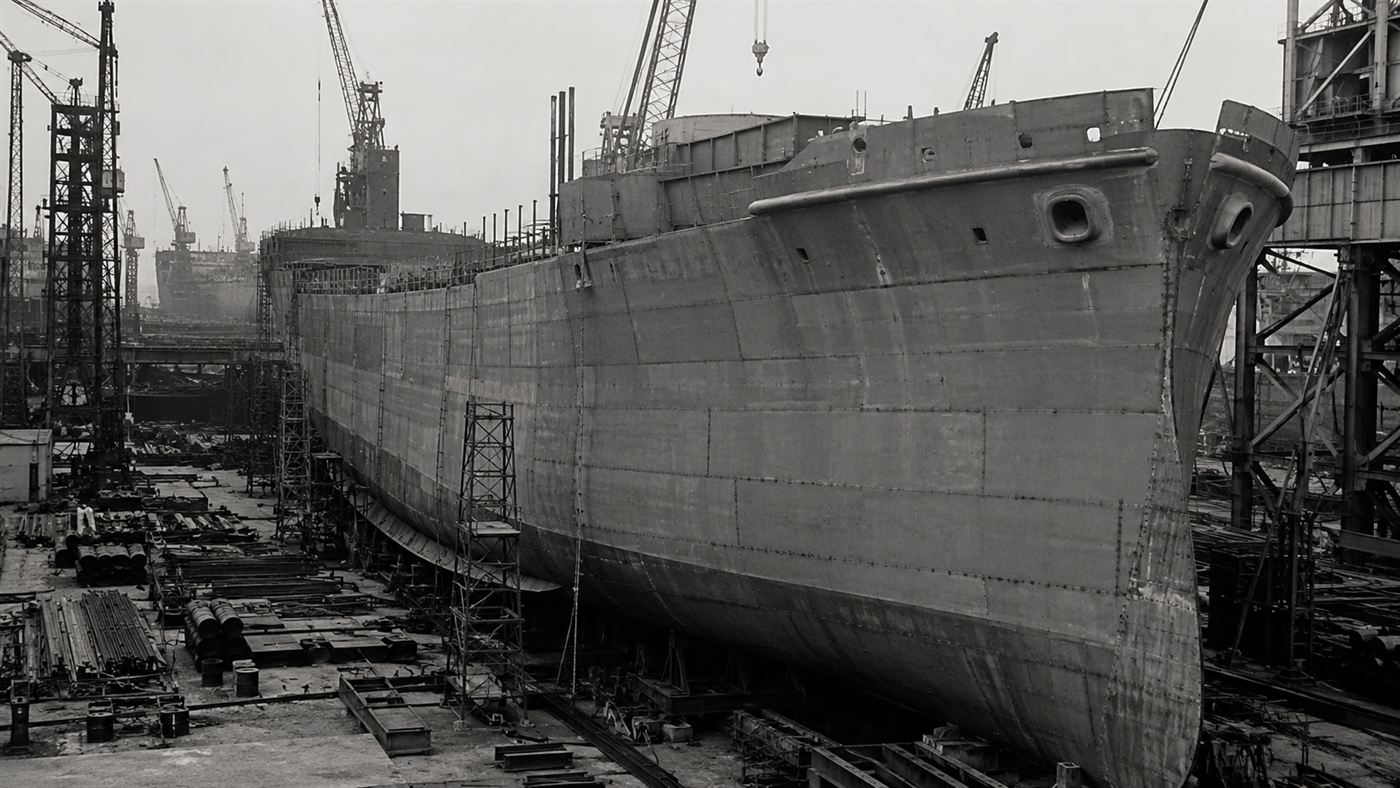
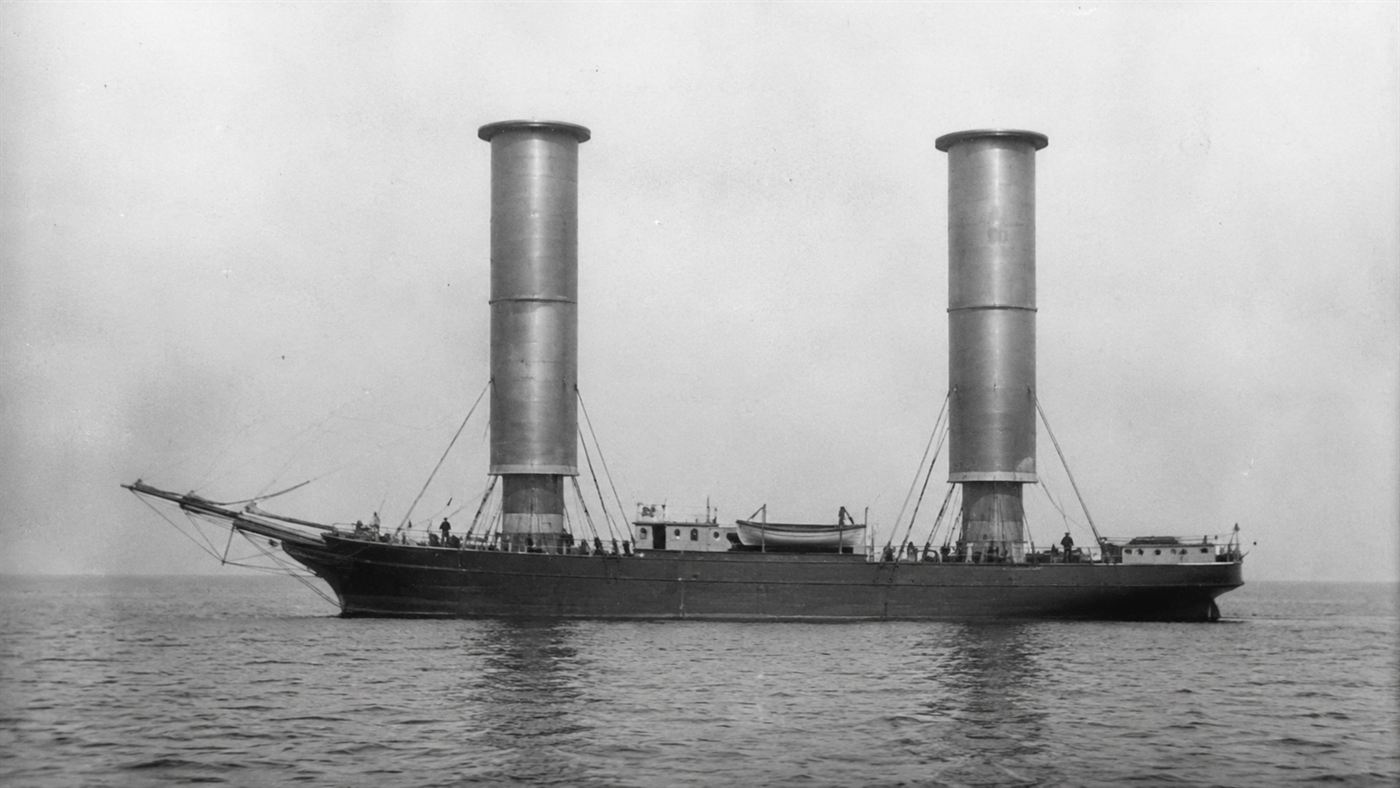
That first believer was a German engineer named Anton Flettner. As documented in the history of the rotor ship, he patented his idea in 1922 and, in 1924, refitted a schooner called the Buckau with two rotating cylinders about 15 meters tall, each turned by a modest 50 horsepower electric motor. People expected a gimmick. What they got was a ship that genuinely sailed on spin.
Rotor sails are tall spinning cylinders mounted on a ship's deck that harness the wind through the Magnus effect to help push the vessel forward. First built by Anton Flettner in the 1920s and revived in the 2010s, they can cut a cargo ship's fuel use and carbon emissions by roughly 5 to 12 percent, with no sails to haul and no crew climbing rigging.
What are rotor sails and how do they work?
The physics behind rotor sails is a piece of textbook trickery called the Magnus effect. When a cylinder spins in a crosswind, it drags air faster around one side than the other, and that difference in speed creates a pressure difference, which becomes a force pushing sideways. It is the same reason a spinning football or a curveball bends in flight, only here the "ball" is a tower the size of a small grain silo.
Point that sideways force in a useful direction and it becomes thrust. A ship fitted with rotor sails still has its normal engine, but when the wind is anywhere off the beam the spinning cylinders add a hard push, so the engine can burn less to hold the same speed. There are no ropes, no billowing canvas, and almost nothing for the crew to do, since a computer simply spins the cylinders faster or slower, or parks them, as the wind shifts. That quiet automation is a big part of why the Magnus effect has finally found a home at sea, making wind-assisted propulsion practical on modern cargo ships in a way it never was in Flettner's day.
The 1920s ship that sailed to New York on spinning towers
Flettner's Buckau was no lab model. It worked, and it worked well enough to make a statement voyage. As his biography records, the ship was renamed the Baden-Baden and in 1926 crossed the Atlantic, arriving in New York harbor on May 9. A vessel powered by two whirling drums had just sailed from Europe to the United States, and crowds came to gawk at the thing that should not have moved.
For a brief moment the Flettner rotor looked like the future of shipping. It was efficient, it was strange, and it drew headlines, a genuine case of wind-assisted propulsion decades ahead of its time. But timing is everything in engineering, and the Flettner rotor had arrived at exactly the wrong moment in the history of fuel.
Why the Flettner rotor was abandoned
The problem was never that the technology failed. It was that oil got cheap. The Buckau did save fuel, but the rotors cost money to build and install, and against the tumbling price of bunker oil in that era the savings simply did not pay off. Shipowners did the math, shrugged, and stuck with cheap diesel and cheap crude.
The Flettner rotor faded, and fate finished the job when the Baden-Baden was destroyed in a storm in 1931. For the rest of the century the idea survived mostly as a curiosity in engineering textbooks, a clever answer to a question nobody was asking while fuel stayed cheap and nobody counted the carbon coming out of a ship's funnel.
Why rotor sails are back
Two things changed. Fuel got expensive again, and the world started taxing and regulating the carbon that shipping pours into the sky. Suddenly a free push from the wind was worth a second look, and a Finnish company called Norsepower dusted off the century-old Flettner rotor and rebuilt it with modern materials, sensors and software. The result is the same spinning cylinder Flettner would recognize, now standing on working cargo ships.
The proof came on a real vessel. As Maersk Tankers reported, a year-long trial on the tanker Maersk Pelican measured an 8.2 percent cut in fuel and carbon, roughly 1,400 tonnes of CO2 saved in twelve months. Norsepower has fitted rotor sails to ferries and freighters like the Estraden and the cruise ferry Viking Grace, and the German-built E-Ship 1 has run with four rotors since 2010. Wind-assisted propulsion, left for dead, is suddenly a live industry again.
How much fuel do rotor sails actually save?
The honest answer is that it depends on the wind, but the numbers are real. The Maersk Pelican's 8.2 percent came over a full year of ordinary trading, and Norsepower estimates that across average global routes the figure sits around 12 percent, climbing higher on windy runs and falling toward zero when the air is still or dead ahead. On the right route, wind-assisted propulsion quietly shaves a slice off every voyage.
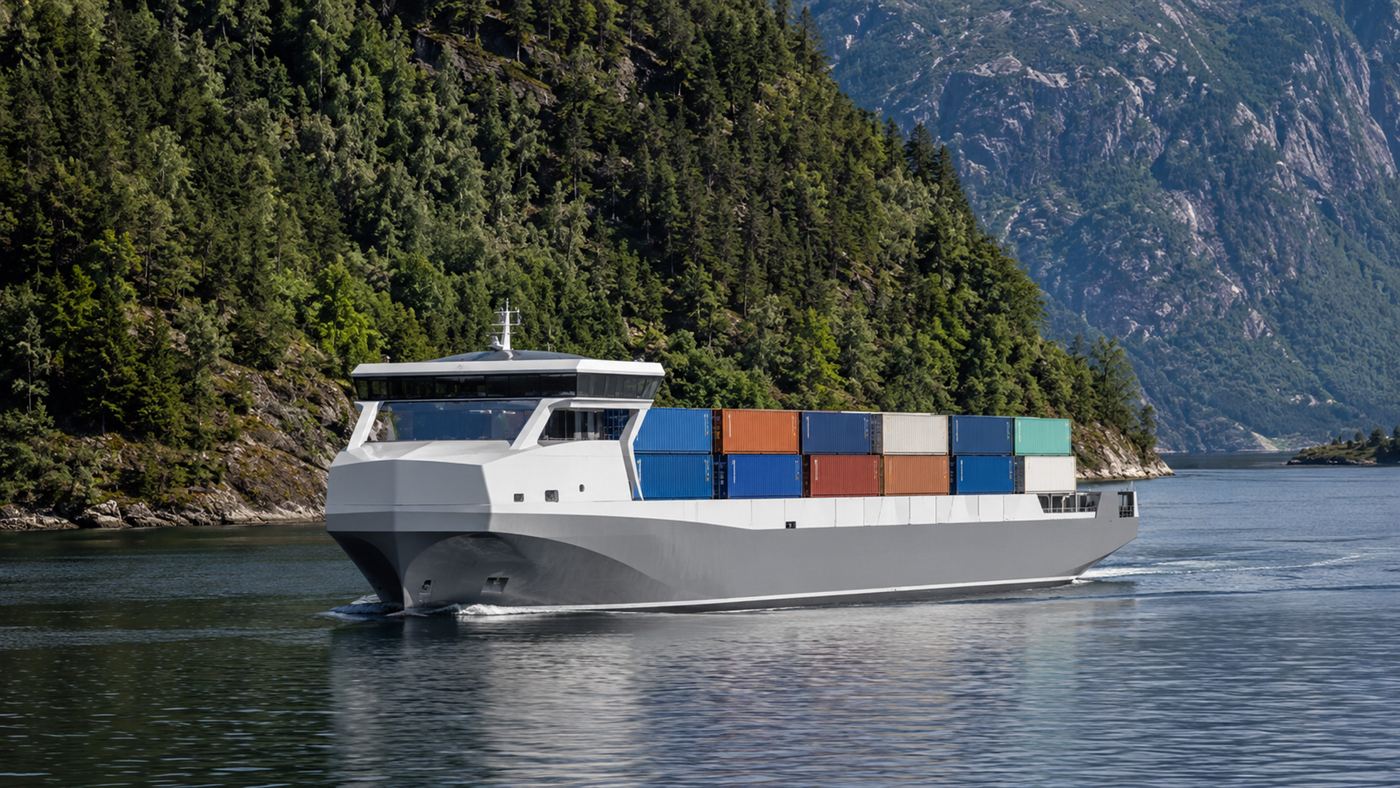
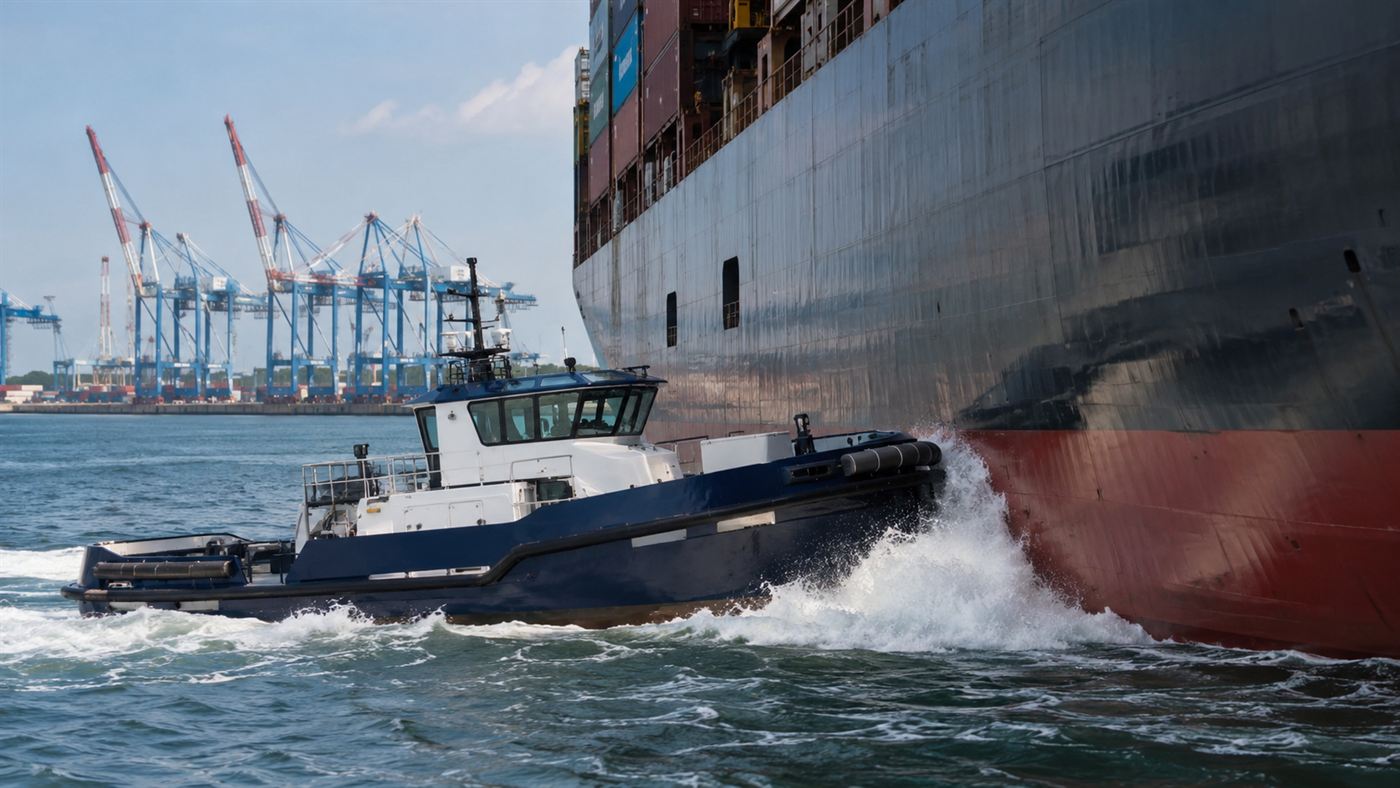
Scaled up, that slice gets large. Norsepower has estimated that fitting rotor sails across the world's tanker fleet could avoid more than 30 million tonnes of CO2 a year, comparable to taking around 15 million cars off the road. Shipping moves roughly 90 percent of world trade and burns a mountain of heavy fuel to do it, so even single-digit percentages, spread over thousands of cargo ships, add up to a serious dent. It is a rare case of a clean-energy fix that bolts straight onto the machines we already have, a cousin in spirit to the battery-swapping electric tugboat and the autonomous electric container ship Yara Birkeland.
The honest catch
Rotor sails and other forms of wind-assisted propulsion are not a magic wand, and it is worth being clear about their limits. The savings live and die by the wind, so a ship crossing a calm, windless stretch or steaming straight into a headwind gets little or nothing, and the headline percentages are fleet averages, not guarantees on any single day. The tall cylinders also eat deck space and sightlines, which is fine on a tanker and awkward on a container ship stacked high with boxes or a vessel that works cargo cranes.
They are a help, not a cure. A rotor sail trims a slice off a ship's fuel bill, it does not replace the engine or make the vessel carbon-free, and the up-front cost of a retrofit still has to pencil out over years of sailing. Rival ideas, like the rigid WindWings that unfolded on the cargo ship Pyxis Ocean in 2023, are chasing the same prize from a different angle. The real story is not that spinning towers will save shipping single-handedly, but that an idea the industry threw away a century ago turned out to be right, just early.
A hundred years after the world laughed at a ship with spinning drums, the wind is quietly back on the payroll at sea. Would you like to see more of the ships you depend on leaning on the wind again, even if it means stranger-looking vessels on the horizon? Tell us in the comments.
Related reading: explore more from our Energy desk, where old ideas keep coming back with new engineering behind them.