In the Second World War, American shipyards run largely by women welders learned to build a giant Liberty ship in weeks, and once, as a stunt, in under five days
Building an ocean-going cargo ship used to take the better part of a year and an army of skilled craftsmen. Then a wartime emergency forced America to do the impossible, and treat a 440-foot vessel like something rolling off a factory line. The Liberty ship is how a nation out-built a war.
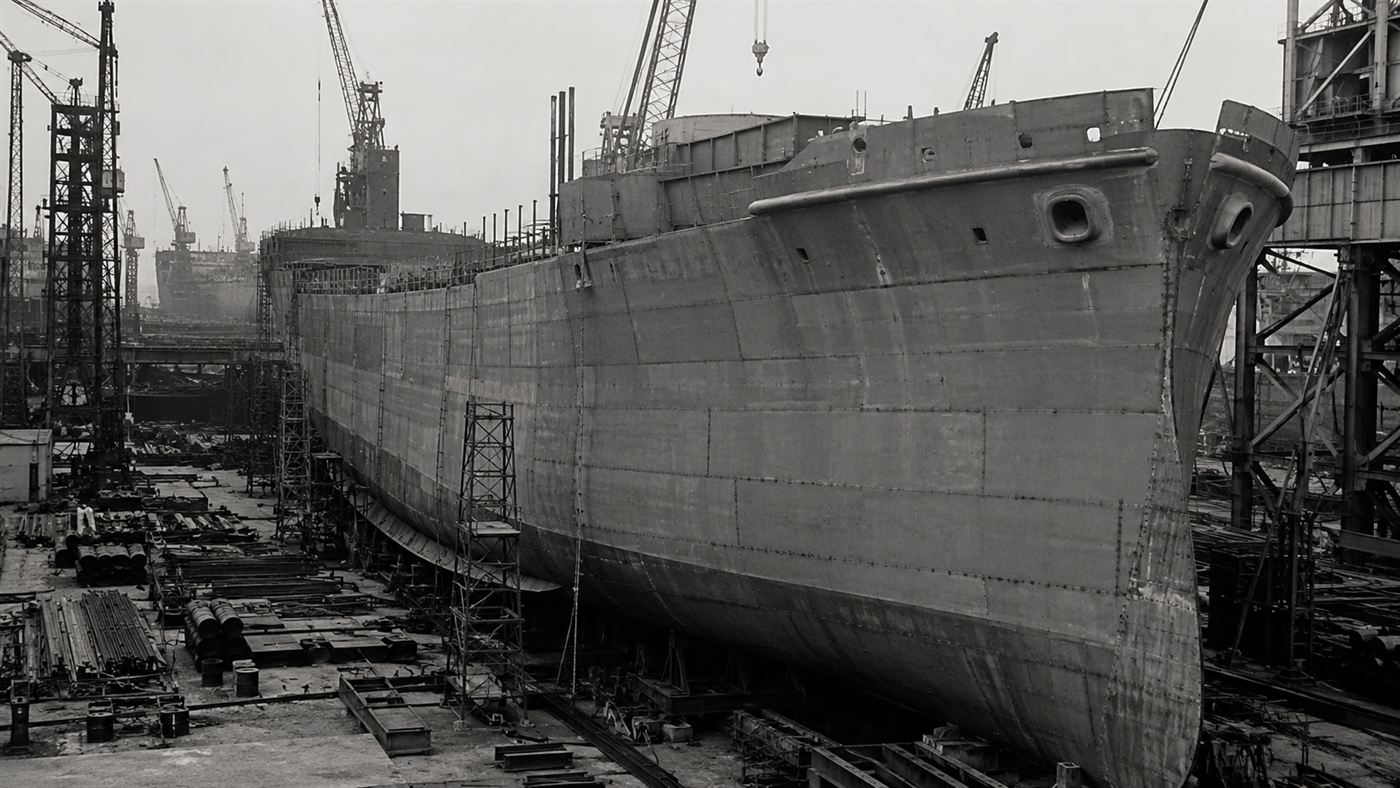
Prefabricated and welded, Liberty ships were assembled like giant kits. Illustration: Watts & Wild.
We usually think of mass production in terms of cars and gadgets, small things churned out by the million. It is much harder to imagine applying the same logic to something the size of an ocean liner. Yet that is exactly what the United States did in the early 1940s, when the survival of the Allied war effort came down to a brutal race between how fast ships could be sunk and how fast they could be built.
The answer was the Liberty ship, a plain, sturdy, deliberately unglamorous cargo vessel that America built in staggering numbers. In doing so, the country reinvented shipbuilding itself, turning a slow craft into an assembly line and handing the work to hundreds of thousands of ordinary people who had never built anything before. It is one of the great industrial stories of the twentieth century, and like most great stories, it has a darker thread running through it.
The short version: Liberty ships were standardized WWII cargo vessels built by the US to replace merchant ships sunk by U-boats. By welding prefabricated sections instead of riveting, yards led by Henry Kaiser cut build times from nearly a year to about six weeks, and once launched a ship in under five days. Around 2,700 were built, though some of the fast welds later cracked.
Out-building the U-boats
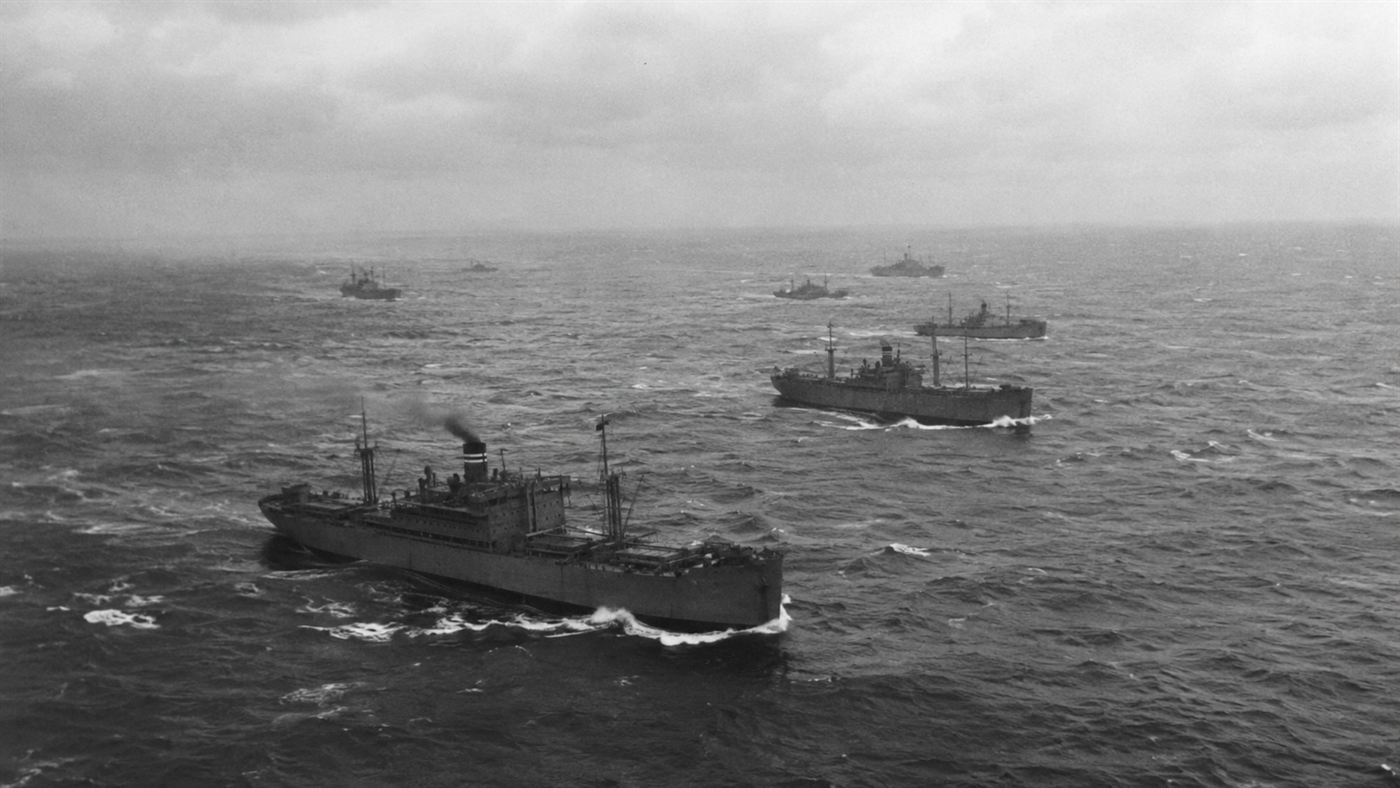
In 1941 the Allies were losing the war at sea. German U-boats were sinking merchant ships in the Atlantic faster than shipyards could replace them, and if that continued, Britain would be starved of food, fuel and weapons into surrender. What was needed was not a better ship but simply a vast number of good-enough ones, delivered faster than the enemy could destroy them.
The Liberty ship was the answer, based on an old and simple British tramp steamer design chosen precisely because it was easy to build. Each one could haul thousands of tons of cargo, tanks, food, ammunition, whole locomotives, across the ocean. President Roosevelt himself called them ugly ducklings, and they were never meant to be beautiful. They were meant to be a bridge of ships, and there needed to be an ocean of them.
The assembly line goes to sea
The man who cracked the problem was not a shipbuilder at all. Henry J. Kaiser was an industrialist who had helped build great dams, and he approached ships the way Henry Ford approached cars. Instead of laying a ship down and building it slowly in place, his yards manufactured big prefabricated sections elsewhere, then brought them together with cranes and joined them on the slipway.
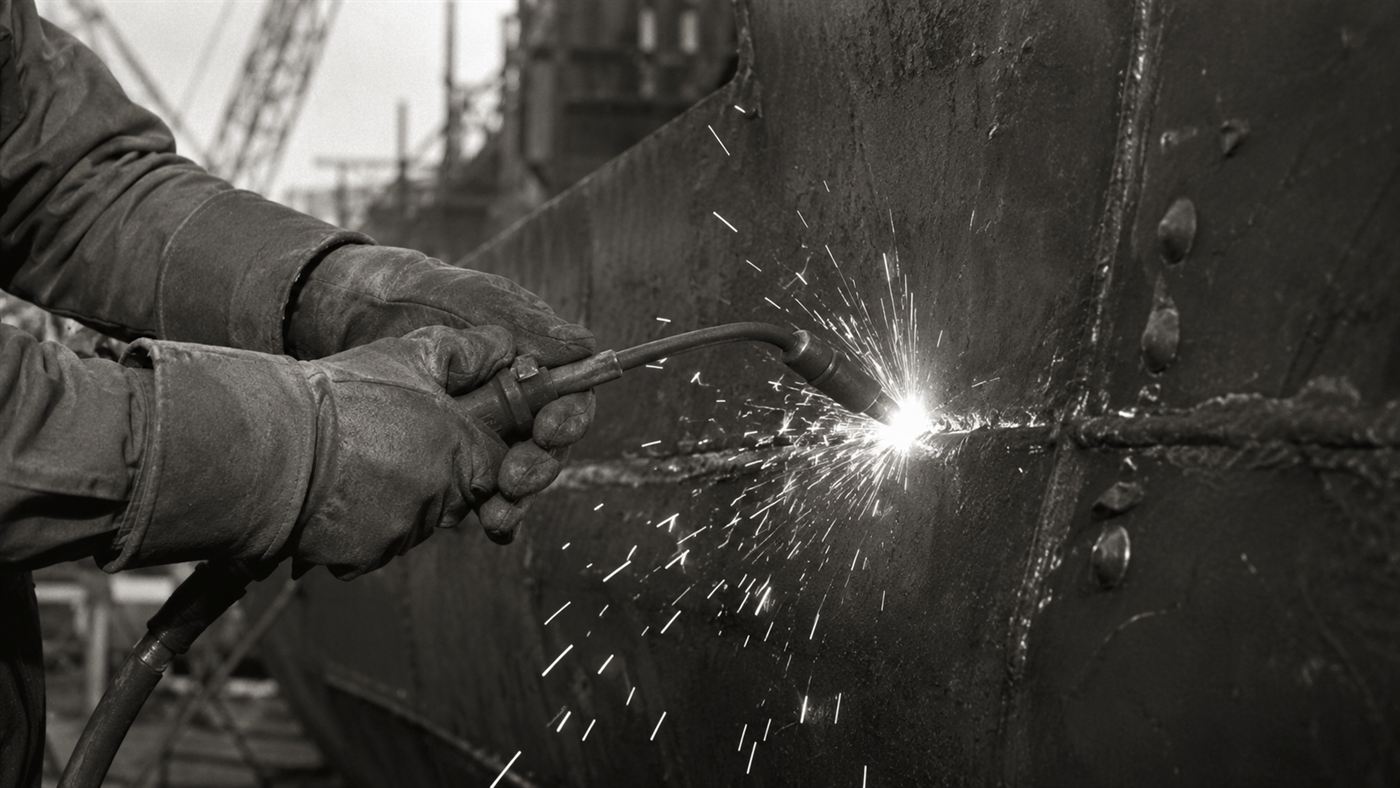
The key that made it all possible was welding. Traditional ships were held together with millions of hand-driven rivets, skilled and painfully slow work. Kaiser's ships were welded instead, which was faster, lighter, and crucially could be taught to people with no shipbuilding background at all. A ship stopped being a handcrafted object and became something assembled from a kit, and the numbers it unlocked were astonishing.
The four-day ship
The speed the yards reached still sounds barely believable. At the start of the program, a single Liberty ship took roughly 1.4 million work-hours and about 355 days to complete. Within two years, the yards had driven that down to under 500,000 work-hours and an average of around 42 days per ship. An ocean-going vessel, in six weeks.
As Wikipedia records, in a 1942 publicity stunt the SS Robert E. Peary was assembled from the laying of its keel to its launch in just 4 days, 15 hours and 29 minutes. It was a deliberate record attempt, a competition between yards to boost morale and prove a point, and the finished ship still needed fitting out afterward. But it captured something real. America had made building a ship as routine as building a house, and it was doing it faster than the enemy could ever sink them.
Who really built the Liberty ship
None of this speed would have mattered without the people, and here the story of the Liberty ship becomes a social one. With so many men away at war, the yards were filled by hundreds of thousands of workers who had never held a welding torch, and a huge share of them were women. They became the real-life Rosie the Riveters, though in the shipyards they were often known as Wendy the Welders.
As the National Park Service describes at the Richmond shipyards in California, the production-line method let unskilled laborers do repetitive, specialized jobs that needed little training. Farm workers, homemakers and shopkeepers learned a single task and did it thousands of times. It was an industrial revolution and a quiet social one at the same time, as millions of women proved, torch in hand, that they could do work the country had always reserved for men.
When the welds cracked
The very thing that made the Liberty ship possible also became its most dangerous flaw. Welding was fast, but in the early 1940s the science of welded steel hulls was still poorly understood. A welded ship is essentially one continuous piece of metal, which means a crack, once started, has nothing to stop it from running.
As Defense Media Network recounts, a number of Liberty ships suffered brittle fracture, especially in cold seas where the steel lost its toughness, and cracks spreading from stress points such as square hatch corners caused some hulls to split apart, a few breaking clean in two, occasionally while sitting at the dock. The failures were frightening, but they were also studied intensely, and the hard lessons drawn from them founded the modern science of how and why metal fractures, knowledge that has made every welded structure since, from ships to bridges, far safer.
The honest catch
It is easy to tell this as a pure tale of triumph, and the achievement genuinely was enormous, but a few honest notes keep it grounded. The famous four-day ship was a one-off stunt, not the everyday reality. The routine miracle was the roughly six-week ship, which is astonishing enough without the theatrics. And the brittle-fracture cracks were not a footnote. They cost ships and lives, and the calm engineering response, redesigning the details and learning the physics of fracture, was as important as the speed that caused the problem.
There is a human catch too. The Rosies and Wendies were vital, but they were often paid less than the men beside them, faced real discrimination, and were largely pushed back out of the yards once the war ended and the men came home. And the Liberty ships themselves were built to be cheap and even expendable, designed with only a few years of life in mind, because in that war quantity truly was a strategy. It worked not because each ship was excellent, but because America simply made more of them than the enemy could ever destroy. That, in the end, is the real lesson of the Liberty ship. Sometimes the decisive weapon is not the finest one, but the one you can build faster than it can be taken away.
A nation answered the U-boats not with a better ship but with an unstoppable flood of good-enough ones, welded together by people learning as they went. Was the Liberty ship a triumph of doing whatever it takes, or a warning about the price of building fast and worrying about the flaws later? Tell us what you think in the comments.
Related reading: the Bessemer process, the sparky trick that made the cheap steel these ships were built from. See also how the Edmund Fitzgerald, the biggest ship on the Great Lakes, broke apart and sank in a 1975 storm.
More from Watts & Wild
More in Industry & Mega-Builds →

Bruno writes about energy, industry and the big machines that run the modern world, with an eye for the human story behind the engineering.