To build the highest railway on Earth across ground that melts and heaves, engineers had to do something strange: keep the frozen earth frozen on purpose
The Qinghai-Tibet Railway climbs to a place where the air holds barely half the oxygen of sea level and the ground itself is treacherous: frozen soil that softens every summer and turns solid every winter, buckling anything built on it. To run trains across it, engineers fought the strangest enemy in railway history, the thaw, by keeping the permafrost frozen on purpose.
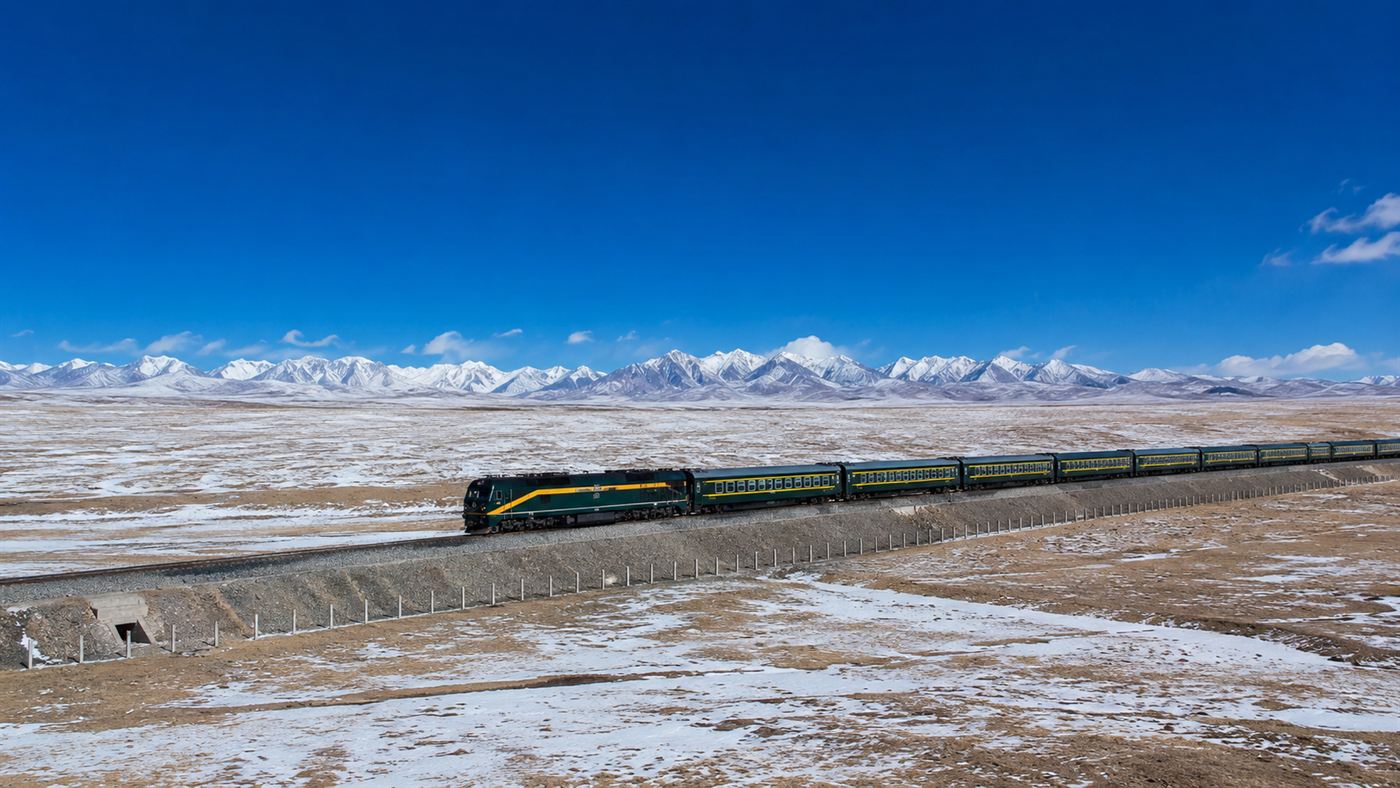
The line crosses the roof of the world, where the ground freezes and thaws by the season. Illustration: Watts & Wild.
Some mega-builds fight gravity, others fight water. The Qinghai-Tibet Railway had to fight the ground it stood on. Running from Xining in western China up onto the Tibetan Plateau and down into Lhasa, as Wikipedia records, it reaches an altitude no other railway comes close to, crossing the Tanggula Pass at more than 5,000 metres above sea level. Up there the rules of ordinary engineering simply stop applying.
Opened in 2006, the line was decades in the making, and the long-feared section was not the mountains but the flat, frozen plains in between. For hundreds of kilometres the track crosses permafrost, ground that has stayed frozen for thousands of years. Build a heavy, sun-warmed railway on it carelessly and you melt the ice in the soil, the ground turns to mud, and the track sinks and twists itself apart.
How the Qinghai-Tibet Railway keeps the ground frozen
The engineers' answer was a toolkit of clever, low-tech tricks, all aimed at the same goal: never let the heat of the line reach the ice below. In the most fragile stretches they simply lifted the railway off the ground entirely, carrying it on long raised viaducts so cold air can flow underneath and the warmth of the track never touches the soil.
Where the line does run on an embankment, that embankment is packed with crushed rock rather than fine earth. The loose stone lets cold winter air sink down into it and chills the ground, while slowing the summer heat from getting in, a passive air conditioner made of gravel. It is a quiet, ingenious way to defend the permafrost using nothing but the climate itself.
Pipes that pump cold into the earth
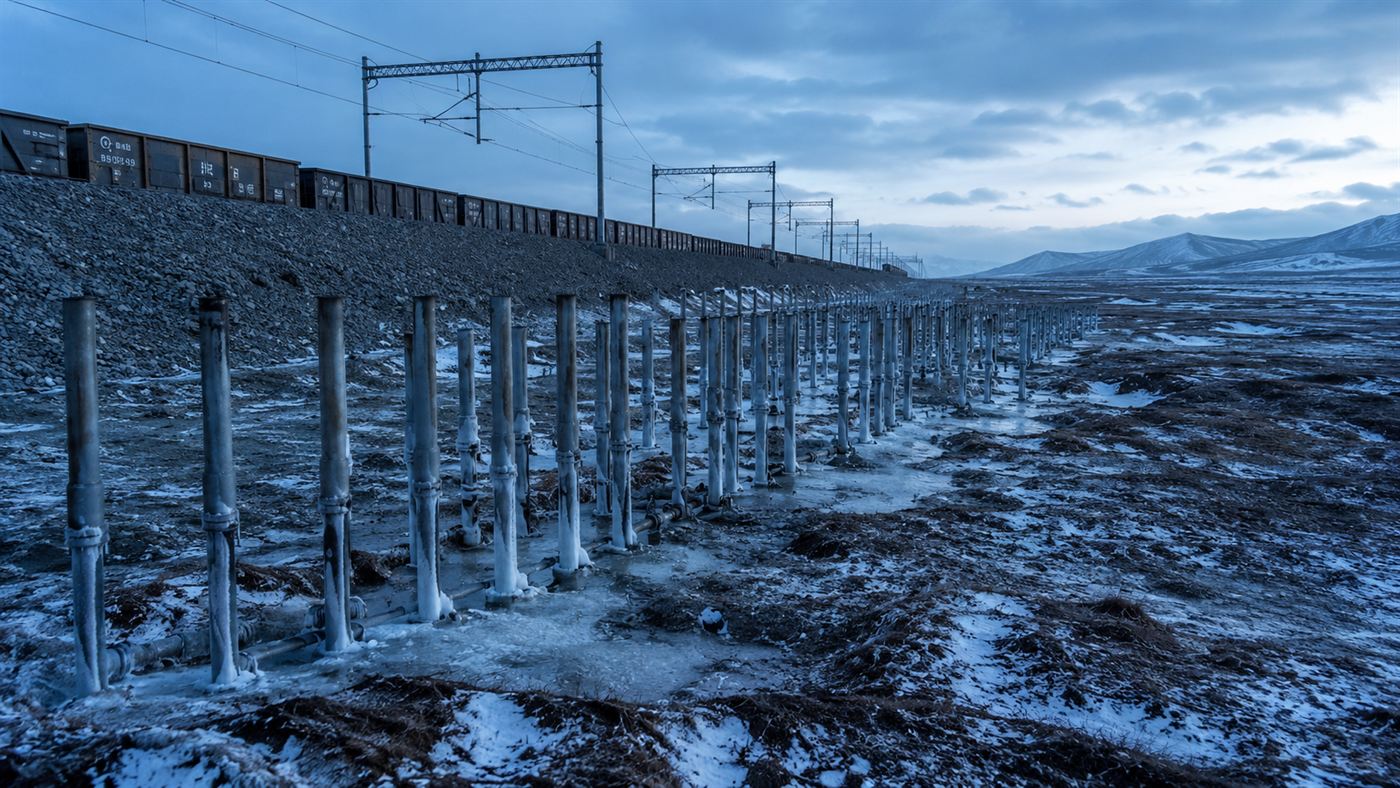
The most striking devices are the thousands of metal pipes that stand in neat rows alongside the track like a strange metal forest. As Britannica describes, these are heat pipes, sealed tubes filled with ammonia, and they work without any power at all. In winter, when the air is colder than the ground, the ammonia inside carries heat up out of the soil and releases it to the sky, actively chilling the earth below.
In summer the process simply switches off, so the pipes only ever cool and never warm. Over a year they leave the ground colder than it would otherwise be, building up a reserve of cold to survive the brief, dangerous thaw of the plateau summer. It is the centrepiece of how the Qinghai-Tibet Railway stays stable on terrain that should, by rights, swallow a railway whole.
Building for thin air and wild animals
The frozen ground was only one of the plateau's hazards. At that altitude the air is so thin that workers risked altitude sickness just by showing up, so the project ran oxygen stations and clinics along the route, and the passenger carriages are sealed and enriched with extra oxygen, with masks available, so travellers do not fall ill on the climb. Crossing the high Tibetan Plateau is as much a medical challenge as a structural one.
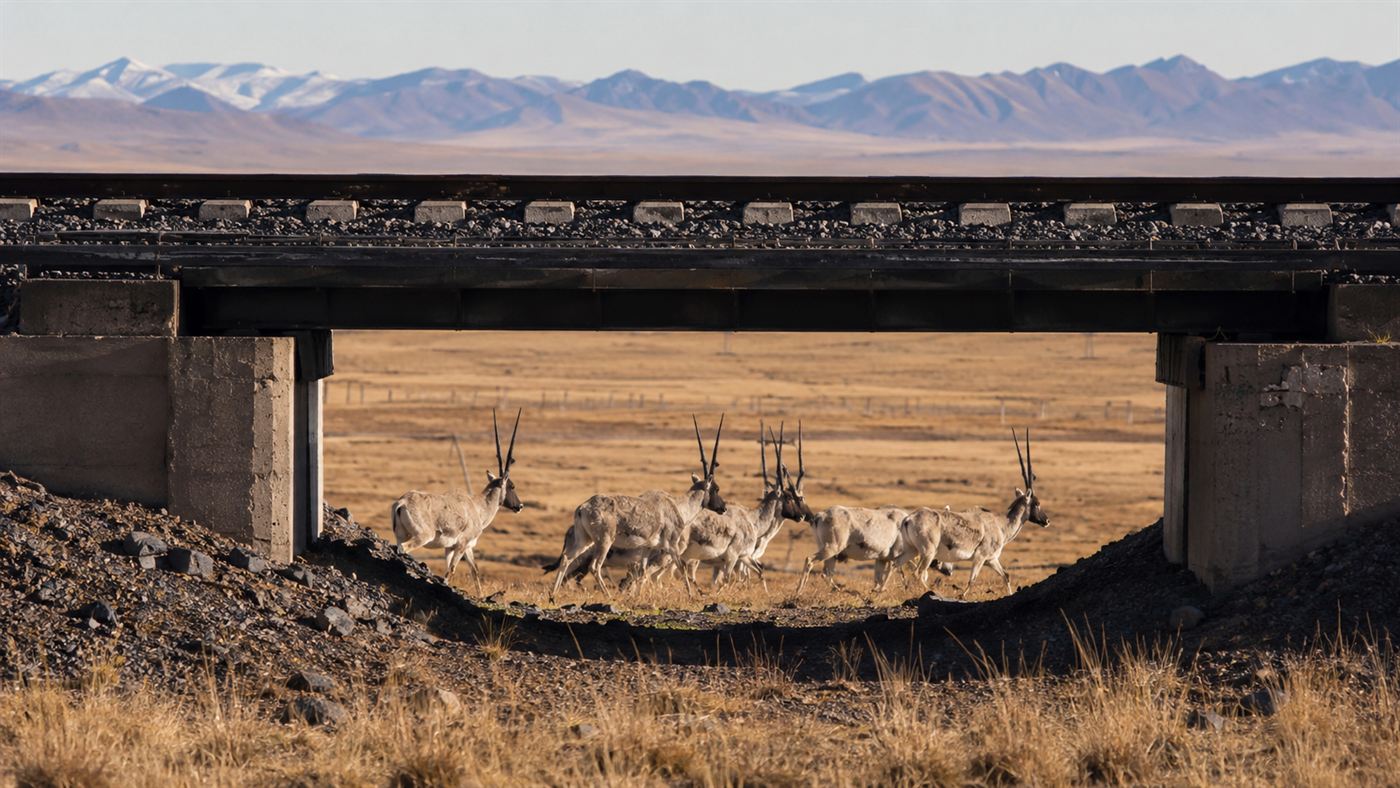
The builders also had to share the land with its wildlife. The plateau is home to the Tibetan antelope, which migrates across exactly the ground the line was cutting through, so as National Geographic has reported on the chiru, the designers left dedicated underpasses and gaps for the herds to cross beneath the track. Whether the animals fully adapted is debated, but the attempt marked an unusual moment of a giant railway bending around the rhythms of the wild.
The honest catch
For all its ingenuity, the Qinghai-Tibet Railway sits on contested ground in more ways than one. The line is politically charged, praised by Beijing for connecting and developing Tibet and criticised by others who fear it accelerates migration and erodes Tibetan culture, and an honest account has to acknowledge that argument exists rather than pretend the railway is only a feat of engineering.
There is a physical worry too. All the cooling tricks were designed for a stable climate, but the plateau is warming faster than the global average, and a hotter world makes the permafrost harder to keep frozen. The very ground the line depends on is becoming less reliable, which means the railway may need ever more effort, and money, simply to stand still. It is a triumph of engineering that is also, quietly, a race against a thaw it cannot fully stop.
Why a frozen railway still amazes
Strip away the politics and the climate anxiety and what remains is genuinely astonishing: a working railway running trains full of people across the highest, coldest, thinnest-aired terrain ever tamed by rail. The engineers did not conquer the plateau so much as negotiate with it, using gravel, pipes and viaducts to keep a fragile balance rather than bulldoze through.
That is perhaps the real lesson of the line. On ground this hostile, the winning move was not brute force but working with the cold instead of against it. The Qinghai-Tibet Railway is a reminder that the most impressive engineering is sometimes the kind that leaves the natural world as close to undisturbed as a 5,000-metre railway possibly can.
To run trains across the roof of the world, engineers had to keep the very ground beneath the track frozen solid. Is freezing the earth on purpose brilliant engineering or a warning that some places should be left alone? Tell us in the comments.
Related reading: The world's longest railway tunnel, driven flat through 2,300 metres of Alpine rock.