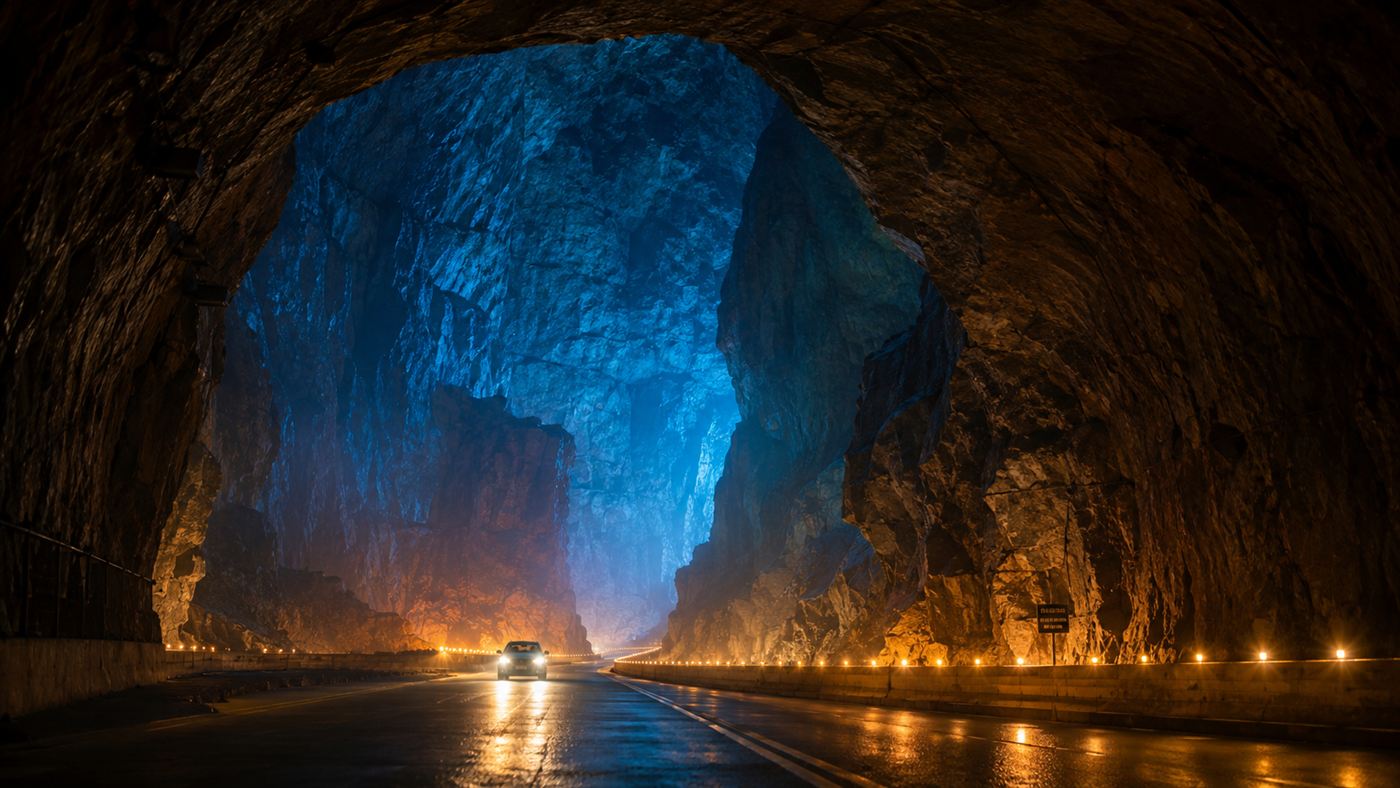
The Karakoram Highway cost about a thousand lives to carve through the highest mountains on Earth, and the peaks have been trying to swallow it back ever since
They call it the eighth wonder of the world, and a friendship road between two nations. But to build a paved highway across some of the most violent terrain on the planet, the people who made it paid an almost unthinkable price: roughly one worker dead for every mile of road. And the mountains have never accepted it.
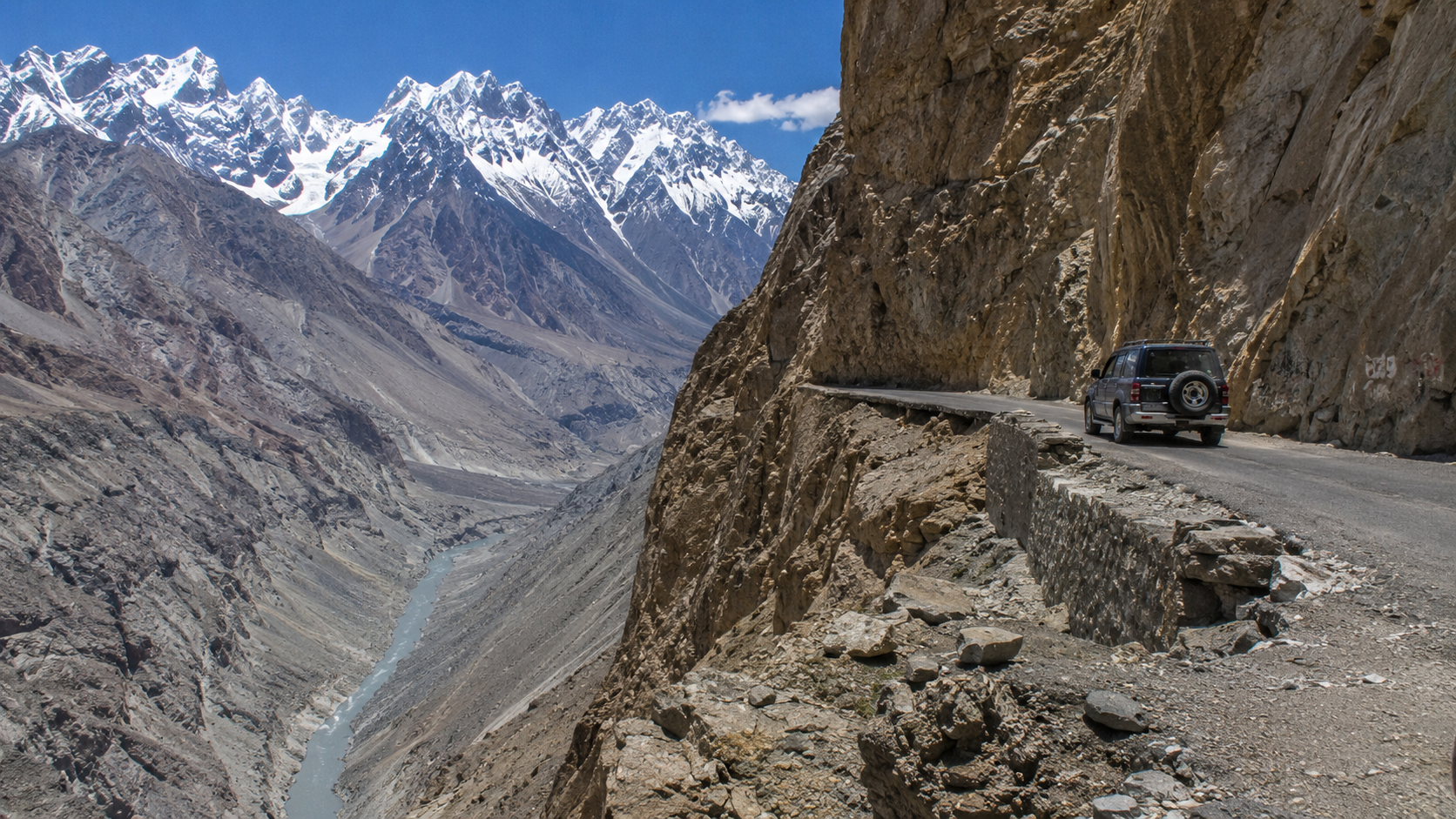
A ribbon of asphalt threaded across the roof of the world. Illustration: Watts & Wild.
The Karakoram Highway is the highest paved international road on Earth, a 1,300-kilometre thread of asphalt that climbs out of Pakistan, crosses the Khunjerab Pass at nearly 4,700 metres, and drops down into western China. It runs through a landscape that seems actively hostile to the idea of a road: a collision zone of three of the world's great mountain ranges, where the Himalaya, the Karakoram and the Hindu Kush grind together.
This is not just scenery. It is the geological front line where the Indian and Eurasian plates are still smashing into each other, throwing up peaks and shaking loose the avalanches and landslides that make this one of the most unstable places humans have ever tried to build.
What is the Karakoram Highway?
The road was a joint project between Pakistan and China, conceived as both a practical trade link and a symbol of friendship between the two countries. Work stretched across roughly two decades, beginning in the 1960s and running into the late 1970s, with the highway finally opened to the public in 1986. Thousands of soldiers and labourers from both nations worked side by side, often with little more than hand tools and dynamite.
What they were attempting was close to insane. They had to gouge a permanent road across cliffs of crumbling rock, over glaciers, and along valleys that funnel rockfalls like a shotgun. Every mile gained had to be defended against a mountain range that was, quite literally, trying to bury it as fast as they dug.
A road built by hand through the death zone
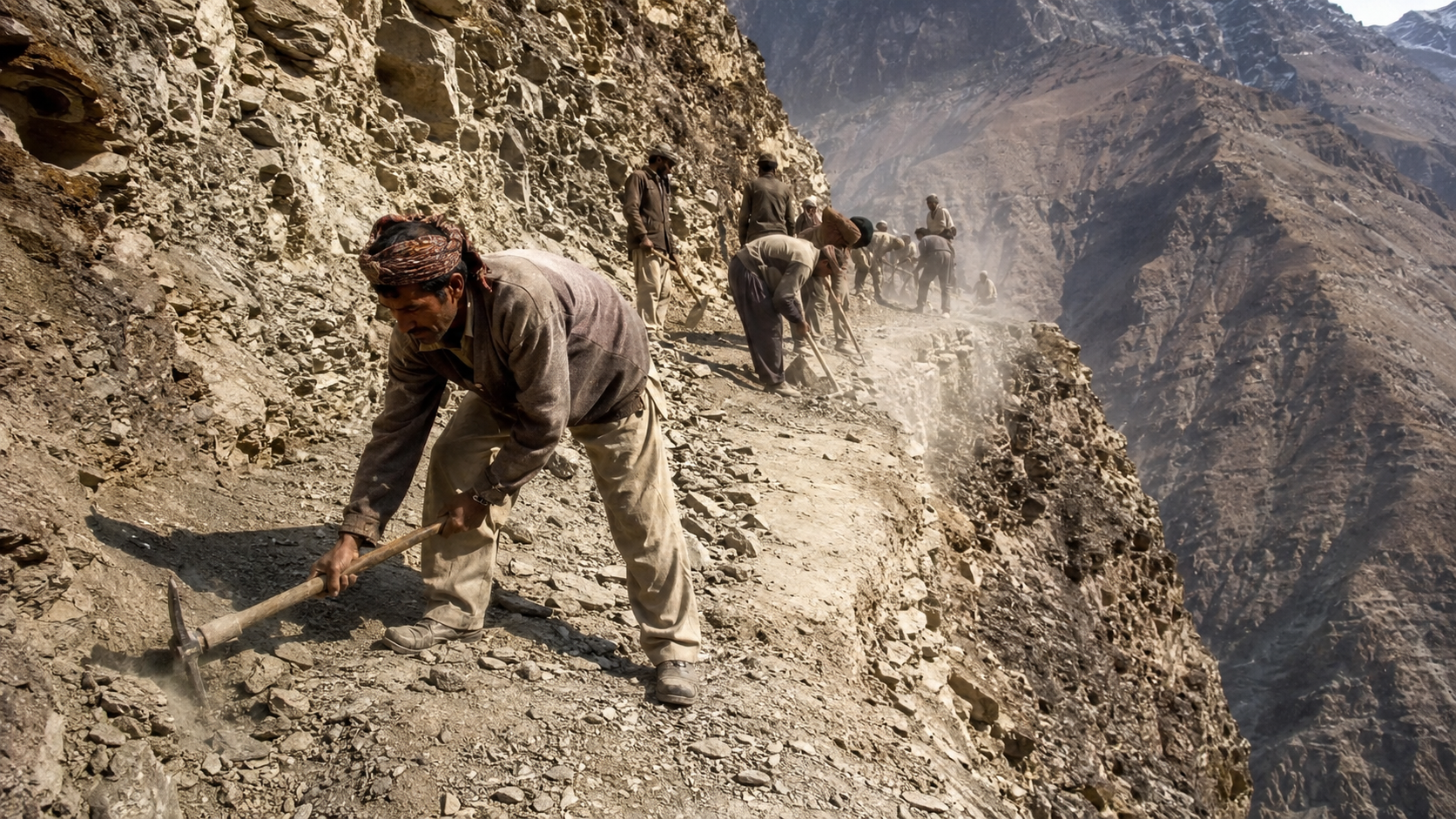
The conditions were brutal beyond most modern construction. Workers dangled on ropes over thousand-metre drops to drill blasting holes by hand. Altitude sickness, rockfalls, flash floods and freezing cold were constant companions. Landslides could erase a week's work, and a man, in seconds.
The mountains fought back the whole way. The single greatest killer was not machinery or cold but the rock itself, sliding, falling and collapsing onto the people trying to tame it. For the engineers, holding a finished section of road open was almost as hard as building it, because the slopes above kept shedding their weight onto the carriageway below.
One worker for every mile
The human cost is what turns this from an engineering marvel into something closer to a memorial. The most commonly cited figures put the death toll at around 810 Pakistani and roughly 200 Chinese workers, close to a thousand lives in total. With the road running some 500 miles through the worst of the terrain, that is famously remembered as about one death for every mile.
The Chinese workers who died are buried in a cemetery in the town of Gilgit, far from home, tended to this day as a mark of the cost of the project. For all the talk of friendship and trade, the Karakoram Highway is, underneath the asphalt, one of the deadliest things ever built for the sake of a road. It is a monument made of both concrete and grief.
When the mountain drowned the highway
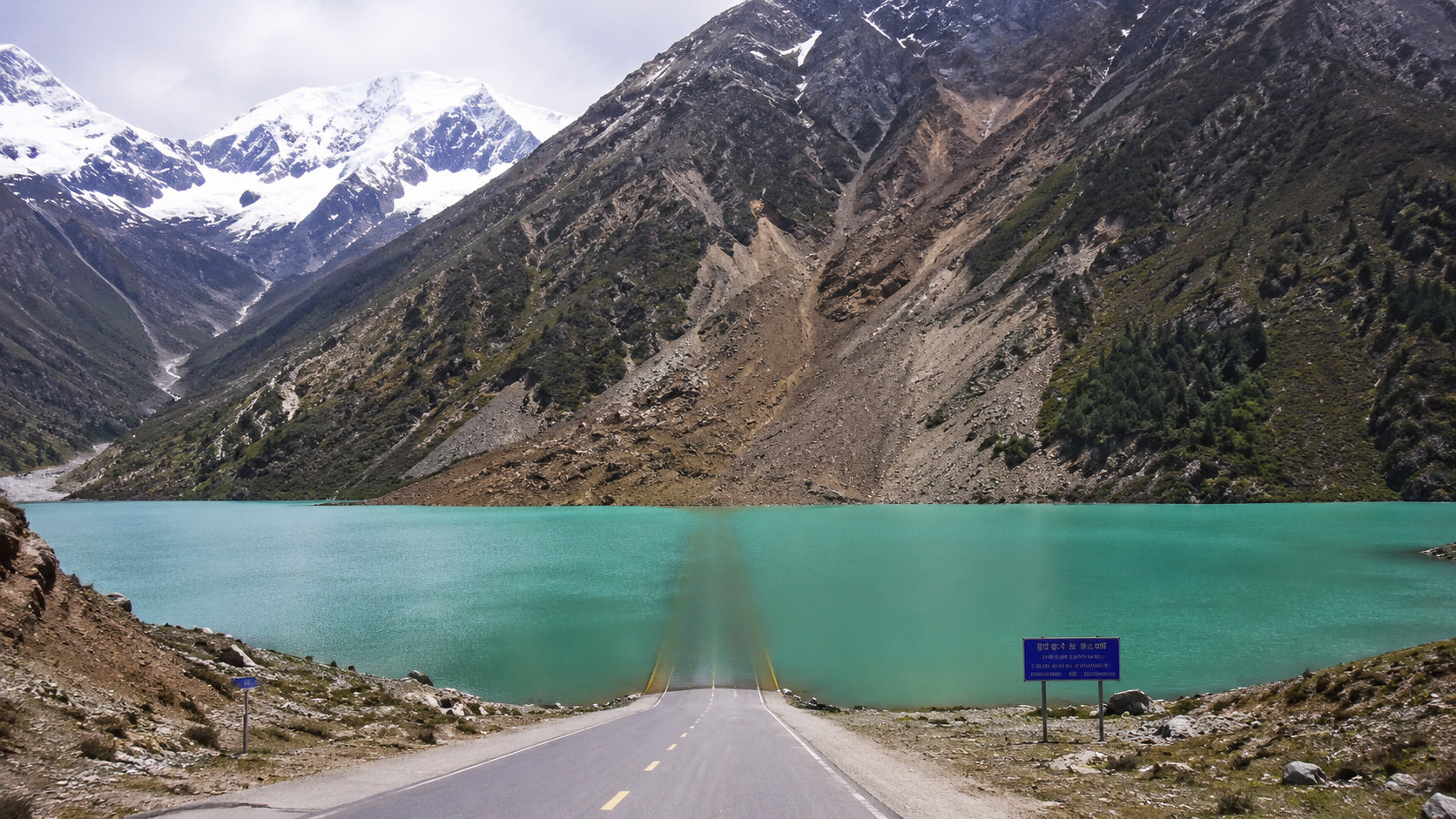
And the mountains are still not finished. In January 2010, a massive landslide crashed down into the Hunza valley, near the village of Attabad, killing people instantly and damming the river. Behind that natural dam, a lake began to rise. Over the following months it grew into the vast, eerily beautiful Attabad Lake, which swallowed villages, drowned farmland, and submerged a long stretch of the highway itself under deep blue water.
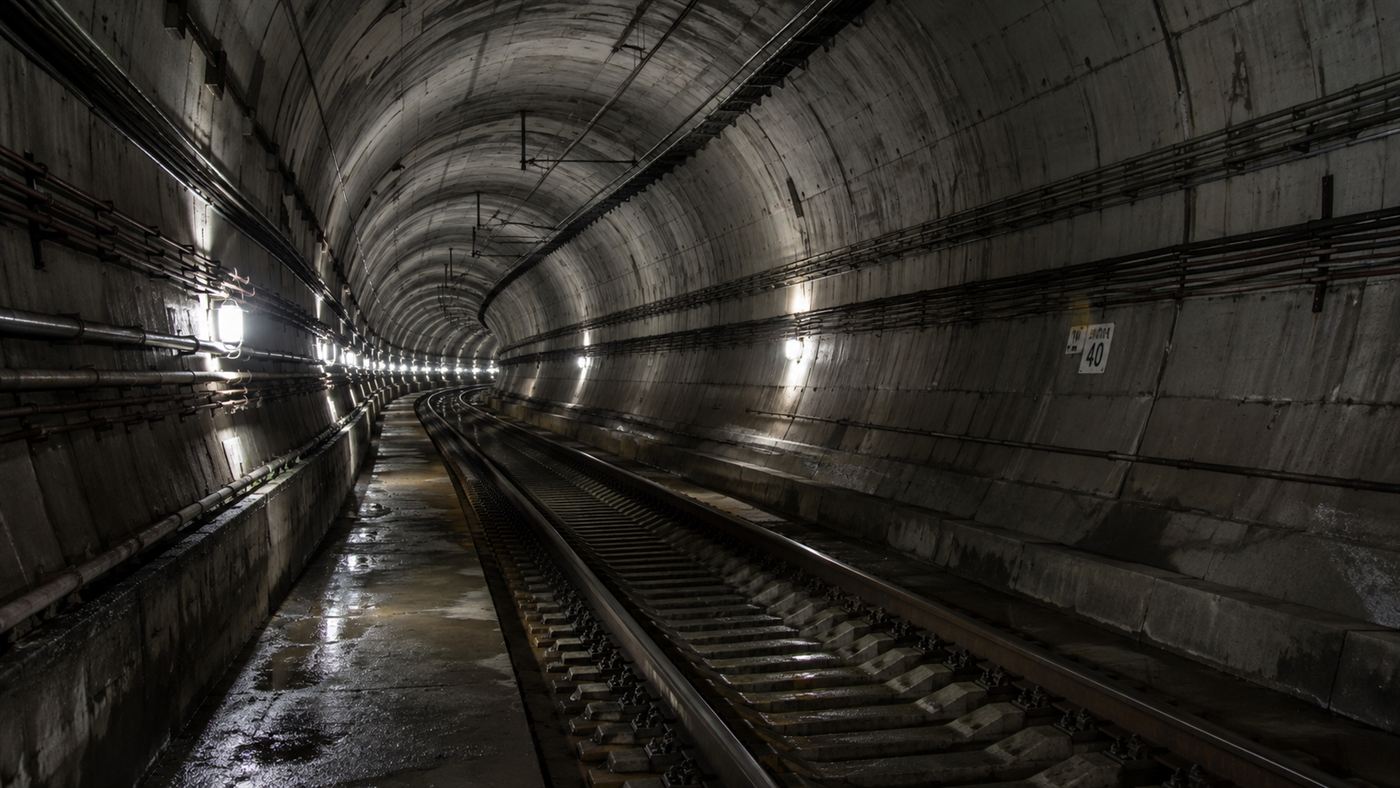
For years, the only way past was by boat. The road that had cost a thousand lives to build was simply gone, erased by the same forces that killed its builders. The fix was, fittingly, even more engineering: Pakistan and China bored a series of tunnels through the mountainside to carry the highway above the new lake, reopening the route in 2015. The road had to be rebuilt to survive the landscape's revenge.
The honest catch
A few things are worth keeping straight. The exact death toll is uncertain, as record-keeping in such remote and politically sensitive work was patchy, and the famous "one death per mile" line is a memorable rounding rather than an audited figure. The numbers are real enough to be sobering, but they are estimates.
It is also fair to note that the highway was never purely a gift of friendship. It is a strategic artery that binds Pakistan and China together and gives China a route toward the Arabian Sea, which is exactly why both governments were willing to spend so many lives and so much money on it. The romance of the "eighth wonder" should not erase the cold geopolitics, or the workers who had little say in either.
Why the Karakoram Highway still matters
Today the road is the spine of the China-Pakistan Economic Corridor, a multibillion-dollar modern trade scheme, and a magnet for adventurous travellers who come to drive one of the most spectacular roads on Earth. It carries trucks, tourists and history across a frontier that was, until living memory, almost impossible to cross.
But its deepest lesson is the one written in the cemetery at Gilgit and the waters of Attabad Lake. You can drive a road through the highest mountains in the world, but you never really defeat them; you only strike a bargain, paid in lives and constant repair, to be allowed across for a while. The Karakoram Highway is the proof, and the price, of that bargain.
A thousand workers died to carve this road through the mountains, and the mountains keep tearing it down anyway. When a project costs a life for every mile, at what point does the wonder stop being worth the price? Tell us what you think in the comments.
Related reading: China's Qinghai-Tibet railway faced the opposite enemy, building not on falling rock but on ground that keeps melting beneath the tracks.