Dubai built Palm Jumeirah, an island shaped like a palm tree, out of nothing but sand sprayed from the sea by GPS and held together by a curving wall of rock
Off the coast of Dubai lies a palm tree five kilometres wide, made of land. Palm Jumeirah was built from the sea floor up, out of millions of tonnes of sand sprayed precisely into place, with no foundations beneath it, and it added dozens of kilometres of new beach to a desert city.
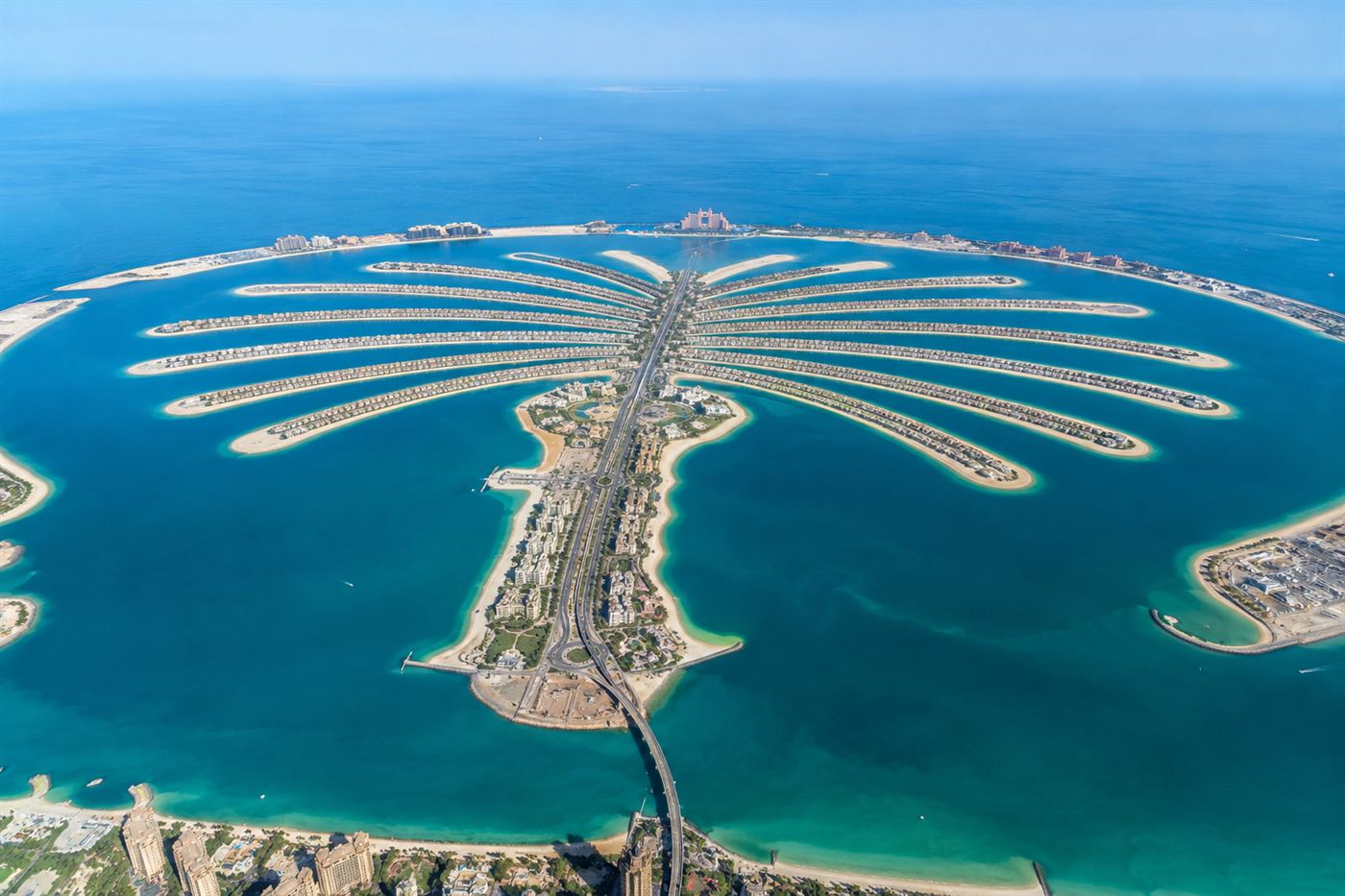
Palm Jumeirah, an island in the shape of a palm tree, off the coast of Dubai. Illustration: Watts & Wild.
Palm Jumeirah is one of the few human creations you can recognise from orbit. Out in the warm, shallow water of the Persian Gulf, off the coast of Dubai, the sea is interrupted by an unmistakable shape: the trunk and spreading fronds of a giant palm tree, ringed by a long curving arm of rock, picked out in sand and villas against the turquoise water. It is not a sandbar or a natural island. Every grain of it was put there on purpose.
What makes it remarkable is not the shape but the substance. As the project is documented, Palm Jumeirah was reclaimed from the sea using roughly 94 million cubic metres of sand and 7 million tonnes of rock, with no concrete piles holding the land up. The island is, essentially, a carefully shaped and hardened pile of sea sand.
What is Palm Jumeirah? Palm Jumeirah is an artificial island off Dubai, shaped like a palm tree, built from around 94 million cubic metres of sand and 7 million tonnes of rock. Completed in the mid-2000s, it has a trunk, 16 fronds of villas and a crescent breakwater, and added kilometres of coastline.
Palm Jumeirah, a palm tree made of land
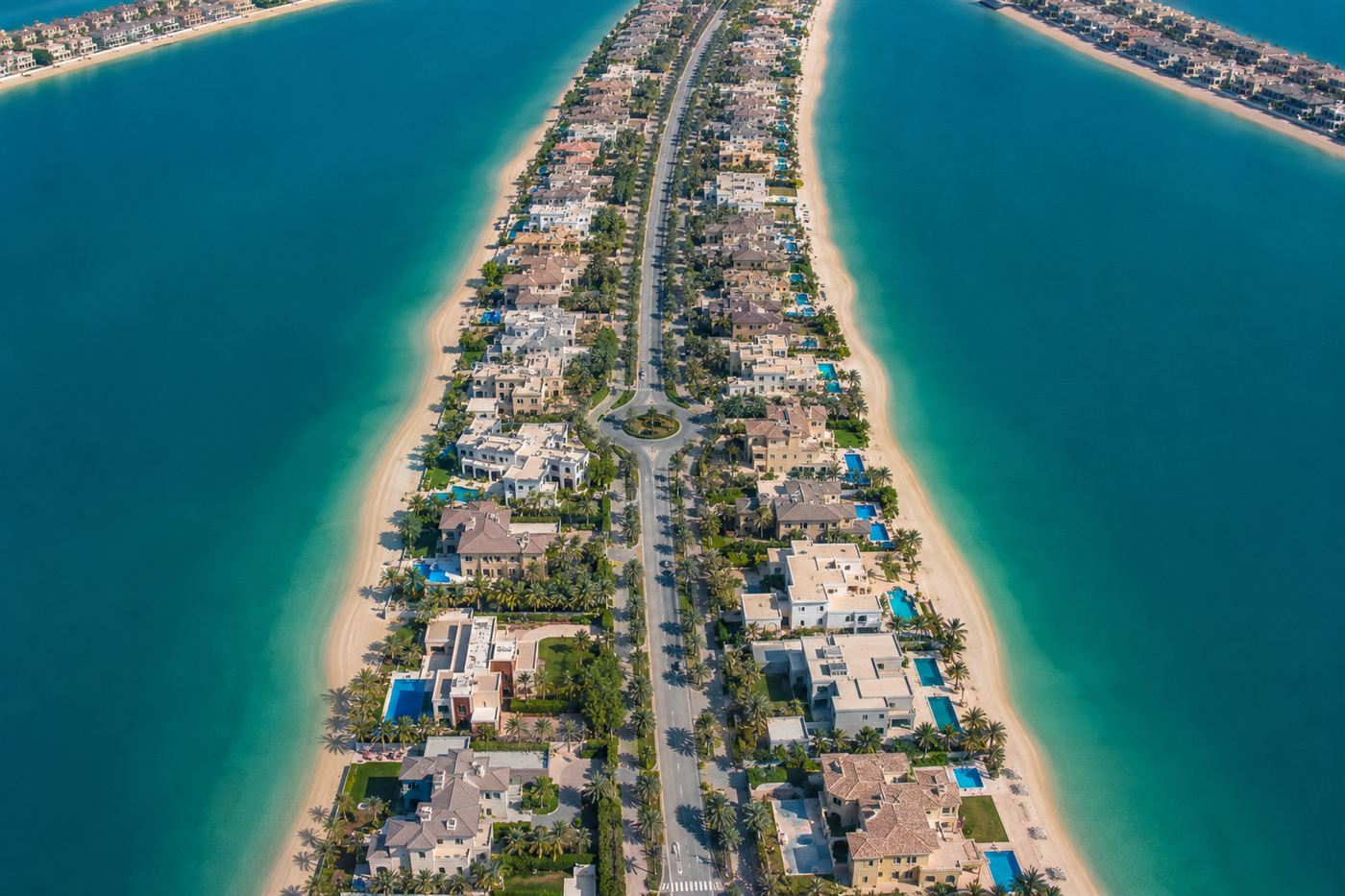
The design of Palm Jumeirah is as much branding as engineering: a central trunk carrying a road and apartments, sixteen fronds reaching out into the water and lined with private villas, each with its own stretch of beach, and around the whole thing a crescent-shaped breakwater that closes off most of a sheltered lagoon. The palm shape was chosen deliberately, because fronds create far more waterfront than a plain circle would. By folding the coastline into a tree, the developers turned a patch of open sea into many kilometres of beachfront property in a city that had run short of it.
That, in the end, was the point of the exercise. Dubai had a short natural coastline and an enormous appetite for seaside real estate, and Palm Jumeirah manufactured the one thing it lacked: more shore.
Sprayed from the sea by GPS
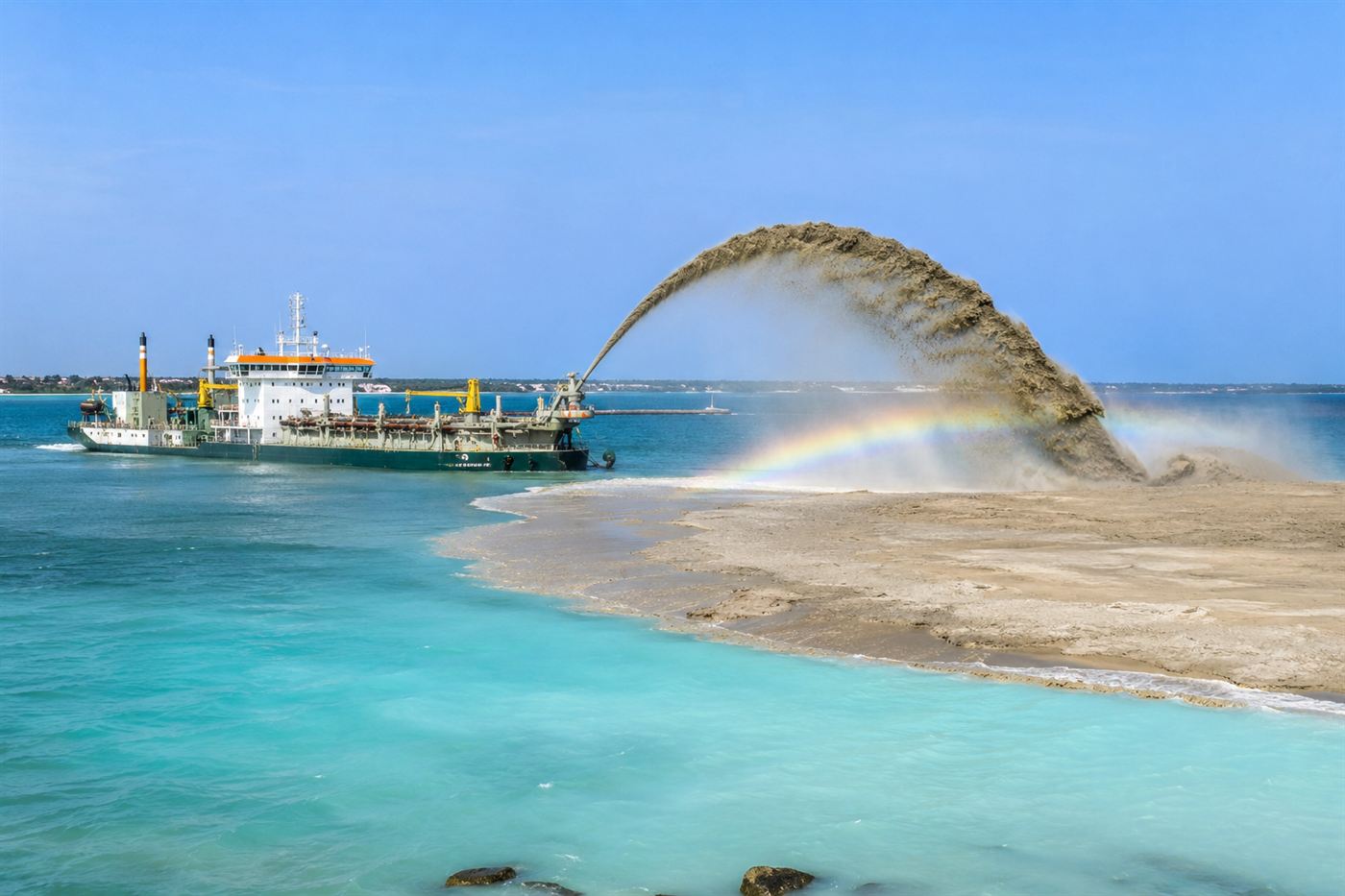
The way the island was built is genuinely strange to picture. Rather than trucking in rock and earth, the engineers grew the land out of the seabed itself, using specialist Dutch dredging ships. The vessels suck sand up from the sea floor and then fire it back out through a nozzle in a great arc, a technique vividly known as "rainbowing", spraying sand precisely where it is wanted. To draw a shape as exact as a palm tree, every spray was positioned by satellite navigation, so that the growing island matched the plan to within a small margin as it rose above the waves.
Grain by grain, arc by arc, Palm Jumeirah was painted onto the sea in sand, guided from the sky. There is something almost absurd about building a landmass with the precision of a printer, but that is essentially what happened.
Shaking the ground solid
Loose sea sand is treacherous stuff to build on. Saturated and uncompacted, it can behave almost like a liquid, especially if shaken, and it will not safely hold up villas and hotels. So once the shape of Palm Jumeirah had been sprayed into place, the engineers had to turn that soft heap of sand into solid ground, and they did it not with foundations but with vibration. Around fifteen machines drilled some two hundred thousand holes across the island, and into each they forced water and air while vibrating probes shook the sand, packing the grains tightly together. This process, called vibro-compaction, densified the whole island from within until it was firm enough to build on, without a single pile being driven into the seabed.
A crescent against the waves
The fragile fronds of sand could not survive the open sea on their own, so the entire island sits inside the embrace of its crescent breakwater, a long barrier of rock quarried from the mountains and dropped into the Gulf. Its job is to soak up the energy of waves and storms before they can reach the villas, keeping the inner lagoon calm. Building Palm Jumeirah took the expertise of dredging companies who specialise in exactly this, conjuring new land out of the sea, a craft the Dutch in particular have practised for centuries on their own low coastline.
What it cost the sea
The marvel has a real bill attached, and not only a financial one. Dredging and dumping so much sand stirred up the seabed, smothered patches of reef and seagrass, and changed the way currents and sand move along the coast. The sheltered lagoon that the breakwater created turned out to trap the water and let it stagnate, until gaps had to be cut in the rock arm to let the sea flush through. And the grander schemes that were meant to follow Palm Jumeirah, a larger palm and an archipelago shaped like a map of the world, largely stalled when the money dried up, leaving Palm Jumeirah as the one that was actually finished and lived on.
The honest catch
It is fair to hold two thoughts about Palm Jumeirah at once. As a piece of engineering it is genuinely impressive: shaping an inhabited island out of sprayed sand, and then shaking it solid enough to carry hotels without foundations, is a real and difficult achievement of dredging and soil mechanics. But it is also a monument to a particular kind of excess, an enormously expensive luxury landscape built with oil wealth, at a measurable cost to the marine environment and with open questions about how it will cope with erosion and rising seas over the long term.
Neither view cancels the other. Humans looked at an empty stretch of warm sea, decided they wanted a palm tree made of beachfront, and then actually built one solid enough to live on, drawing it onto the water with satellite-guided jets of sand. Palm Jumeirah is a slightly unsettling demonstration of just how much of the planet's surface people can now reshape, for better and for worse, when they decide to.
A palm tree made of land, sprayed onto the sea from a ship and shaken solid enough to live on. Is Palm Jumeirah a triumph of engineering, a folly of excess, or both? Tell us in the comments.
Related reading: The Oresund crossing, where engineers built an artificial island to swallow a bridge.