The platypus lays eggs, carries venom in its heels and hunts with its eyes shut by feeling the faint electricity of its prey through a bill packed with forty thousand sensors
The platypus is so strange that the first scientists to see one thought it was a hoax. It lays eggs like a bird, carries venom like a snake, and hunts underwater with its eyes, ears and nose shut, feeling for the tiny electric fields its prey gives off.
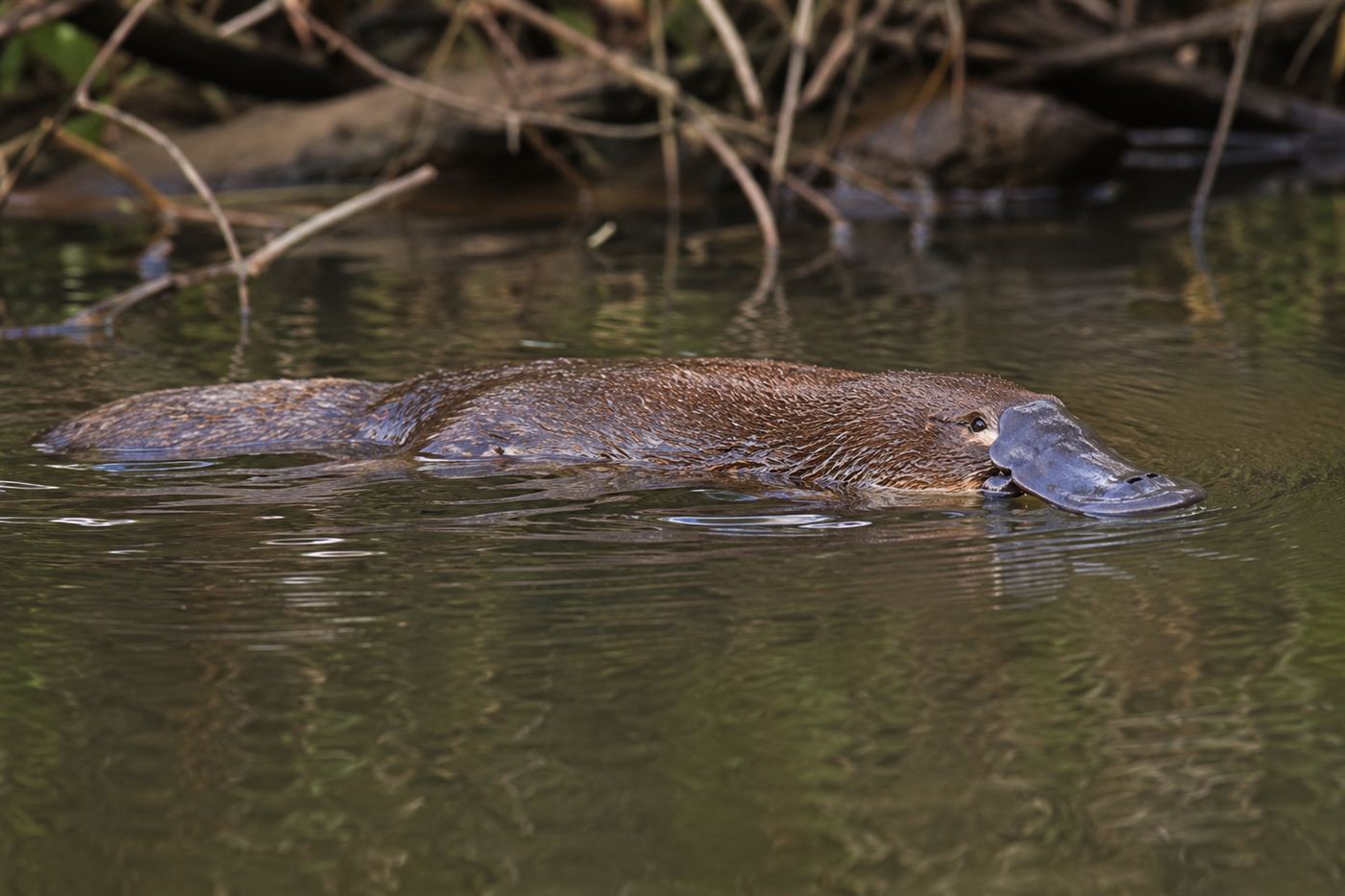
The platypus, an egg-laying mammal that hunts by sensing electricity. Illustration: Watts & Wild.
The platypus looks like a creature assembled from spare parts. It has the flat bill of a duck, the dense fur and paddle tail of a beaver, and the webbed feet of an otter, and it lays eggs, which mammals are not supposed to do. Found in the rivers and creeks of eastern Australia and Tasmania, it is one of only five surviving species of egg-laying mammal in the world, the others being its cousins the echidnas. For sheer improbability, almost nothing else alive comes close.
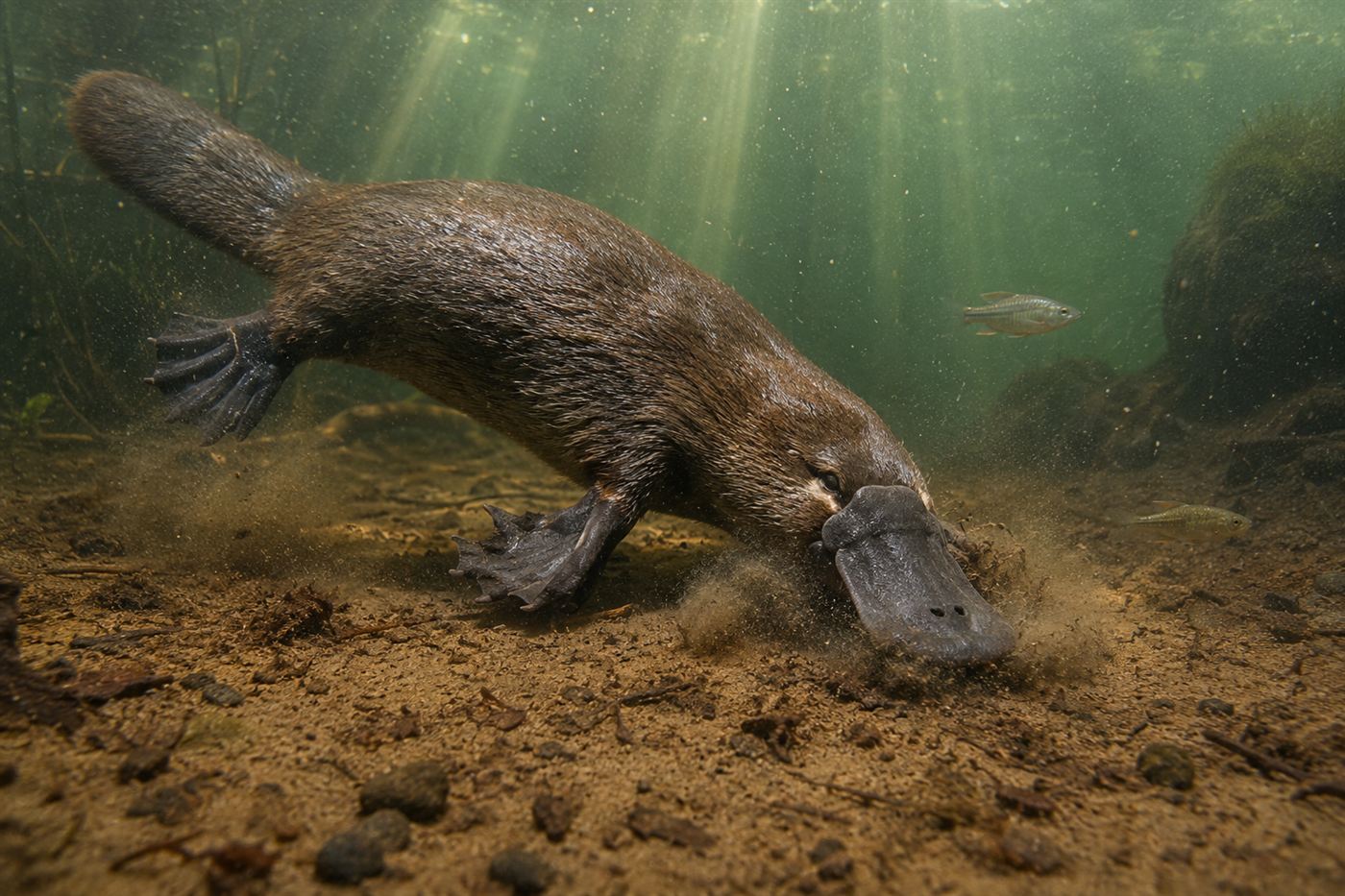
But the strangest thing about the platypus is not how it looks; it is how it hunts. As the American Museum of Natural History explains, when a platypus dives it shuts its eyes, ears and nostrils completely, and finds its food using a sixth sense built into its bill: it detects the faint electricity given off by living prey.
How does a platypus hunt? The platypus closes its eyes, ears and nostrils underwater and hunts using electroreception. Its bill carries around 40,000 sensors that detect the faint electric fields made by the muscles of its prey, so it can find shrimp and larvae in murky water without seeing them at all.
A creature that looks made up
Part of what makes the platypus so disorienting is that it breaks the neat categories we put animals into. It is warm-blooded and furry and feeds its young on milk, all signs of a mammal, yet it lays leathery eggs like a reptile or a bird, and the female has no nipples, instead sweating milk through patches of skin for her young to lap up. It is a living reminder that the boundary between the great groups of animals is blurrier than the textbooks suggest.
It is also superbly adapted to its watery life. Dense, waterproof fur keeps it warm in cold rivers, its webbed front feet drive it through the water, and the same webbing folds back on land to free up claws for walking and digging the burrows where it shelters and nests. Other animals build a hidden sense of their own, like the star-nosed mole, which sees the world through a twenty-two-fingered star of touch.
How the platypus hunts with its eyes shut
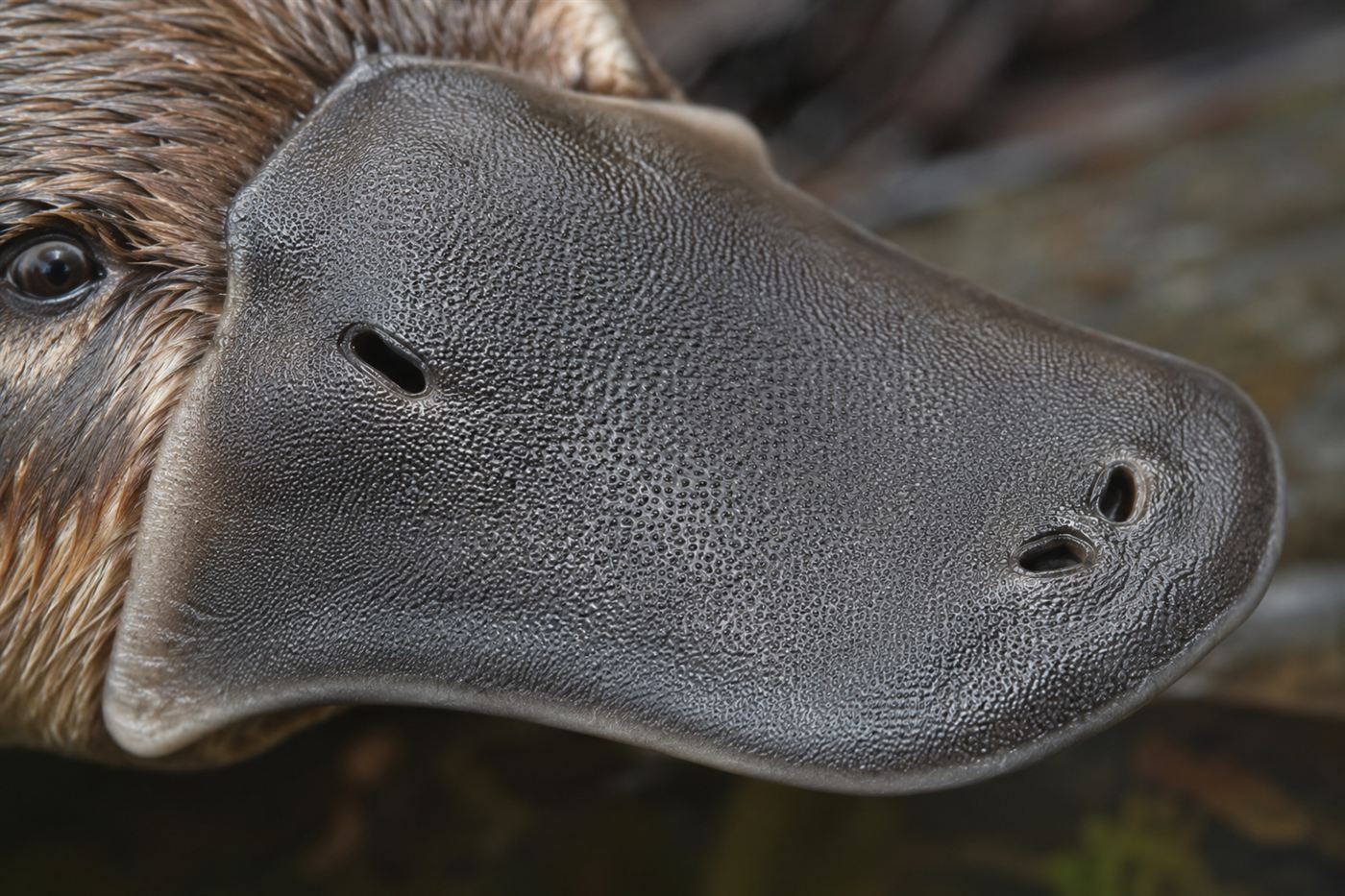
The heart of the platypus story is that bill, which is not the hard beak of a duck but a soft, leathery, intensely sensitive organ. Packed into it are something like 40,000 receptors, a mix of two kinds: electroreceptors that pick up faint electric fields, and mechanoreceptors that feel tiny movements in the water. When a shrimp or an insect larva flicks a muscle, it gives off a minute electrical pulse, and the platypus can detect fields as weak as a few tens of microvolts, far too faint for us to feel.
Cleverer still is how it pinpoints prey. The electric pulse from a moving animal reaches the bill almost instantly, while the ripple of water it makes arrives a fraction of a second later. By sensing both and timing the gap between them, the platypus can work out not just that prey is there but exactly how far away it is, sweeping its bill through the murk like a living electric scanner. It hunts, in total darkness, by feeling for the electricity of life.
Venom in its heels
As if egg-laying and electric senses were not enough, the platypus is also one of the very few venomous mammals. The males carry a sharp, hollow spur on each hind ankle, connected to a gland that produces venom, and they can drive it into an attacker or a rival. The venom is not strong enough to kill a healthy human, but those unlucky enough to have been spurred describe pain so intense and long-lasting that ordinary painkillers barely touch it. Production of the venom ramps up in the breeding season, which suggests its main job is settling disputes between males competing for mates.
No stomach, no teeth, a glow in the dark
The list of oddities keeps going. The platypus has no true stomach at all; its food passes from a gullet almost straight into its intestine, and since adults have no teeth, it grinds up its prey using horny pads and bits of gravel scooped up from the riverbed. It runs at a noticeably low body temperature for a mammal. And in one of the more delightful recent discoveries, its fur turns out to be biofluorescent, glowing a soft blue-green under ultraviolet light, a trait found only recently and still not fully explained.
The animal they thought was a fake
Given all this, it is no wonder that when the first platypus specimen reached Britain at the end of the eighteenth century, the naturalists who examined it suspected they were being conned. The combination of a duck's bill on a furry, beaver-like body looked exactly like the kind of stitched-together fake that taxidermists of the era sometimes produced to fool collectors. One leading scientist is said to have taken scissors to the pelt, searching for the threads where a trickster must have sewn the bill on. There were none. The impossible animal was simply real.
The honest catch
It is tempting to treat the platypus as a kind of primitive leftover, a half-finished mammal, but that is the wrong way to see it. It is not an ancestor of anything; it is a thoroughly modern, highly specialised animal that simply happened to keep an ancient trait, egg-laying, while evolving brand-new ones, like its electric bill, that no other mammal has matched. And a few of the headline marvels come with caveats: the venom will not kill a person, the purpose of the glow-in-the-dark fur is genuinely unknown, and the "no stomach" line, while true, is a quirk shared by some fish rather than a unique platypus trick.
None of that dims the wonder. Out of all the mammals on Earth, this one lays eggs, broadcasts no warning as it slips into a dark river, shuts down its eyes and ears, and finds its dinner by feeling the faint electric ghosts of moving animals. The platypus hunts on electricity, carries venom in its heels, and glows under the right light, and every word of that is true. Sometimes the strangest-sounding animal in the world is also one of the most real.
A mammal that lays eggs, carries venom, and hunts blind by feeling the electricity of its prey. What is the strangest animal you have ever come across, and did you believe it was real? Tell us in the comments.
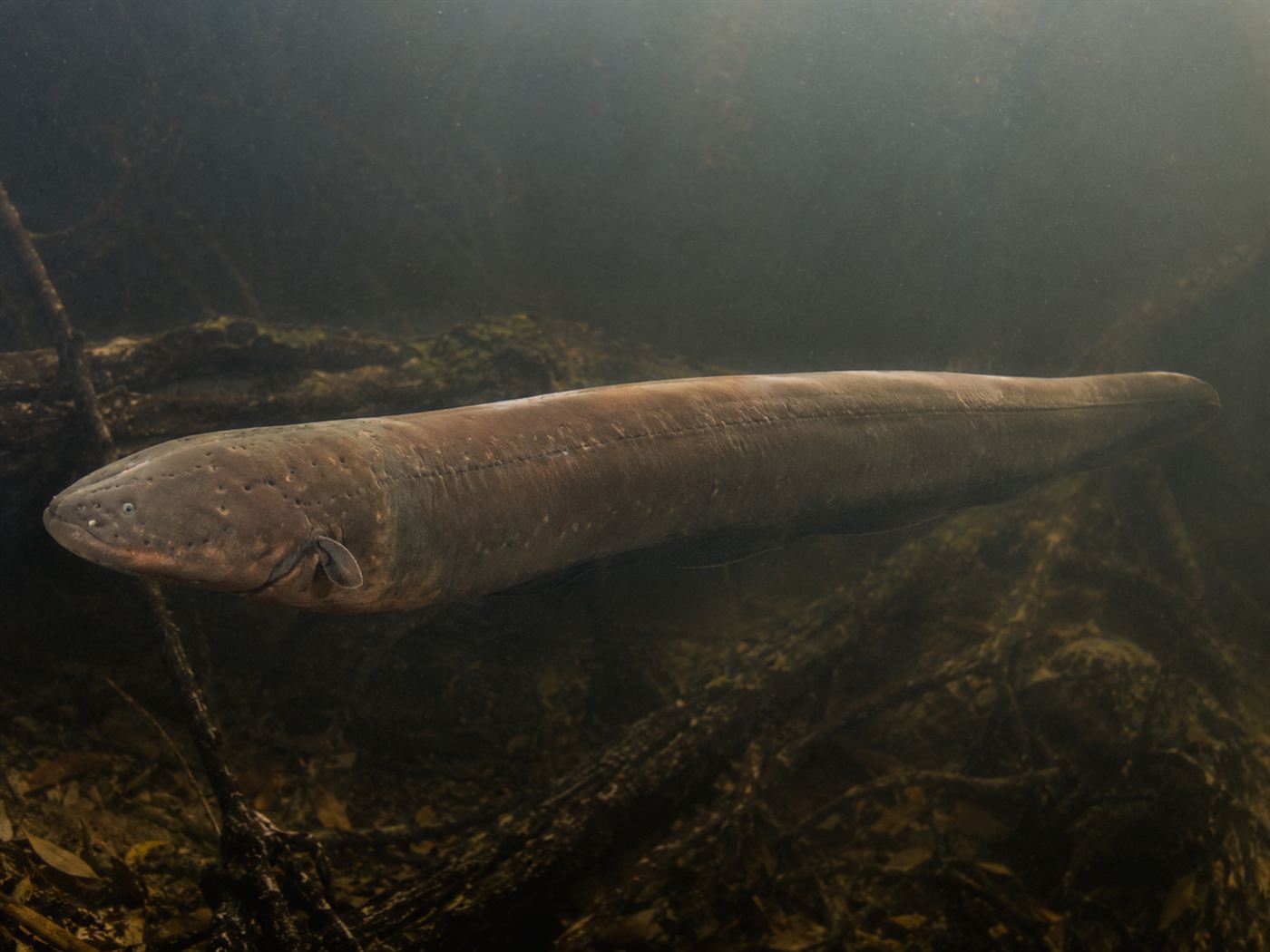
Related reading: The electric eel, which generates the electricity that the platypus only senses.