Eight people sealed themselves inside a glass world in the Arizona desert for two years, and then the oxygen they were breathing began to quietly vanish
It was meant to be a tiny working copy of planet Earth, sealed off from ours, that would keep eight humans alive on nothing but its own air, water and crops. For a while it became one of the most mocked science projects in history. The truth is far more interesting than the punchline.
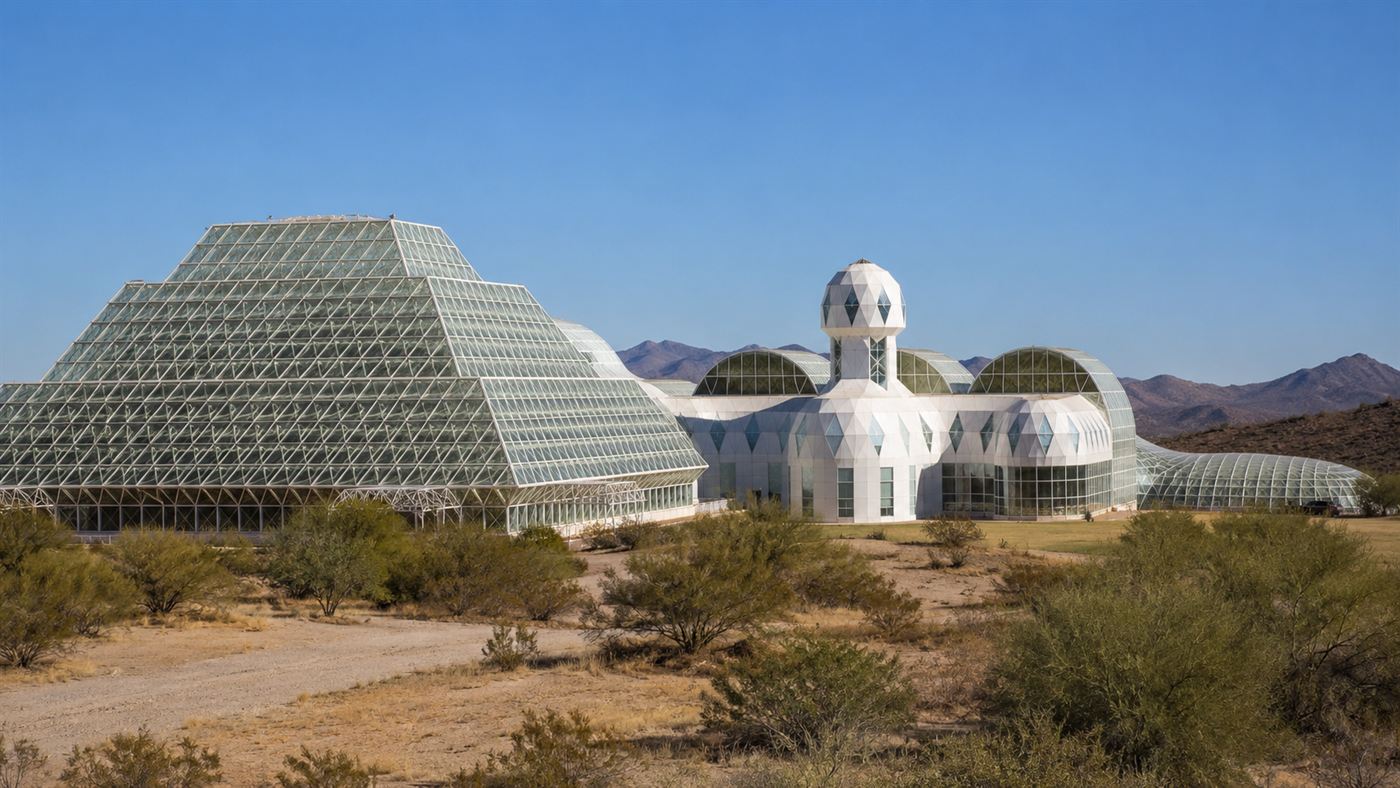
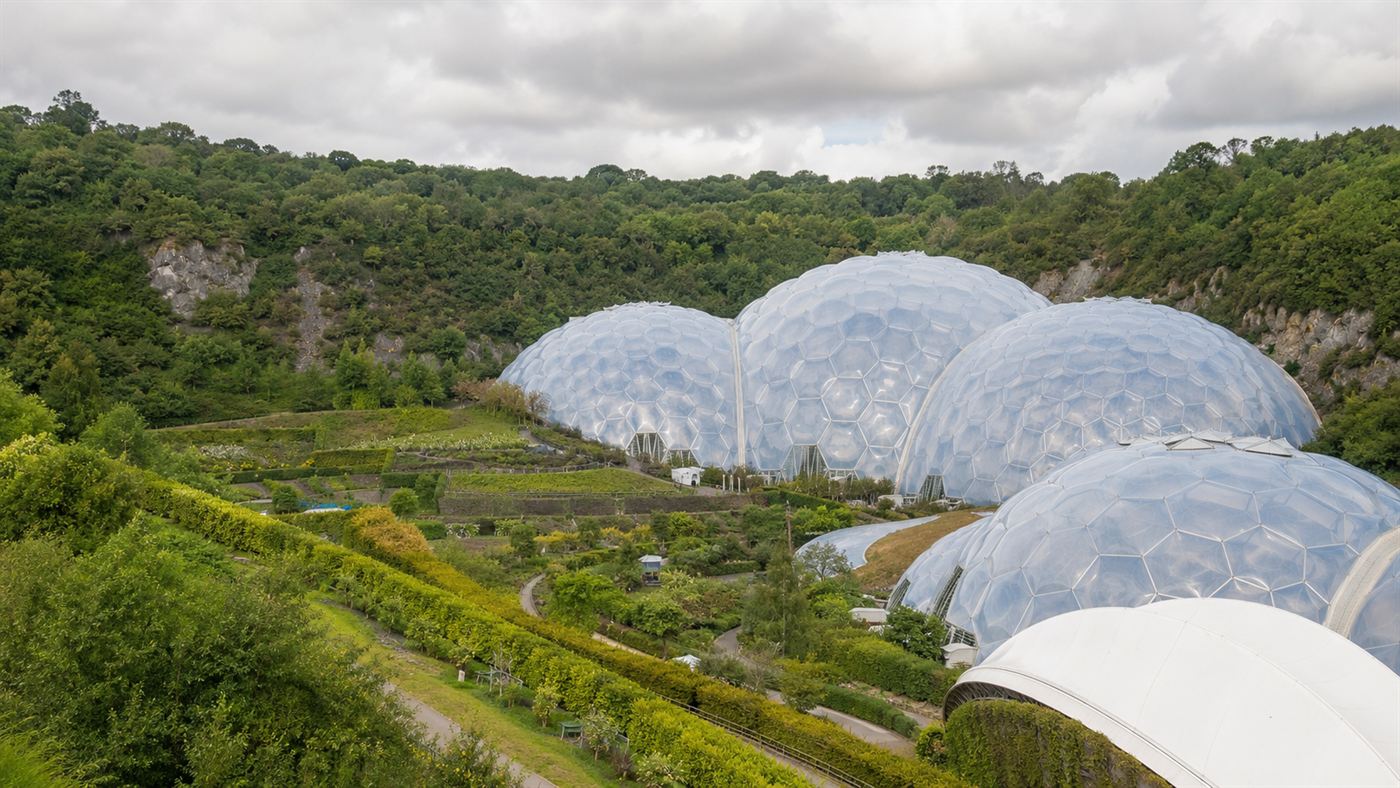
Biosphere 2, the sealed glass world built in the Arizona desert to copy the living Earth. Illustration: Watts & Wild.
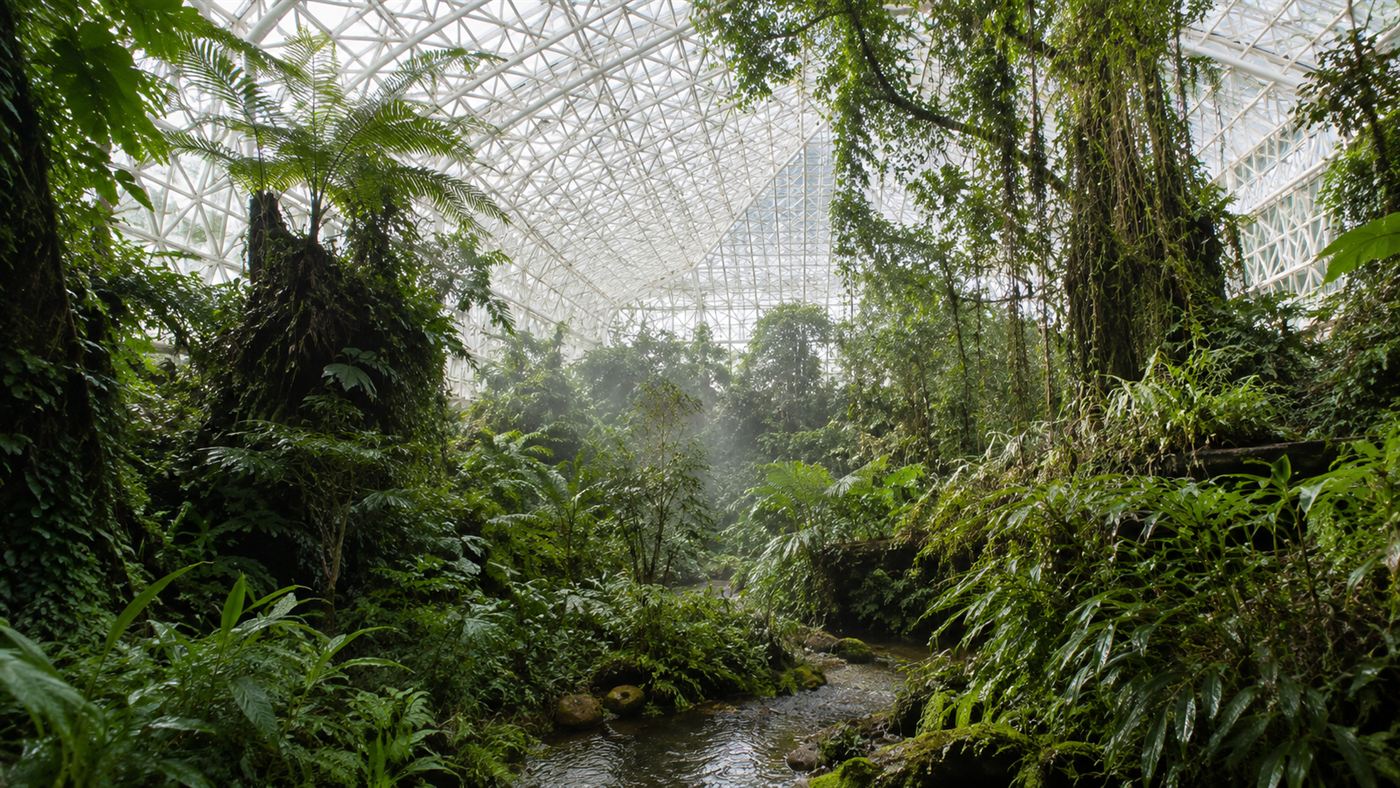
On 26 September 1991, eight people stepped through an airlock in the Arizona desert and were sealed inside the Biosphere 2 sealed world, a glass and steel copy of the living Earth. As the record of Biosphere 2 lays out, the structure covers about 3.14 acres near Oracle, north of Tucson, and packed a miniature rainforest, an ocean with a living coral reef, a mangrove wetland, a savanna, a fog desert and a working farm all under one continuous roof. The plan was simple to state and wildly hard to do: live for two years on whatever this little Earth could make, recycling its own air, water and food, with nothing coming in from outside.
The dream behind it was nothing less than a blueprint for living on other planets. If you could build a sealed, self sustaining world here, you could in principle build one on Mars.
The Biosphere 2 sealed world, a planet in a greenhouse
The project was bankrolled by the Texas billionaire Ed Bass, who put something like 150 million dollars into it, and dreamed up by a charismatic, faintly cult like group led by the systems thinker John Allen, steeped in Buckminster Fuller's idea of Spaceship Earth. The eight crew, four men and four women, were quickly nicknamed the Biospherians, and they walked in believing they were rehearsing the future of the species.
For the first weeks it looked like it might just work. The crew farmed their half acre of crops, tended their tiny ocean, and breathed air scrubbed by their own jungle. Then the world they were sealed inside began, slowly, to turn against them.
The air that went missing
The most frightening problem was invisible. The oxygen in the sealed air started to fall, and it kept falling. As a Dartmouth account of what really happened explains, the oxygen level slid from the normal 20.9 percent down to around 14.5 percent over sixteen months, the equivalent of suddenly living at over 13,000 feet of altitude, leaving the crew gasping, exhausted and unable to sleep properly. In the end, outside oxygen had to be pumped in to keep them safe.
The cause turned out to be a beautifully subtle trap. The rich soil they had packed in to grow their crops was alive with microbes, and those microbes breathed out carbon dioxide faster than the young plants could turn it back into oxygen, while much of the missing oxygen was quietly soaked up by the concrete of the building itself. The world they built had a metabolism, and it was eating their air.
Hungry, and at each other's throats
Then there was the food. The farm produced most of what they ate but never quite enough, and the Biospherians spent much of the first year genuinely, gnawingly hungry, growing thin as they laboured to coax more out of their plots. Outside the farm, the little ecosystems lurched out of balance in their own ways: the insects meant to pollinate the plants died off, while cockroaches thrived and aggressive ants overran everything.
Worst of all for morale, the humans cracked before the machinery did. Trapped together, hungry and oxygen starved, the eight crew split into two bitter factions over how the mission should be run, and former friends ended up barely speaking to one another through the long months inside. The sealed paradise had become a pressure cooker.
The punchline years
They lasted. On 26 September 1993, exactly two years after they went in, all eight walked out, thinner and drained but alive, having completed the full stretch. A second, shorter mission in 1994 then collapsed not because of the biology but because of the people running it, in a furious management dispute that saw a future political operative, Steve Bannon, brought in to take over operations while former crew members broke back into the building in protest. By then the press had made up its mind. Biosphere 2 was a punchline, a rich man's folly, a sci fi fantasy that ran out of air and food and friends.
The honest catch
And a lot of that mockery was fair. The project really did overpromise wildly, it really was wrapped up with an eccentric, secretive group, and as a literal dress rehearsal for colonising Mars it plainly did not work, because the crew could not even keep their own air breathable without help from outside. Anyone who tells you Biosphere 2 was a triumph is selling something.
But here is the twist the punchline always leaves out. A sealed world that goes wrong is, scientifically, a gift, because it shows you exactly how a closed life support system can fail in ways no computer model had predicted, from disappearing oxygen to dying pollinators to concrete that eats the air. As Edge Effects argued years later, the experiment that everyone laughed at has quietly aged into something valuable, and the building did not become a ruin. Columbia University ran research there, and the University of Arizona, which now owns it, has turned it into a serious climate laboratory, using its sealed rooms to do things you could never do to the real planet, like deliberately drought stressing an entire rainforest under glass or watching artificial hillsides weather from bare rock. The grand dream of a Mars colony failed. What replaced it was the realisation that the most useful thing about a copy of the Earth is that you are allowed to break it, and learn what breaks first.
Eight people locked themselves inside a glass copy of the Earth, nearly suffocated as the oxygen vanished, fell out with each other, and turned a famous failure into a laboratory we still use. If you could seal yourself inside a perfect little world for two years, do you think you would last, or crack first? Tell us what you think in the comments.
Related reading: Deep in an Arctic mountain, the Svalbard seed vault holds a frozen backup of the world's food, and it has already been opened to rescue crops from a war zone.