The Mirny diamond mine is a 525-metre pit gouged into frozen Siberia, so enormous that aircraft are forbidden to fly over the hole in case the air pulls them in
In one of the coldest inhabited places on Earth, where winter temperatures plunge toward minus 60 degrees, Soviet engineers dug a hole so vast it looks like a wound in the planet. It made a fortune in diamonds, swallowed a generation of brutal labour, and earned a reputation, true or not, for pulling helicopters out of the sky.
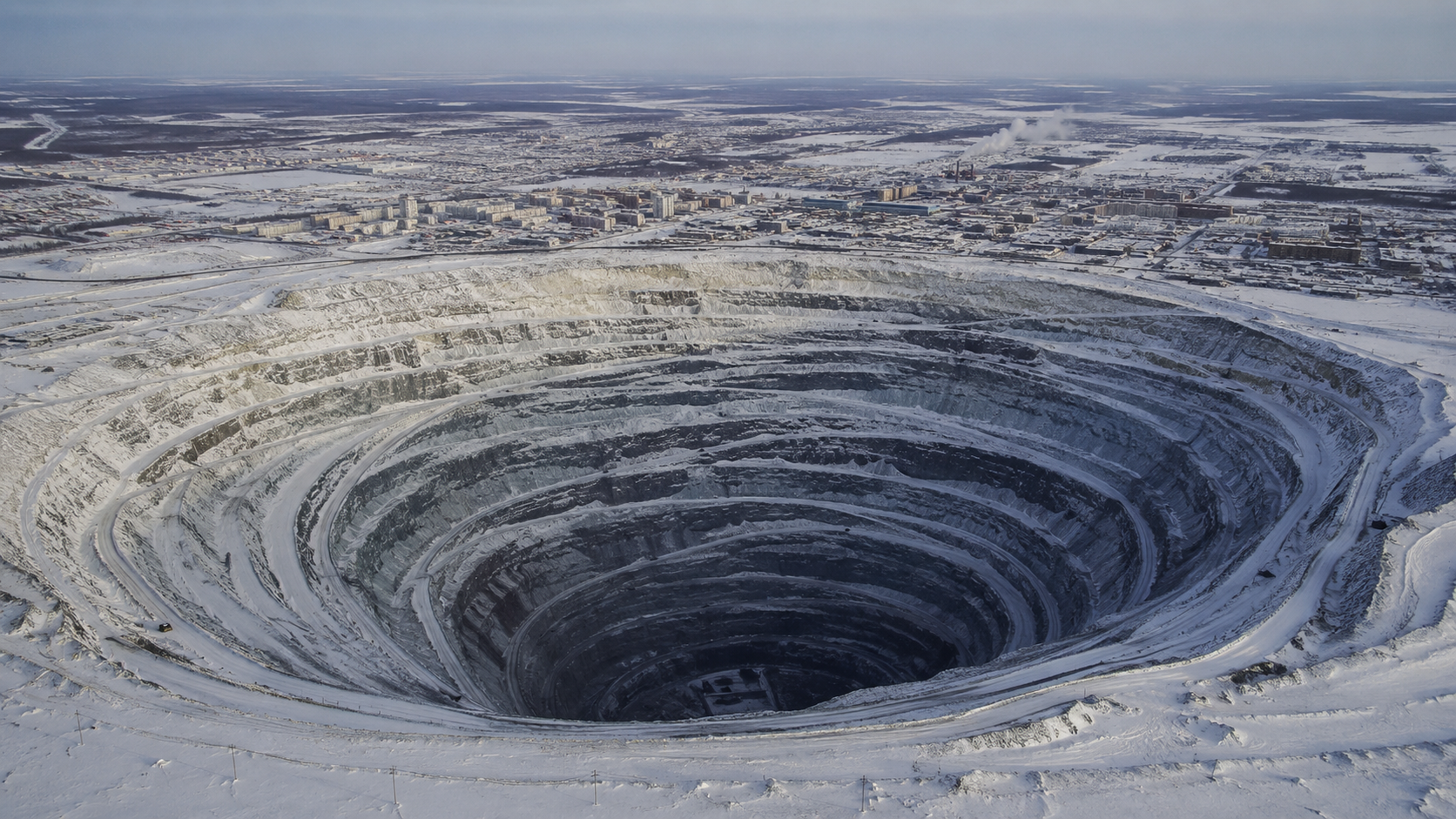
The spiralling pit of Mirny, one of the largest holes humans have ever dug. Illustration: Watts & Wild.
The Mirny diamond mine, also simply called the Mir mine, sits in the Sakha Republic of eastern Siberia, a region so remote and so cold that building anything there is an act of defiance. The pit is around 525 metres deep and 1,200 metres across, a terraced funnel so large that the town built beside it seems to huddle nervously at its edge. From the air, it is one of the most awesome and unsettling sights of any human structure on the planet.
It exists because, in 1955, Soviet geologists found something extraordinary buried under the frozen ground.
What is the Mirny diamond mine?
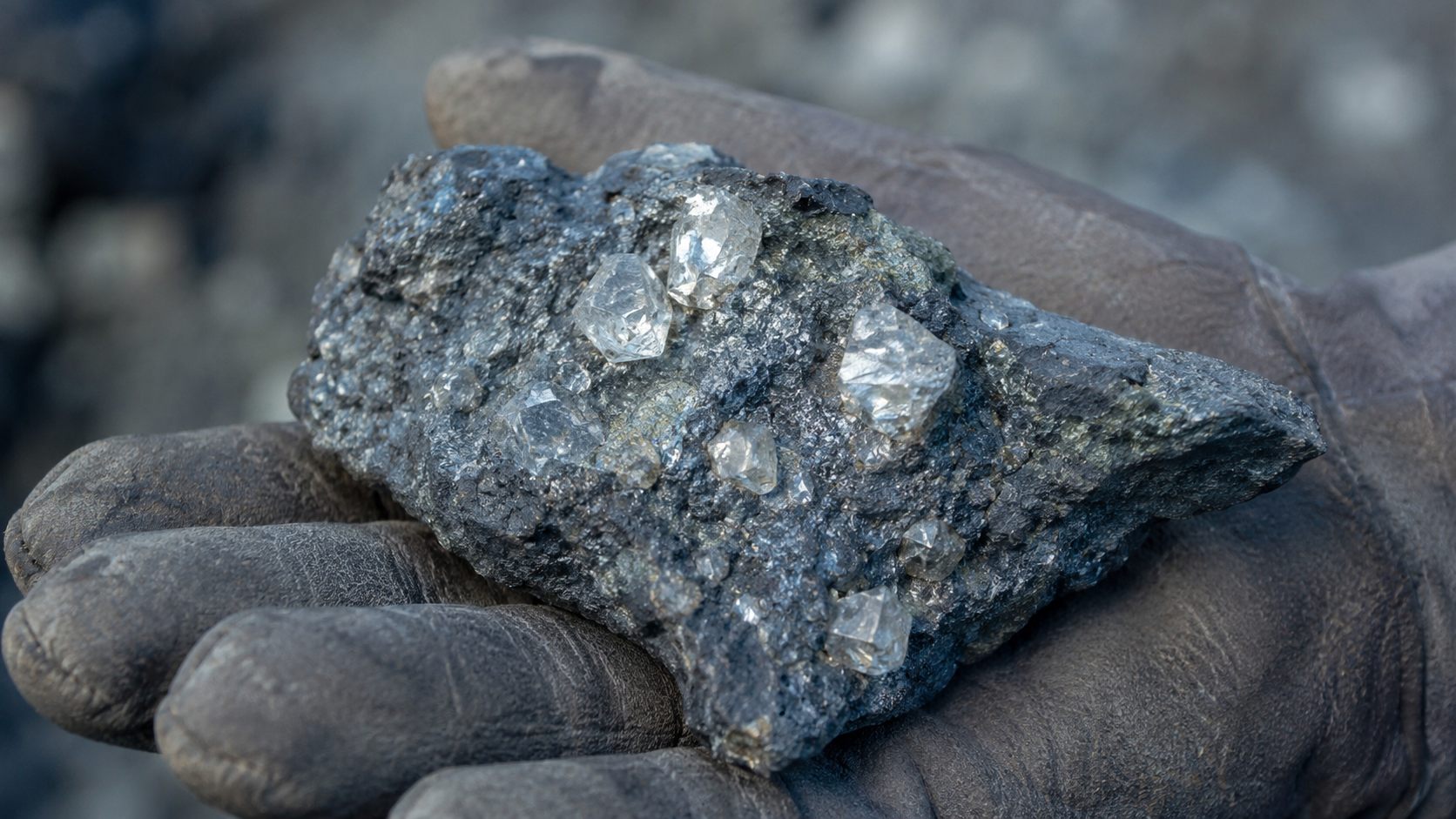
The story begins with a kimberlite pipe, a deep carrot-shaped column of volcanic rock that can carry diamonds up from far inside the Earth. In June 1955, geologists on a sweeping expedition through Yakutia located one, reportedly sending back a coded telegram about smoking "the pipe of peace" to announce the find without giving the secret away. The Soviet Union, then desperate for industrial diamonds, moved fast.
Within a couple of years a mine and a whole town, Mirny, were rising in the wilderness. For decades the pit poured out diamonds by the millions of carats, becoming the first and biggest diamond operation in the entire Soviet Union and a serious rival to the Western diamond trade. Open-pit digging finally stopped in 2001, by which point the hole had reached its colossal final size.
Digging a hole into permafrost
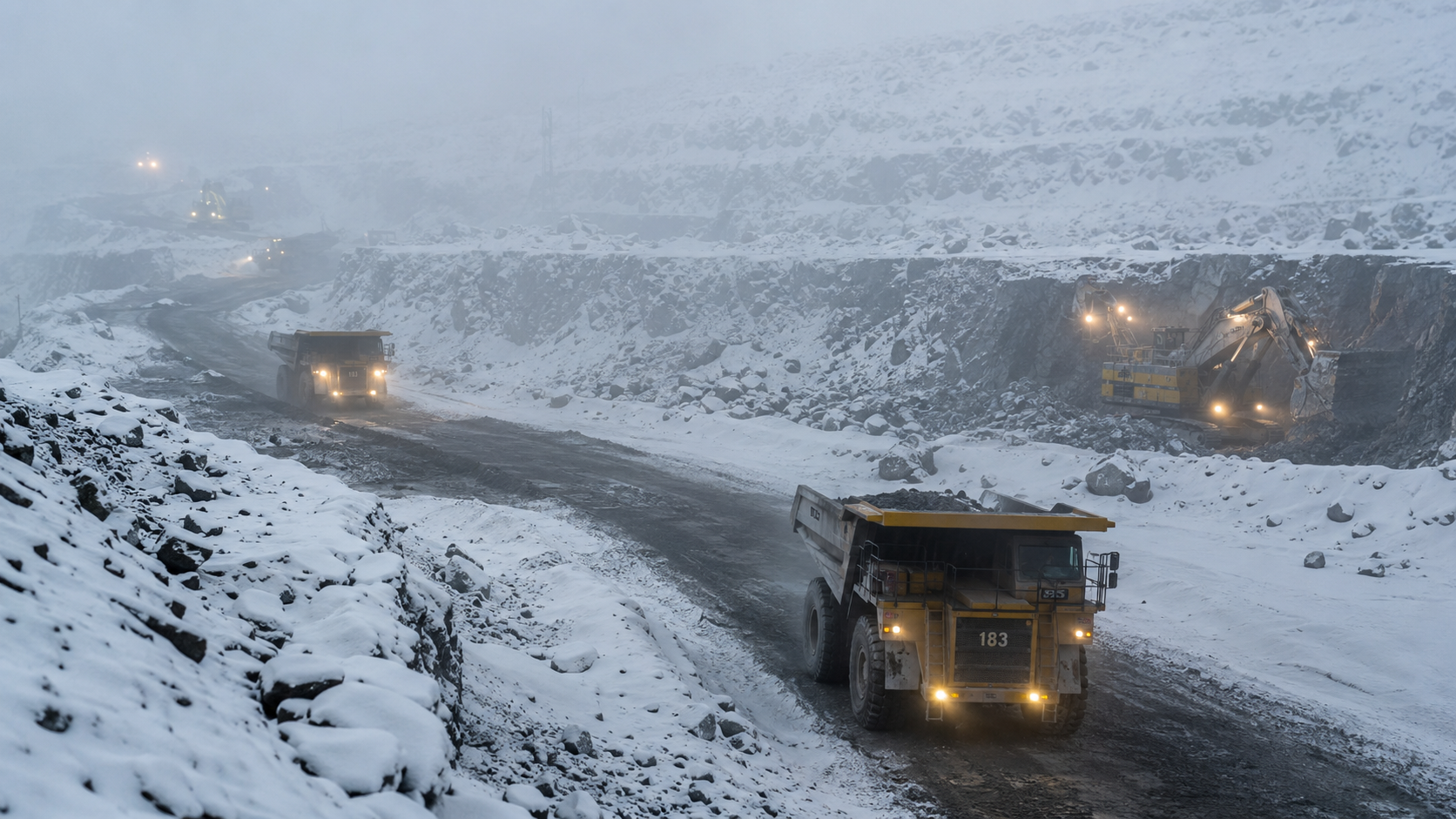
The engineering challenge was savage. For seven months of the year the ground is locked in permafrost, frozen so hard that ordinary digging is hopeless. Then, in the brief summer, the surface thaws into a treacherous slush that swallows machinery and roads. The miners were caught between rock and mud, in cold that could destroy equipment and kill the unprepared.
Their solutions were brute force. They used jet engines to blast and thaw the frozen earth, and dynamite to shatter what the heat could not soften, blowing their way down through ground that had been frozen solid for ages. In the deep cold, car tyres shattered, steel grew brittle, and oil turned to sludge, and still the pit went down, year after year, ring by terraced ring.
The mine that closed the sky
The single most repeated fact about Mirny is its forbidden airspace. The story goes that the gigantic pit acts like a plughole for the atmosphere, generating powerful downdraughts and swirling vortices, and that more than one helicopter was sucked down into the hole before flights over it were banned outright.
It is a fantastic image: a hole so big it eats aircraft. But the honest truth is that no crash has ever actually been confirmed as caused by the mine's air currents, and the helicopter-swallowing tale is far more legend than verified fact. The flight restriction over the pit is genuinely real; the dramatic explanation for it is the part that should be taken with a pinch of Siberian salt.
Was it really worth it?
By the cold arithmetic of the Soviet economy, absolutely. The diamonds Mirny produced were worth a staggering sum and helped fund a state that needed hard currency and industrial abrasives. The mine turned an empty stretch of taiga into a working city and put Soviet diamonds firmly on the world map.
But the price was paid in human endurance. This was a hole dug largely by hand and machine in one of the harshest climates on the planet, by workers enduring conditions most of us can barely imagine, far from anywhere, for the sake of stones destined to sparkle on fingers thousands of miles away. The glamour of a diamond and the grim reality of where it comes from rarely sit further apart than they do at Mirny.
The honest catch
A couple of the most popular claims deserve a careful eye. Mirny is often called "the second largest hole in the world" or similar, but rankings of giant holes depend on whether you count depth, width or volume, so treat the exact superlative loosely. And it is sometimes said that Stalin personally ordered the mine, which is unlikely given that he had already died in 1953, before the diamond pipe was even found; the project was a Soviet state effort, not one man's command.
None of that shrinks the achievement, or the unease. Mirny is a genuine monument to what a determined state can rip out of the most hostile ground on Earth, and a reminder that the line between an engineering triumph and an environmental scar can be exactly the same 525 metres deep. Today the open pit is quiet, with mining continued underground beneath the frozen giant.
Why the Mirny diamond mine still matters
Mirny stands as one of the boldest, and bleakest, examples of humans bending an impossible place to their will. It proved that you could industrialise the deep Siberian cold, and it left behind a hole so large it has become a landmark visible from space and a fixture of every list of the planet's most astonishing man-made sights.
Its deeper lesson is about the true cost of the things we prize. Every diamond from Mirny carries inside it the permafrost, the jet engines, the dynamite and the frozen labour of the people who clawed it out of the ground, and that hidden weight is part of what we are really buying. The hole is silent now, but it is not going anywhere, and neither is the question it poses.
To pull diamonds from frozen Siberia, people carved a hole so big it has its own no-fly zone. Is a mine like Mirny a triumph of human will, or a scar we will have to look at forever? Tell us what you think in the comments.
Related reading: On the other side of Russia, scientists drilled a far narrower hole far deeper, until the rock itself grew too hot and strange to continue.