A quarter of a million children were put on trains, sent across the country and lined up at stations for strangers to pick, in the name of saving them
For seventy-five years, a strange and enormous rescue rolled across America. Homeless children were gathered from the slums of New York, loaded onto trains, and offered to whoever would take them at stops along the line. It was meant as mercy, and for many it was, but it also meant a child could be chosen like produce.
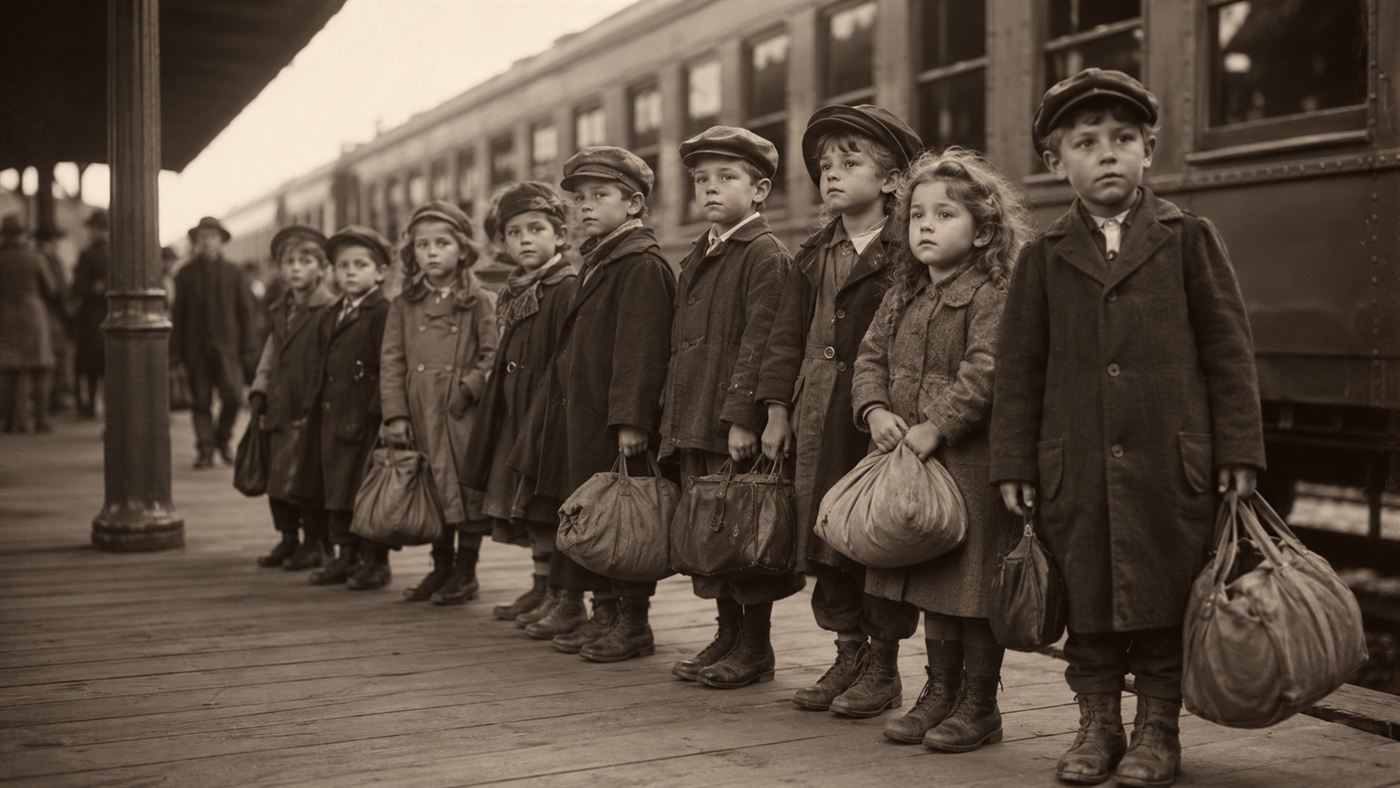
Children from the orphan trains waited on station platforms to be chosen by local families. Illustration: Watts & Wild.
Between 1854 and 1929, an estimated quarter of a million children were carried out of the crowded cities of the East on what became known as the orphan trains. Most began in New York, where waves of immigration and poverty had left the streets full of orphaned, abandoned and destitute children with nowhere to go.
The trains took them west, into the farms and small towns of the Midwest and beyond, to be handed over to families who agreed to raise them. It was the largest movement of children in American history, and for all its good intentions, it is a story that sits uneasily between rescue and something much harder to defend.
The short version is that the orphan trains were a genuine attempt to save children from misery, dreamed up by a reformer who hated orphanages, and that the same programme delivered some children into love and others into a kind of servitude.
Why the orphan trains began
The driving force was Charles Loring Brace, a minister who founded the Children's Aid Society in New York in the 1850s. He looked at the thousands of children sleeping rough and crammed into grim institutions, and he became convinced that no orphanage could ever raise a child as well as a family could.
His radical answer was to find those families out in the countryside. Rural households, he believed, would welcome an extra pair of hands and a child to raise, and the fresh air and honest work of a farm would rescue a city waif from a future of crime and despair. Compared with warehousing children in vast orphanages, it genuinely was a humane idea.
Chosen at the station
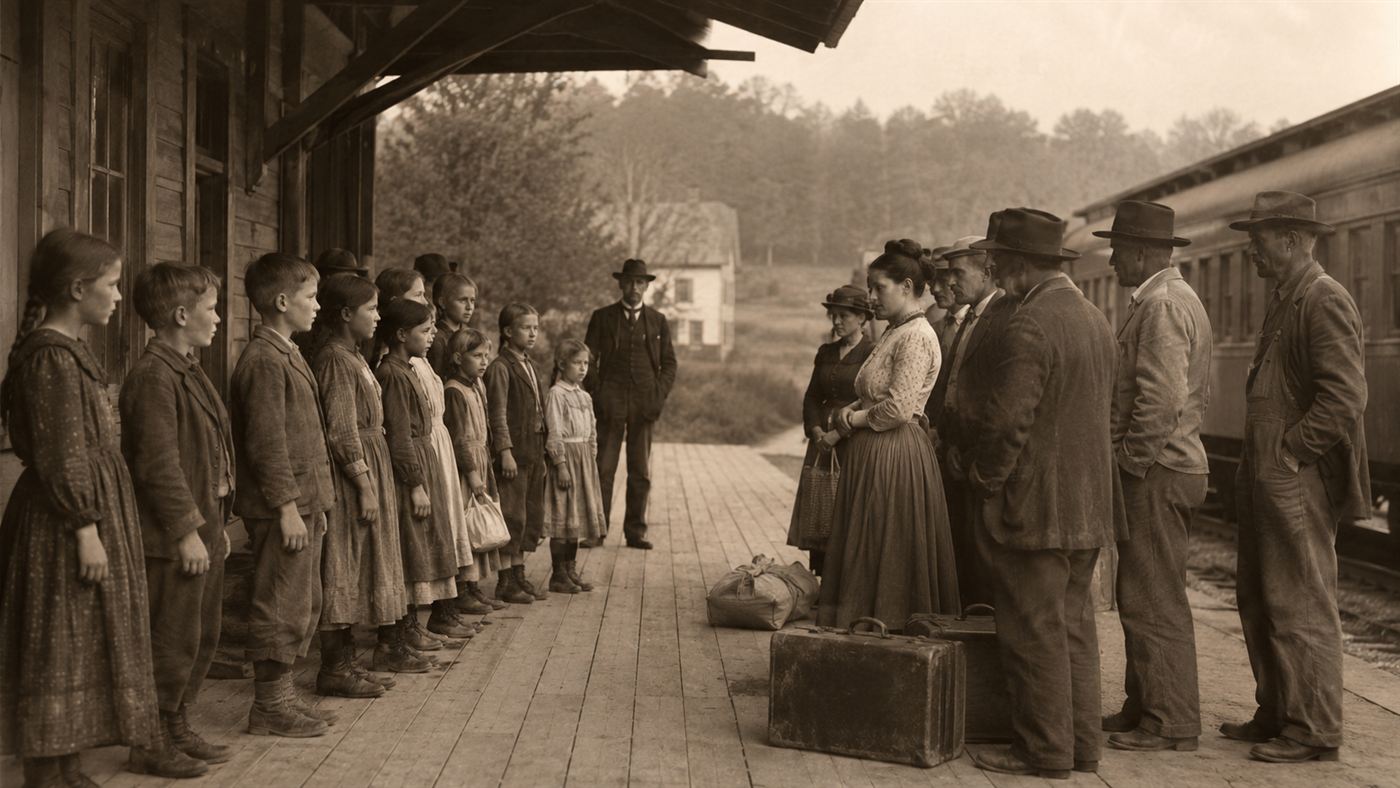
The reality on the ground could be jarring. Groups of children were washed, dressed and put aboard a train with an agent, and at each advertised stop they were brought out before the local townsfolk, sometimes lined up on a platform or a stage to be looked over and picked.
Families inspected them, asked about their health and strength, and chose the ones they wanted, a scene that many later remembered with pain. This practice of placing out is often pointed to as the origin of the very phrase we still use, putting a child up for adoption, because the children were quite literally put up to be seen and selected.
Two very different fates
What happened next depended entirely on luck. Many children were genuinely taken in, loved, educated and treated as true sons and daughters, and grew up grateful that the orphan trains had carried them away from the slums. For them the programme was exactly the rescue it claimed to be.
Others were far less fortunate. With little checking of the families and almost no follow-up, some children were taken simply as free farm labour, worked hard, and treated more like servants than kin. Brothers and sisters were routinely split up between different towns, and many spent the rest of their lives searching for the siblings they had lost on the platform.
What did the orphan trains leave behind?
By the time the last train ran in 1929, the movement had quietly reshaped how America thought about children in need. The Children's Aid Society's core belief, championed by Brace, that a child belongs in a family rather than an institution, became the foundation of the modern foster care system that replaced the orphan trains.
They also left thousands of tangled personal histories. Poor records meant many riders never learned where they truly came from, and reunions of surviving orphan train riders continued into recent decades, elderly men and women still trying to piece together the families the trains had scattered.
The honest catch
It is tempting to tell this as either a heartwarming rescue or a heartless scandal, and the truth is that it was stubbornly both at once. Charles Loring Brace was not a villain; he was a reformer who correctly saw that orphanages were failing children, and his instinct that families matter more than institutions was ahead of its time and largely right.
But good intentions did not protect the children from the flaws in his plan. A placing out programme with no real vetting, no follow-up and no thought for keeping siblings together was always going to hand some children to loving homes and others to exploitation, with nothing but chance to decide which. The orphan trains are not a simple story of heroes or monsters, but a reminder that even sincere mercy, carried out carelessly, leaves scars alongside the lives it saves.
A quarter of a million children were carried across a country and handed to strangers, and no two of their stories are the same. Was the orphan train a rescue that scarred, or a scandal that also saved lives? Tell us what you think in the comments.
Related reading: Eastern State Penitentiary, another well-meant reform that went wrong. See also the lobotomy, a celebrated cure that harmed the people it promised to help, and Pruitt-Igoe, a hopeful housing dream that had to be destroyed. See also the Willard suitcases, the belongings of asylum patients the system forgot.