Nature ran a self-sustaining nuclear reactor in Gabon for 300,000 years before humans invented fission, and the fuel was already spent when we found it
In June 1972, technicians at a French uranium enrichment plant noticed something impossible: ore from a mine in Gabon had less fissile uranium than the laws of physics said it should. The missing isotopes had been consumed by a natural nuclear chain reaction that had been running underground, entirely on its own, nearly two billion years before Enrico Fermi built the first human reactor in a Chicago squash court.
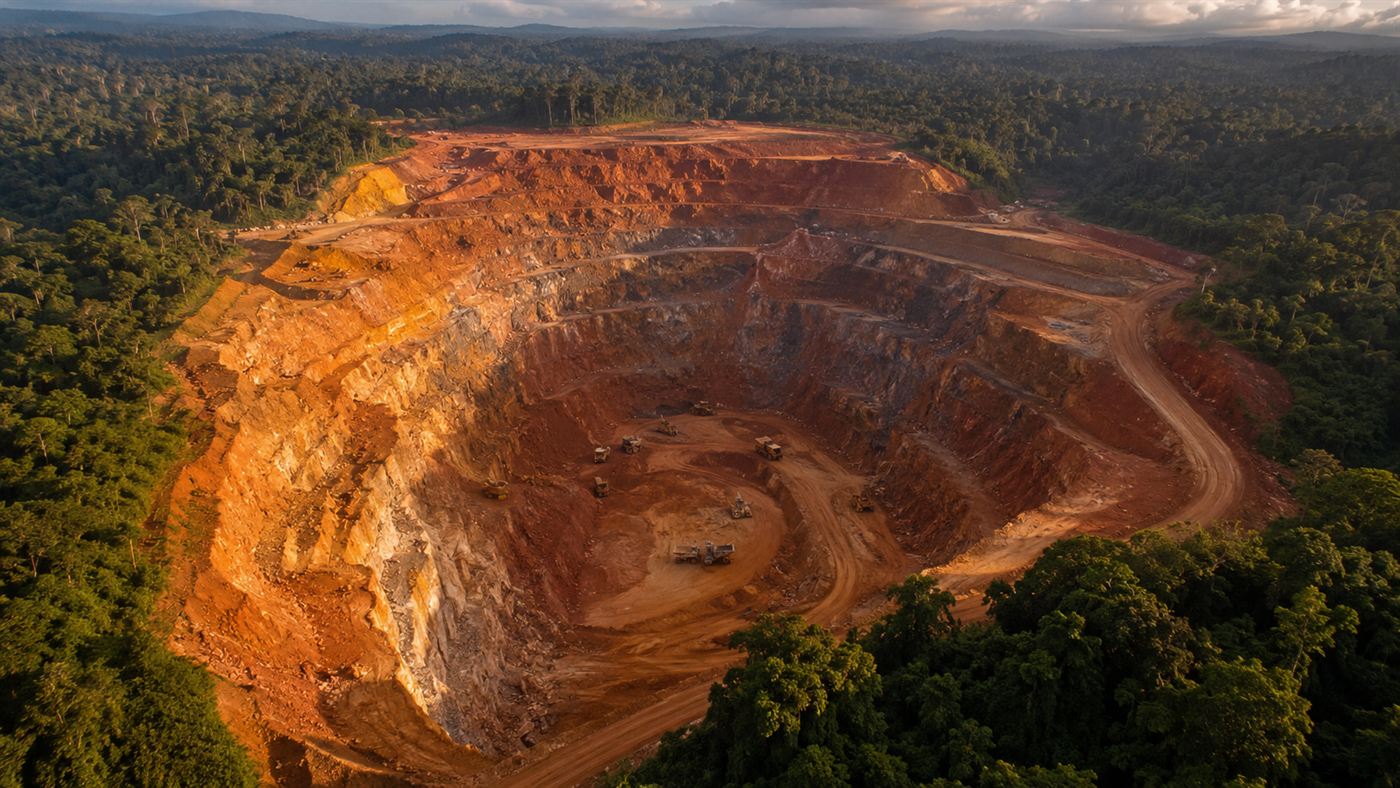
The Oklo uranium mine in Gabon, where 16 zones of ancient nuclear fission were discovered inside the rock. Illustration: Watts & Wild.
The natural nuclear reactor at Oklo, in what is now the Republic of Gabon, is the only one of its kind ever found on Earth. It did not need a physicist, a control rod, or a cooling tower. It needed uranium ore of the right concentration, ancient groundwater for a moderator, and about 300,000 years of geological patience. When the water boiled off, the reaction paused. When the rock cooled and the groundwater seeped back, it started again. Over and over, cycling on and off roughly every three hours, for hundreds of millennia.
When French physicist Francis Perrin and the team at the Commissariat à l'Énergie Atomique (CEA) announced the discovery at a press conference on June 25, 1972, the finding upended a core assumption of nuclear physics: that sustained nuclear fission was something humans had invented. It had happened before. Long before.
How a routine quality check revealed a reactor nobody built
The clue came from a number that was slightly wrong.
Everywhere on Earth, and in every meteorite ever tested, uranium has a fixed isotopic ratio: 99.28% is uranium-238, and 0.72% is the fissile isotope uranium-235.
In May 1972, a chemist at the Pierrelatte enrichment plant in France noticed that ore from the Oklo mine in Gabon contained only 0.7171% uranium-235, a deficit of about 200 parts per million.
That sounds small, but isotopic ratios simply do not vary.
Natural processes do not deplete uranium-235 selectively.
The only thing that consumes uranium-235 in a predictable way is nuclear fission, the splitting of atomic nuclei to release energy.
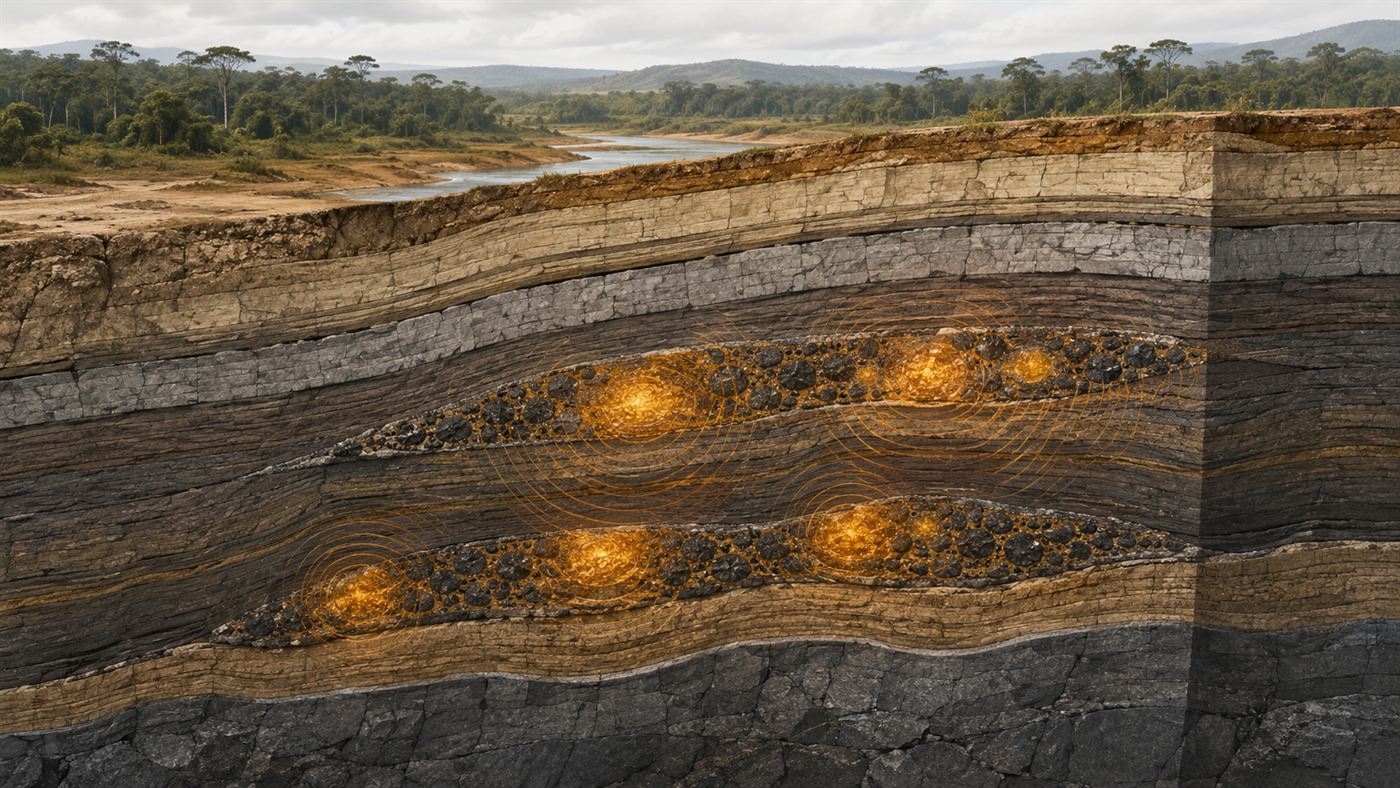
When the CEA team went to Oklo to investigate, they found 16 separate zones where nuclear fission had occurred in the rock, spread across roughly two kilometres of the uranium deposit.
Each zone was an ancient reactor that had run on nothing but geology.
Why the Oklo natural nuclear reactor could only happen 1.7 billion years ago
A natural nuclear reactor is possible only under very specific conditions, and most of them no longer exist on Earth.
The key is the abundance of uranium-235.
Today, uranium-235 makes up just 0.72% of all uranium, far too dilute to sustain a chain reaction without the kind of enrichment that requires industrial centrifuges.
But uranium-235 decays faster than uranium-238, so the further back in time you go, the higher its concentration was.
At 1.7 billion years ago, uranium-235 made up roughly 3% of all uranium at Oklo, about the same level as the enriched uranium used in modern light-water reactors.
The Oklo ore body was also extraordinarily rich, with uranium concentrations up to several hundred times higher than typical ore.
And crucially, the rock was saturated with ancient groundwater.
Water is a neutron moderator: it slows fast neutrons down to the thermal speeds at which they are most effective at splitting uranium-235 atoms.
Put rich enough uranium ore, ancient water, and 1.7-billion-year-old physics together, and you get a self-sustaining chain reaction.
The same combination would be impossible today, not because the geology has changed, but because the uranium-235 has already decayed too far.
How the chain reaction switched itself on and off
The Oklo reactors did not run continuously for 300,000 years.
They cycled.
When the chain reaction started, the energy it released heated the groundwater in the ore body until it boiled away.
Without the moderating water, the neutrons moved too fast to sustain fission efficiently, and the reaction slowed and stopped.
The rock then cooled over the next few hours.
Groundwater seeped back in through the surrounding rock, the moderator was restored, and the chain reaction started again.
Researchers who have modelled the cycle estimate it ran on a rhythm of roughly 30 minutes on and 2.5 hours off, a geological heartbeat repeated across hundreds of thousands of years.
The average power output was modest by engineering standards, around 100 kilowatts per reactor zone, about enough to boil a kettle non-stop, not enough to light a city.
But it was real, sustained nuclear fission, operating without any human intervention, in a layer of rock deep underground, in what would one day become central Africa.
What Oklo revealed about nuclear waste storage
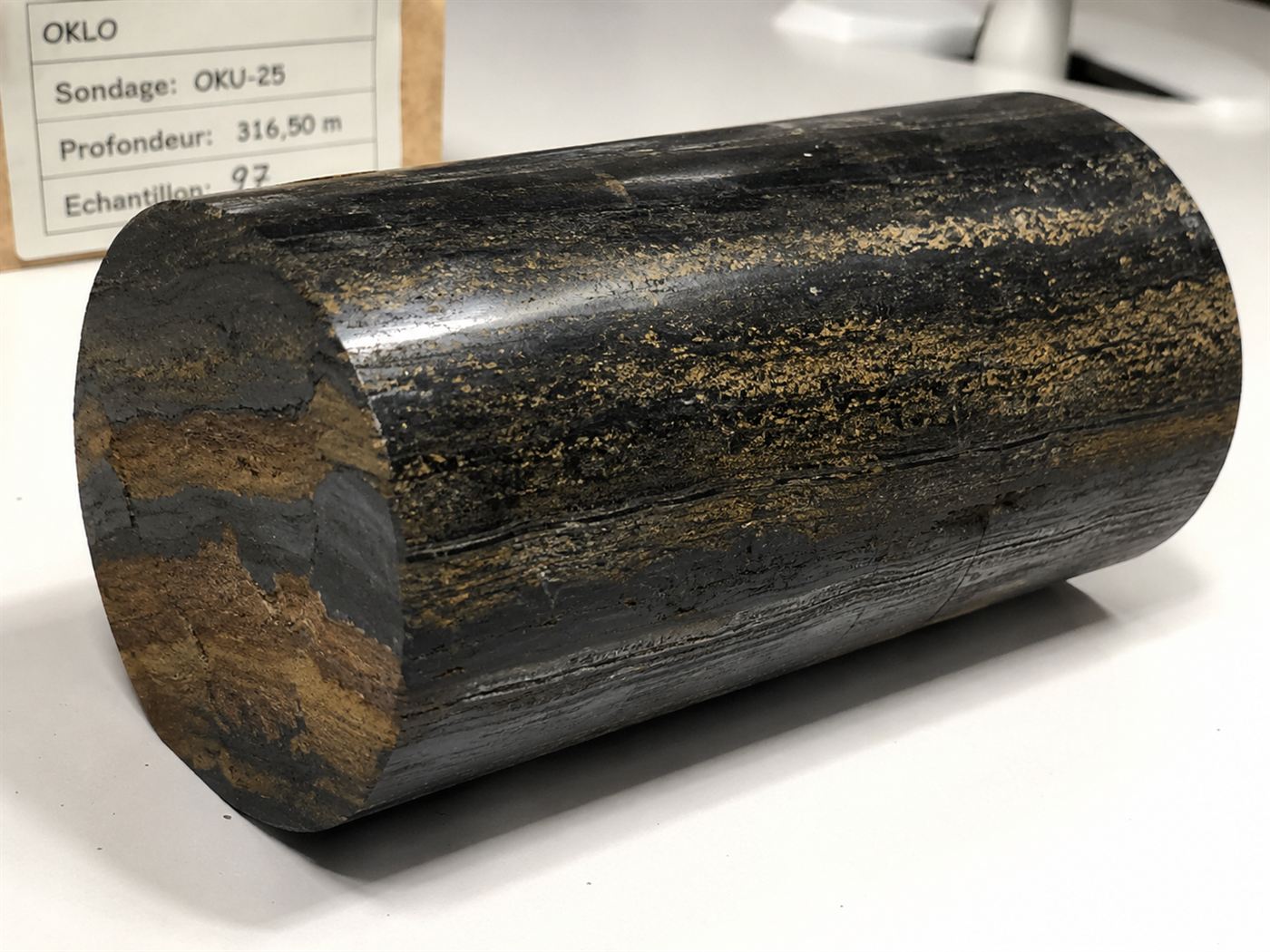
When the CEA team analysed what had been left behind at Oklo, they found something remarkable beyond the fission itself.
The nuclear waste, the fission products and transuranium elements produced by 300,000 years of chain reaction, had barely moved.
Some isotopes had migrated a few centimetres.
Others had stayed exactly where they were produced, locked in the mineral structure of the rock for nearly two billion years.
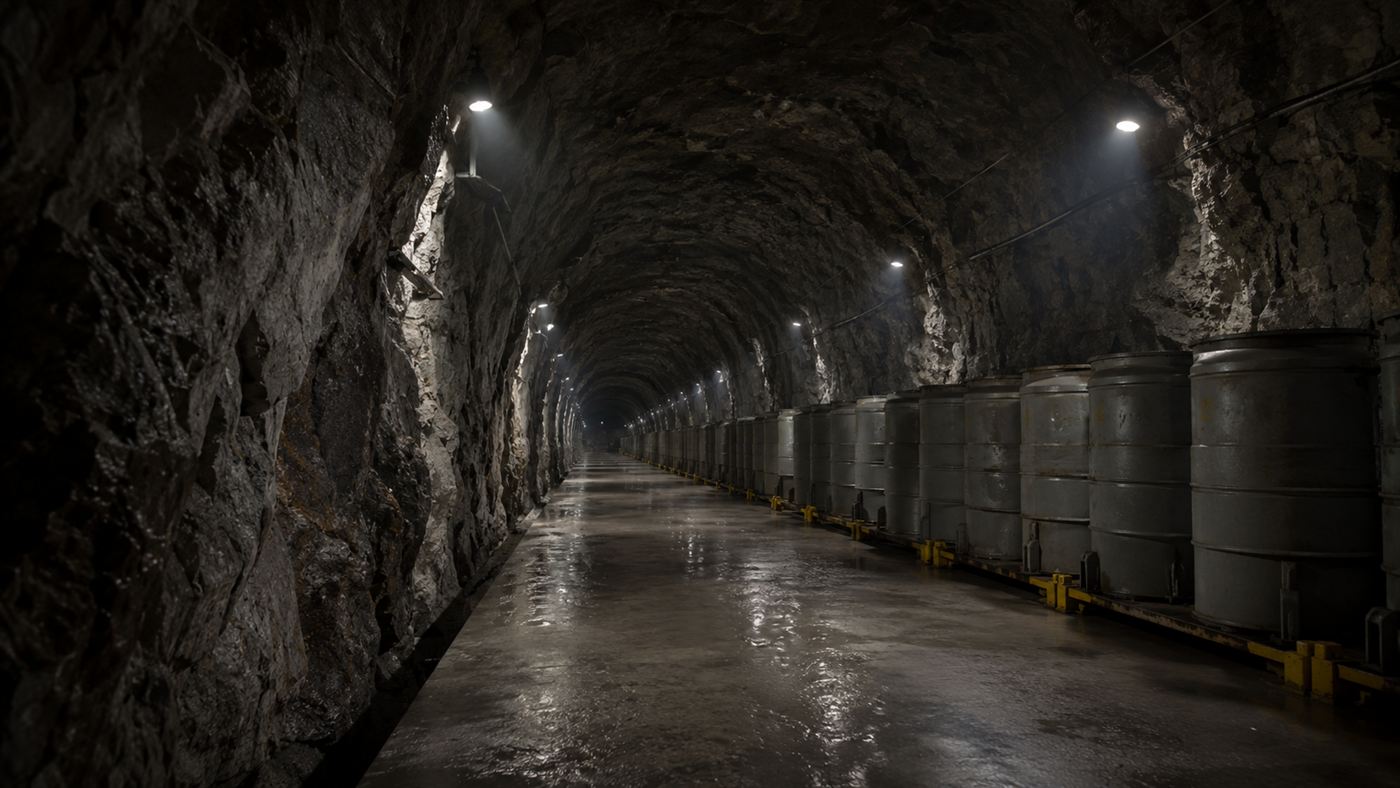
For the nuclear industry, which has spent decades arguing about where to bury its waste and whether any geological formation can contain it long enough, Oklo is a natural experiment that ran for a billion times longer than any engineered repository will need to.
It is one of the reasons Finland chose to bury its nuclear waste deep in granite bedrock at Onkalo, a project designed on the principle that stable geology can hold radioactive material far more reliably than any engineered container alone.
The nuclear waste from Oklo did not need a steel canister or a bentonite clay barrier.
It needed only the right rock and enough time, and it stayed put for 1.7 billion years.
That is the Oklo argument, offered by nature, for why deep geological disposal of nuclear waste can work in principle.
The honest catch
Oklo is remarkable, but it is not a perfect analogy for a modern nuclear waste repository, and a few things about the standard telling deserve scrutiny.
First, the containment was not total.
The claim that "nothing moved" is a simplification.
What is accurate is that the most hazardous long-lived elements, including plutonium and the rare earths, stayed within a few metres of where they were created, which is the relevant comparison for waste storage.
Second, the conditions at Oklo were unusually favourable.
The surrounding rock was chemically reducing, meaning there was little oxygen to mobilise uranium compounds, and the groundwater chemistry kept the heavy elements immobile.
Not every geological repository will share those conditions.
Third, the cycling reactor is an elegant story, but some of the modelling behind it remains contested.
The 300,000-year figure that appears most widely is a reasonable central estimate, not a precisely measured fact.
None of this makes Oklo less extraordinary.
It is still the only place on Earth where nature ran sustained nuclear fission on its own.
It still provides the longest natural experiment in radioactive containment ever observed.
It just does not answer every question about whether the next underground repository will perform as well.
Nature ran a self-sustaining natural nuclear reactor in Gabon for hundreds of thousands of years, kept its waste locked in rock for nearly two billion years, and left the fuel spent by the time humans arrived to find it. Does Oklo change how you think about where we should bury the waste from our own reactors, or do you think natural analogues can never really answer an engineering question? Tell us what you think in the comments.
Related reading: The 1957 Windscale fire was the world's first major nuclear accident, and Britain kept the worst of it secret for thirty years.