Bill Gates is building a nuclear reactor cooled by liquid sodium on the site of a retiring coal plant in Wyoming, with a molten-salt battery that lets it ramp up to power 400,000 homes
Almost every reactor on Earth is cooled by water. In a small Wyoming coal town, Bill Gates's company TerraPower is building something the United States has never permitted before: a commercial reactor cooled by liquid sodium, paired with a heat store that lets it surge on demand.
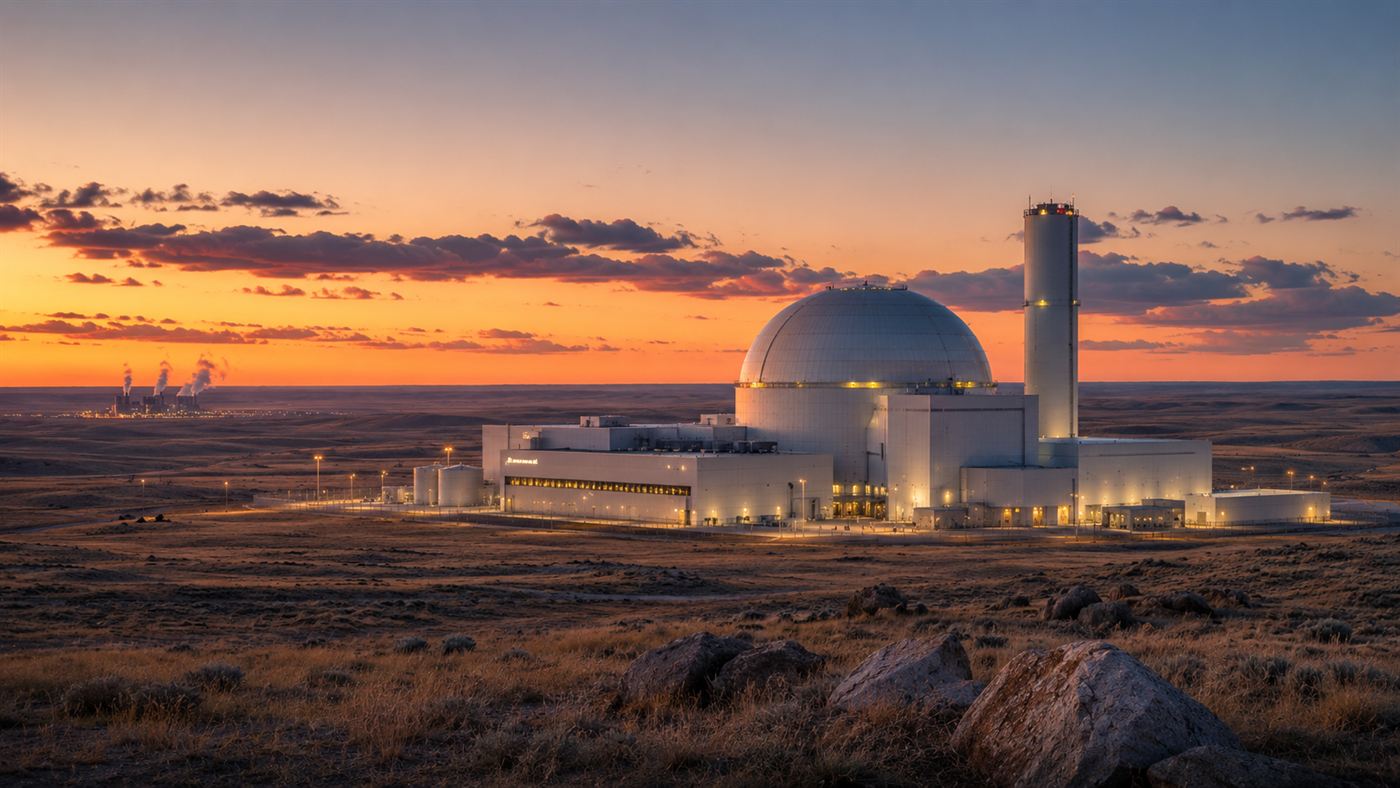
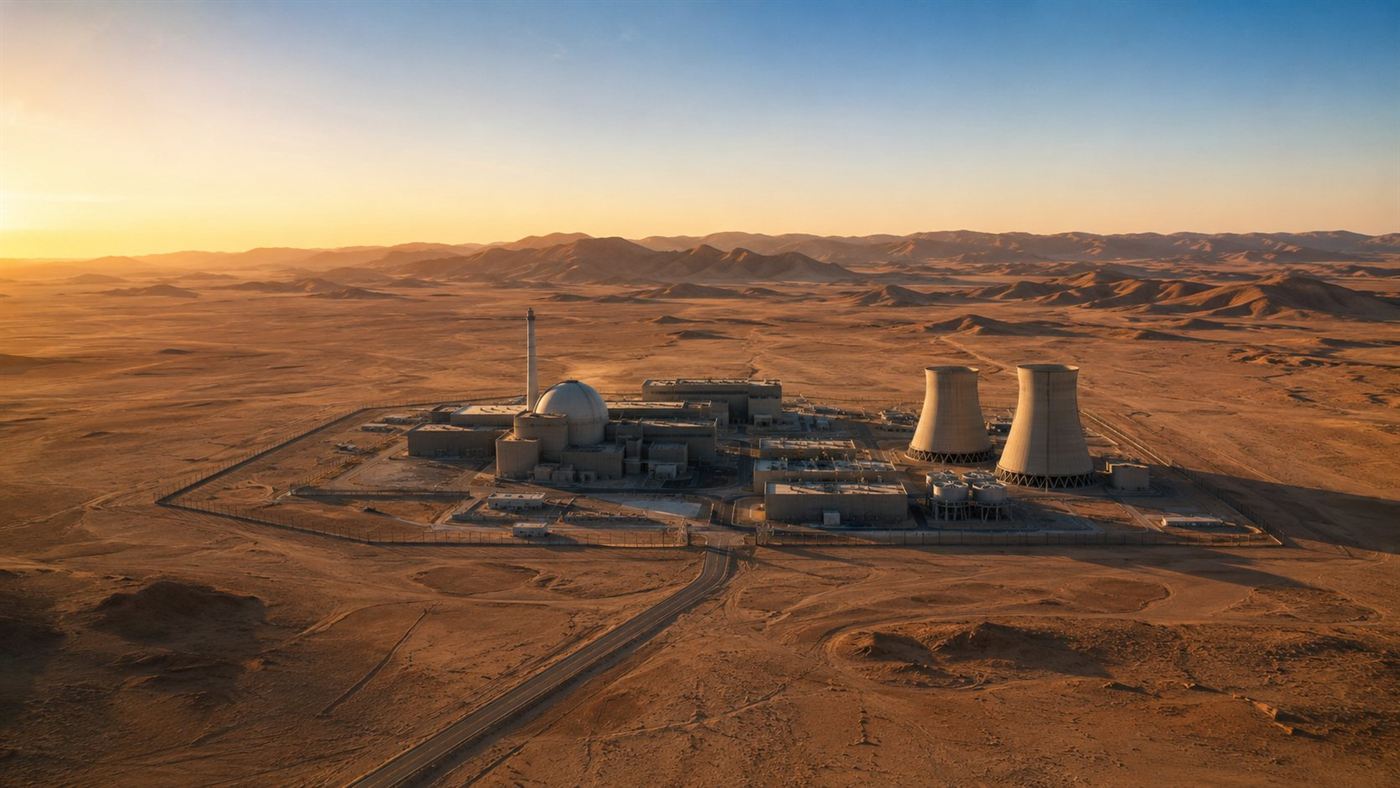
TerraPower's Natrium plant is rising next to a retiring coal station in Kemmerer, Wyoming. Illustration: Watts & Wild.
In December 2025, the US Nuclear Regulatory Commission did something it had never done in its entire history: it cleared the construction of a commercial power reactor that is not cooled by water. The project is the TerraPower Natrium reactor, being built by the company founded and chaired by Microsoft co-founder Bill Gates, in the small mining town of Kemmerer, Wyoming.
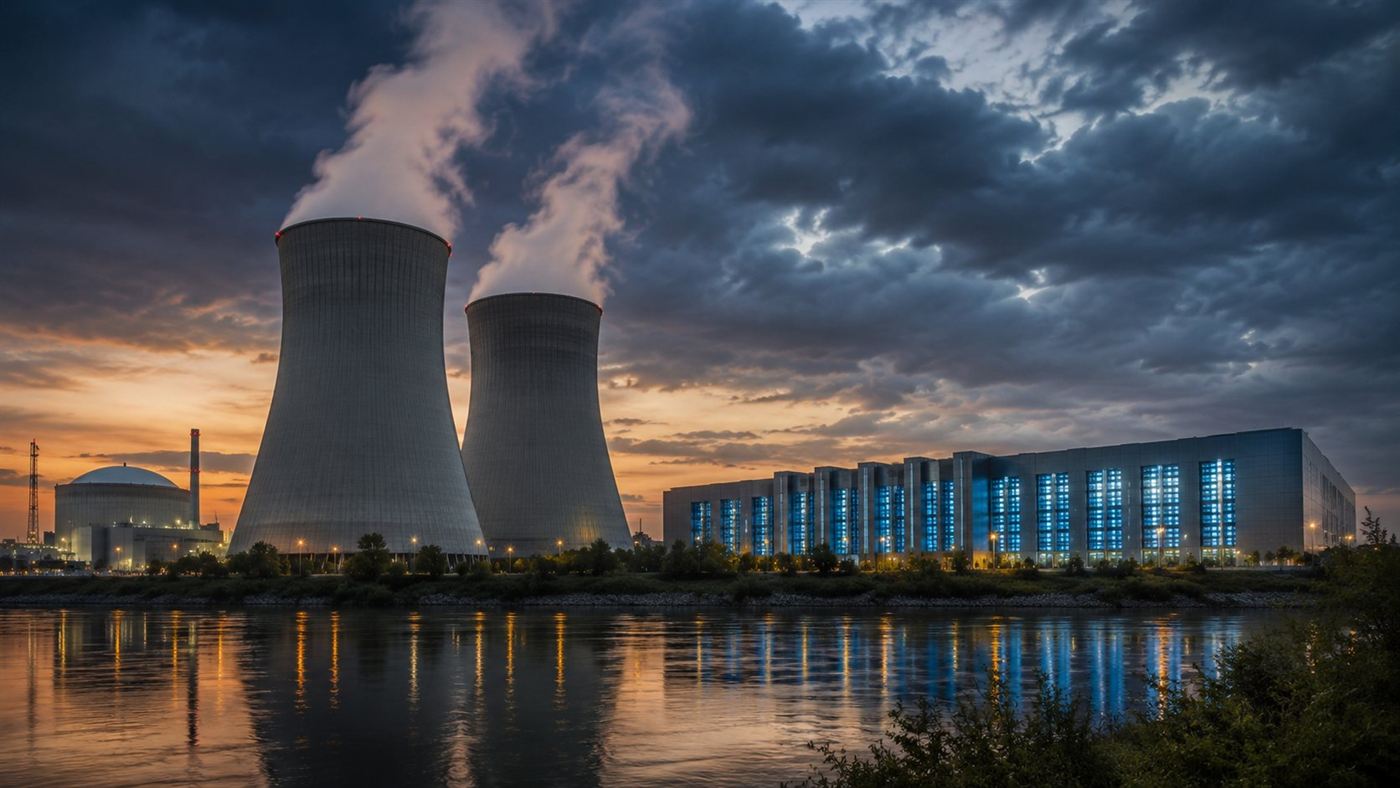
Just about every one of the roughly 440 power reactors running in the world today is a light-water reactor, a design whose basic plumbing dates back to the 1950s. The Natrium plant throws that template out. It is cooled by molten sodium metal instead of water, and it carries a built-in heat battery. After years of paperwork, it is now actually being built.
A reactor that swaps water for sodium
The heart of the plant is a 345-megawatt sodium-cooled fast reactor. Instead of pressurised water, it uses liquid sodium to carry heat away from the core. Sodium soaks up heat far better than water and stays liquid at ordinary pressure, so the reactor does not need the thick, high-pressure steel vessel that defines a conventional plant. That is the trade the whole design is built around.
Permitting it was the hard part. As the US Department of Energy noted, the NRC's construction permit was the first ever issued for a commercial non-light-water reactor, and the safety review was finished in December 2025, ahead of schedule and about 11 percent under budget. For an industry famous for delays, getting the rulebook itself to bend was arguably the bigger milestone.
The molten-salt battery is the clever part
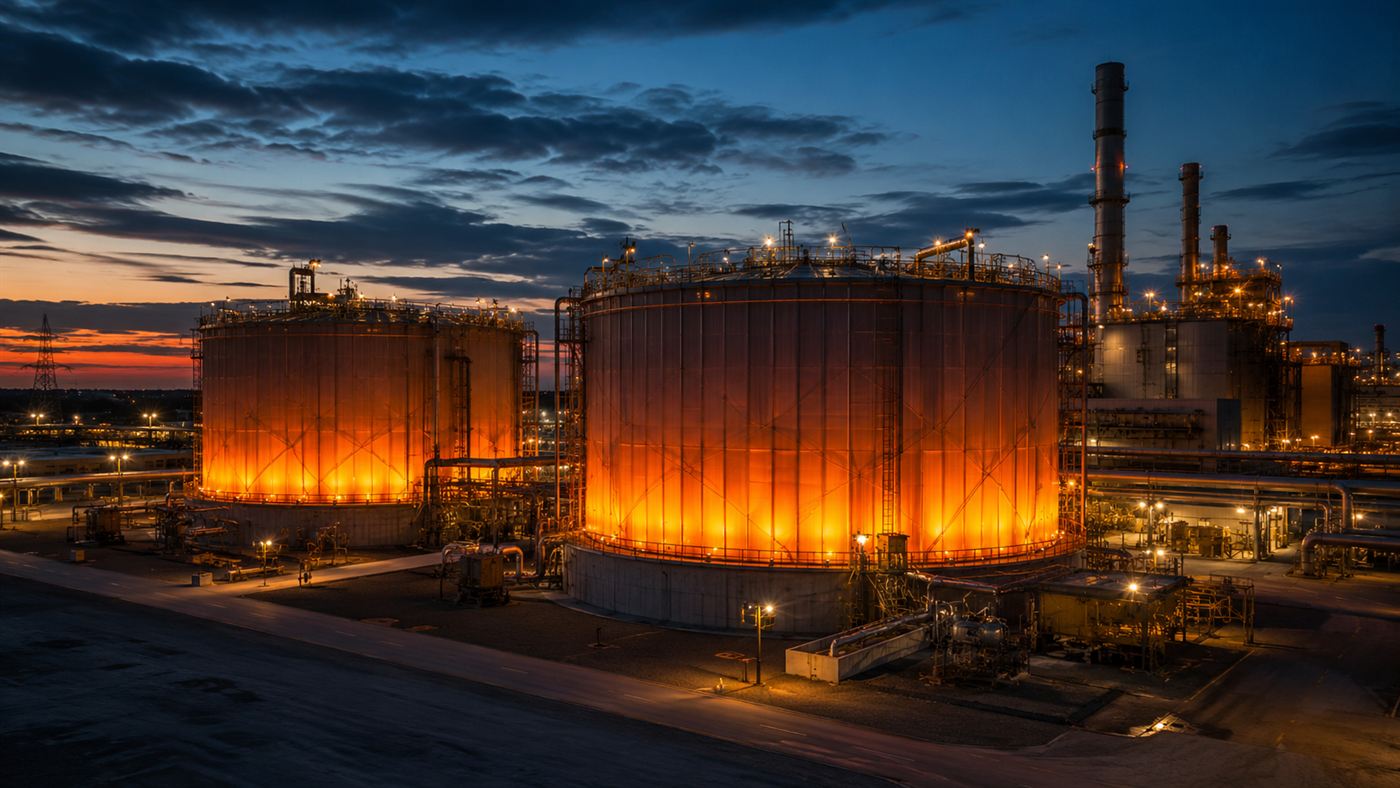
The detail that makes engineers lean in is not the reactor at all, it is the tank of molten salt sitting beside it. The reactor runs flat out at a steady 345 megawatts, but instead of sending all that heat straight to the grid, it can pour the surplus into the salt, the same trick that solar-thermal towers use to store sunshine as heat.
When demand spikes, that stored heat is released to drive extra turbines, and the plant's output can jump to 500 megawatts for hours at a time, enough to power around 400,000 homes. The Department of Energy calls it the only advanced reactor design with this kind of built-in storage. In practice it means a nuclear plant that can throttle up and down to follow wind and solar, rather than just plodding along at one fixed level.
From coal to nuclear on the same ground
Where they are building it is part of the point. Kemmerer is a coal town, and its nearby Naughton coal-fired power station is being retired. The Natrium plant is going up right next door, reusing the grid connections, the skilled workforce, and the local economy that the coal plant leaves behind. TerraPower says it is the only coal-to-nuclear project of its kind under development anywhere in the world.
That framing matters far beyond Wyoming. The United States has hundreds of ageing coal plants that will close this decade, each one a ready-made site with transmission lines and workers already in place. If a reactor can quietly take the coal plant's spot and keep the lights and the jobs on, the politics of shutting down coal start to look very different. TerraPower broke ground on the non-nuclear parts of the site in June 2024.
Why Bill Gates is betting on this
TerraPower was founded by Bill Gates back in 2008, on the bet that the way to revive nuclear power was not to build the same giant plants more cheaply, but to design a smaller, more flexible reactor from scratch. Gates has called Natrium the most advanced nuclear project in the world, and has put a large slice of his own fortune behind it, alongside federal money from the Department of Energy.
The logic is that a cheaper, load-following reactor is exactly what a grid full of wind and solar needs: something firm and carbon-free that can lean in when the weather stops cooperating. The plant is expected to be finished and generating power around 2030. If it works, TerraPower wants to build a fleet of them, turning a one-off Wyoming experiment into an assembly line.
The honest catch
It is worth being clear-eyed here, because the plant does not actually exist yet. A construction permit is not a working reactor, and the target date is 2030, in an industry where nuclear projects are notorious for running years late and billions over budget. None of the headline promises have been proven on the grid, only on paper and in smaller test rigs.
There are technical reasons to stay sceptical too. Liquid sodium catches fire on contact with air and reacts violently with water, so the engineering has to be flawless. The reactor needs HALEU, a more enriched uranium fuel whose supply chain ran largely through Russia and has already pushed the timeline back. And not everyone is convinced the green light was earned: the Union of Concerned Scientists called the approval rushed and warned it could put public health and the environment at risk. One reactor working would be a milestone, but it would not yet prove a whole new kind of nuclear power.
Why the TerraPower Natrium reactor matters
For all the caveats, the Natrium plant is the most concrete attempt in a generation to build nuclear power differently. It treats a reactor less like an unchanging block of baseload and more like a flexible plant with a battery bolted on, one that can rise on the same ground a coal station leaves behind. That is a genuinely new shape for an old technology.
The next few years will decide whether it is a template or a cautionary tale. If Natrium comes in close to its promises, expect retiring coal towns across America to start eyeing the same swap. If it slips and balloons in cost, it will become one more reminder of why nuclear is so hard. Would you welcome a sodium-cooled reactor on the site of your local coal plant, or does the idea make you nervous? Tell us in the comments.
Related reading: China built the world's first commercial gravity battery, a 148-metre tower that stores electricity by stacking 35-tonne blocks made from coal ash and old wind turbine blades, and is now building eight more. Natrium is part of a wider wave: small modular reactors finally moved from paper to construction in 2026.