The US detonated 23 nuclear bombs on Bikini Atoll, told its 167 residents to leave for a few years, and 70 years later the islanders are still waiting to go home
In February 1946, US officials asked King Juda of Bikini Atoll to give up his island for the good of mankind. The 167 Bikini Islanders packed their belongings, promised they would return in a few years, and left. They are still waiting.
Bikini Atoll in the Marshall Islands sits at the northern edge of the Pacific, a ring of 23 tiny islands around a turquoise lagoon 60 kilometers wide. In January 1946, it was home to 167 people who had lived there for centuries, catching fish, growing coconuts, and building their houses from coral and wood. By February they were gone, loaded onto US Navy ships by officials who told them the move was temporary.
It was not temporary. Between 1946 and 1958, the United States detonated 23 nuclear devices on and around Bikini Atoll, including the Castle Bravo hydrogen bomb that exploded on March 1, 1954 with a force 1,000 times that of the Hiroshima bomb. The lagoon was turned into a graveyard of warships, the soil into a reservoir of radioactive cesium, and the coconuts into food that could not be safely eaten. The islanders were moved from atoll to atoll, nearly starved, briefly allowed back, and evacuated again. Today, roughly 5,000 descendants of those original 167 people are scattered across the Marshall Islands and the United States, still waiting for a home that may never again be safe enough to enter.
King Juda said yes for the good of mankind
In January 1946, US Commodore Ben Wyatt flew to Bikini Atoll and gathered the community for a meeting under the stars.
He told King Juda, the paramount chief, that the United States wanted to use the atoll to test atomic weapons, and that the tests were necessary for the good of mankind and to end all world wars.
Juda asked his people.
They agreed, trusting the Americans who had recently liberated the Marshall Islands from Japanese occupation during World War II.
Juda told Wyatt: "We will go, believing that everything is in the hands of God."
Within weeks, the 167 Bikini Islanders were loaded onto the USS LST-1108 and taken 200 kilometers east to Rongerik Atoll, a small, barely inhabited island with far fewer resources than Bikini Atoll.
The US Navy brought them food for the first few months, then stopped.
By 1948, the Bikini Islanders were near starvation.
Rongerik's fish were mildly toxic, its coconut palms produced poorly, and the islanders had no way to supplement their diet.
A visiting doctor filed an emergency report.
The US moved them again, this time to Kili Island, 900 kilometers to the southeast, where the food was adequate but the waters were too rough for the small canoes the Bikini Islanders had always used to fish.
Kili had no lagoon.
A people whose entire culture was built around the sea now lived on an island they could not safely sail from.
Operation Crossroads: the Navy's sacrificial fleet
While the islanders adjusted to Rongerik, the US Navy was assembling one of the most unusual fleets ever gathered for a single purpose.
Operation Crossroads called for 95 target ships, including five captured German and Japanese warships, to be anchored in the Bikini Atoll lagoon.
The ships were manned by more than 4,000 live animals, including goats, pigs, and rats, placed at various positions on deck to measure the effects of nuclear blast and radiation on living creatures.
On July 1, 1946, the first Operation Crossroads test, called Able, dropped an atomic bomb from a B-29 bomber.
It missed its intended target by 700 meters and sank only five ships.
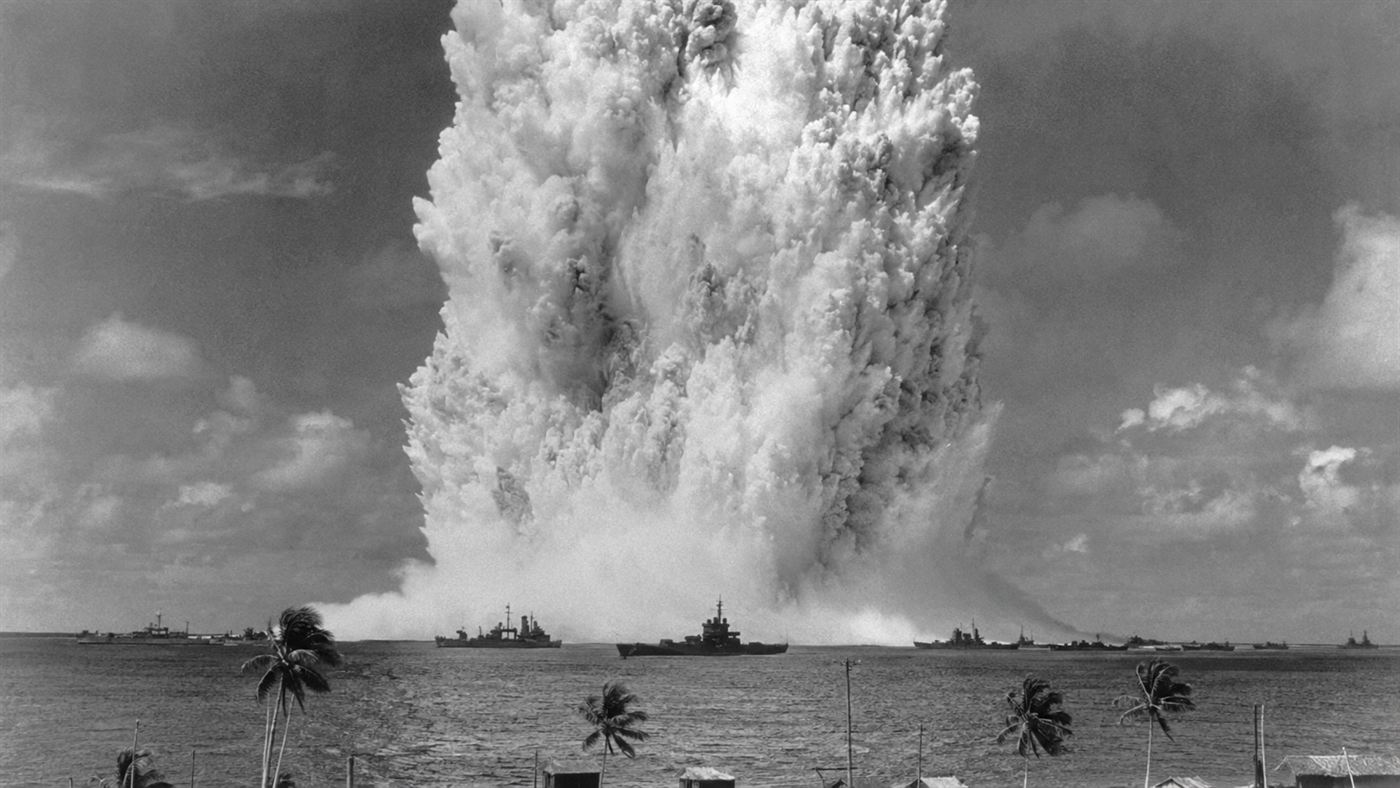
The second Operation Crossroads test, Baker, on July 25, 1946, was far more dramatic.
A bomb suspended 27 meters below the surface of the Bikini Atoll lagoon detonated and sent a column of water 600 meters high into the air, carrying two million tons of radioactive seawater that rained back down on the fleet.
The Baker shot sank eight ships outright and contaminated nearly all the others with radioactive water that proved almost impossible to scrub clean.
Sailors spent weeks trying to decontaminate the surviving ships by hand scrubbing with soap and water, receiving radiation doses that many would pay for with their health in the years ahead.
Operation Crossroads was officially declared complete after Baker, with a third planned test cancelled.
The Navy eventually scuttled or towed away the surviving ships, leaving the Bikini Atoll lagoon with the radioactive residue of the Operation Crossroads fleet still settling into its sand.
Castle Bravo turned the Marshall Islands into a nuclear disaster
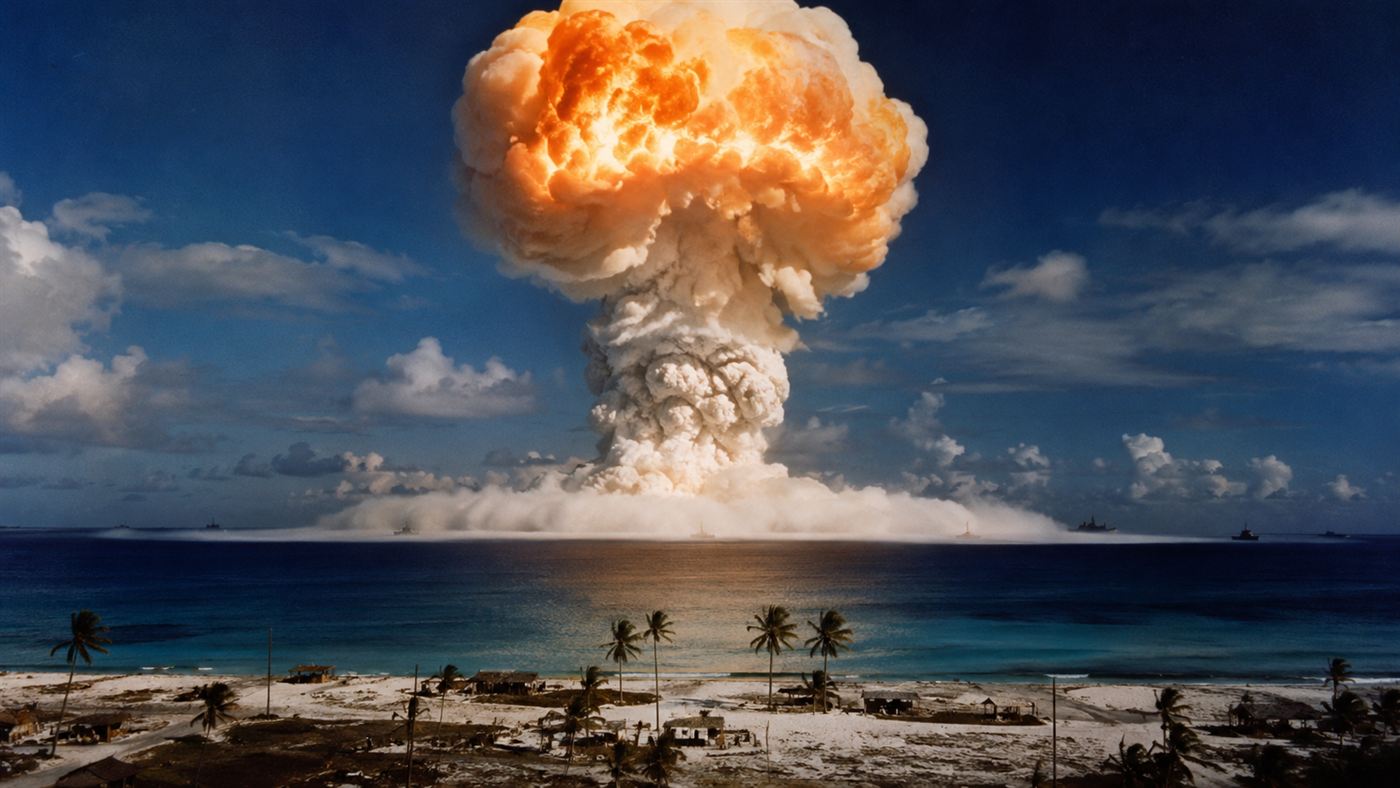
The Castle Bravo explosion on March 1, 1954 was supposed to yield about six megatons.
It yielded 15.
Castle Bravo was the most powerful nuclear device the United States ever detonated, exploding with a force 1,000 times greater than the bomb dropped on Hiroshima, though even it was dwarfed by the Soviet Tsar Bomba, the largest explosion ever made.
The fireball was seven kilometers wide.
It vaporized three islands at Bikini Atoll entirely.
Wind conditions had shifted from what the meteorologists predicted, and the Castle Bravo nuclear fallout cloud drifted east instead of north, directly over the inhabited atolls of Rongelap and Utrik in the Marshall Islands.
The people of Rongelap saw the sun rise twice that morning, the second one brighter than the first, followed by a white powder falling from the sky that their children played in before anyone told them to stop.
That powder was nuclear fallout.
The 64 Rongelapese and 18 Americans on a nearby weather station were evacuated two days later.
A Japanese fishing vessel, the Lucky Dragon No. 5, was 150 kilometers from Bikini Atoll when Castle Bravo detonated.
All 23 crew members developed radiation sickness.
One, Aikichi Kuboyama, the ship's radio operator, died six months later.
His death sparked international protests about nuclear testing in the Pacific and directly contributed to the 1963 Partial Nuclear Test Ban Treaty, which ended atmospheric nuclear testing by the US, UK, and Soviet Union.
Castle Bravo's nuclear fallout was so severe that scientists calculated it had contaminated an area of Pacific ocean roughly the size of Australia.
What Bikini Atoll's nuclear tests left in the soil
The United States declared Bikini Atoll safe for resettlement in 1968.
About 540 Bikini Islanders returned, at first cautiously and then with growing confidence as the reef seemed intact and the island looked much as their parents had described it.
But the soil and the food told a different story.
By 1978, scientists had measured dangerous levels of cesium-137 in the coconut crabs, the fish, the coconut milk, and the well water across Bikini Atoll.
Women who had returned were reporting miscarriages and stillbirths at elevated rates.
Studies of the returning population found that some residents had ingested enough cesium-137 to be considered a genuine health risk, and the US evacuated Bikini Atoll for the second time in September 1978.
The Marshall Islands Nuclear Claims Tribunal, established in 1988, eventually calculated total damages from Marshall Islands nuclear testing at $2.3 billion.
The United States paid $150 million and argued that amount was sufficient.
The gap between $150 million and $2.3 billion has never been closed.
Without that funding, the cleanup that might make Bikini Atoll habitable again has never been seriously attempted.
The nuclear fallout legacy extends beyond Bikini.
Rongelap Atoll, whose residents were exposed to Castle Bravo nuclear fallout in 1954, was not fully evacuated until 1985, when the community asked the Greenpeace vessel Rainbow Warrior to help them move because they no longer trusted US assurances that the island was safe.
In 2010, Bikini Atoll was inscribed as a UNESCO World Heritage Site, recognized not for its beauty but as a monument to the nuclear age and the Marshall Islands nuclear testing program that altered the lives of every person on those atolls.
Why the fish came back but the people could not
In 2017, marine biologist Dr. Steve Palumbi of Stanford University led a team that dove into the Bikini Atoll lagoon for the first time in many years.
What they found surprised them.
The coral was thriving.
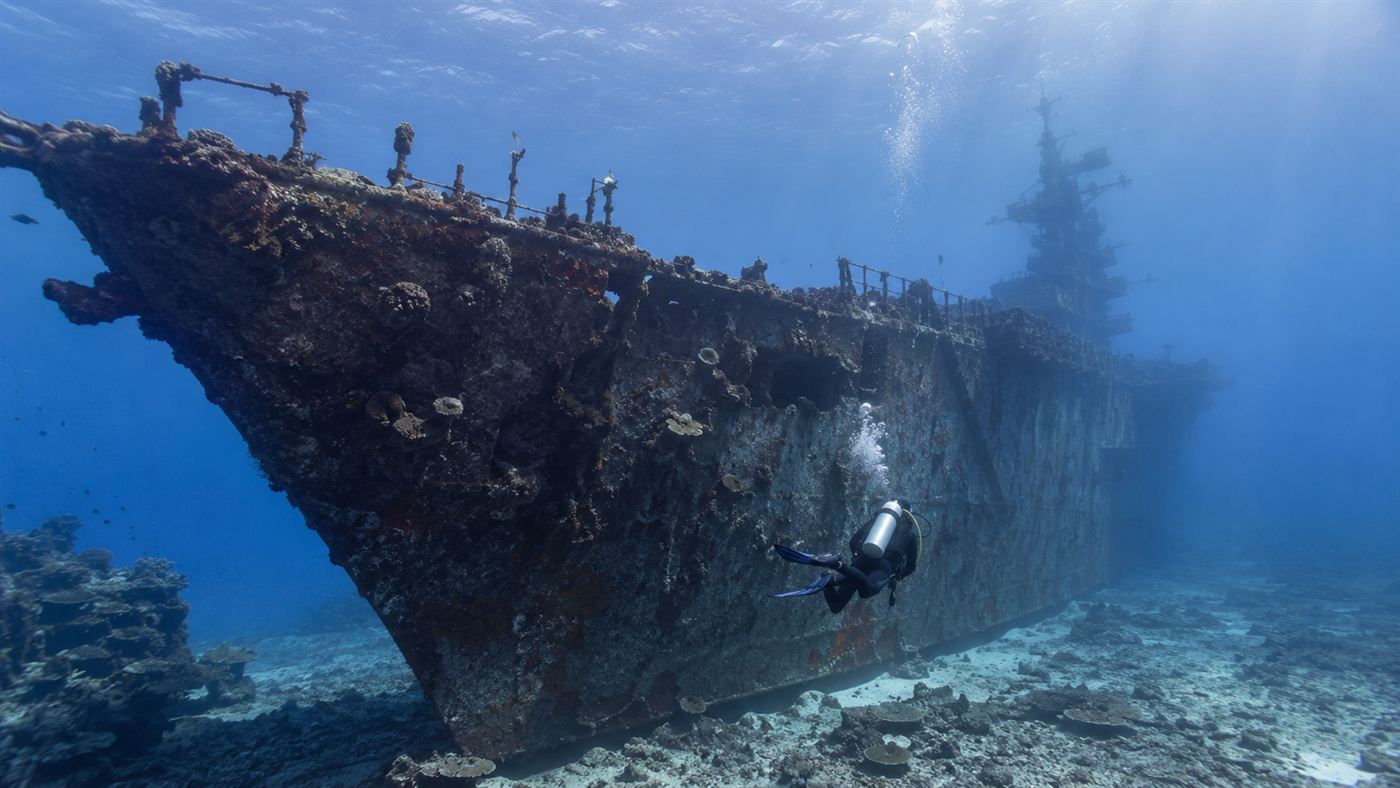
Schools of reef fish, sharks, and giant grouper moved through the underwater wreckage of the Operation Crossroads fleet.
The sunken USS Saratoga, the aircraft carrier that slid to the bottom of the Bikini Atoll lagoon during Operation Crossroads in 1946, was now one of the world's most extraordinary dive sites, its hull covered in soft coral and circled by grey reef sharks.
The Bikini Atoll lagoon, in the near-complete absence of humans for 70 years, had recovered far more than anyone expected.
The one exception was the seafloor closest to the craters from the largest blasts, where the sandy bottom still bore chemical signatures of nuclear detonation.
But the fish and the coral did not accumulate cesium-137 at levels dangerous to their biology the way humans would if they ate the coconuts or drank the well water.
The difference comes down to diet and biology.
A human living on Bikini Atoll and eating local food would absorb dangerous levels of radioactive cesium within months.
A reef fish eating invertebrates in the Bikini Atoll lagoon absorbs far less, because cesium travels up the food chain differently depending on what is being consumed and in what quantities.
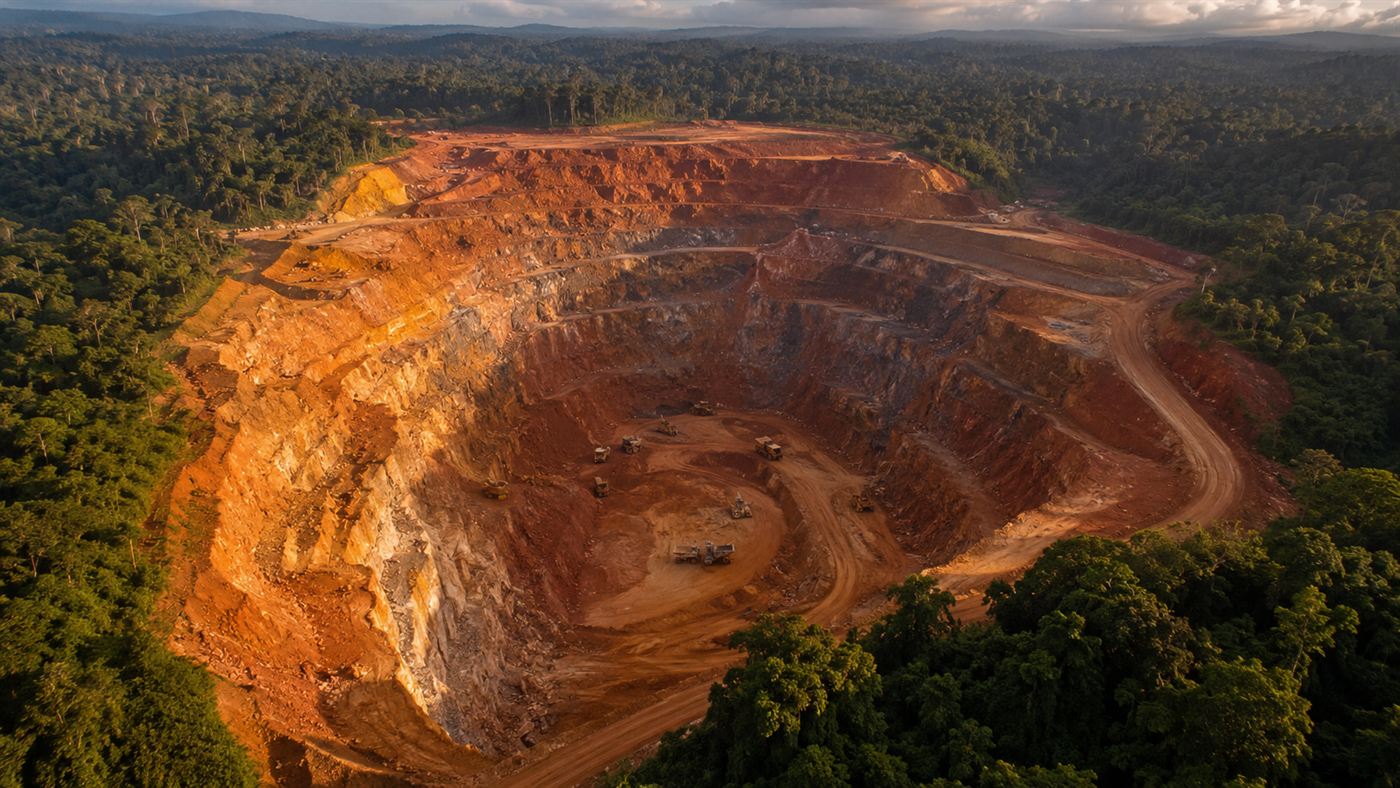
The same principle shows up elsewhere: at the Oklo natural nuclear reactor in Gabon, which ran underground for 300,000 years, the surrounding ecosystem absorbed nuclear processes without the catastrophic effect on wildlife that human exposure causes, because dose and pathway matter as much as the source of radiation.
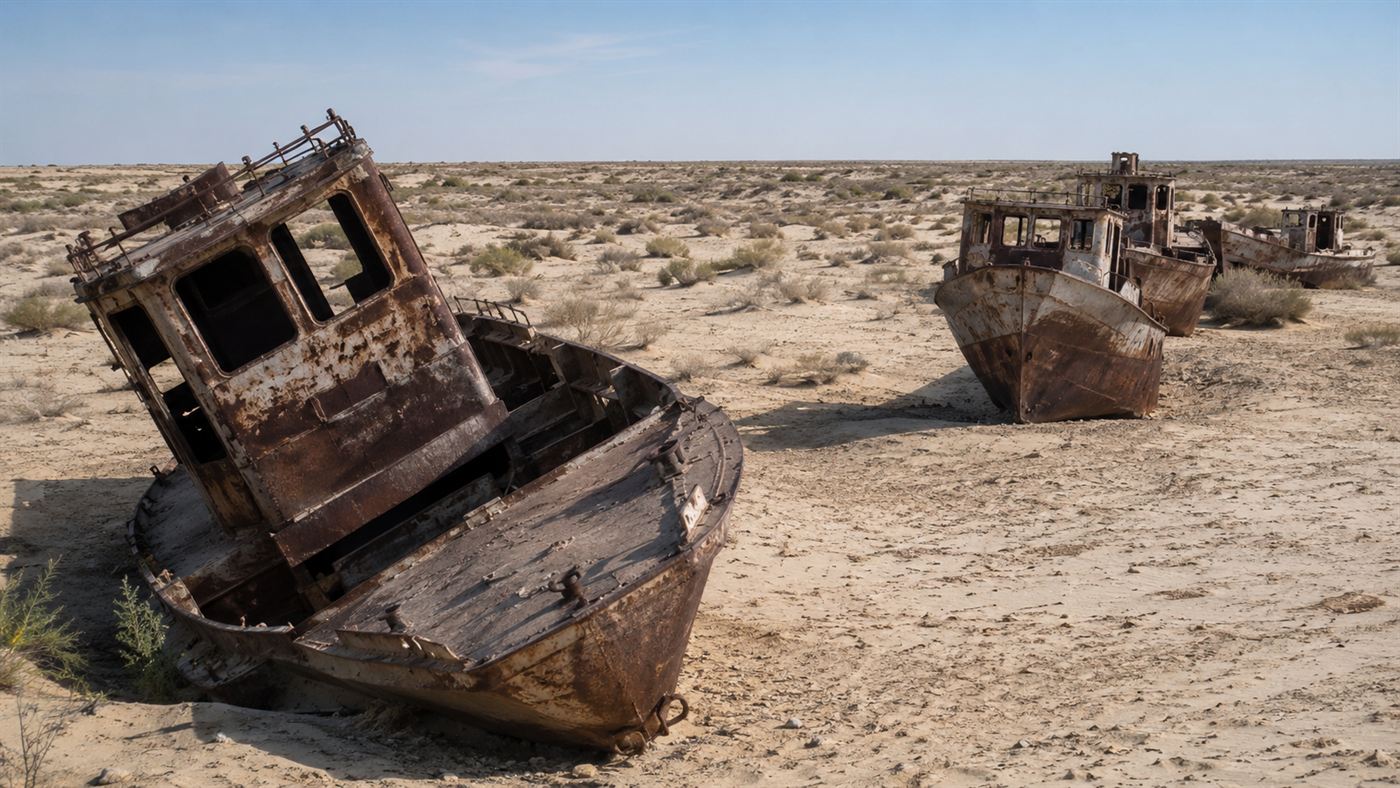
The Bikini Atoll recovery also mirrors what happened to the Aral Sea after Soviet irrigation drained it: when humans removed a massive pressure on an ecosystem, nature found a way, though the human cost of the original decision remained uncorrected.
For the Bikini people, the news from the 2017 survey was bittersweet.
Their atoll was alive.
It just could not safely sustain them.
The honest catch
The coral recovery at Bikini Atoll is real, but scientists caution that the lagoon has not returned to its pre-1946 state.
Several coral species abundant before Operation Crossroads and the subsequent Marshall Islands nuclear testing have not reappeared.
The underwater craters from the largest blasts remain biologically impoverished compared with surrounding areas.
The question of whether Bikini Atoll's soil could be cleaned up sufficiently for human habitation has never been seriously tested, because the funding has never arrived.
Some researchers believe that removing the radioactive topsoil and replanting with crops that do not concentrate cesium could reduce exposure to acceptable levels.
Others argue that the depth and distribution of the nuclear fallout contamination makes that practically impossible without decades of work and billions of dollars.
The Bikini Islanders themselves are divided: some want to return regardless, arguing that their connection to the land is worth the risk; others say they would not go back unless scientists certified the island safe beyond doubt.
What is not in dispute is this: the Marshall Islands nuclear testing program displaced 167 people in 1946 with a promise that was never kept, the compensation agreed to was never fully paid, and the people who gave up their home for the good of mankind are still waiting.
If you were a Bikini Islander, would you go back knowing the soil was still contaminated? Leave your answer in the comments below.