In the 1930s the US Navy really did fly two enormous airships that carried fighter planes inside their bellies and launched and caught them in mid-air on a trapeze
It sounds like something from a comic book: a colossal airship, nearly as long as the Titanic, cruising through the sky with a squadron of fighter planes riding inside it, dropping them out through a hole in its belly and hooking them back in as they flew. Yet it was completely real, and it lasted only a few short years.
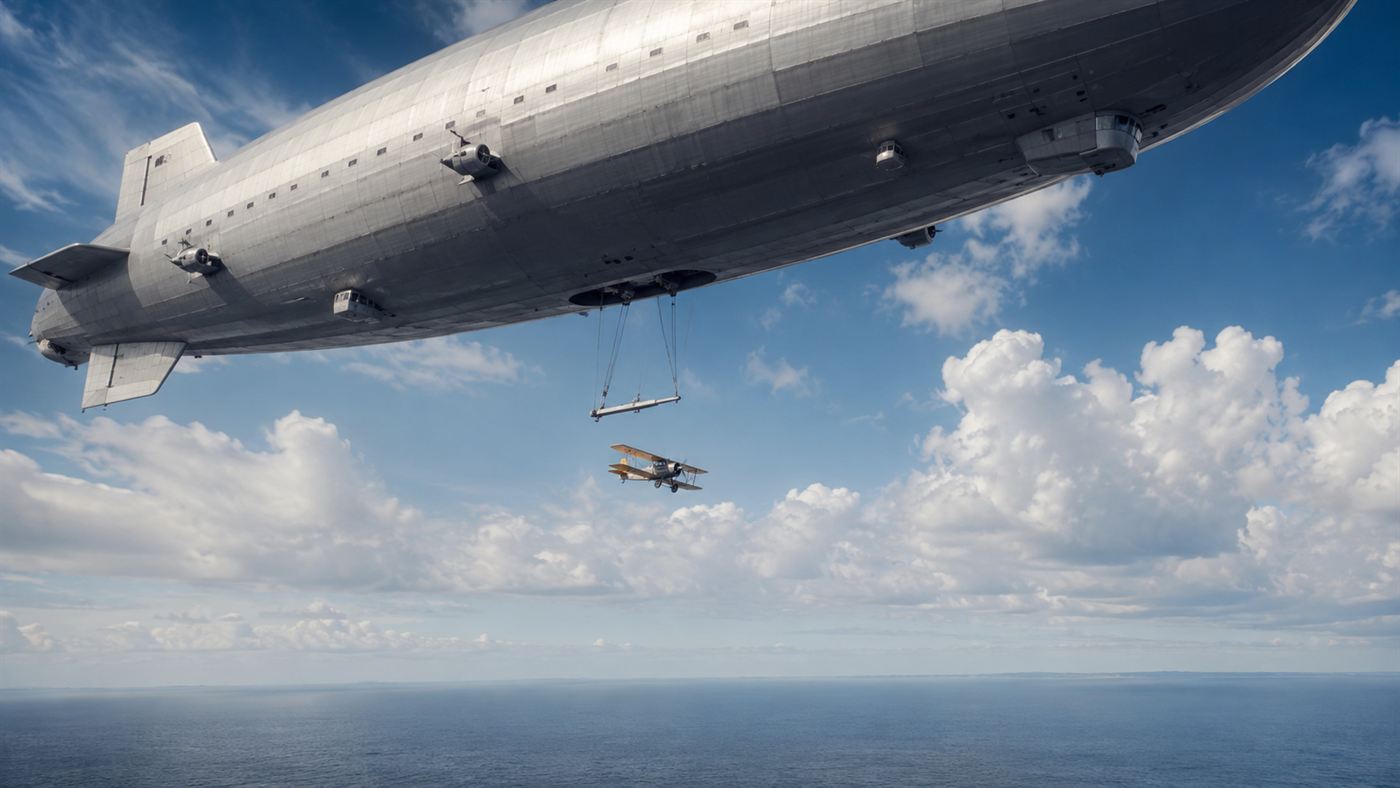
A tiny fighter drops away from the belly of a Navy airship. Illustration: Watts & Wild.
In the years between the World Wars, the United States Navy became convinced that the future of scouting the oceans belonged to the airship. Not the flimsy blimps we know today, but vast rigid airships with metal skeletons, capable of flying for days and covering enormous distances over the sea.
Out of that belief came two of the most extraordinary machines ever flown: the USS Akron and the USS Macon. They were flying aircraft carriers in the most literal sense, airborne bases that carried their own fighter planes and launched them thousands of feet above the water. For a brief moment, the sky really did hold aircraft carriers.
The short version: the Navy built two helium airships the size of ocean liners, fitted them with tiny fighter planes and a mid-air trapeze, and used them as flying aircraft carriers to scout the Pacific. Both were lost in storms within a few years, and the whole daring idea died with them.
Airships the size of ocean liners
It is hard to overstate how big these things were. Each was around 785 feet long, only a little shorter than the Titanic, and they floated not on dangerous hydrogen but on non-flammable helium, which the United States had almost all of the world's supply of. That choice was meant to make them far safer than the hydrogen airships of Europe.
Inside the enormous hull, past the gas cells that gave them lift, was something no other aircraft had: a hangar. The Akron and the Macon were each a genuine rigid airship built to carry, house, service and relaunch a flight of small warplanes while cruising high above the ocean, a hangar deck in the sky.
How did the flying aircraft carriers launch planes?
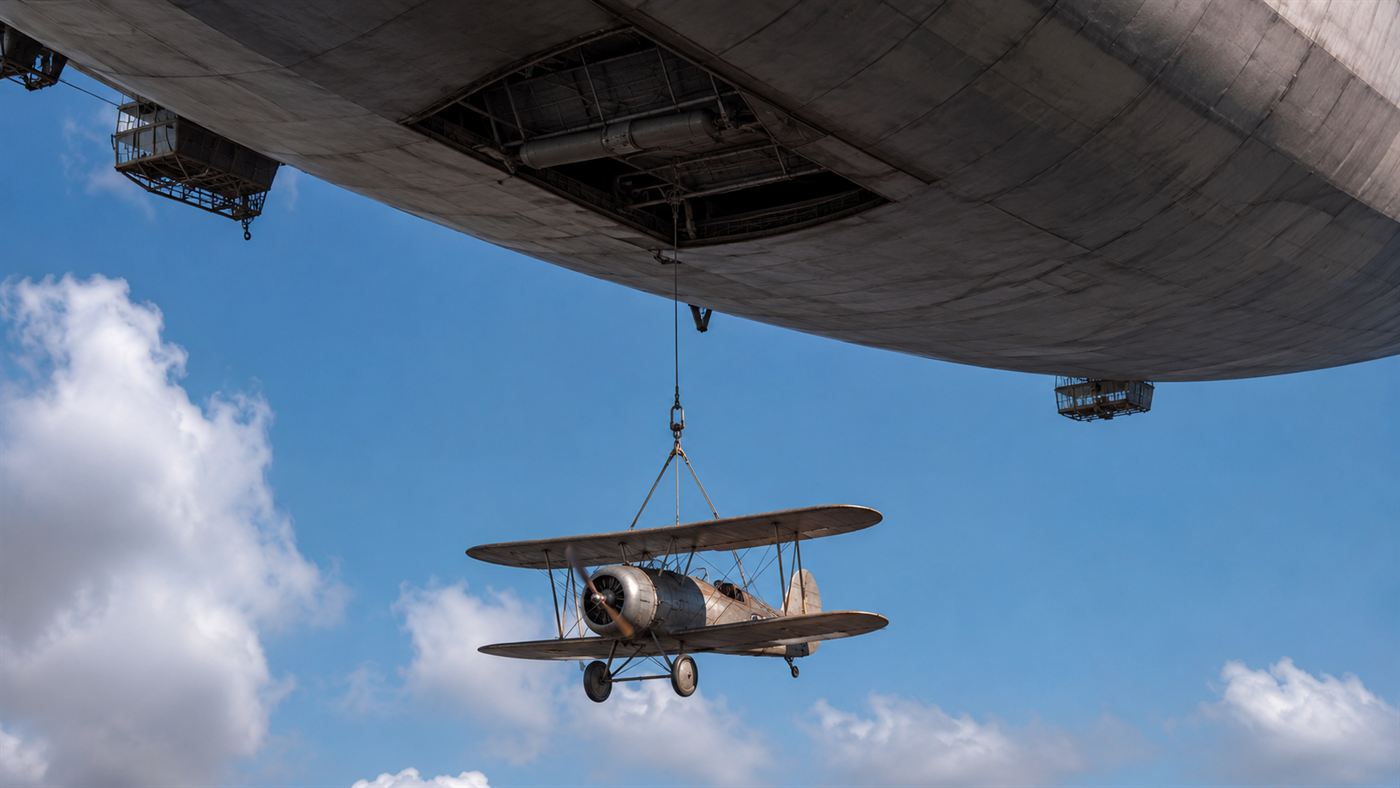
The trick was a device the crews called the trapeze. Each fighter, a stubby little biplane called the Sparrowhawk, had a hook mounted above its top wing. To launch, a trapeze bar lowered the plane down through an opening in the belly of the airship, out into the rushing air, and then simply let go.
Recovering the plane was the truly nerve-racking part. The pilot had to fly back up beneath the moving airship, match its speed, and delicately drive his hook onto the swinging trapeze so he could be lifted back inside. Pulling that off in gusty air, over open ocean, is one of the great forgotten feats of early aviation, and the flying aircraft carriers did it routinely.
Eyes for the fleet over a vast ocean
The point of all this was not really the fighters themselves, which were too small to matter much in a battle. The point was reach. A single airship could sweep enormous stretches of the Pacific, and by sending its little scout planes ranging out in every direction, it could search a patch of ocean far larger than any ship or plane of the day.
In an era before radar and satellites, finding the enemy fleet first was everything, and a flying scout that could see for hundreds of miles was a tantalising advantage. The USS Macon in particular grew skilled at using its planes as long-range eyes, turning one airship into a search party that could cover a small sea.
The storms that ended it all
The fatal weakness was the weather. These were huge, lightly built structures, and for all their size they were fragile in the face of violent air. On April 4, 1933, the USS Akron flew into a storm off the coast of New Jersey, was driven down into the Atlantic, and broke apart in the waves.
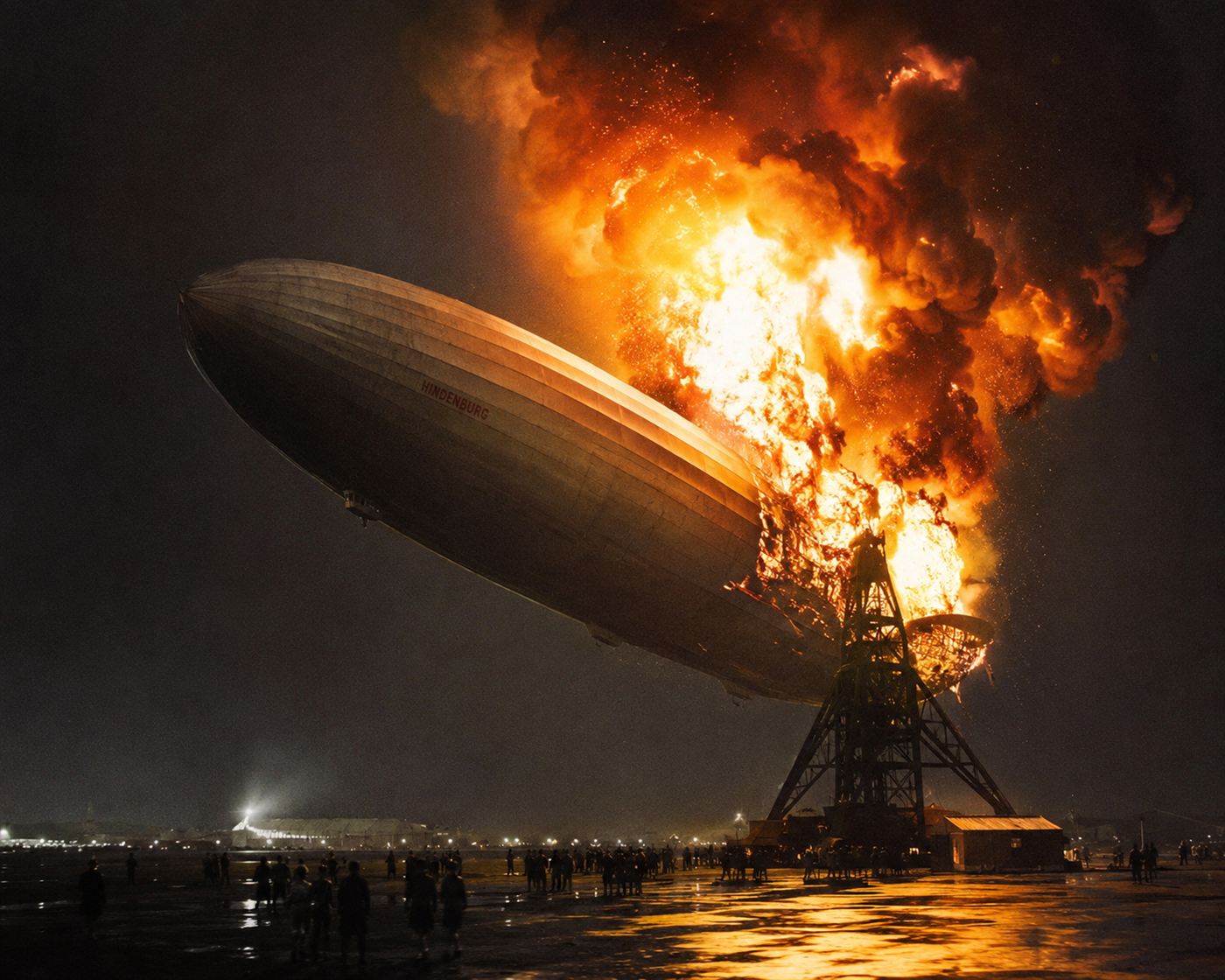
With almost no life jackets aboard and the water freezing, 73 of the 76 men on the USS Akron died, a greater loss of life than the far more famous Hindenburg. Less than two years later, in February 1935, its sister the USS Macon suffered a structural failure in a storm off California and sank into the Pacific, and with it went the whole program.
The honest catch
It is easy to mourn the flying aircraft carriers as a brilliant idea killed by bad luck, but that is only half true. Yes, both were destroyed by storms rather than enemies. But their fragility in ordinary bad weather was not a fluke, it was baked into what they were, and no realistic airship could have been both huge enough to carry planes and tough enough to shrug off a gale.
There is also a quieter truth: the concept was already being overtaken. Long-range flying boats were arriving that could scout the oceans more cheaply and survive weather that shredded an airship. The crashes are remembered as the cause of death, but the flying aircraft carriers were probably a dead end that ordinary aeroplanes would soon have closed anyway.
Why the sky carriers still fascinate us
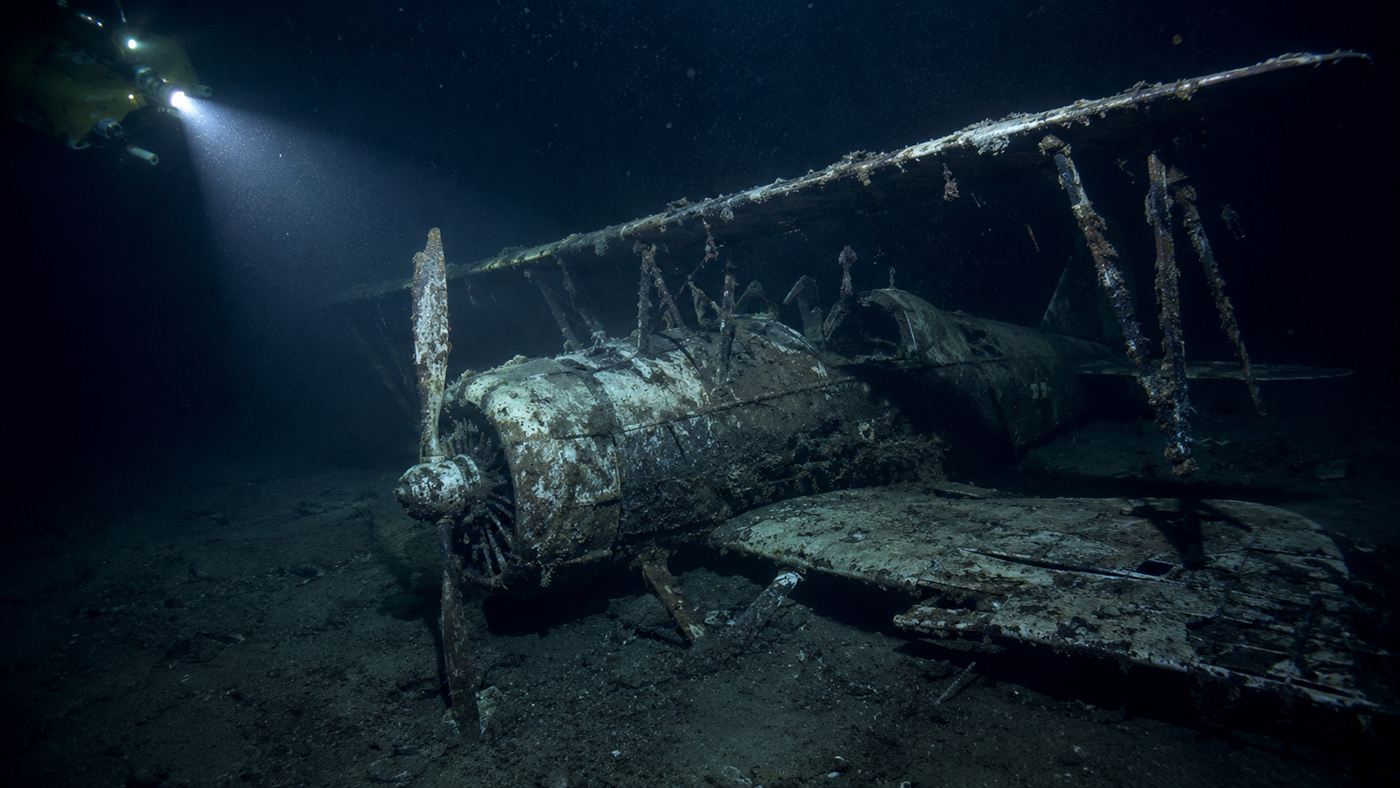
Decades later, the wreck of the USS Macon was found on the seafloor off California, its lost Sparrowhawk fighters still scattered around it in the dark, and the site is now protected as a piece of history. It is a strange, haunting reminder that this really happened, that America once flew aircraft carriers through the clouds.
The idea keeps coming back too, in science fiction and even in modern military studies of drones launched from larger aircraft. The Akron and Macon failed, but the dream behind them, of a mothership in the sky that carries its own little fleet, has never quite let go of our imagination.
For a few short years America genuinely flew aircraft carriers through the sky, launching and catching fighter planes in mid-air, and then two storms ended the dream forever. Was it a visionary idea ahead of its time, or a beautiful mistake that was always going to fall out of the sky? Tell us what you think in the comments.
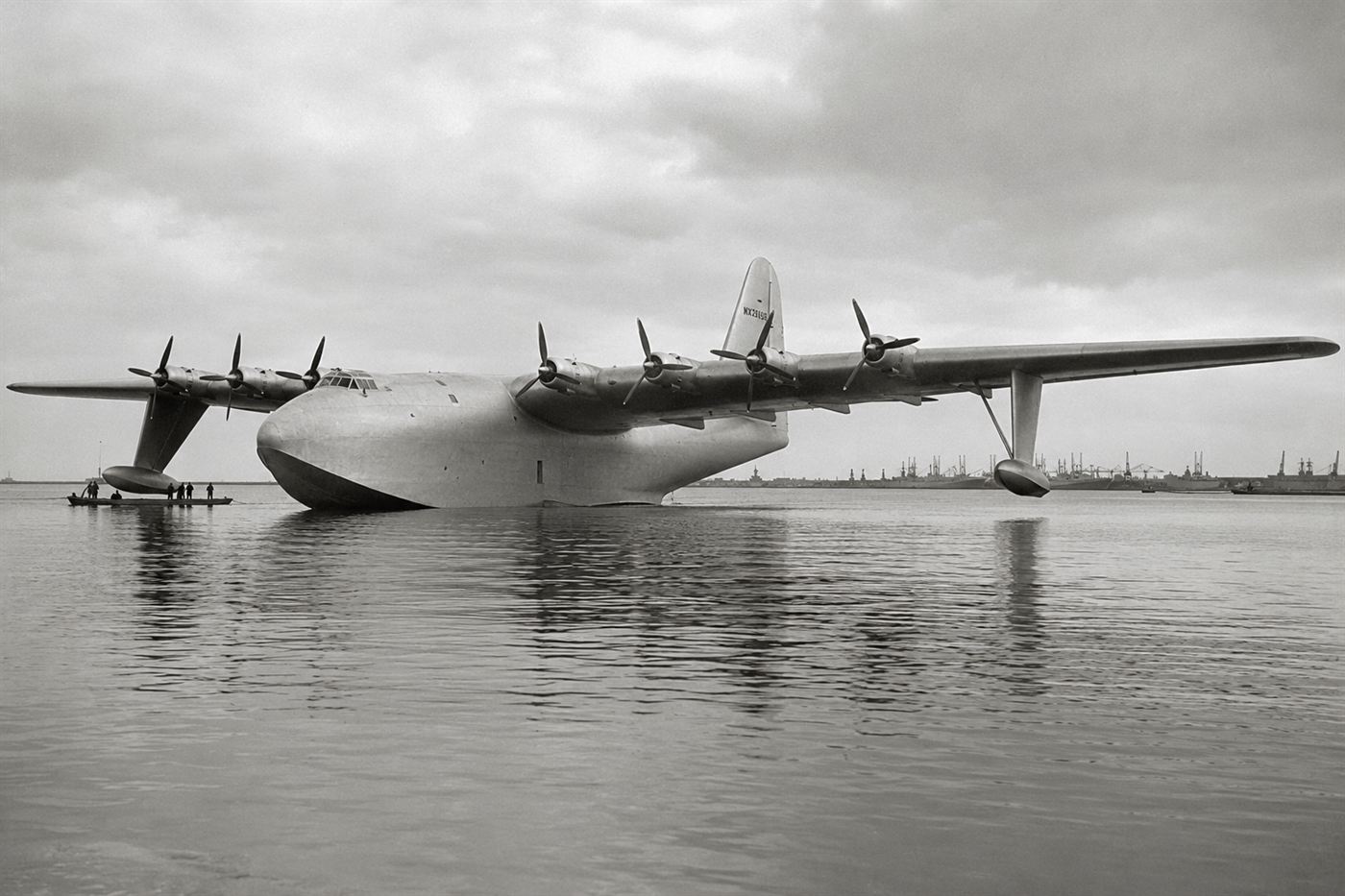
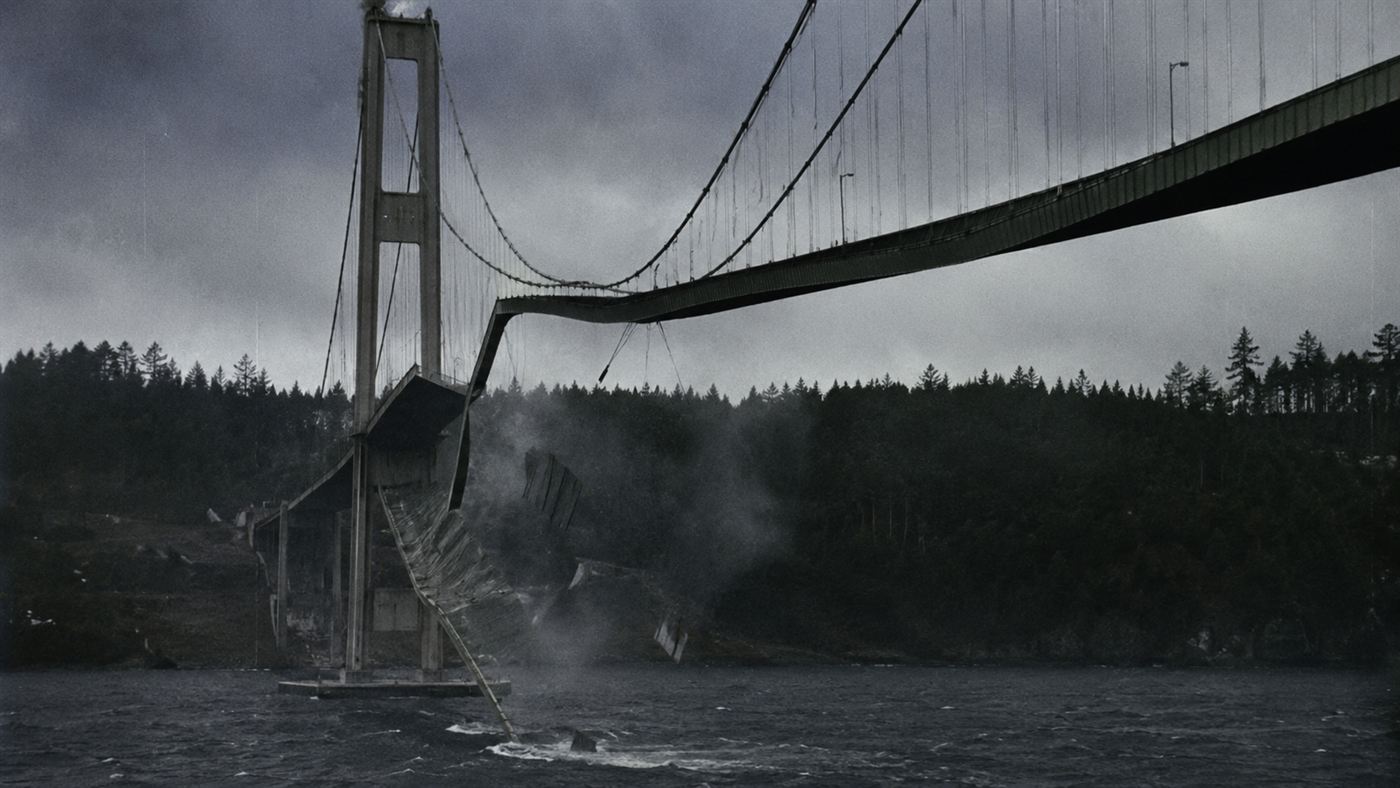
Related reading: the Hindenburg, the hydrogen airship whose fiery end is far more famous but killed fewer people. See also the Spruce Goose, the giant wooden flying boat that flew only once, and the bridge that shook itself to pieces in the wind. For more early aviation, see the giant concrete arrows that guided airmail pilots across the country by night.