In the 1920s America built a chain of giant concrete arrows and lit towers stretching coast to coast, a lighted highway in the sky that guided airmail pilots flying blind through the night
Hikers in the deserts of the American West sometimes stumble on something baffling: a huge yellow arrow made of concrete, tens of feet long, pointing off across the empty land toward nothing at all. It is the ghost of a forgotten national system, one that once let pilots cross a continent in the dark by following the ground.
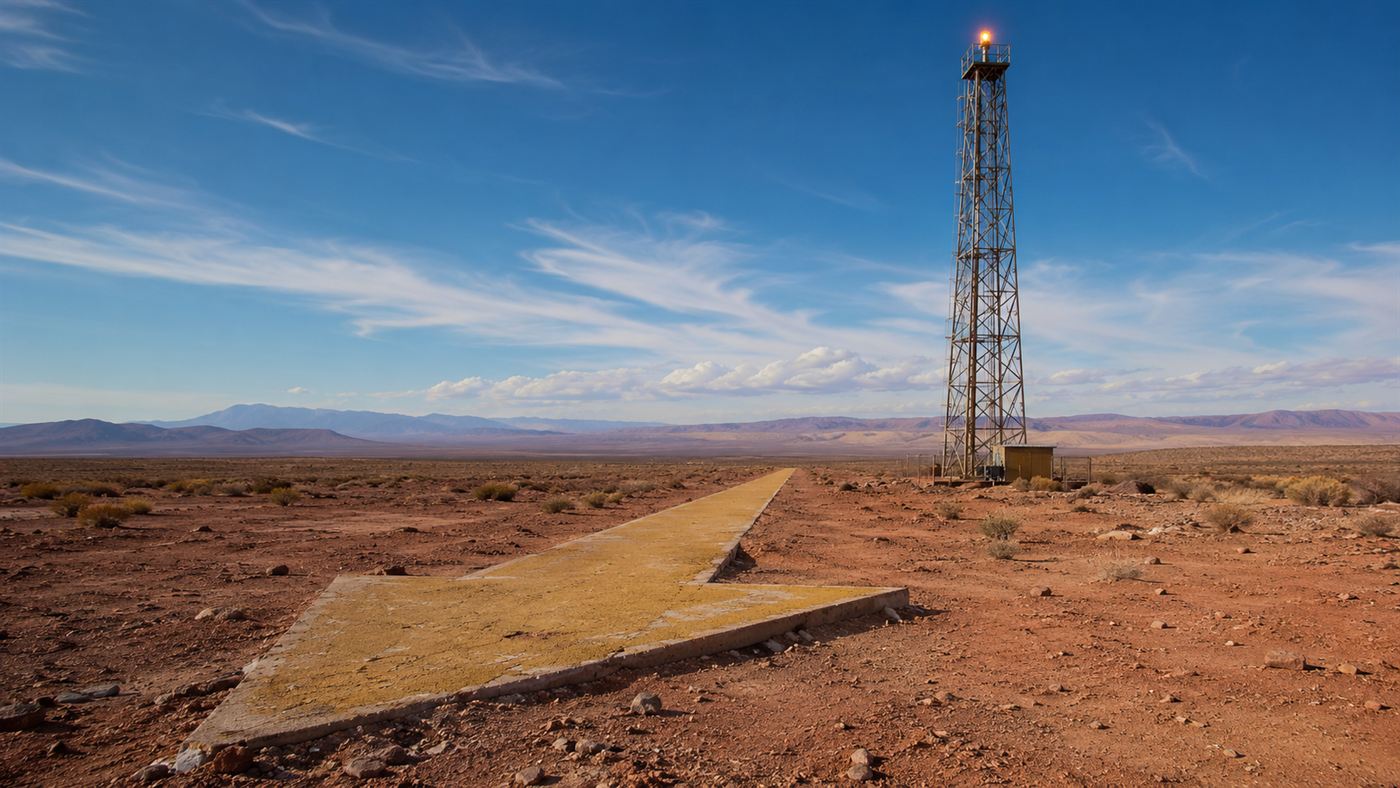
A giant arrow and its beacon tower once pointed the way through the night. Illustration: Watts & Wild.
In the early 1920s, the United States had a problem it desperately wanted to solve: it could fly the mail, but only in daylight. A letter carried by plane by day still had to travel by slow train through the night, which threw away most of the speed advantage aircraft were supposed to offer. To beat the railroads, the mail had to fly around the clock.
The trouble was that a pilot in 1924 navigated almost entirely by looking out of the window, and at night there was nothing to see. So the government came up with an astonishing fix, building a coast-to-coast trail of lights and enormous concrete arrows on the ground that pilots could follow through the darkness like a runway that stretched across the entire country.
The short version: to fly the mail at night, America laid down a chain of beacon towers and giant painted concrete arrows from New York to San Francisco. Pilots followed them light to light across the continent, and long after the system died, the arrows still lie scattered and forgotten across the West.
A country that could only fly by day
When airmail began, it was a genuine marvel, cutting days off the delivery of a letter across the country. But its great weakness was the dark. Once the sun went down, a pilot lost the rivers, roads and rail lines he used to find his way, so the planes landed at dusk and the mailbags finished the journey by train, wasting the whole night.
The Post Office knew that to truly beat the railroads, its planes had to keep flying after sunset. That meant giving pilots something they could see and follow in the dark, a problem that in the days before radio had only one practical answer: put the road to San Francisco on the ground itself, lit up so it could be seen from the air.
Building a lighted highway in the sky
Starting in 1924, crews strung a line of steel towers across the country, each carrying a powerful rotating beacon that swept the night like a lighthouse. The towers were spaced roughly ten miles apart, close enough that a pilot could always see the next light glowing ahead before the last one slipped behind him.
The finishing touch was on the ground. At the foot of each tower lay a bright yellow concrete arrow, often fifty to seventy feet long, pointing straight at the next beacon in the chain. By day, or in the beam of the plane's own light, the arrows told a lost pilot instantly which way to go, turning the wilderness below into a signposted route.
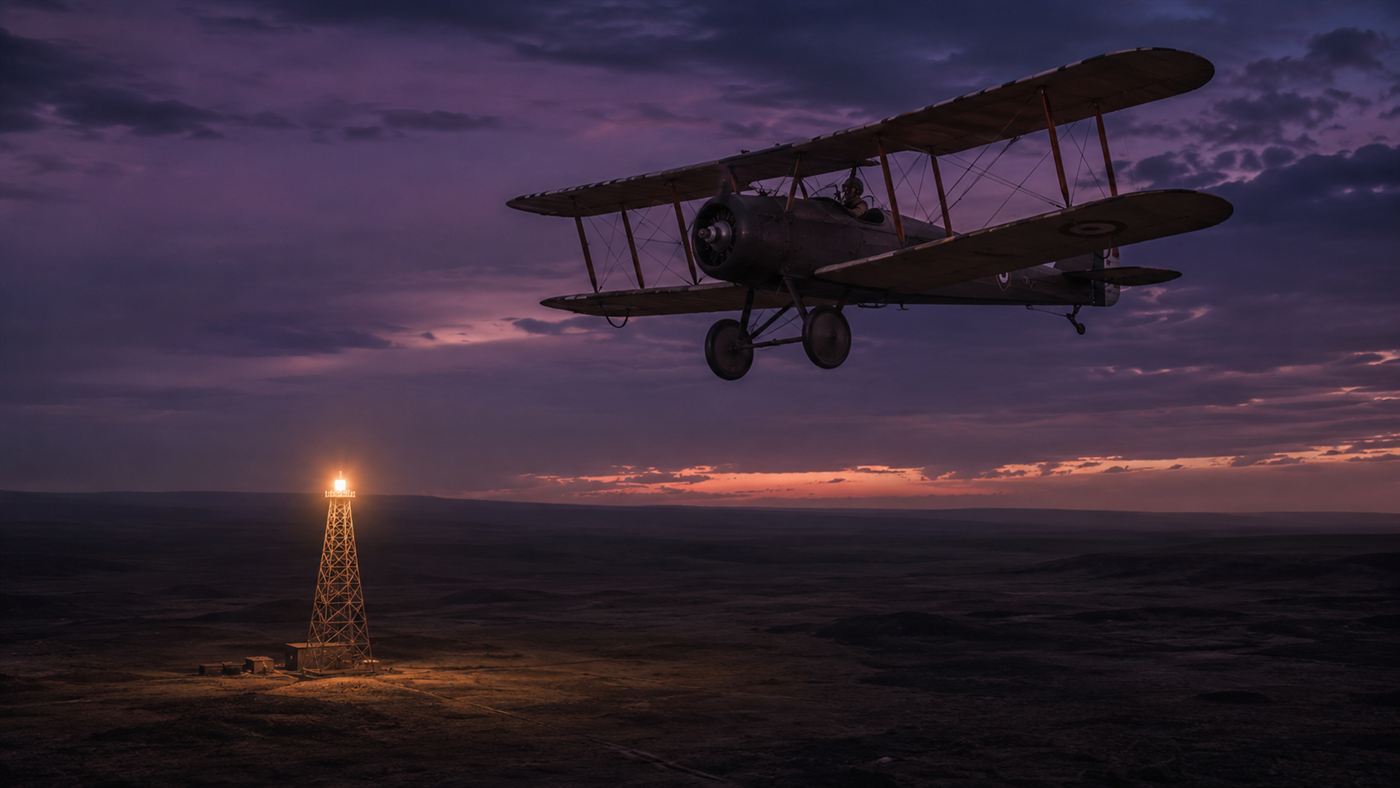
How did pilots fly from light to light?
Flying the airway was a matter of patience and nerve. A pilot would fix on the rotating beacon ahead, fly toward it, and as he passed over its tower he would pick up the next one already blinking on the horizon, hopping from light to light the whole way across the country. The concrete arrows beneath confirmed his heading at a glance.
The system worked, and it transformed the airmail. With the beacons lit, planes could carry letters through the night, and coast-to-coast mail that once took days now crossed the country in a day and a half. For a few years, the giant arrows were the backbone of the fastest long-distance delivery America had ever seen.
The invention that made the arrows useless
Their triumph did not last. Even as the beacon system reached its peak in the early 1930s, a better way to fly blind was arriving: radio navigation. Instead of straining to spot a distant light, a pilot could now follow invisible radio signals that worked in fog, cloud and total darkness, no ground markers needed.
Once radio navigation spread, the lighted airway was obsolete. The towers were switched off and their steel towers dismantled, much of it melted down for scrap during the Second World War. The elaborate chain of beacons that had conquered the American night was quietly unplugged within a couple of decades of being built.
The honest catch
It is tempting to picture these concrete arrows as some mysterious lost technology, but they were never a secret, and they did exactly one plain job very well for a short time. They were a clever stopgap, a way to bridge the gap between the birth of flight and the arrival of radio, not a marvel ahead of its time so much as a smart answer to a problem that soon solved itself.
It is also fair to say the romance of the surviving arrows outstrips their former importance. In their day they were ordinary infrastructure, as unglamorous as a road sign. What makes them feel magical now is simply that they were forgotten so completely, left to sit in the desert until people rediscovered them and could not imagine what they were for.
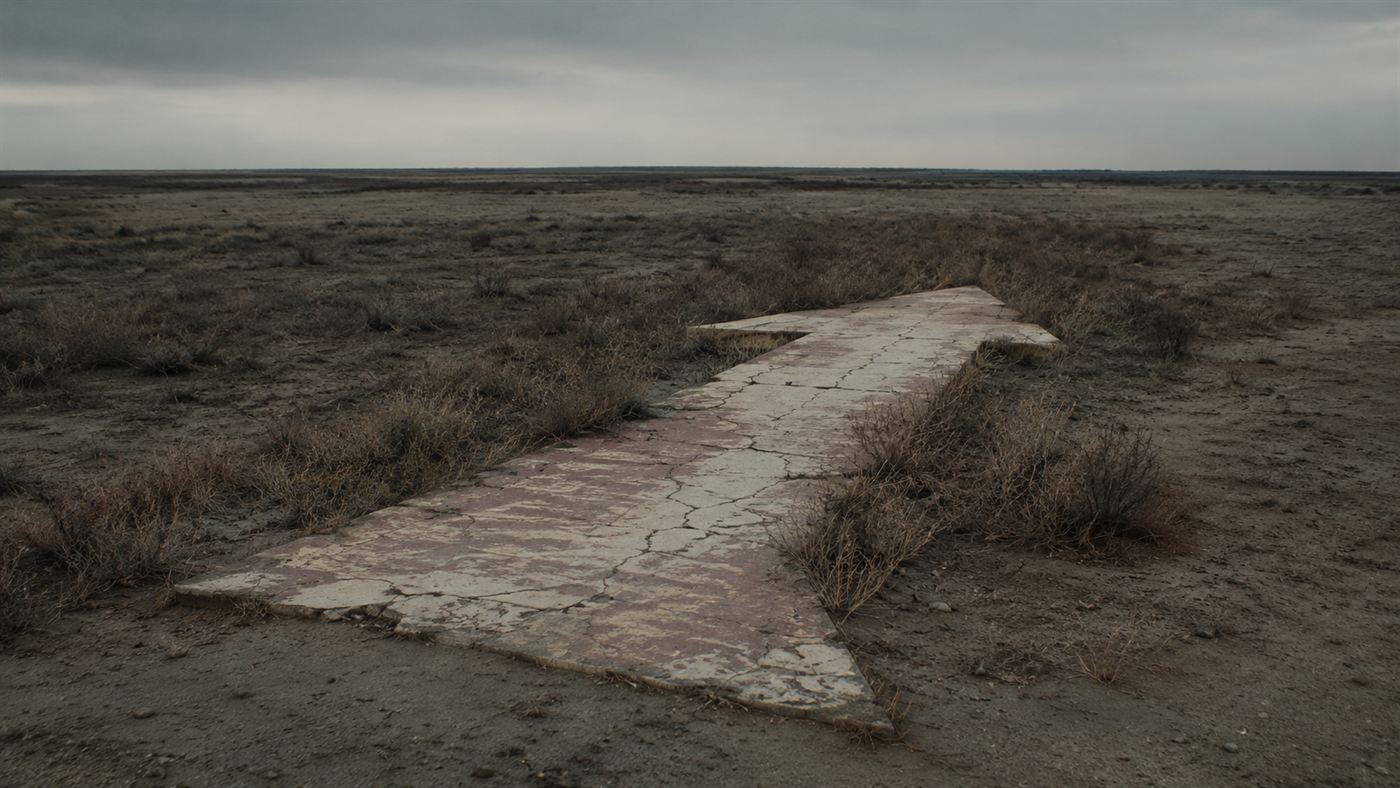
Why the concrete arrows still point across the desert
When the towers came down, the arrows stayed, because breaking up and hauling away thousands of slabs of concrete across remote country was simply not worth the cost. So they were abandoned where they lay, and many of them are still there, faded and cracked but unmistakable, scattered along the old airways of the West.
People who find them today often have no idea what they are looking at, a fifty-foot arrow in the middle of nowhere, aimed at an empty horizon. That is their strange charm. They are the fossil trail of a brief, brilliant era when a nation lit up the ground so it could finally fly through the night, and then moved on and forgot it had ever needed to.
A whole country once painted arrows across the ground so its pilots could find their way in the dark, then abandoned the trail the moment radio arrived. What other everyday systems that feel permanent to us now do you think will one day be baffling relics in an empty field? Tell us what you think in the comments.
Related reading: the US Navy's flying aircraft carriers, giant airships that launched fighter planes in mid-air. See also the pneumatic tube mail that fired letters under city streets, and the Spruce Goose, the wooden flying boat that flew only once. See also the Lady Be Good, the bomber that lost its way and vanished into the Sahara.