It looks like a dinosaur, kicks like a weapon, and quietly plants an entire rainforest
Deep in the rainforests of northern Australia and New Guinea walks a bird taller than a grown person, with a glossy black body, a vivid blue neck, a bony helmet on its head and a dagger on each foot. It has a reputation as the most dangerous bird on Earth. And yet the truth is gentler and far more important: without this creature, the forest itself begins to die.
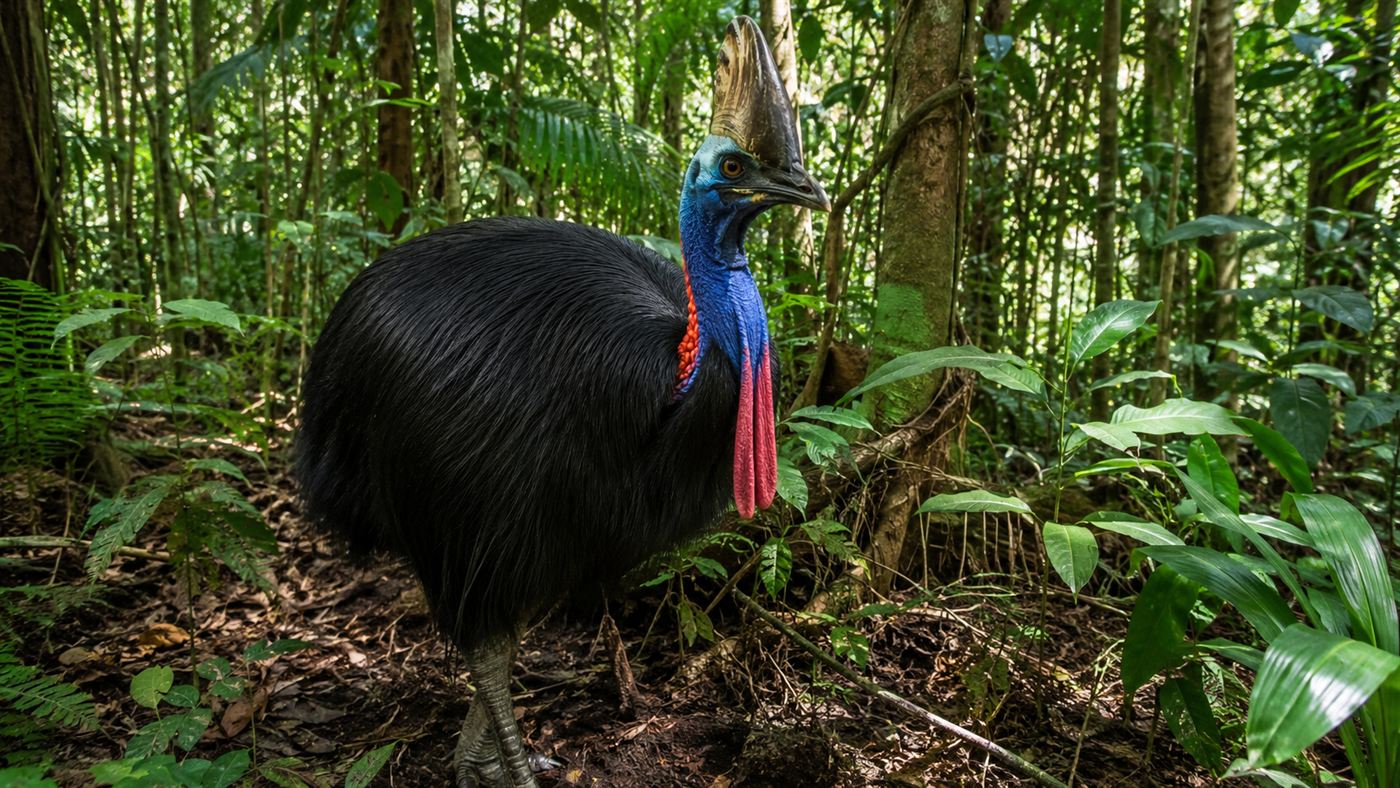
The southern cassowary looks like a dinosaur because, in a sense, it is one. Illustration: Watts & Wild.
The cassowary is a huge flightless bird, the southern species standing up to about 1.8 metres tall and weighing as much as 60 kilograms. With its brilliant blue-and-red neck, its tall keratin crest and its heavy, scaly legs, it looks less like a modern bird than like something that wandered out of the age of dinosaurs, which is closer to the truth than it sounds.
Birds are the living descendants of dinosaurs, and few of them wear that heritage as plainly as the cassowary. But the reason it matters to the forest has nothing to do with how prehistoric it looks, and everything to do with what it eats and where it leaves it.
A dinosaur that never left
Everything about the cassowary's appearance is dramatic. On its head sits a tall, hollow casque, a kind of helmet whose exact purpose scientists still argue over, from pushing through dense undergrowth to display to helping with sound. Its neck blazes with colour, and it can run at around 50 kilometres an hour through thick jungle and even swim across rivers. It is one of the most strikingly ancient-looking animals you can still meet alive today.
That theatrical look has made it a star of nature documentaries and a magnet for fearful headlines. The bird is genuinely powerful and should always be treated with respect. But the fear tends to crowd out the far more interesting fact about what the cassowary actually does for a living.
The dagger on its foot
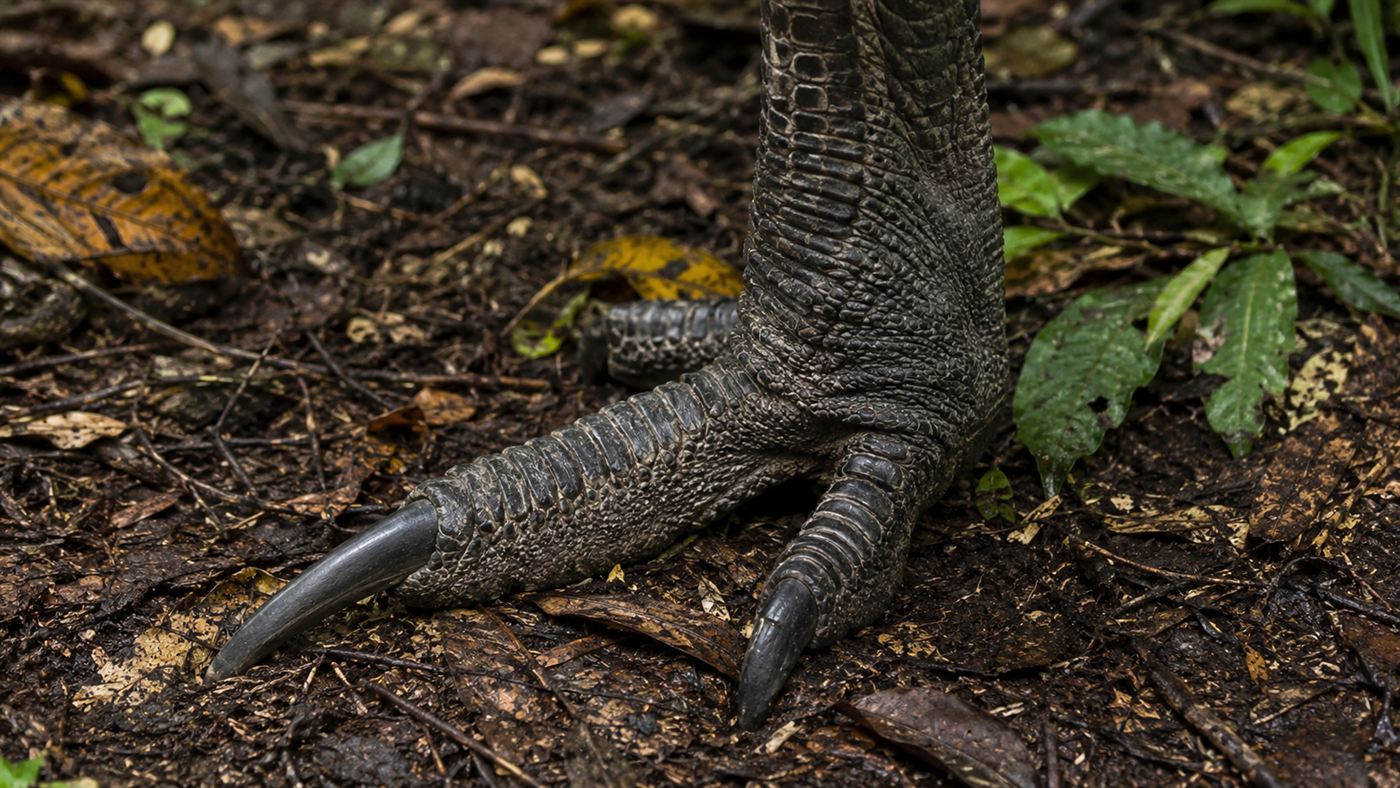
The cassowary's fearsome reputation rests on its feet. On the inner toe of each foot sits a straight, sharp claw that can be 7 to 12 centimetres long, a genuine dagger. If the bird feels cornered, it can leap and lash out with a downward kick from legs strong enough to drive that claw deep into flesh. It is the feature that earns the cassowary its title as the world's most dangerous bird.
That said, the danger is wildly overstated in the popular imagination. Cassowaries are mostly shy and would far rather walk away than fight, and serious injuries to humans are very rare. The grim cases that do happen almost always involve people feeding the birds, which teaches them to approach and demand food, turning a wary forest animal into a bold and risky one.
Why the cassowary is really a gardener
Here is the part the scary stories miss. The cassowary is what ecologists call a keystone species, an animal so central that whole systems lean on it. It wanders the forest eating fallen fruit, and the seeds inside that fruit pass through it and land in its droppings, neatly bedded in natural fertiliser, sometimes far from the parent tree. In doing so, a single cassowary plants the seeds of dozens of rainforest species as it walks, spreading and mixing the forest with every meal.
Some rainforest trees produce fruit and seeds so large that almost no other animal can swallow and move them. For those plants, the cassowary is not just helpful, it is essential, the only courier big enough to carry their seeds to new ground. Take the cassowary out of the picture and parts of the forest would slowly lose the ability to spread and renew themselves. The most dangerous bird in the world is, in fact, one of the hardest-working gardeners in nature.
The most devoted father in the forest
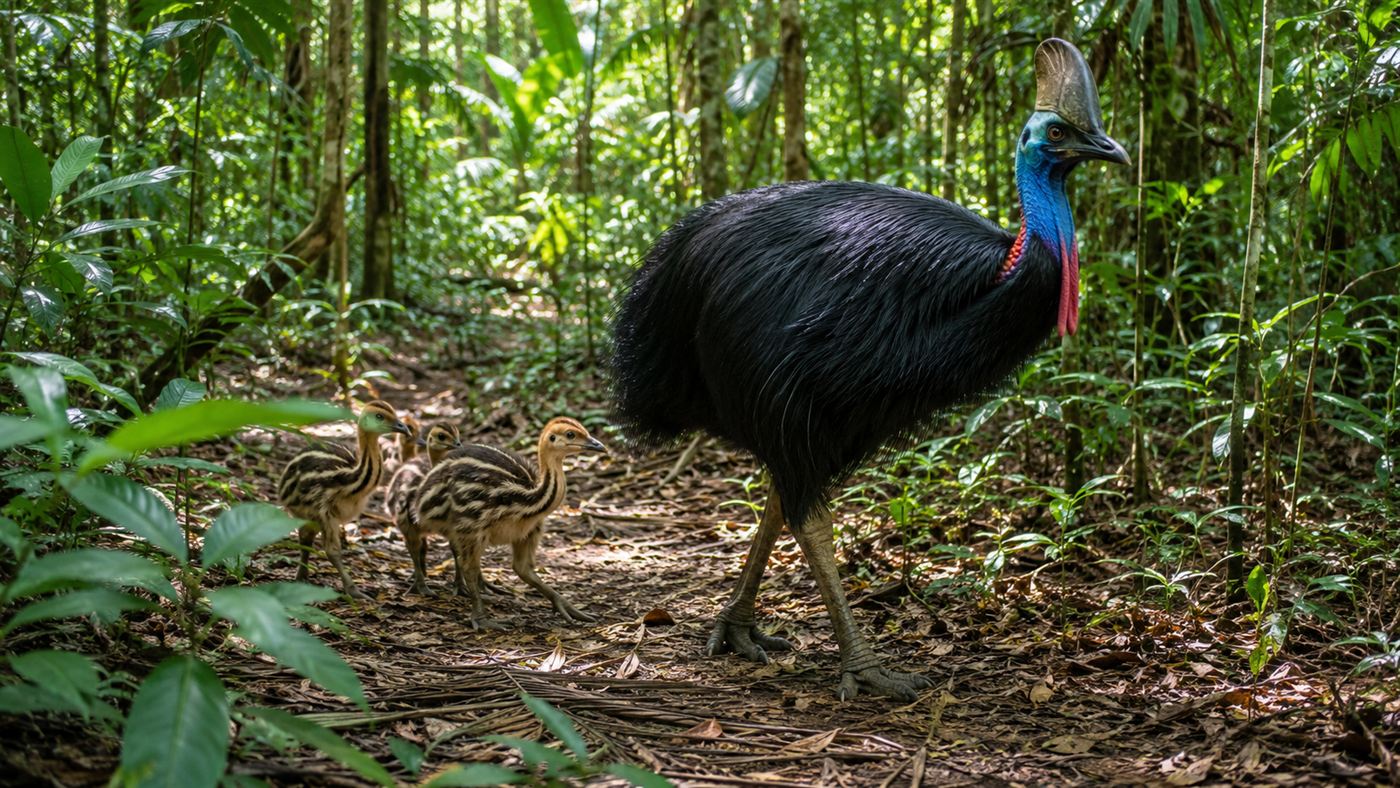
There is a tender twist to all this menace. Once a female cassowary has laid her clutch of large green eggs, she leaves, and it is the male who takes over completely. He sits on the eggs for around two months, barely eating, and then raises the striped chicks alone for the better part of a year, guarding and teaching them through the forest. The fearsome dinosaur bird is also one of the animal kingdom's most dedicated single fathers.
That devotion is part of why the bird is so protective and why people should keep their distance, especially from a male with chicks. It is not aggression for its own sake. It is a parent doing one of the most demanding jobs in the rainforest.
The honest catch
The honest picture flips the usual story on its head. The cassowary is far less of a threat to us than we are to it. In Australia the southern cassowary is endangered, its numbers worn down by cleared forest, dogs, and above all by cars on the roads that now cut through its home, along with the well-meaning feeding that makes the rare dangerous encounters more likely. The bird that headlines call a killer is itself the one fighting to survive.
And the stakes are bigger than one species. Because so much of the rainforest's future is carried in the cassowary's gut, losing the bird would mean slowly losing the forest's ability to renew itself, tree by tree, generation by generation. It is the same quiet lesson the natural world keeps teaching us: the animals we fear or overlook are often the ones holding the whole system together.
The world's most dangerous bird turns out to be a devoted father and the gardener a whole rainforest leans on. Should we be more afraid of the cassowary's claw, or of a forest losing the only animal that can plant it? Tell us what you think in the comments.
Related reading: the Great Emu War, when Australia sent soldiers with machine guns against flightless birds and lost.