A Japanese crab carries the face of an angry samurai, and the famous reason may be wrong
Pull one of these small crabs from the seas around Japan, turn it over, and a fierce human face glares back at you from its shell, brow furrowed, mouth set in fury. For centuries people believed the Heikegani were drowned samurai reborn, and a famous scientist offered a haunting explanation for the face, but it does not quite hold up.
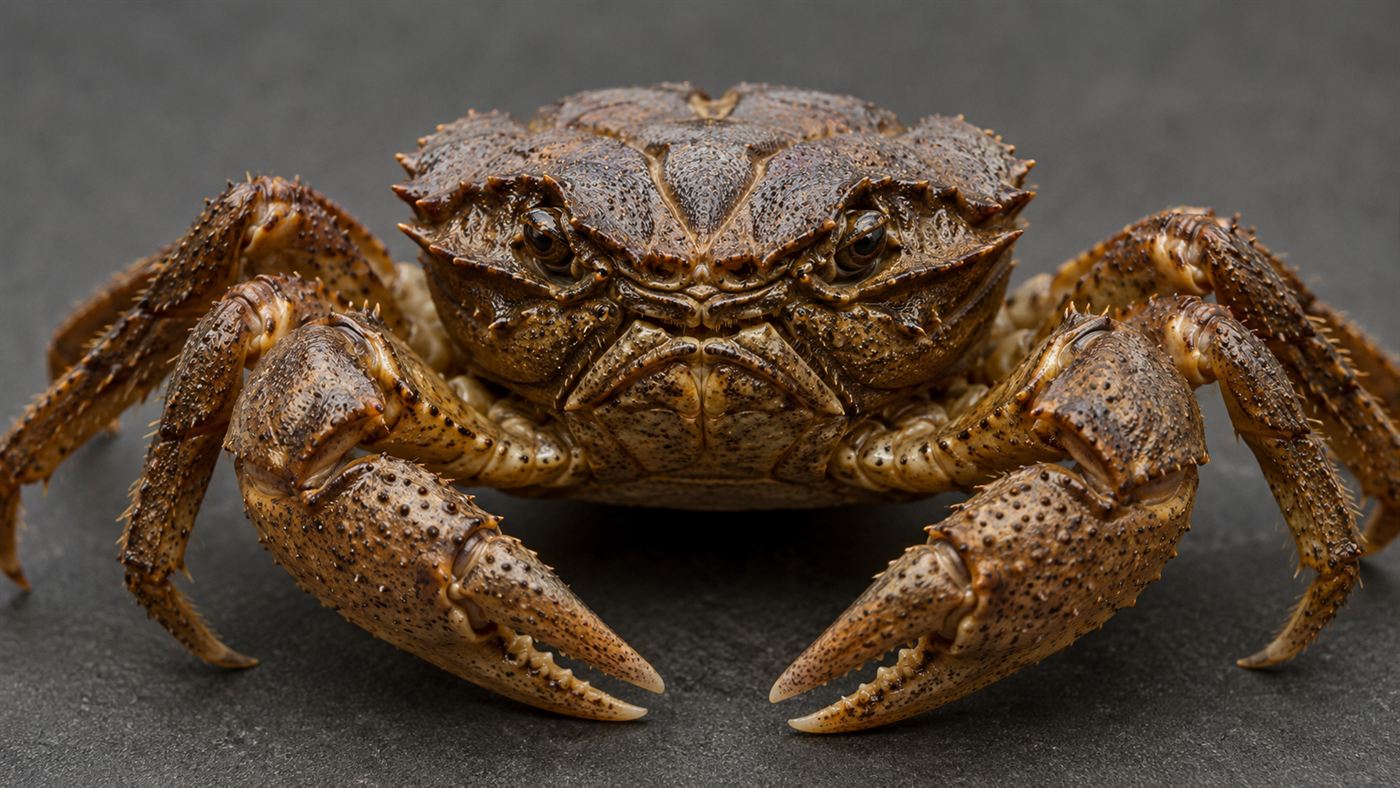
The ridges on the shell read unmistakably as a scowling, helmeted human face. Illustration: Watts & Wild.
Few animals carry a story as eerie as this one. The Heikegani is an ordinary little crab in almost every way, except that its back is moulded into the shape of a snarling warrior's face, complete with the hollows of angry eyes and a grim, downturned mouth. To anyone who sees it, the resemblance is instant and unsettling.
That single feature has wrapped the crab in eight centuries of legend, and made it the star of one of the most beloved, and most disputed, science stories ever told on television.
The ghosts of a drowned army
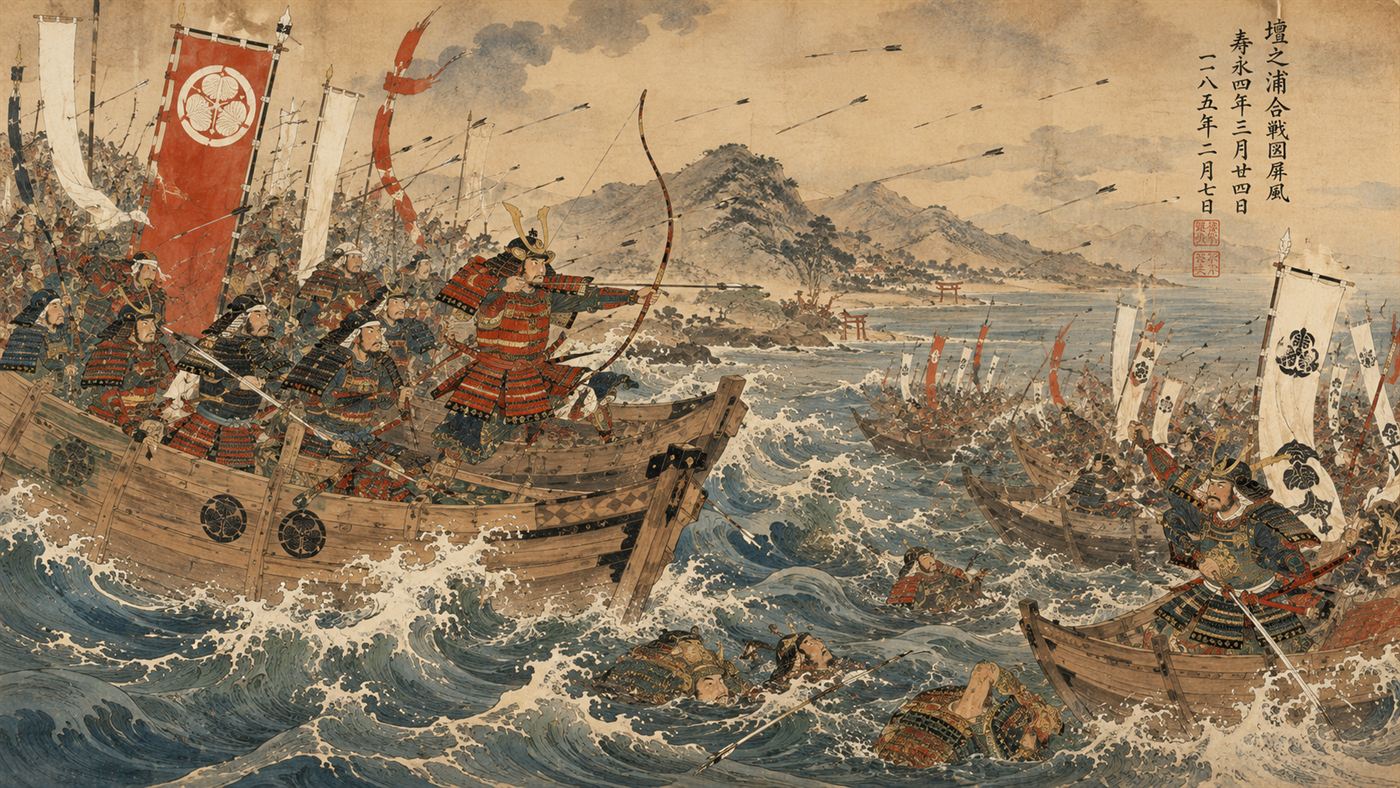
The legend reaches back to 1185 and the Battle of Dan-no-ura, the sea battle that ended a long and bloody war between two great clans of medieval Japan. The losing side, the Heike, were destroyed almost completely, and rather than be captured many of their warriors, and even their child emperor, threw themselves into the waves to drown.
Afterwards, fishermen working those same waters began pulling up crabs whose shells seemed to wear the furious faces of the fallen. People concluded that the spirits of the drowned Heike warriors had passed into the crabs, doomed to haunt the scene of their defeat forever, and so the little creatures became known as the Heikegani, the Heike crabs.
Why the Heikegani looks like a face
The face is real in the sense that the pattern truly is there, but it is not a portrait of anything. The bumps and ridges on the shell are the external signs of where powerful muscles attach to the inside of the crab's body. Those ridges serve a structural purpose, and the fact that they happen to line up into something resembling a scowling face is down to pareidolia, the same quirk of the human brain that lets us see faces in clouds, plug sockets and burnt toast.
In other words, the crab is not trying to look like a samurai any more than a cloud is trying to look like a rabbit. Our minds are simply wired to find faces everywhere, and this particular arrangement of ridges trips that wiring with uncanny force. Related crabs carry similar patterns without any legend attached at all.
Carl Sagan's beautiful theory
In his 1980 television series Cosmos, the astronomer Carl Sagan reached for the Heikegani to explain how selection shapes living things. He told it like this: generation after generation, fishermen who hauled up a crab with a face-like shell felt a flicker of respect for the drowned samurai and threw it back, while crabs without the face were kept and eaten. Over many centuries, Sagan suggested, the fishermen had unknowingly bred the crabs toward ever more human-looking faces, a slow act of artificial selection performed by superstition.
It is a gorgeous idea, and as a way of showing how selection works it has inspired countless people to think about evolution. The trouble is that, as a description of these particular crabs, it appears to be wrong.
Did fishermen breed the samurai face into Heikegani?
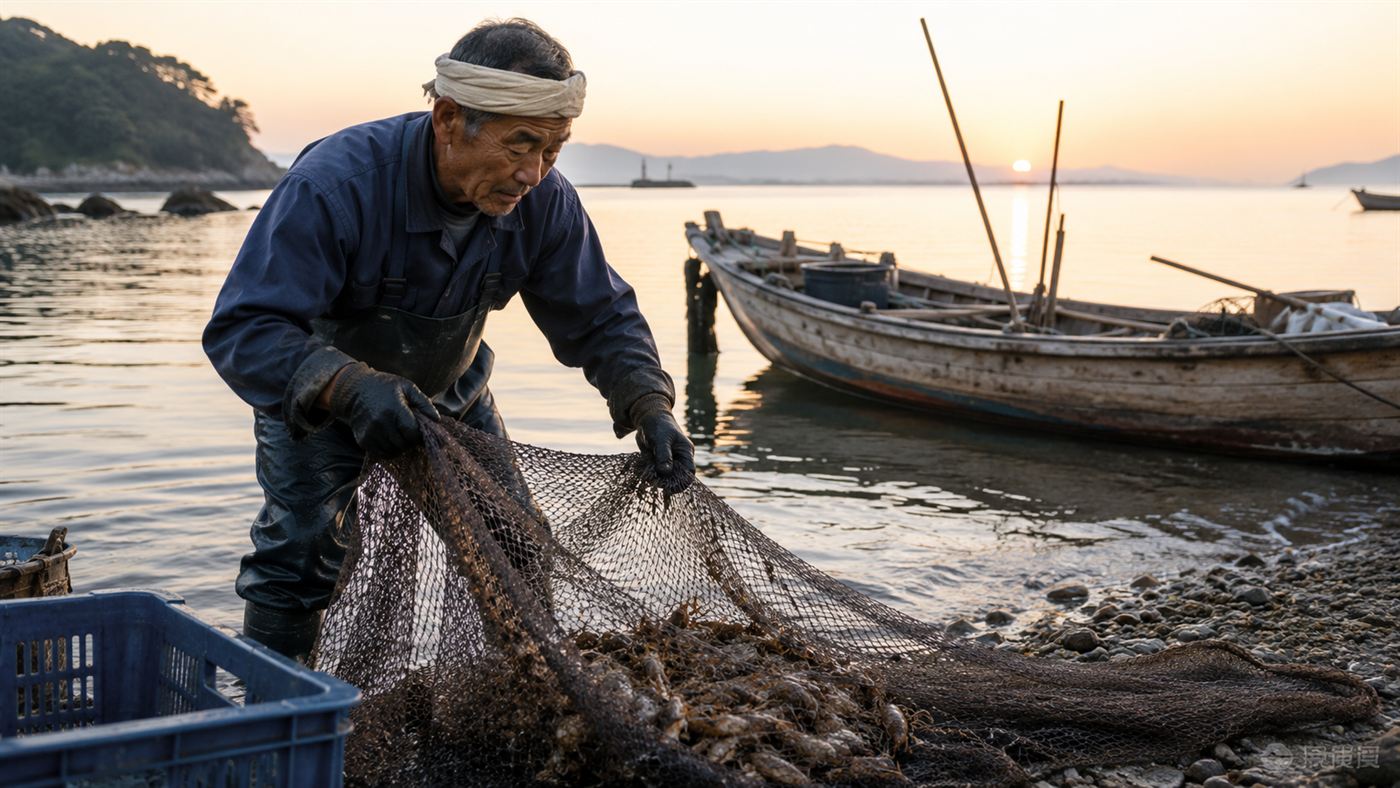
The flaw is simple and a little deflating. Nobody actually eats Heikegani, because they are far too small to be worth catching for food, which means there was never any pressure of the kind Sagan described, no harvesting of plain crabs and sparing of face-like ones. Without that pressure, fishermen throwing back the odd crab could not have reshaped the species at all.
On top of that, the face-making ridges are there for mechanical reasons that have nothing to do with looking human, and similar patterns show up in crab relatives far from Japan. The likeliest truth is that the crabs always looked roughly like this, people noticed the resemblance after the battle, and a powerful story grew up around a coincidence of anatomy.
Are Heikegani really reincarnated samurai?
As biology, of course, the answer is no. The crabs are not warriors reborn, the faces are pareidolia, and the pattern predates the battle that supposedly created it. There is no ghost in the shell, only muscle, ridge and the pattern-hungry human eye. The honest version of the story is less magical than either the legend or Sagan's theory, but in a way it is more interesting, because it is really a story about us.
What the Heikegani shows is how readily people build meaning out of coincidence, how a chance resemblance can gather a battle, a religion's idea of rebirth, and even a famous scientist's lesson all around one small crab. The face on the shell was always there. Everything else, the samurai, the selection, the ghosts, we added ourselves.
A small crab, a lost battle and our endless hunger to see faces and meaning where there are only ridges and chance. Does it spoil the magic to learn the samurai crab is just pareidolia, or does the real story of how we invented its face beat the legend? Tell us what you think in the comments.
Related reading: the narwhal, whose single spiral tusk built the myth of the unicorn for centuries.