The pangolin's armour stops a lion, and that is exactly why poachers can carry it away
When a lion or a leopard corners a pangolin, the little animal does something almost magical: it tucks its head away and rolls into a ball of overlapping scales so tough that the big cat eventually gives up and walks off. It is one of nature's best suits of armour. Against a human hand it is the worst possible defence, because it turns the animal into something you can simply pick up.
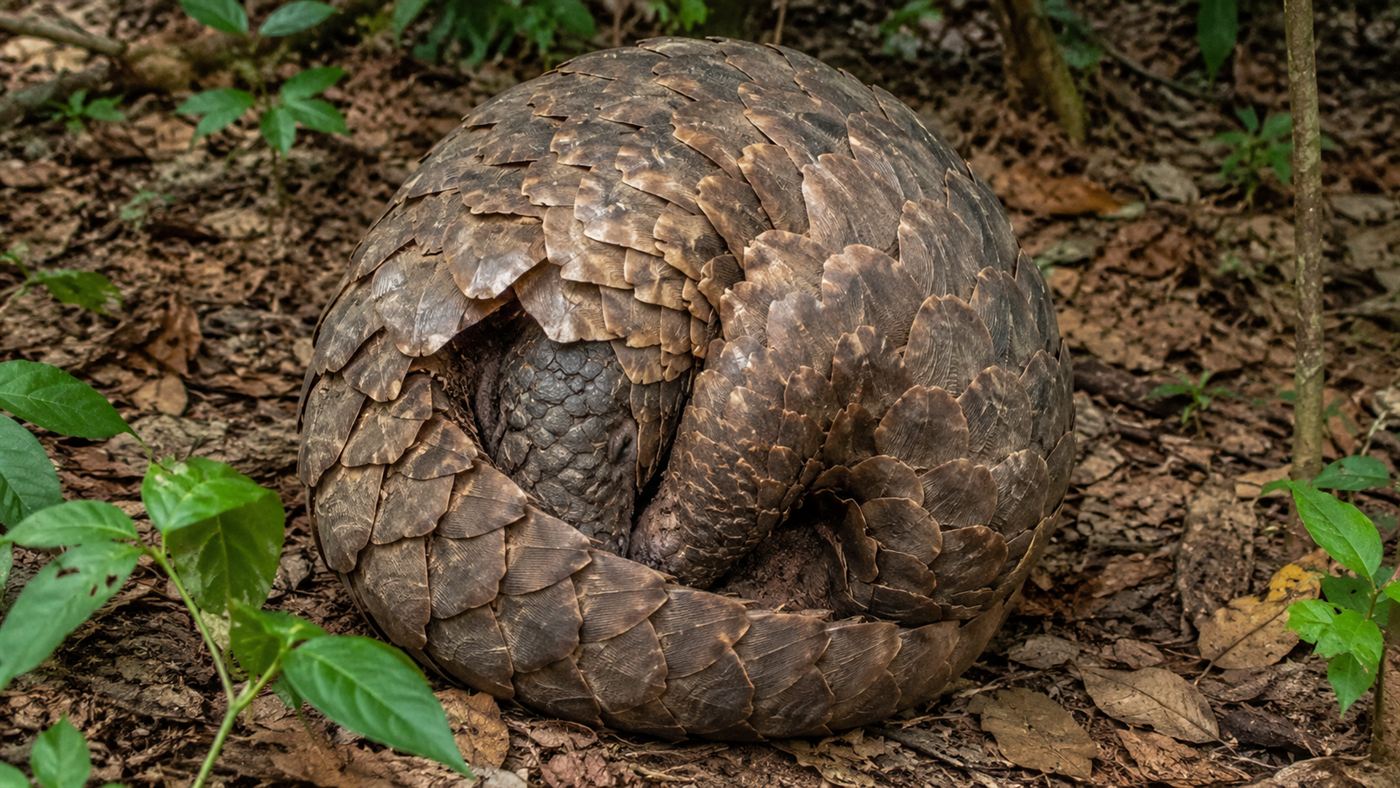
Rolled into a ball, a pangolin can shrug off a lion. It cannot do anything about a person with a sack. Illustration: Watts & Wild.
The pangolin is one of the strangest mammals alive, and most people have never heard of it. It is the only mammal on Earth wrapped head to tail in scales, which gives it the look of a walking pinecone or a small, gentle dragon. Those scales are made of keratin, the very same stuff as your fingernails, and they can account for around a fifth of the animal's entire weight.
There are eight species, four spread across Asia and four across sub-Saharan Africa, and every one of them is in trouble. The reason is brutally simple. The pangolin has become the most trafficked wild mammal in the world, and the scale of the killing is hard to take in.
A ball that beats lions but not people
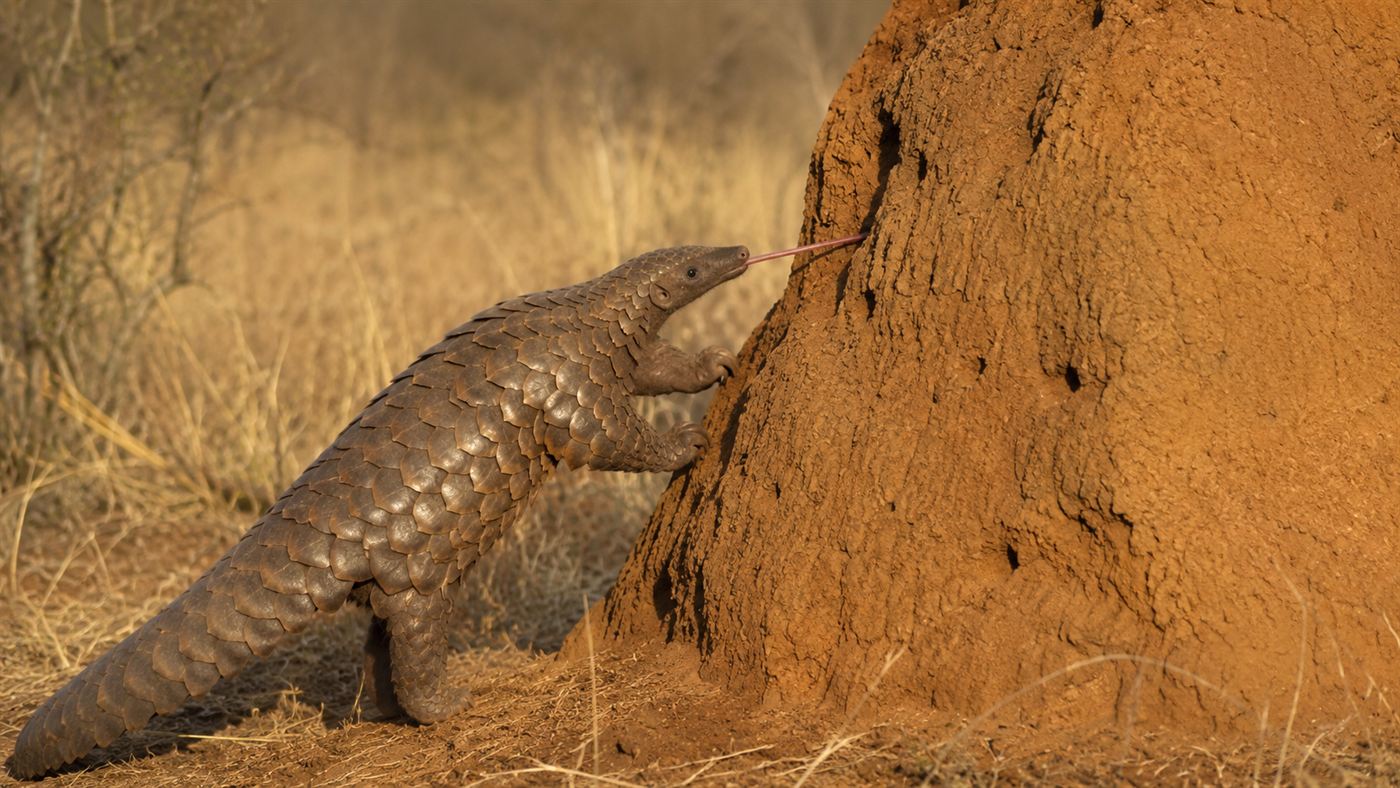
Everything about the pangolin is built around two ideas: eat insects, and avoid being eaten. It has no real teeth and a long, sticky tongue that can be longer than its whole body, anchored deep inside its chest, which it flicks into ant nests and termite mounds. A single pangolin can eat tens of millions of ants and termites in a year, quietly doing the job of a small army of pest controllers.
When danger comes, it curls up, and the curl is genuinely brilliant. The name pangolin comes from a Malay word meaning the one that rolls up, and the armoured ball it makes is so well sealed that lions and tigers cannot bite through it. The cruel twist is that the same trick that defeats every natural predator makes it effortless for a person to lift the motionless ball straight off the ground. The pangolin does not run, does not bite, does not fight. It just waits to be saved by armour that no longer works.
Why the pangolin is hunted to the edge
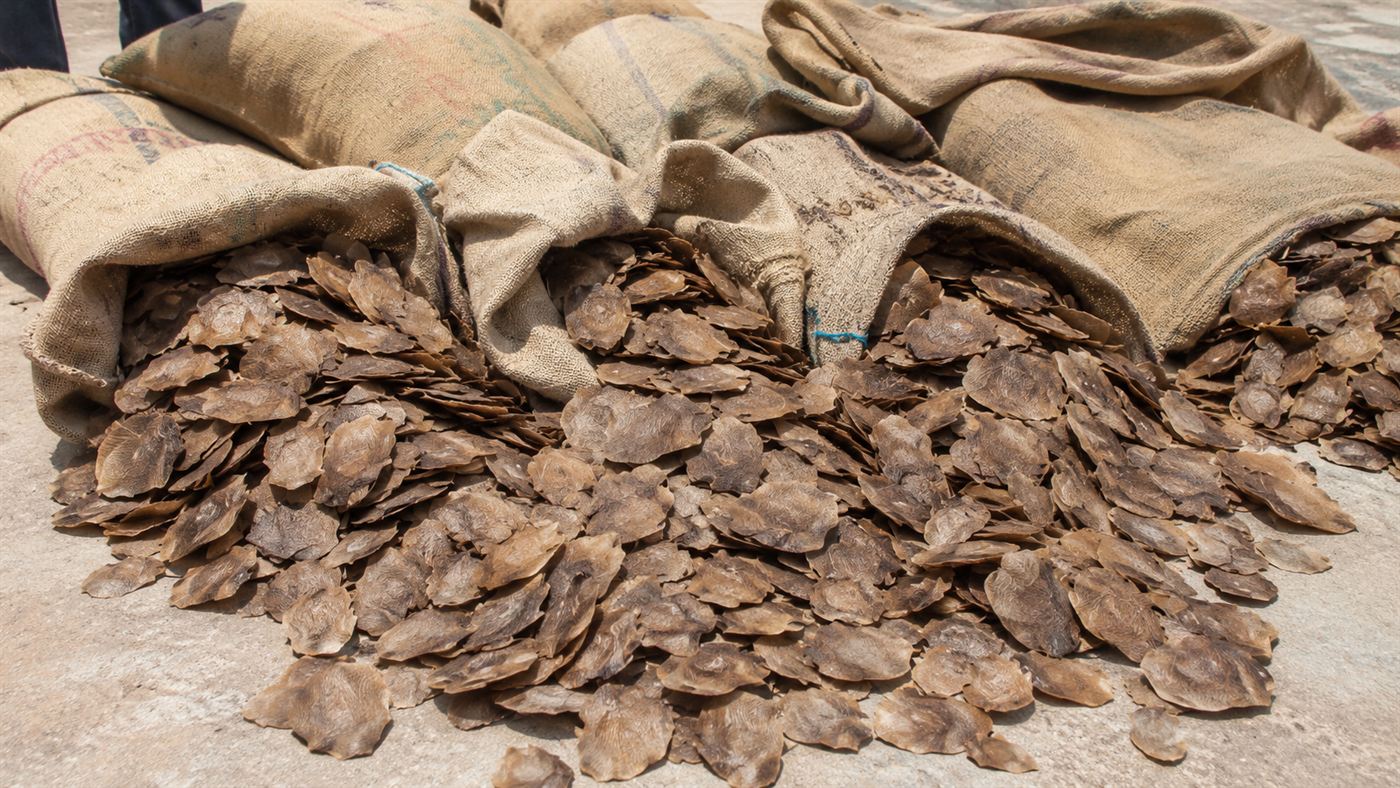
The trade runs on two demands. The scales are boiled, dried and ground up for use in some traditional medicines, where they are believed to treat everything from arthritis to poor circulation. The meat is sold as a luxury, a way of showing wealth at the table in parts of Asia. Estimates of how many are taken run from around 100,000 a year up into the millions, with well over a million thought to have been trafficked in a single recent decade.
Because Asia's pangolins have been so heavily depleted, the trade has swung toward Africa, where huge shipments of scales are now intercepted in ports on their way east. All eight species are protected under the global wildlife trade treaty, which bans commercial international trade in them, and still the seizures keep coming, tonne after tonne of scales from animals that no longer exist.
The pest controller we are losing
It is tempting to file the pangolin under sad but distant, an exotic creature far from anyone's daily life. That misses the quieter cost. Like bats and vultures and so many unglamorous animals, the pangolin does unpaid work that keeps an ecosystem balanced. Strip the pangolins out of a landscape and the ants and termites they once held in check are left to multiply unchecked.
Their digging aerates the soil and their burrows shelter other animals, so the loss ripples outward in ways no one bothers to measure until they are gone. It is the same story we keep relearning, that the value of nature's invisible workers only becomes obvious in their absence, by which point the bill is already due.
The honest catch
A few things deserve straight talk. The medicinal claims behind the scale trade have no scientific support whatsoever, because the scales are simply keratin; eating them is, chemically, no different from chewing your own fingernails. The trafficking numbers are genuine estimates rather than exact counts, since this is a hidden, illegal trade, and the truth is almost certainly worse than the figures that get confirmed. The pangolin is dying for a cure that was never real.
There is one more thread worth handling carefully. Pangolins were caught up in the search for the origins of the recent coronavirus pandemic, because related viruses turned up in trafficked animals, but their exact role was never proven and remains debated. What is not in doubt is the core of the story. A shy, harmless, insect-eating animal, armoured against everything but us, is being carried out of the world's forests by the sackful, and most people will never even learn its name.
An animal whose armour can beat a lion is being lifted out of the forest by the sackful, for a medicine that does nothing. Does an animal most people have never heard of deserve the same fight we give to elephants and tigers? Tell us what you think in the comments.
Related reading: how India lost almost all its vultures to a single drug, and what it cost people.