A burned-out filmmaker free-dived a freezing kelp forest every day for a year and built a friendship with a wild octopus, and the film of it won an Oscar
A broken man, a cold sea, and an animal with three hearts and no bones. My Octopus Teacher sounds like the unlikeliest film ever to win an Academy Award, and yet its story of one diver and one octopus moved millions and changed how people see the ocean.
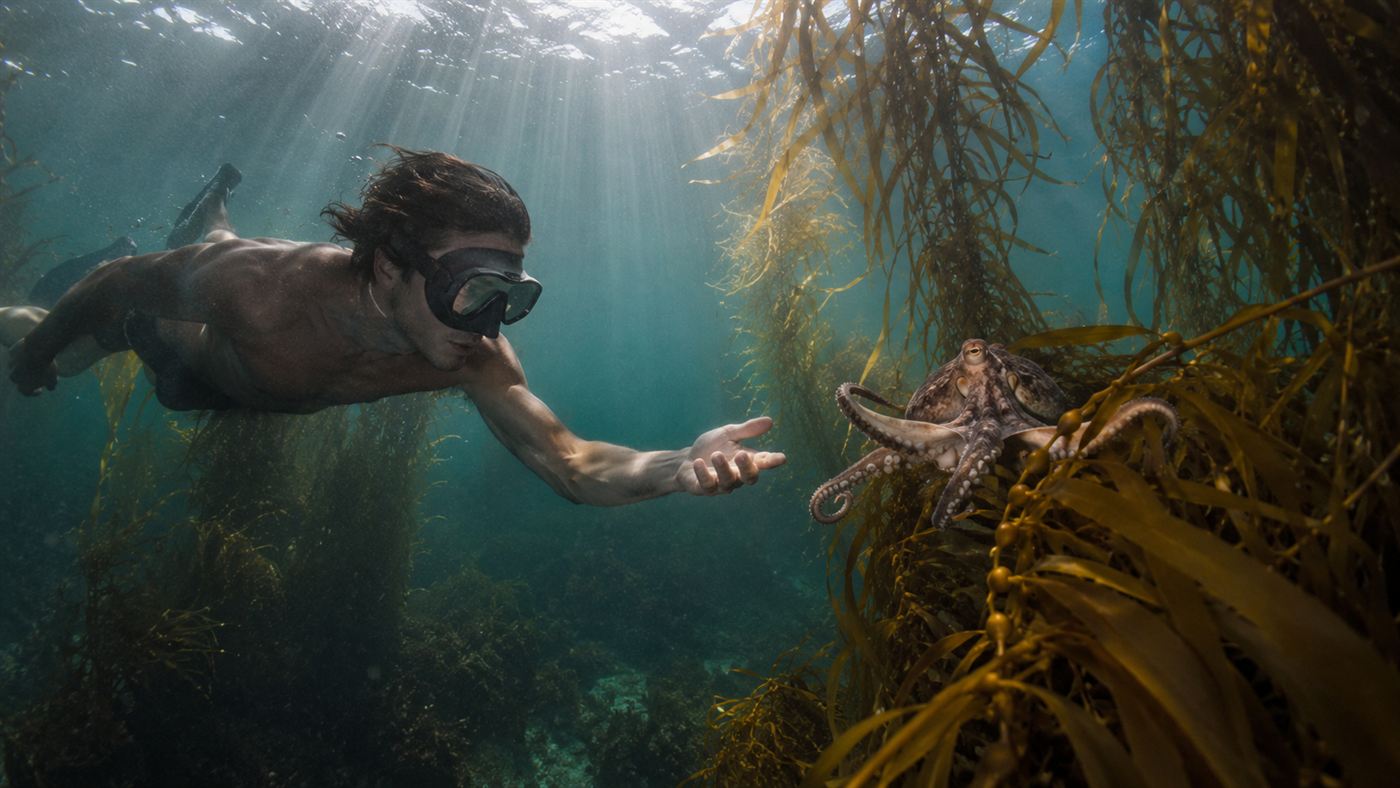
My Octopus Teacher turned a year of daily dives in a South African kelp forest into one of the most loved nature films ever made. Illustration: Watts & Wild.
My Octopus Teacher is, on paper, a hard sell: a quiet documentary about a middle-aged man who befriends a mollusc. Yet when it landed on Netflix in 2020, it became a worldwide sensation and went on to win the Academy Award for Best Documentary Feature. The reason is that it is not really a wildlife film at all. It is a story about loneliness, attention, and what happens when a person decides to truly watch another creature's life.
At its centre is the South African filmmaker Craig Foster, who was burned out and adrift when he started diving, and a wild common octopus who, over the course of a year, appeared to accept him into her world. What unfolded between them became both a personal rescue and a window into one of the strangest, smartest animals in the sea.
My Octopus Teacher is a 2020 documentary about filmmaker Craig Foster, who free-dived every day for a year in a cold kelp forest off South Africa and built a relationship with a wild common octopus. He filmed her life until she mated, laid eggs and died, and the experience helped pull him out of a personal crisis.
How Craig Foster found the kelp forest
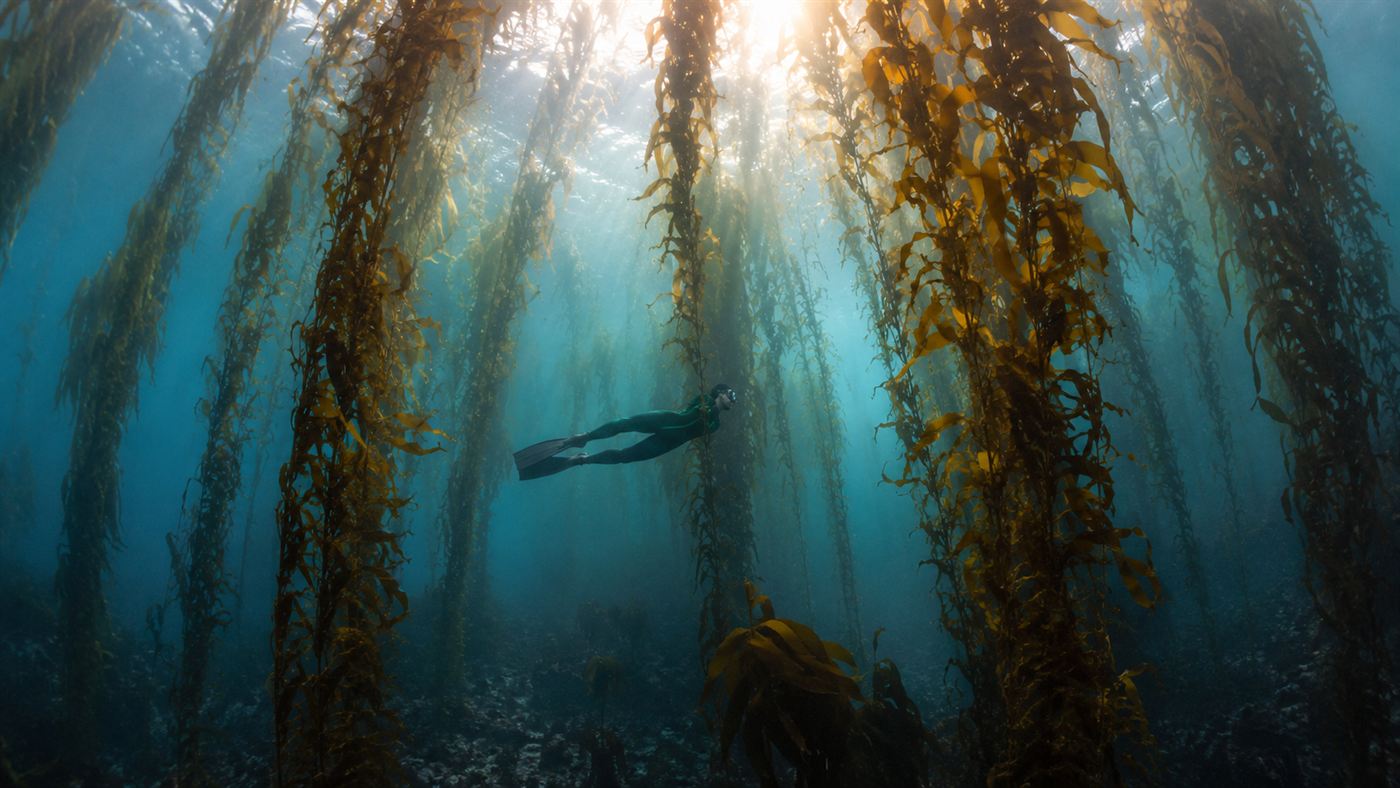
The film grew out of a crisis. Craig Foster, an accomplished documentary maker, had hit a wall of exhaustion and depression, unable to work or feel much of anything. As a way back to himself, he returned to the cold Atlantic water of False Bay near Cape Town, where he had played as a boy, and made a vow: he would free-dive there every single day, without a wetsuit or an air tank, into the chilly green kelp forest just offshore.
That daily discipline changed him. Diving on a single breath in cold water forces a kind of total presence, and as his body adapted, Craig Foster began to really see the kelp forest as a living system rather than a backdrop. It was during this ritual that he noticed an octopus doing something so curious that he decided to come back the next day, and the next, to watch her.
A year with a wild octopus
What followed was an extraordinary act of patience. Craig Foster visited the same common octopus almost every day for about a year, moving slowly and never threatening her, until the famously wary animal began to tolerate and then, apparently, trust him. In the film's most quietly astonishing moment, she reaches out and rests her arms on his hand and chest, an octopus choosing to touch a human.
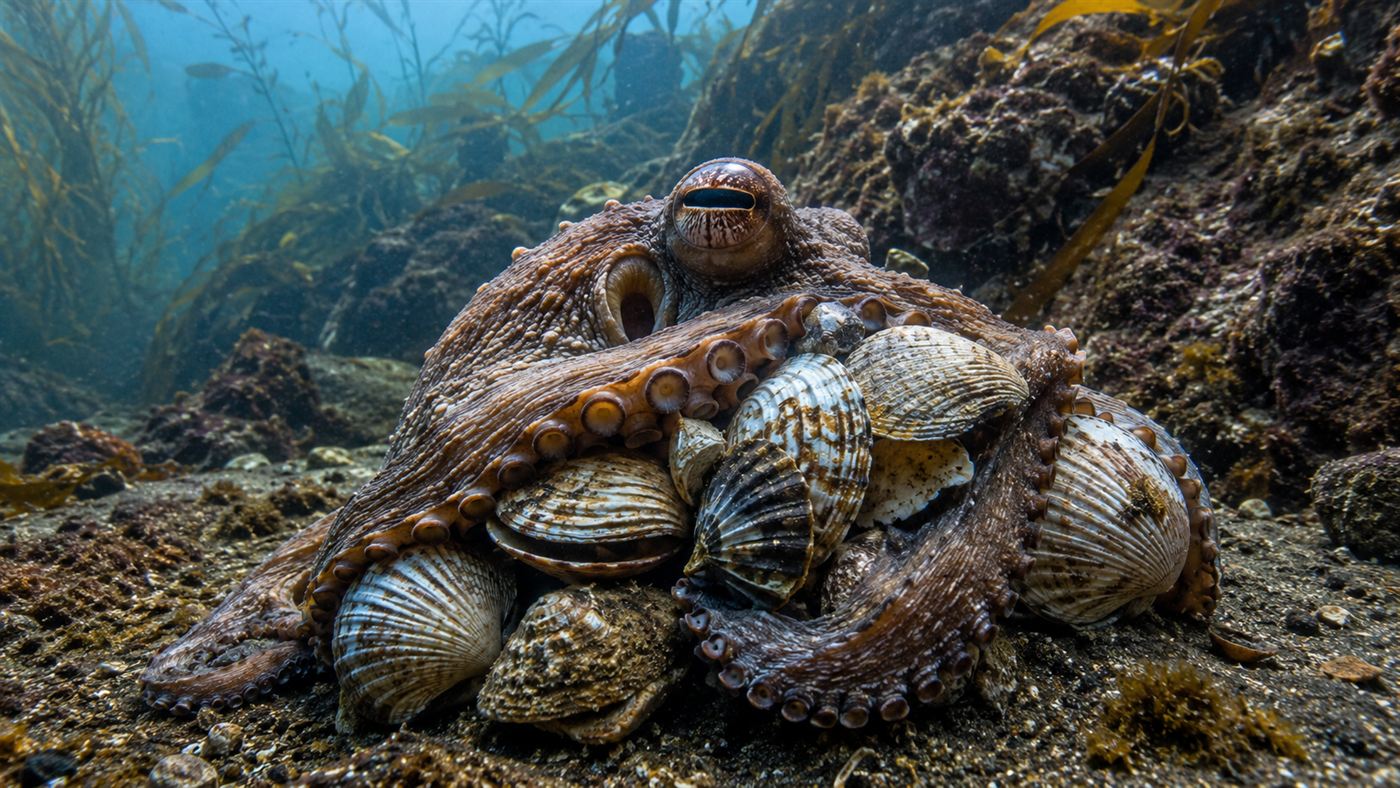
Over that year he documented the full arc of her short life. He filmed her hunting crabs, solving problems, and using shells and stones to build armour around herself, vivid demonstrations of octopus intelligence. He watched her outwit pyjama sharks in the kelp forest, lose an arm to one and slowly regrow it, and on one famous occasion escape a shark by clambering onto its back. It is a portrait of a wild creature living by its wits, captured with a tenderness that is hard to look away from.
What the octopus taught the filmmaker
The emotional core of My Octopus Teacher is what the relationship did for the man. By committing to show up every day and pay close attention to another life, Craig Foster slowly climbed out of his own depression. The octopus, he says, taught him to feel again, to be present, and to understand that he was part of the natural world rather than separate from it, a lesson he then passed on to his own son.
That sense of connection has a hard ending built into it. A common octopus lives only about a year, and the species is semelparous, meaning it reproduces just once and then dies. Near the end of the film she mates, lays her eggs, and slowly fades away while guarding them, exactly as her biology dictates. Foster channelled the experience into the Sea Change Project, a conservation effort to protect South Africa's kelp forest, turning a private friendship into a public cause.
Why My Octopus Teacher struck such a nerve
Released into the strange, isolated early days of the pandemic, My Octopus Teacher found a vast audience hungry for exactly its message: slow down, pay attention, connect. It won the Oscar in 2021 and turned an obscure stretch of South African coast and an eight-armed mollusc into something millions of people suddenly cared about. Few nature films have done more to make ordinary viewers reconsider the inner life of an animal.
It also rode a wave of growing scientific interest in octopus intelligence. Octopuses have huge nervous systems, much of it distributed through their arms, and they solve puzzles, use tools, and show what looks like curiosity and play. The film gave a human face, and a single unforgettable individual, to a body of research suggesting these animals think in ways profoundly unlike, and yet eerily comparable to, our own.
The honest catch
For all its beauty, My Octopus Teacher earns a few raised eyebrows. The biggest is anthropomorphism: a common octopus is a solitary animal that lives a single year, and it is a stretch to assume she experienced anything like the friendship Craig Foster describes. Much of the bond is, inevitably, a human reading projected onto a creature whose mind we barely understand, and the narrative was shaped, as all documentaries are, to tell a clean, moving story.
Some biologists also gently note that constant daily contact with a wild animal is not necessarily harmless or something to imitate. None of that erases the film's real value, though. The octopus intelligence it shows is genuine, the science behind it is sound, and its effect on how people regard the ocean and the kelp forest has been enormous. Even if we cannot know what the octopus felt, My Octopus Teacher proved that simply paying close, patient attention to another life can change a human one.
A man cured his despair by paying daily attention to one wild octopus, and millions felt it through the screen. Do you think he truly befriended her, or do we just need to believe an animal can love us back? Tell us in the comments.
Related reading: A single whale has crossed the Pacific for decades singing at a pitch no other whale answers, the loneliest whale on Earth. See also the cuttlefish, the octopus's colorblind cousin and the sea's master of disguise.