Wisdom the albatross is at least 74 years old, has flown three million miles, outlived the scientist who banded her in 1956, and is still raising chicks
Somewhere in the middle of the Pacific, a seabird with a worn red leg band keeps coming home to lay another egg. Wisdom the albatross has been doing this since before the space age, which makes her, as far as anyone knows, the oldest wild animal of her kind ever recorded.
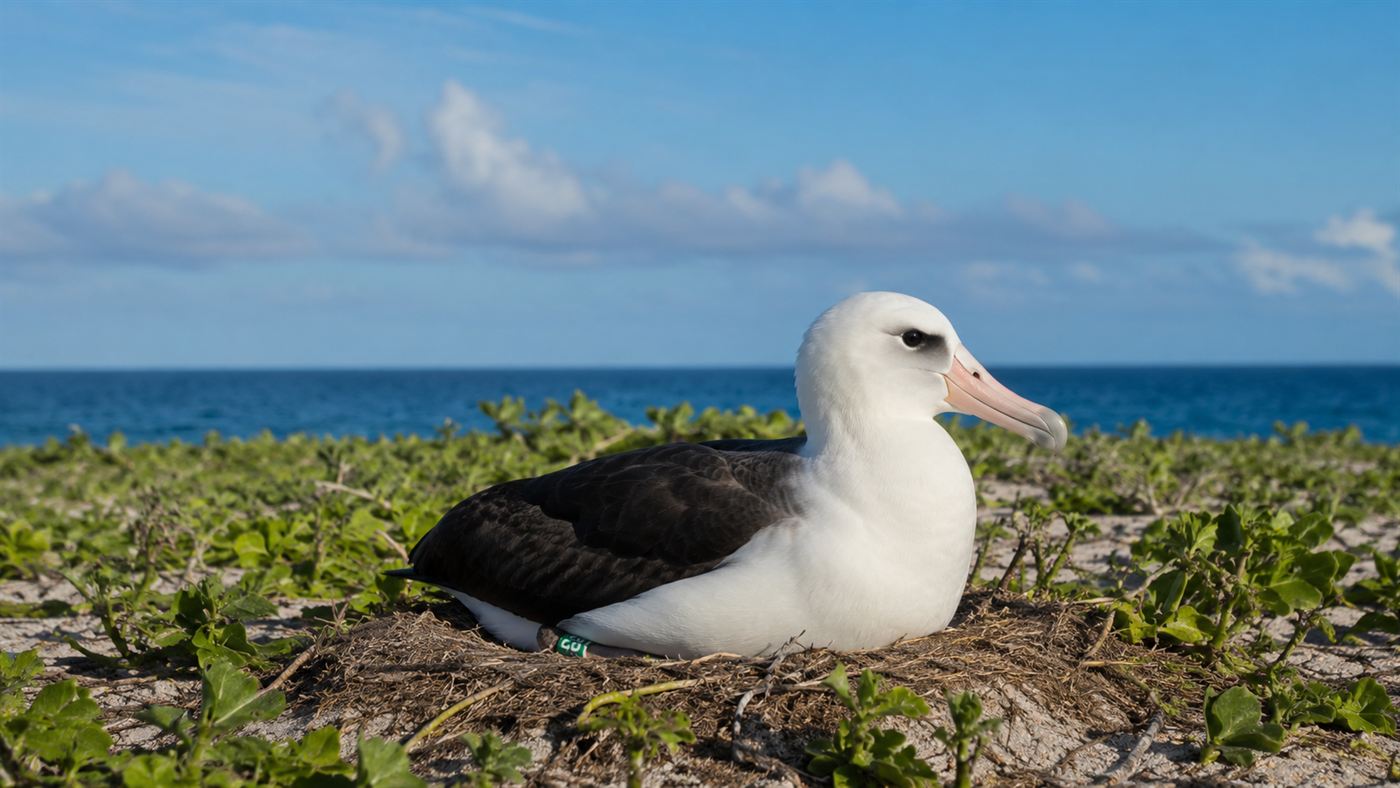
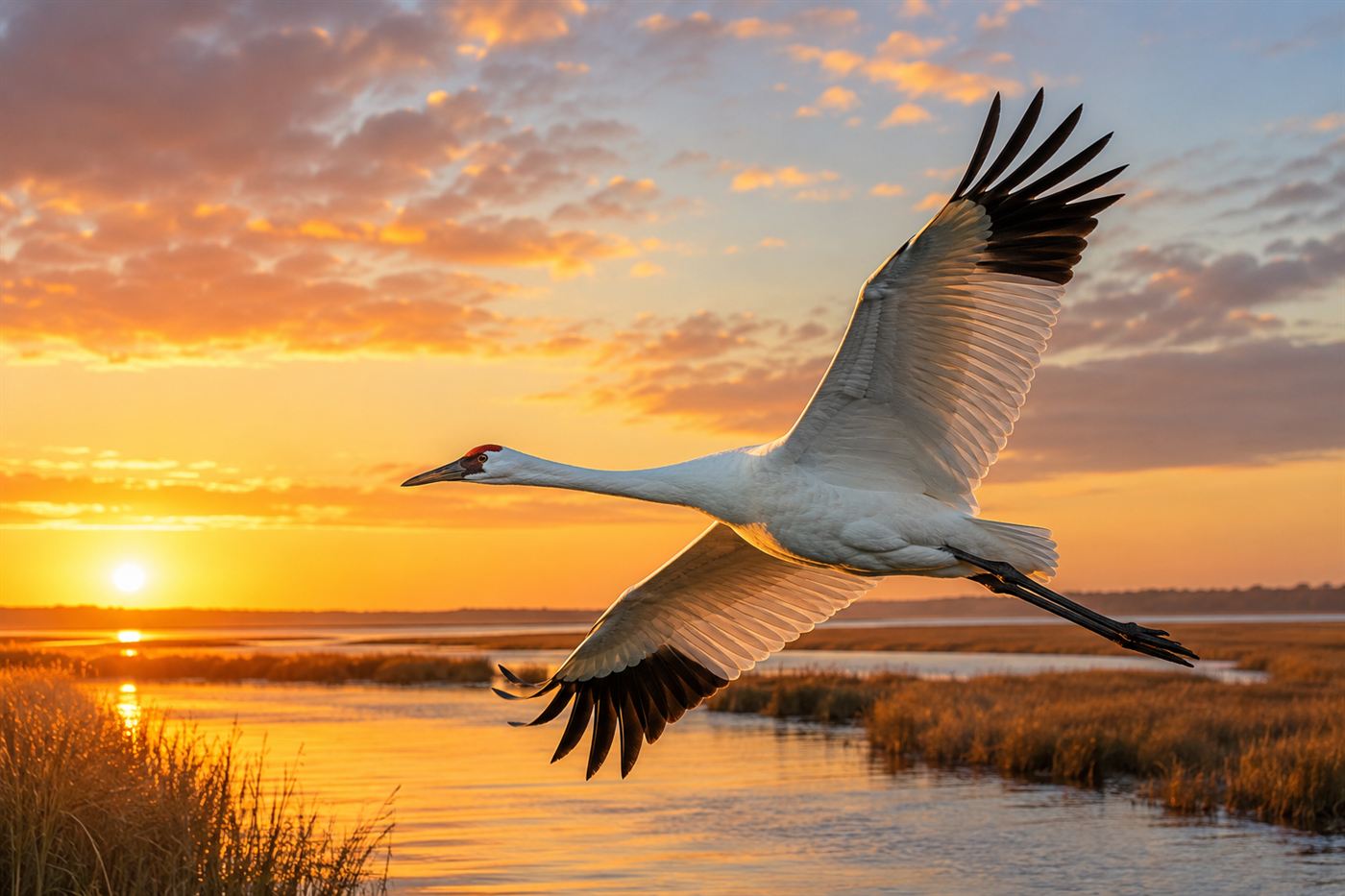
Wisdom has returned to the same patch of Midway Atoll to nest for nearly seventy years, raising chick after chick. Illustration: Watts & Wild.
Wisdom the albatross is a female Laysan albatross, a large white seabird of the open Pacific, and she is the oldest known wild bird on the planet. She is at least 74 years old, an age that sounds impossible for a creature that spends almost its entire life riding the wind over the ocean. She still returns each winter to a tiny scrap of land to find a mate, lay an egg, and raise a chick, exactly as she has done for most of a century.
Her story is really two stories braided together: the astonishing endurance of one bird, and the patient human habit of paying attention. Without a metal band slipped onto her leg in 1956, nobody would ever have known that the same Laysan albatross was coming back, decade after decade, long after the man who tagged her was gone.
Wisdom the albatross is at least 74 years old, making her the oldest known wild bird in the world. She was banded as an adult at Midway Atoll in 1956 and estimated to be about five then, and she is still returning to nest and lay eggs, having outlived several mates and the scientist who first tagged her.
The band that revealed the oldest wild bird
The whole story turns on a small act of science in 1956. A young biologist named Chandler Robbins was working at Midway Atoll, a remote ring of islands northwest of Hawaii, banding nesting albatrosses to study them. One of the birds he fitted with a numbered band was already a breeding adult, which meant she was at least five years old, the youngest age a Laysan albatross starts to breed.
That bird was Wisdom. Decades later, in 2002, Chandler Robbins was back at Midway Atoll and, by an extraordinary coincidence, recorded the very same band on a nesting albatross near where he had first found her. The realisation slowly dawned, as the US Fish and Wildlife Service recounts, that this was very likely the oldest wild bird ever documented, and biologists have followed her ever since, replacing her worn band as the years rubbed the numbers smooth.
Three million miles on the wind
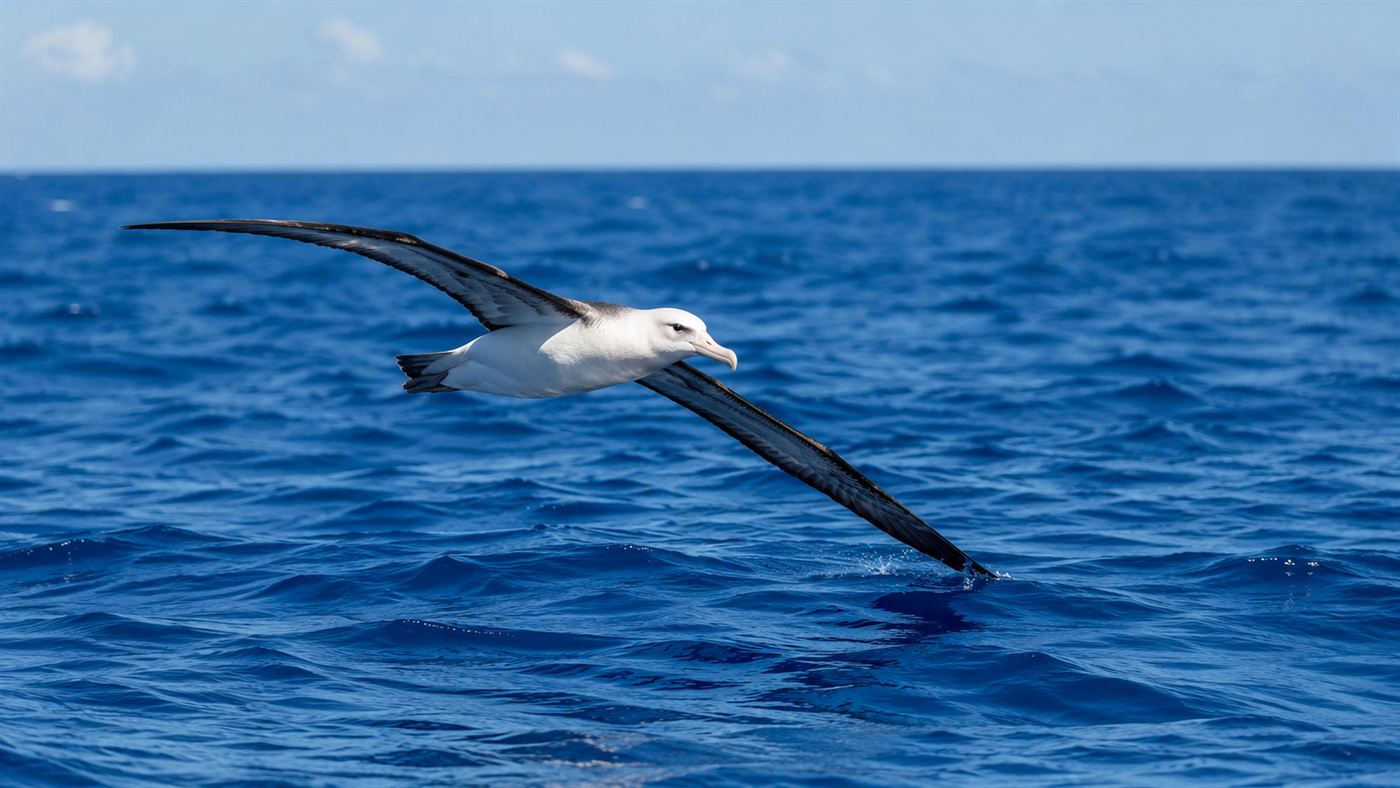
To grasp what 74 years means for an albatross, you have to think about how they live. A Laysan albatross spends the vast majority of its life at sea, sleeping on the water and gliding for hours without a single wingbeat, using the wind over the waves to travel enormous distances in search of squid and fish. They come to land only to breed.
Add up a lifetime of that and the numbers turn dizzying. The US Geological Survey estimates that Wisdom has flown well over three million miles since 1956, the equivalent of roughly 120 trips around the Earth, or several round trips to the Moon. As the oldest wild bird on record, she is also one of the most travelled animals that has ever lived, and almost all of it happened far from any human eye.
Wisdom the albatross, still a mother at 74
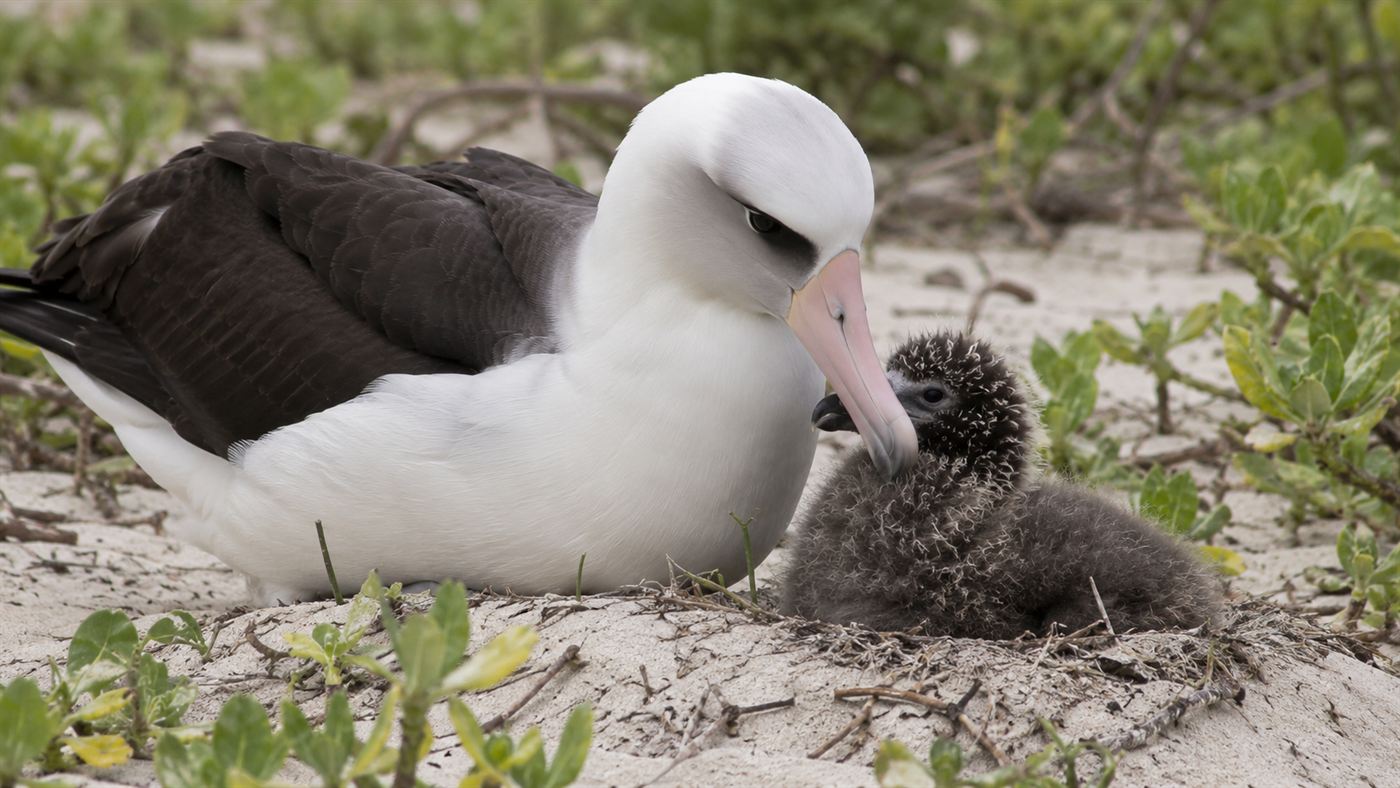
The most remarkable thing about Wisdom the albatross is not just that she is alive, but that she is still doing the hardest job a bird does. Laysan albatross pairs typically mate for life and raise a single chick at a time, an exhausting months-long effort of taking turns to incubate the egg and then fly thousands of miles to bring back food. Wisdom has done this perhaps thirty to forty times, raising an estimated 30 or more chicks.
She has also outlived partners. Albatrosses bond for decades, but over a life this long even a faithful mate eventually fails to return, and Wisdom has found new ones. In late 2024 she came back to Midway Atoll with a new partner and laid another egg at the age of at least 73, as Smithsonian magazine reported, the oldest known bird ever to do so, and a chick hatched in early 2025. That a bird older than the satellites overhead was still tending a newborn is the kind of fact that stops you in your tracks.
The bird that outlived her scientist
There is a quiet poignancy threaded through this. Chandler Robbins spent a long and distinguished career studying birds, and he lived to a great age himself, dying in 2017. The albatross Chandler Robbins had banded as a routine data point back in 1956 was still alive and breeding when he passed, and remains so years later. The scientist is gone; the subject of his fieldwork flies on.
It is a reminder of why the slow, unglamorous work of tagging and counting matters. A single band from Chandler Robbins turned an anonymous seabird into Wisdom the albatross, a creature we can actually follow through time, and through her we have learned that these birds can live far longer and breed far later than anyone assumed. One careful decision in 1956 is still teaching us things seventy years on.
The honest catch
A few caveats keep the wonder honest. Wisdom's age is a minimum, not a measurement, since she was already an adult when banded, so she could be older, and "oldest known" really means oldest known to us; somewhere out there an unbanded Laysan albatross could be older and we would simply never know. Her recent breeding is real but fragile, and not every late egg leads to a chick that survives its first perilous year.
And her home is under threat in ways that have nothing to do with her age. Midway Atoll is low and flat, exposed to rising seas and storm surges that can wash out nests, and its beaches are littered with plastic that adult albatrosses mistakenly feed to their chicks, killing many. Wisdom is a genuine marvel, the oldest wild bird we have ever found, but she is also an ambassador for a species, and an ocean, that need a great deal more looking after.
A single seabird has outflown the Moon many times over and outlived the man who tagged her, and she is still a mother. Does knowing one wild animal across seventy years change how you think about the rest of them? Tell us in the comments.
Related reading: Pilots in crane costumes flew ultralight planes to teach a nearly extinct bird how to migrate again.