It is colorblind, yet it is the greatest quick-change artist the ocean has ever produced
Watch one glide over a reef and its skin becomes a screen, flashing stripes, blotches and rolling waves of colour that vanish into the background in the blink of an eye. Now learn the twist that makes it almost unbelievable. The cuttlefish, the finest colour-matcher in the sea, almost certainly cannot see colour at all.
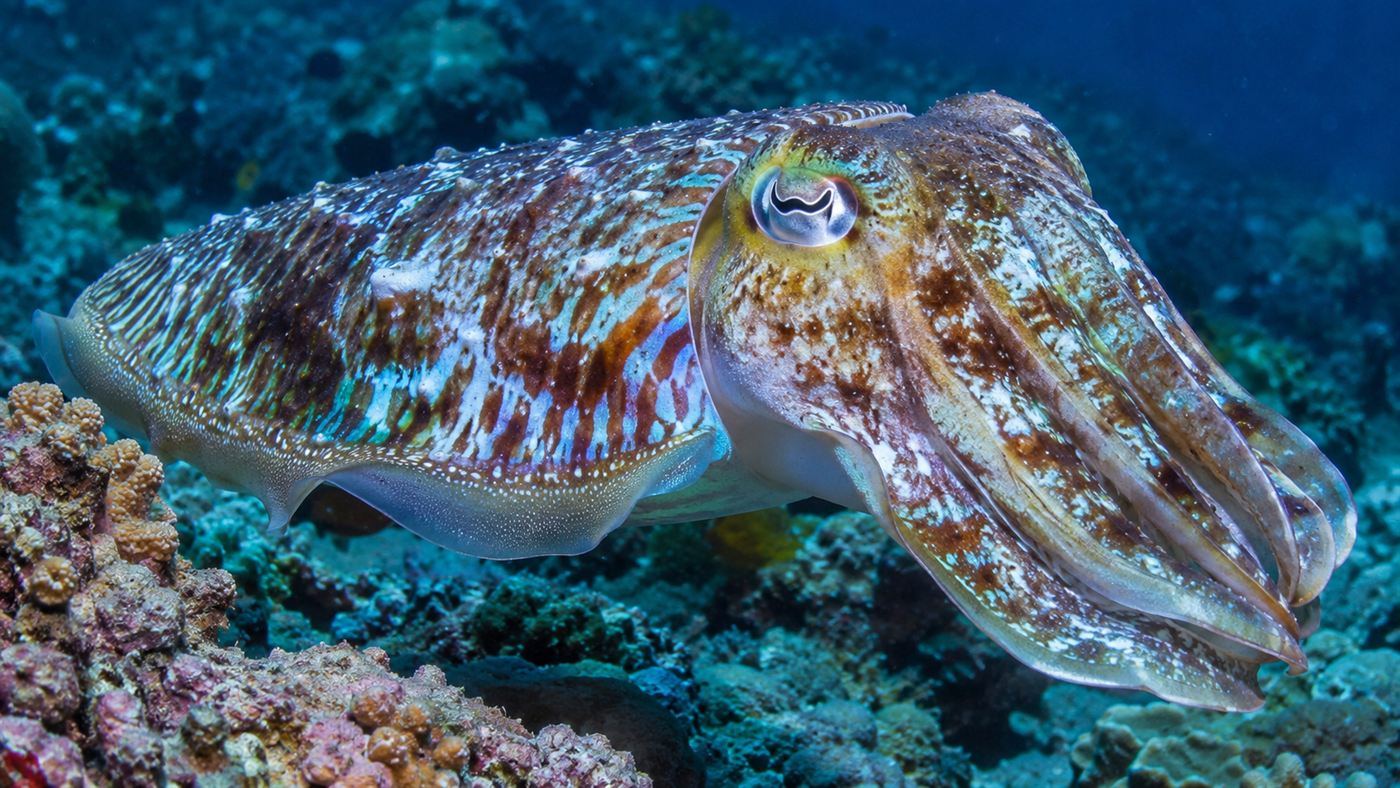
In a heartbeat the cuttlefish can repaint its entire body to match whatever lies beneath it. Illustration: Watts & Wild.
For all the octopus gets the headlines, its cousin the cuttlefish may be the strangest and cleverest of the lot. It is not a fish at all but a soft-bodied cephalopod, and it carries one of the most sophisticated displays in nature on its own skin, controlled by one of the largest brains of any creature without a backbone.
What makes it truly mind-bending is the gap between what it can do and what it should be able to do. By every test we have, this living kaleidoscope is colourblind, and yet it paints itself in perfect colour anyway.
A quick-change artist with no equal
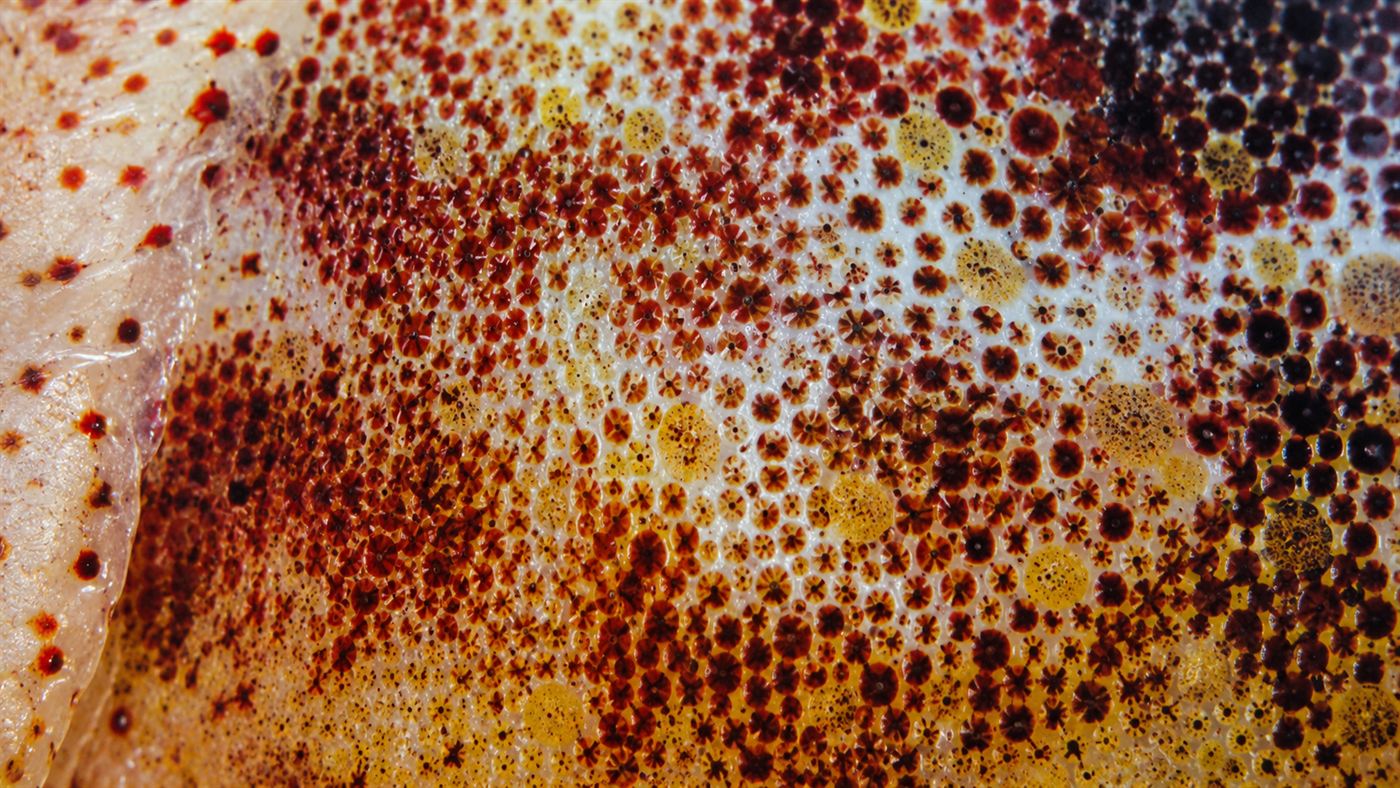
The cuttlefish's skin is a layered marvel. Just beneath the surface sit millions of tiny sacs of pigment that it can squeeze or relax to flash different colours, backed by deeper layers that bounce and scatter light to add shimmer and sheen. By controlling all of this at once, the animal can change its colour, its pattern and even the texture of its skin in well under a second, melting into sand, rock or coral as it moves.
It is not just hiding, either. Cuttlefish use the same system to talk, throwing pulses of colour across their bodies to court mates, warn rivals and signal mood. The skin is at once a cloak, a billboard and a language, all running faster than you can follow.
How a colorblind cuttlefish matches any color
Here is the paradox that has puzzled scientists for years. Cuttlefish have only a single type of light-sensing cell in their eyes, which by all the normal rules should mean they see the world only in shades of grey, unable to tell red from green. And yet they match the colours of their surroundings with uncanny accuracy.
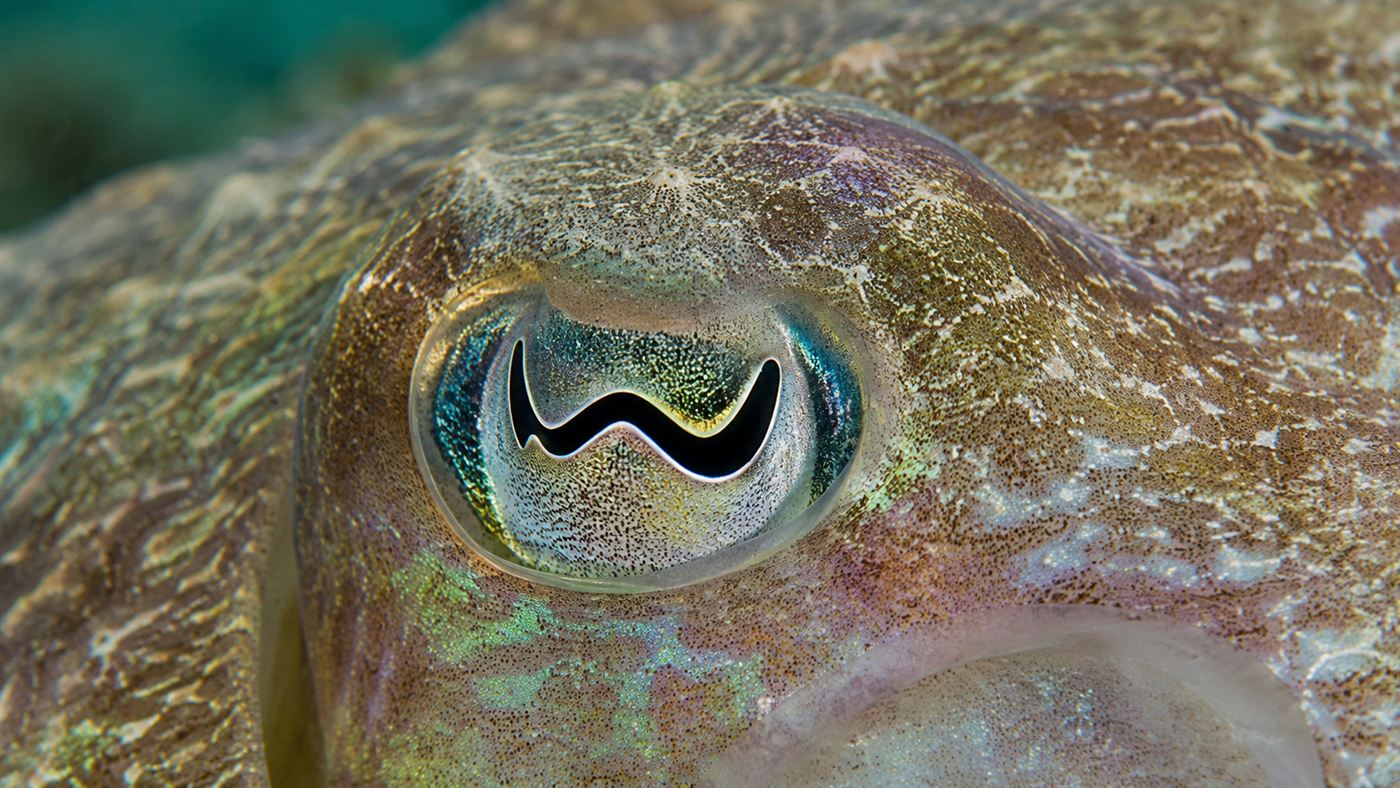
The most intriguing answer points to their weird, W-shaped pupils. A pupil like that smears incoming light so that different colours come into focus at slightly different depths, a flaw most eyes try to avoid. The leading idea is that the cuttlefish exploits this on purpose, judging colour not from colour-sensing cells but from which wavelengths are sharply in focus, in effect reading colour through blur. It is a startlingly clever workaround, if that is really what is happening.
The hypnotist's trick
When it is hunting, the cuttlefish has one more piece of theatre. It can send slow, rhythmic bands of dark colour rolling across its body toward its prey, a hypnotic display known as the passing cloud that seems to mesmerise or unsettle small crabs and fish just long enough for the cuttlefish to strike.
The attack itself is just as dramatic. Two long feeding tentacles, normally tucked away, shoot out in a fraction of a second to seize the dazed victim. A creature that can both turn invisible and put on a light show to stun its dinner is operating on a level most predators never reach.
A mind in eight arms
All of this is run by a remarkable brain. The cuttlefish has the largest brain-to-body ratio of any invertebrate, and recent experiments suggest it uses that brainpower in ways we used to think were reserved for clever mammals and birds. Cuttlefish have passed a version of the famous marshmallow test, choosing to wait for a better meal instead of grabbing an immediate one, and the most patient individuals also turned out to be the fastest learners.
They are full of other tricks too. Some males disguise their own skin to look like a female so they can slip past larger rivals and reach a mate unnoticed. For an animal that usually lives only a year or two and dies soon after breeding, the cuttlefish packs an astonishing amount of cunning into a very short, very colourful life.
Are cuttlefish really colorblind?
It is worth being honest about how much we still do not know. By the standard test of counting light-sensing cells, the cuttlefish truly does appear colourblind, and the clever idea about W-shaped pupils and blurred focus is a strong, well-argued hypothesis rather than a settled fact. What is certain is that the animal behaves as if it sees colour beautifully, whatever the mechanism turns out to be.
Cuttlefish also have a second visual superpower we often forget: they can see the polarisation of light, a property invisible to us, which gives them yet another channel of information about their world. Between that and their pupil trick, they may experience the reef in ways no human ever could.
How smart are cuttlefish?
Smart enough to make us rethink what intelligence even is. The cuttlefish sits on a completely different branch of the tree of life from us, having evolved its big brain entirely separately, and yet it shows planning, self-control and learning that look eerily familiar. It is one of the clearest examples we have that nature can build a sharp mind more than once, by more than one route.
A short-lived, colourblind sea creature that disguises itself perfectly, hypnotises its food and waits patiently for a better meal is a humbling thing to meet. It suggests the ocean is full of cleverness wearing shapes we barely recognise, in animals we too often think of as just seafood.
A colourblind animal that paints itself in flawless colour, hypnotises its prey and passes a test built for children is one of the ocean's great riddles. If a creature this alien can be this clever, how much intelligence are we walking past every day without noticing? Tell us what you think in the comments.
Related reading: the octopus, the cuttlefish's brilliant cousin and the unlikely star of an Oscar-winning friendship. See also the peacock spider, the pinhead-sized rainbow that dances for its life.