These termites build flat mounds all facing the same way, as natural air conditioning
Travel across parts of northern Australia and you pass field after field of strange grey slabs standing in the grass, tall as a person and thin as a wall, every single one pointing the same way like a graveyard laid out by a surveyor. They were not built by people. The magnetic termites engineered them as living air conditioners.
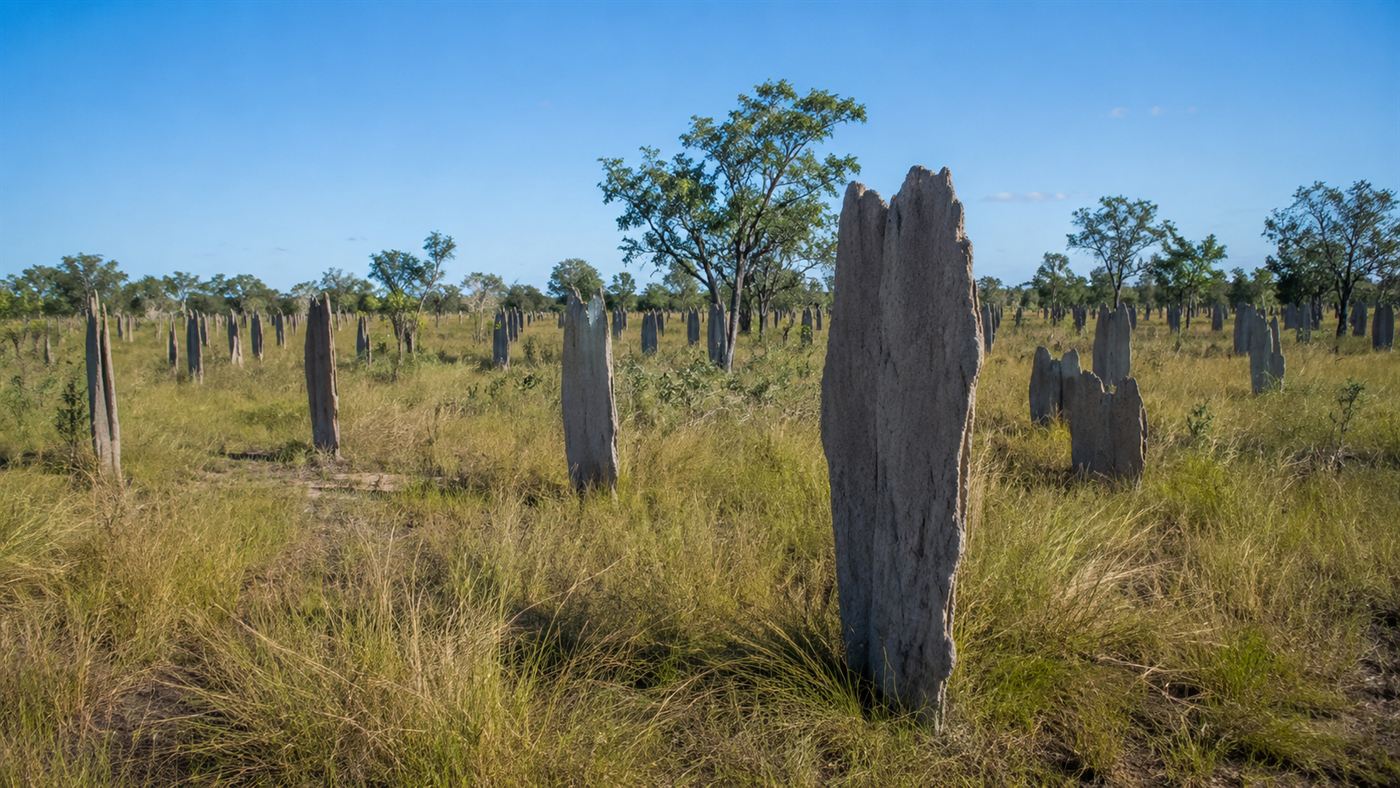
Hundreds of slab-like mounds, all lined up to the same compass bearing. Illustration: Watts & Wild.
We think of climate control as a modern luxury, something that needs power, pumps and refrigerant. The magnetic termites solved the same problem with nothing but the shape and direction of the mud they pile up, in one of the most elegant feats of animal engineering anywhere.
And they did it for a very practical reason: to survive in a land that swings between scorching heat and seasonal floods.
How magnetic termites cool their mounds
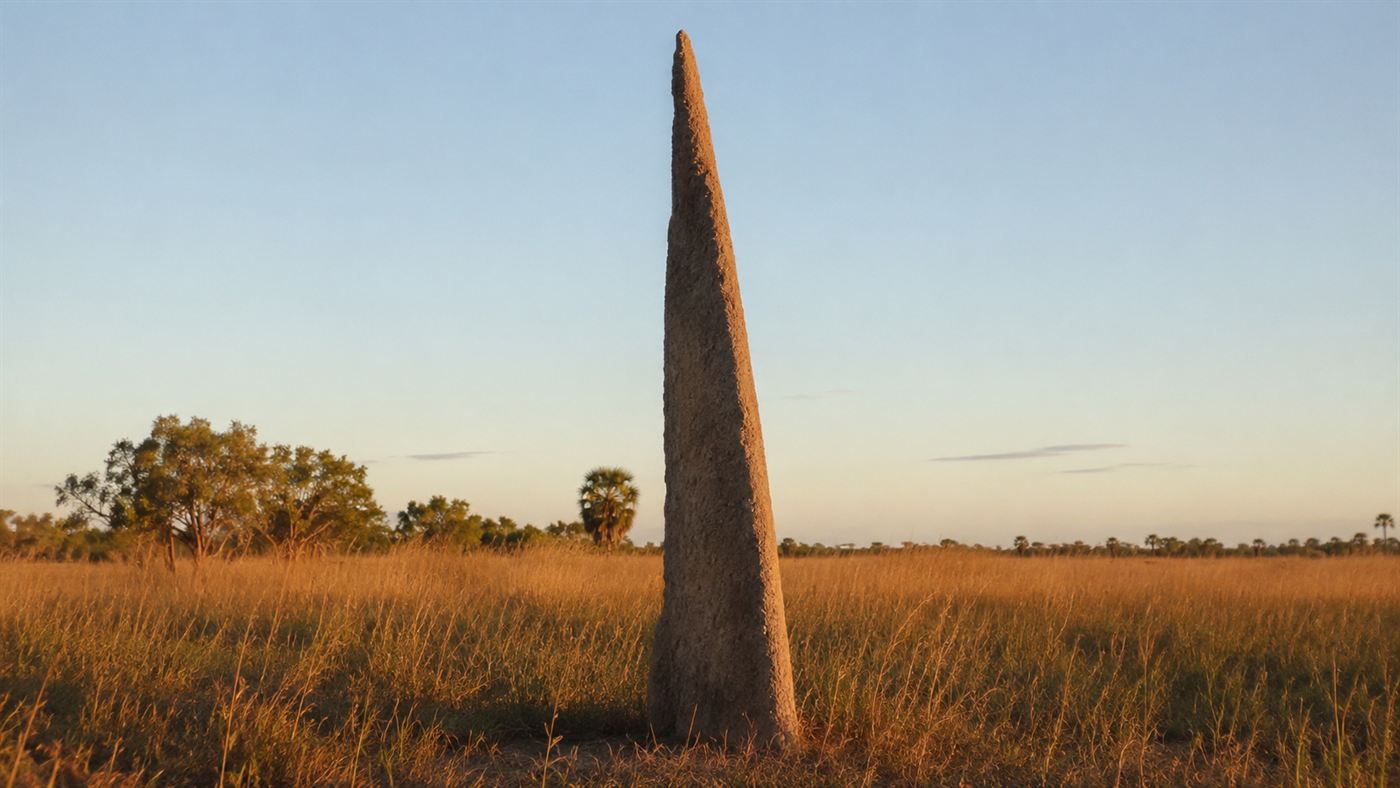
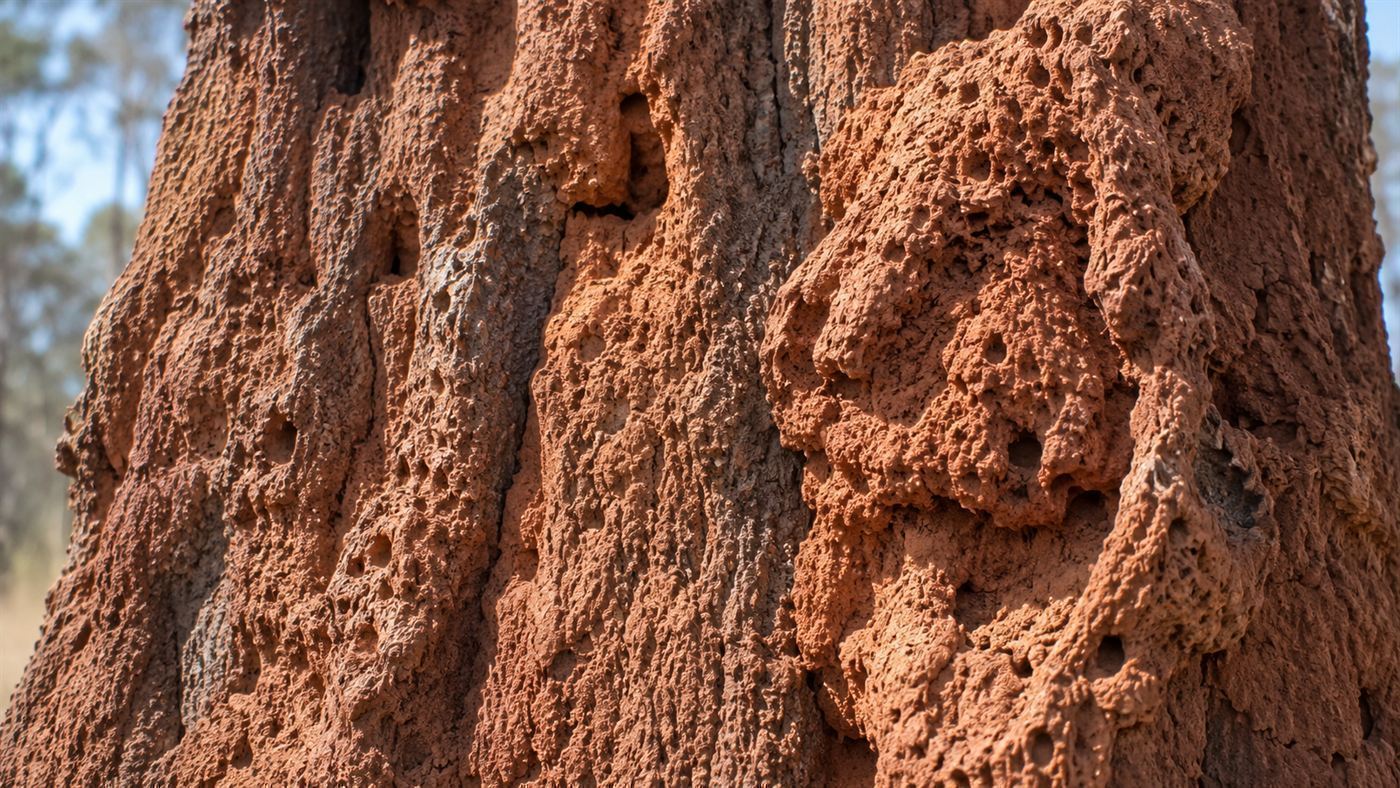
The trick is all in the orientation. Each mound is not a rounded heap but a tall, narrow wedge, like a great fin of earth, and the colonies build them with astonishing consistency. Magnetic termites align their flat mounds along a north-south line, so the broad faces look east and west and only the thin edge ever points at the midday sun.
That geometry is the whole secret. In the cool of early morning and late afternoon, the low sun strikes the wide eastern and western faces and gently warms the nest. But during the punishing heat of midday, when the sun is directly overhead, it falls only on the slim top ridge, so the mound soaks up very little of that dangerous warmth. Measurements have found differences of several degrees between the sunny and shaded surfaces, all managed without a single moving part.
Air conditioning with no power
What the termites have built is a passive solar climate machine. The colony needs to stay within a narrow band of temperature to raise its young and tend the fungus or food stores inside, and in tropical Australia that is no small ask. The shape and alignment of the mound do the work of an air conditioner, keeping the inside far steadier than the wild swings of the air outside.
It is the kind of design human architects now study and copy, building offices that breathe and shade themselves to cut their energy use. The termites got there first, by millions of years, working only with mud, saliva and an inherited sense of which way to point. There is also a flooding problem to solve: these insects live on plains that drown in the wet season, which is why they build tall towers reaching up out of the water rather than digging down.
Why "magnetic"?
The name is the one misleading thing about them. Because the mounds all line up to the same compass direction, early observers reached for the word magnetic, as if the insects carried tiny compasses. In truth the termites are not magnetic at all, and they do not steer their building by Earth's magnetic field; the alignment is set by the path of the sun.
Exactly how the colony reads that path, whether it senses sunlight, shade, wind or some combination, is still debated by scientists, and a faint role for magnetism has never been completely ruled out. But the heart of the behaviour is clearly about temperature, not navigation. The termites are not following a compass; they are dodging the heat.
Why are they called magnetic termites?
Simply because of how their mounds look from above: a whole landscape of slabs, all turned the same way. The striking, compass-like alignment earned them the name magnetic termites, even though the real cause is the sun rather than any magnetic sense.
It is a good reminder of how nature can fool us. The pattern looks so deliberate, so map-like, that a magnetic explanation feels obvious, when the genuine answer, a clever response to sunshine, is in some ways even more impressive.
How do magnetic termite mounds stay cool?
By presenting the right face to the sun at the right time of day. The thin, north-south slab catches the gentle sun when it is cool and hides from it when it is fierce, smoothing out the temperature inside without any energy at all.
One honest note belongs at the end. The system is remarkable but not magic; the inside of the mound still warms and cools, just far less than the open air, and the termites also shuffle around inside to find comfortable spots. What they have achieved is not a perfect thermostat but a brilliant piece of free engineering, a building that cools itself using nothing but its own shape and the turning of the sun.
Tiny insects worked out passive solar cooling long before we did, and built a whole landscape of it out of mud. If a termite can air-condition its home with nothing but clever shape and direction, how much energy could our own buildings save by copying it? Tell us what you think in the comments.
Related reading: the sociable weaver, the bird that builds enormous apartment-block nests to beat the desert's extremes, and the thorny devil, the Australian lizard that drinks rainwater through channels in its skin.